I Am:
Make a Donation
Share this page :

Modeling of the Impacts of Climate Change on Aviation and Adaptation (MICCAA): impact on demand, loss and damage

Reference

N/A

Contract Type

Internship offer

Working Time

Full-time

Compensation

4.35€ / h – 35h per week

Degree

Master's degree

Experience

Between 0 and 2 years

Role

Intern

Application Deadline

18/12/2026

JOB DESCRIPTION:

This work builds on AeroMAPS, an open-source framework for prospective air transport scenarios (Planès et al., 2023), which already models aviation emissions and an income-driven demand for revenue passenger kilometers (Costa-Alves et al., 2026). To evaluate climatic damages, several models could be considered, such as DICE, the Dynamic Integrated model of Climate and Economy (Nordhaus, 1992; Barrage and Nordhaus, 2024) or the Dietz-Stern model (2015). In the specific context of air transport, Johansson et al. (2025) used a modified version of DICE to value aviation CO2 and contrail cirrus within the same framework. Then, Burke et al. (2026) define loss and damage as the discounted damages attributable to specific emissions.

The internship transposes this logic to aviation within AeroMAPS. Aviation emissions are combined with background global emissions from the CMIP7 Scenario Model Intercomparison Project (Van Vuuren et al., 2026), as shown in Fig. 1. The global temperature increase is computed with the FaIR simple climate model (Leach et al., 2021) and non-CO2 effects (such as contrails) following Johansson et al. (2025). The damage function converts temperature into a loss of world Gross domestic product (GDP), from which loss and damages for air transport can be derived.

The damaged GDP then drives future demand in air transport, through loss in revenue passenger kilometers (RPK), which is measured against a counterfactual scenario without climatic damages. Population and GDP projections are kept identical in all runs, so that differences between scenarios result from the climatic impact alone. The share of each impact attributable to aviation is obtained by repeating each run with and without aviation emissions. Climatic damages evaluation is heavily sensitive to the parametrization of the damage function (eg elasticity of marginal utility), as shown in Stern (2007) and Hänsel et al. (2020).

This work will thus evaluate the sensitivity of results to these uncertain parameters. Finally, the internship will consider different scenarios for the global economy, such as Medium (M), High (H) and Very Low (VL) scenario pathways. For each of these global scenarios, different decarbonization scenarios will be considered for aviation from AeroMAPS. For each case, the objective is to evaluate global loss and damage, aviation-attributable loss and damage, and loss in air transport demand up to 2100.

Design and Off-Design Analysis of Ultra-Short, Adaptive Nacelle for Ultra-High-Bypass Ratio Turbofans.

Contract Type

Post-doctoral offer

Working Time

Full-time

Degree

PhD

Experience

Between 0 and 2 years

Role

Post-doctoral research assistant

Application Deadline

14/02/2027

JOB DESCRIPTION:

Ultra-short and thin nacelles are a well-known solution to compensate the weight and drag penalties related to an increased fan diameter. In particular, the reduced wet surface of a short nacelle reduces friction drag at cruise. However, short nacelles are subject to flow separation in off-design conditions (especially take-off), which creates distortion and severely penalizes the fan efficiency. Peters et al. [[1]] have shown that inlets with a length-to-diameter ratio L/D below 0.25 are not robust without the use of an additional feature such as variable-geometry. In this context, we have proposed a slotted-inlet variable geometry concept as a potential enabler for nacelles with length-to-diameter ratios lower than 0.25. Through RANS numerical simulations, we showed that the slotted inlet could alleviate flow separation observed under incidence conditions on a very short L/D=0.19 nacelle. We also observed that there could be a potential for passive actuation since the steep flow turning around the nacelle lips that led to flow separation also causes forward-pulling forces on the slot.

In order to simulate the strong fan-inlet interactions and the fan performance under distortion, we propose to model the fan stages by using a body force approach. This principle, not new in turbomachinery, has been used to deal with short nacelles [[2]], cross-wind conditions [[3]] or aero-propulsive coupling [[4]]. Although this method cannot give access to the whole phenomenology of the flow inside the thrusters, it is able to capture first order phenomena with lower computational cost, compatible with preliminary design.

[1] Andreas Peters, Zoltán S Spakovszky, Wesley K Lord, and Becky Rose. Ultrashort nacelles for low fan pressure ratio propulsors. Journal of Turbomachinery, 137(2):021001, 2015.

[2] Thollet, W. Body Force Modeling of Fan—Airframe Interactions. Diss. Ph. D. thesis, ISAE-SUPAERO, 2017.

[3] Minaker, Quentin J., and Jeffrey J. Defoe. “Prediction of Crosswind  Separation Velocity for Fan and Nacelle Systems Using Body Force Models:  Part 1: Fan Body Force Model Generation without Detailed Stage  Geometry.” International Journal of Turbomachinery, Propulsion and Power 4.4 (2019): 43.

[4] Benichou, Emmanuel, et al. “Numerical Low-Fidelity Method for Improved Analysis of Breakthrough Aero-Propulsive Systems .” 1st Aerospace Europe Conference, 2020.

MISSIONS:

The proposed work will pursue ongoing efforts to develop an adaptive nacelle design framework, using in-house Python scripts for geometry generation, body-force modelling, and the commercial StarCCM+ solver. The objective is to confirm the potential of the slotted-inlet concept by designing a nacelle for a new, given fan design, implementing the slot geometry, setting up body-force modelling of different fan designs, and performing numerical simulations on different off-design conditions including take-off, incidence, cross-wind. We will investigate means to refine the geometry through aerodynamic analysis and shape optimization, and assess actuation requirements in different scenarios (opening/closing the slot in different conditions). We will also explore scaling effects and define requirements for future wind tunnel or flight tests.

Design and Off-Design Analysis of a Semi-Embedded Distributed-Propulsion Nacelle Concept

Reference

N/A

Contract Type

Post-doctoral offer

Working Time

Full-time

Degree

PhD

Experience

Between 0 and 2 years

Role

Post-doctoral research assistant

Application Deadline

14/02/2027

Job description

Ultra-short and thin nacelles are a well-known solution to compensate the weight and drag penalties related to an increased fan diameter. In particular, the reduced wet surface of a short nacelle reduces friction drag at cruise. However, short nacelles are subject to flow separation in off-design conditions (especially take-off), which creates distortion and severely penalizes the fan efficiency. Peters et al. [[1]] have shown that inlets with a length-to-diameter ratio L/D below 0.25 are not robust without the use of an additional feature such as variable-geometry. In this context, we have proposed a slotted-inlet variable geometry concept as a potential enabler for nacelles with length-to-diameter ratios lower than 0.25. Through RANS numerical simulations, we showed that the slotted inlet could alleviate flow separation observed under incidence conditions on a very short L/D=0.19 nacelle. We also observed that there could be a potential for passive actuation since the steep flow turning around the nacelle lips that led to flow separation also causes forward-pulling forces on the slot.

In order to simulate the strong fan-inlet interactions and the fan performance under distortion, we propose to model the fan stages by using a body force approach. This principle, not new in turbomachinery, has been used to deal with short nacelles [[2]], cross-wind conditions [[3]] or aero-propulsive coupling [[4]]. Although this method cannot give access to the whole phenomenology of the flow inside the thrusters, it is able to capture first order phenomena with lower computational cost, compatible with preliminary design

[1] Andreas Peters, Zoltán S Spakovszky, Wesley K Lord, and Becky Rose. Ultrashort nacelles for low fan pressure ratio propulsors. Journal of Turbomachinery, 137(2):021001, 2015.

[2] Thollet, W. Body Force Modeling of Fan—Airframe Interactions. Diss. Ph. D. thesis, ISAE-SUPAERO, 2017.

[3] Minaker, Quentin J., and Jeffrey J. Defoe. “Prediction of Crosswind  Separation Velocity for Fan and Nacelle Systems Using Body Force Models:  Part 1: Fan Body Force Model Generation without Detailed Stage  Geometry.” International Journal of Turbomachinery, Propulsion and Power 4.4 (2019): 43.

[4] Benichou, Emmanuel, et al. “Numerical Low-Fidelity Method for Improved Analysis of Breakthrough Aero-Propulsive Systems .” 1st Aerospace Europe Conference, 2020.

Mission

The proposed work will pursue ongoing efforts to develop an adaptive nacelle design framework, using in-house Python scripts for geometry generation, body-force modelling, and the commercial StarCCM+ solver. The objective is to confirm the potential of the slotted-inlet concept by designing a nacelle for a new, given fan design, implementing the slot geometry, setting up body-force modelling of different fan designs, and performing numerical simulations on different off-design conditions including take-off, incidence, cross-wind. We will investigate means to refine the geometry through aerodynamic analysis and shape optimization, and assess actuation requirements in different scenarios (opening/closing the slot in different conditions). We will also explore scaling effects and define requirements for future wind tunnel or flight tests.

Experimental Characterisation of Swirl Distortion and its Propagation through a Turbofan Fan Stage

Reference

N/A

Working Time

Full-time

Degree

PhD

Experience

Between 2 and 5 years

Role

Post-doctoral researcher

Application Deadline

14/02/2027

Job description

Boundary-layer ingestion concepts are being studied as potential subsonic commercial transport aircraft meeting aviation’s long-term sustainability targets. This often involves embedding low-pressure-ratio thrusters in the fuselage through diffusing S-ducts, which can generate swirl distortion, on top of the ingested boundary layer stagnation pressure loss. Inflow distortion can lead to fan efficiency penalties.

We developed a test module to recreate stagnation pressure distortion, and swirl distortion at the inlet of a turbofan in a ground test bed. A rotating duct can hold a variety of distortion generators, and rotate the distortion pattern around the engine axis. The flow can be traversed at different positions (fan inlet, between rotor and stator, and downstream of the fan stage. Steady, total and static pressure, as well as velocity components are measured using five-hole probes, and 2D hot-wire anemometry gives access to axial and tangential velocities at a higher rate, provided the radial component is negligible. Unsteady and turbulent components can be assessed, but the hot-wire’s 2D assumption is a strong limitation in vortical flows.

Mission

In order to overcome this limitation, we propose to implement (stereoscopic) particle-image velocimetry at the fan interface plane. Existing optical access will be exploited to perform first tests, and new optical access will be commissioned if necessary. Given the large mass flow rate through the engine, we will develop a specific seeding injector that can be traversed across the inlet to seed a region of interest while minimizing its impact on the flow. To this end, aerodynamic shape optimization using RANS numerical simulations will be performed. Different distortion generators will be tested.

In parallel, we will study the transport of the distortion pattern through the fan stage, by means of five-hole or hot-wire probe measurements where applicable. A special attention will be drawn to the temperature and pressure compensation methods for hot-wire anemometry, and the possibility to perform phase-averaging with the rotor blade passing frequency, and employ azimuthal-radial traverses downstream of the fan stator. The generated databases will serve as validation for RANS+body-force numerical simulations conducted in parallel, and contribute to the development of a reference experiment for turbofan distortion studies.

Development and validation of parabolized stability equations and resolvent framework in an unstructured environment to tackle industrial jet-pylon-wing installation noise

Reference

N/A

Working Time

Full-time

Compensation

3400€ / MONTH

Degree

PhD

Experience

Between 2 and 5 years

Role

Post-doctoral researcher

Application Deadline

04/01/2027

The prediction and control of aircraft propulsion-system noise remain important challenges for the development of quieter and more environmentally sustainable aircraft. In particular, the accurate modeling of jet noise in realistic installed configurations requires accounting for the interaction between the jet, its coherent hydrodynamic structures and nearby aerodynamic surfaces, such as pylons and wings (Birch et al., 2005, Meloni et al., 2021, Daviller et al.,2024).

A preceding project demonstrated the potential of advanced numerical and physical modeling approaches for improving the understanding and prediction of propulsion-system noise. However, the prediction of direct jet noise and its reflection beneath the wing is not yet sufficiently robust and accurate for industrial application. More precisely, approaches based on the diffraction of coherent jet structures showed the ability to capture installation-related geometrical effects, but the associated three-dimensional source-modeling methodology is still missing.

The SALSA project aims to address these limitations by developing and validating improved modeling strategies for propulsion-system noise. In the proposed position, one objective is to demonstrate the applicability of advanced stability-based approaches to complex geometries. These approaches include Parabolized Stability Equations (PSE) for the approximate modeling of coherent jet structures and three-dimensional resolvent analysis for the identification and characterization of acoustically relevant flow structures.

The proposed postdoctoral research will be dedicated specifically to the development, validation and application of these methods. The objective is to establish reliable and computationally efficient tools capable of analyzing jet-instability mechanisms and their acoustic relevance in configurations beyond the canonical axisymmetric jet (Amaral et al., 2024), including configurations representative of jet- pylon and jet-wing interactions.

Pilot and Aircraft State Estimation for Adaptive Cockpit AI

Reference

N/A

Working Time

Full-time

Degree

PhD

Experience

Between 2 and 5 years

Role

Post-doctoral researcher

Application Deadline

04/01/2027

The post-doctoral research will focus on:

  • Multimodal state estimation combining physiological, behavioural and flight-system data to assess pilot workload, stress, trust, and startle responses in relation to the operational context.
    Postdoctoral Research Position: Pilot and Aircraft State Estimation for Adaptive Cockpit AI
  • Machine learning and data fusion: developing and comparing machine learning approaches, including classical models, recurrent neural networks and hybrid neuro-symbolic methods, to achieve robust, interpretable and safety-aware state estimation.
  • Adaptive AI assistance: evaluating how integrated team-state estimates can inform the level and type of assistance provided by the intelligent cockpit assistant, including cognitive workload mitigation and startle recovery.
  • Experimental validation: assessing model performance and assistance strategies in simulation environments of increasing realism, from synthetic piloting task (MATB) to X-Plane and PEGASE flight simulators, under both nominal and non-nominal flight scenarios. Different levels of assistance will be assessed.

The COMETES project – Skills and Careers in Space – is launching its website, a platform dedicated to skills and careers in the space sector.

A national programme to train the space industry’s future talent

COMETES – Skills and Careers for Space is a national training programme launched to meet the growing needs of the French space sector. As the winner of the ‘Skills and Professions of the Future’ call for expressions of interest under the France 2030 plan, it brings together 26 partners from five French regions, including ISAE-SUPAERO.

The programme is based on a collaborative approach involving higher education institutions, research centres, industry players, local authorities and training organisations.

COMETES aims in particular to:

  • train 11,000 students over five years
  • create new degree programmes
  • develop innovative training programmes addressing space sector challenges
  • raise widespread awareness of careers and opportunities in the sector

A platform dedicated to careers and skills in the space sector

The COMETES website has been designed as a platform for exploring and learning about careers in the space industry and the skills of the future.

In particular, users can:

  • discover careers in the space sector and New Space
  • explore the training courses available
  • gain a better understanding of developments in the sector
  • find out about the skills in demand

The programme also pays particular attention to sustainable space issues, new space technologies, nanosatellites, space data and systems engineering.

A dynamic approach that benefits local communities and drives innovation

Through COMETES, the Toulouse Urban Community is reaffirming its commitment to skills for the future and to supporting major technological transitions.

The website can be accessed here: https://cometes-spatial.fr/

COP 2027–2031: Giving a Voice to Those Shaping the ISAE-SUPAERO of Tomorrow

COP 2027–2031: Giving a Voice to Those Shaping the ISAE-SUPAERO of Tomorrow

The 2027–2031 Objectives and Performance Agreement (COP) sets out the Institute’s major strategic directions for the next five years. It was developed through a collective reflection process, carried out within several working groups focused on the key challenges that will shape ISAE-SUPAERO’s future.

This time, Henry de Plinval, Director of Research and Educational Resources, and Pascale Rigaud, Project Director for Educational Strategy and Program Development, share their vision of the transformations to come.

  • NewSpace, with more agile and connected platforms, satellite constellations, new telecommunications technologies, and innovative startups.
  • The digital revolution, with AI and digital twins, which open up new possibilities for both research and education.
  • Decarbonized aerospace, a major challenge in supporting the sector’s transformation and helping to shape its future.

But preparing tomorrow’s engineers is not just about mastering these new technologies.

Faced with an increasingly complex world, they must also know how to ask the right questions, exercise sound judgment, and make decisions in the face of uncertainty.

The challenge, therefore, is to strike the right balance: to fully integrate AI into our educational programs and research, without ever losing sight of what makes human intelligence so valuable—ethics, responsibility, consideration for others, and the ability to learn and adapt.

Check out this new episode of our series and dive into the ideas shaping ISAE-SUPAERO’s future COP 2027–2031.

A collective effort to envision the transformations ahead and prepare, starting today, the engineers and aerospace professionals of tomorrow.

Audio & subtitles in French

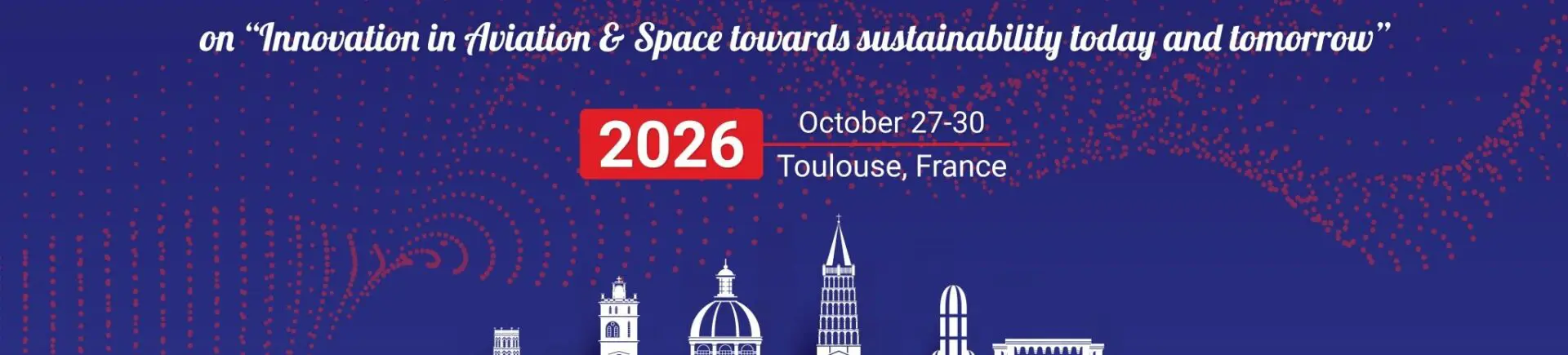
ISAE-SUPAERO is co-hosting the 16th EASN International Conference in Toulouse

Over the years, the EASN conference has established itself as one of Europe’s leading platforms for scientific and technological exchange in the aerospace field. It brings together major players from academia, industry, research organisations and decision-making bodies, with a common objective: to accelerate the innovations that will shape the future of the sector.

The 2026 conference will be held in Toulouse, the European capital of aerospace research and innovation, at the heart of an ecosystem renowned for its scientific excellence and industrial impact.

The conference is also a key event for disseminating the results of EU-funded projects. It offers a unique opportunity to showcase scientific advances, strengthen synergies between disciplines and promote the transfer of knowledge to practical applications.

The programme promises to be rich and structured, with :

  • Plenary sessions featuring leading European experts,
  • scientific presentations (oral and poster) highlighting cutting-edge research,
  • numerous networking opportunities to stimulate collaboration and partnerships.

Following on from the previous event held in Madrid, particular emphasis will be placed on the new generation of engineers and researchers, with dedicated initiatives to encourage their integration into the European aerospace ecosystem.

By hosting this international event, ISAE-SUPAERO is confirming its central role in the development of European cooperation and the promotion of sustainable and innovative aviation and space.

  • High-level presentations: https://easnconference.eu/2026/programme/plenaries
  • Technical presentations: https://easnconference.eu/Agenda_2026
Secret Link