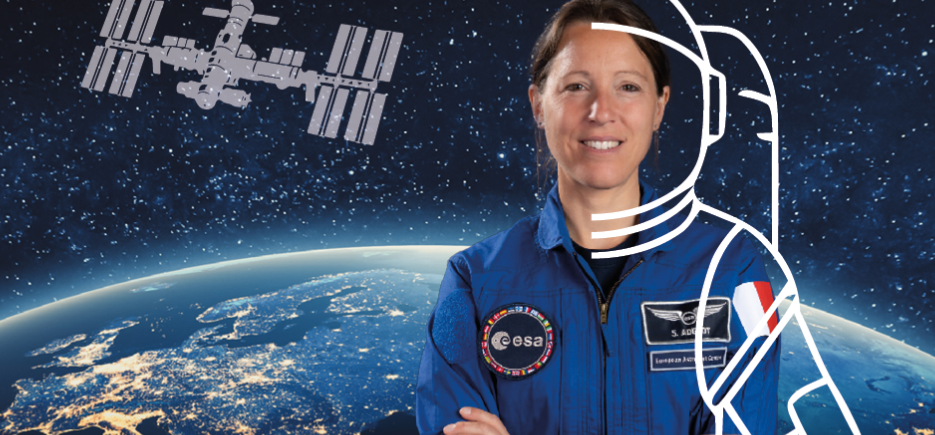
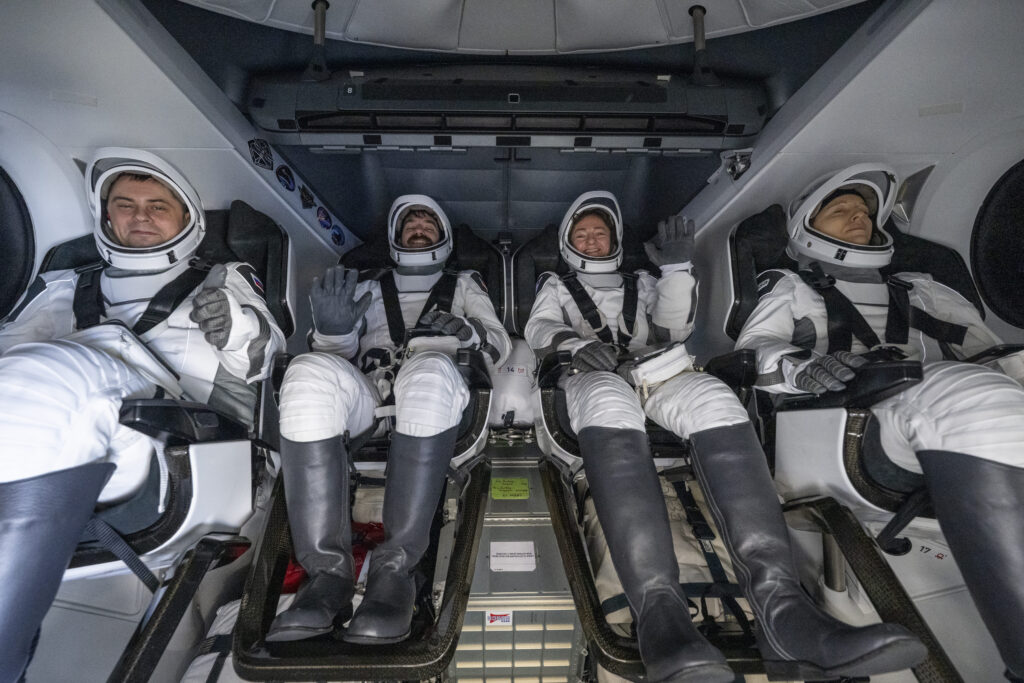
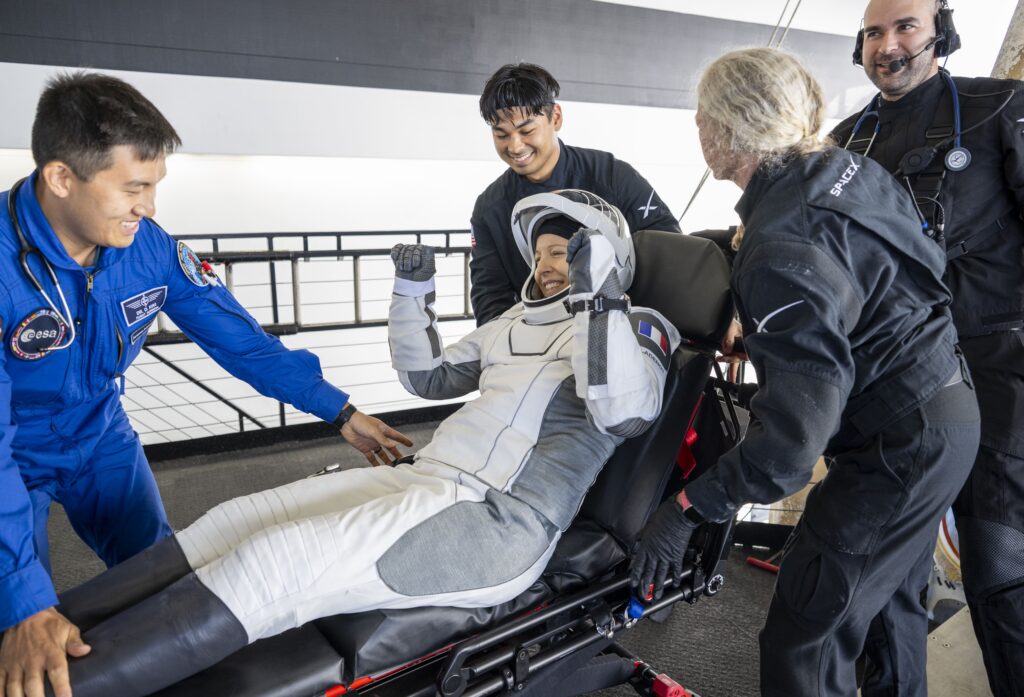
Sophie Adenot, an ESA astronaut and ISAE-SUPAERO engineering graduate, is back on Earth after spending nearly 8 months on the ISS for her Epsilon mission.
Related Content
Pages
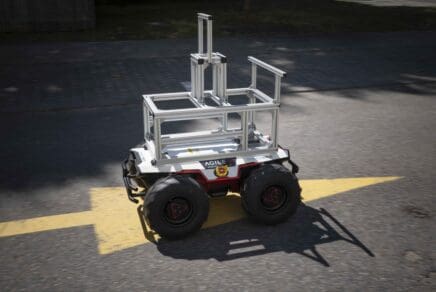
Navigation, Radar, and Remote Sensing (NAVIR² eS) Scientific GroupThe “Navigation, Radar and Remonte Sensing” (NAVIR² eS) scientific group is interested in the theoretical study of information sources and hybridization approaches for autonomous vehicle navigation applications.
DEOS
Doctoral student
PhD
Videos
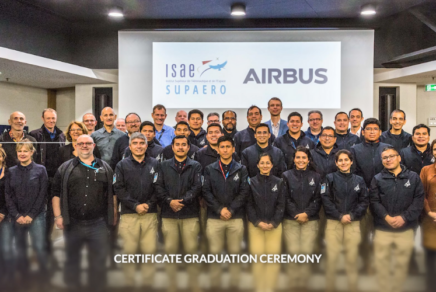
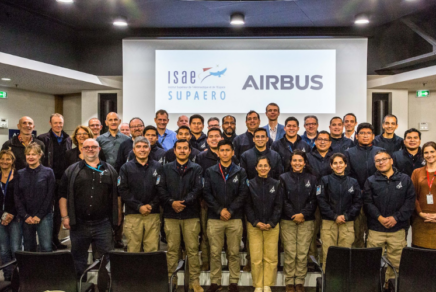
ISAE-SUPAERO and Airbus Defence and Space organize an international training course on space systemsTwenty engineers from the Peruvian space agency CONIDA (Comisión Nacional de Investigación y Desarrollo Aeroespacial) attended a training course in Toulouse designed jointly by ISAE-SUPAERO and Airbus Defence and Space! The aim? To develop their skills in space systems and space missions. The entire program was placed under the academic responsibility of AnnaFederica Urbano, a lecturer and researcher in space systems and launchers at ISAE-SUPAERO. The engineers took part in a preliminary satellite design project. At the end of the five-week course, they all obtained the Certificate of Advanced Studies awarded by ISAE-SUPAERO. For ISAE-SUPAERO and Airbus Defence and Space, this experience opens up prospects for future collaborations in training courses of this type for international customers and industrial and institutional partners. For more information: https://www.isae-supaero.fr/fr/actualites/airbus-defence-and-space-et-l-isae-supaero-forment-des-membres-de-l-agence/
Programme
Space

Testimonials
Testimonial of Baptiste Sigal, Advanced Master® TAS ASTRO student (class) 2025Advanced Master
Aerospace
Space
News
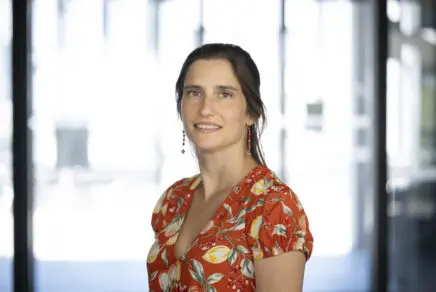
The 2025 Edmond Brun Prize from the French Academy of Sciences awarded to Annafederica Urbano, professor at ISAE-SUPAEROOn October 28, 2025, the Academy of Sciences awarded the Edmond Brun Prize to Annafederica Urbano, professor of space launch vehicles at ISAE-SUPAERO. This biennial physics award recognizes her entire body of work in the field of space propulsion.
DCAS
News
Prize
News
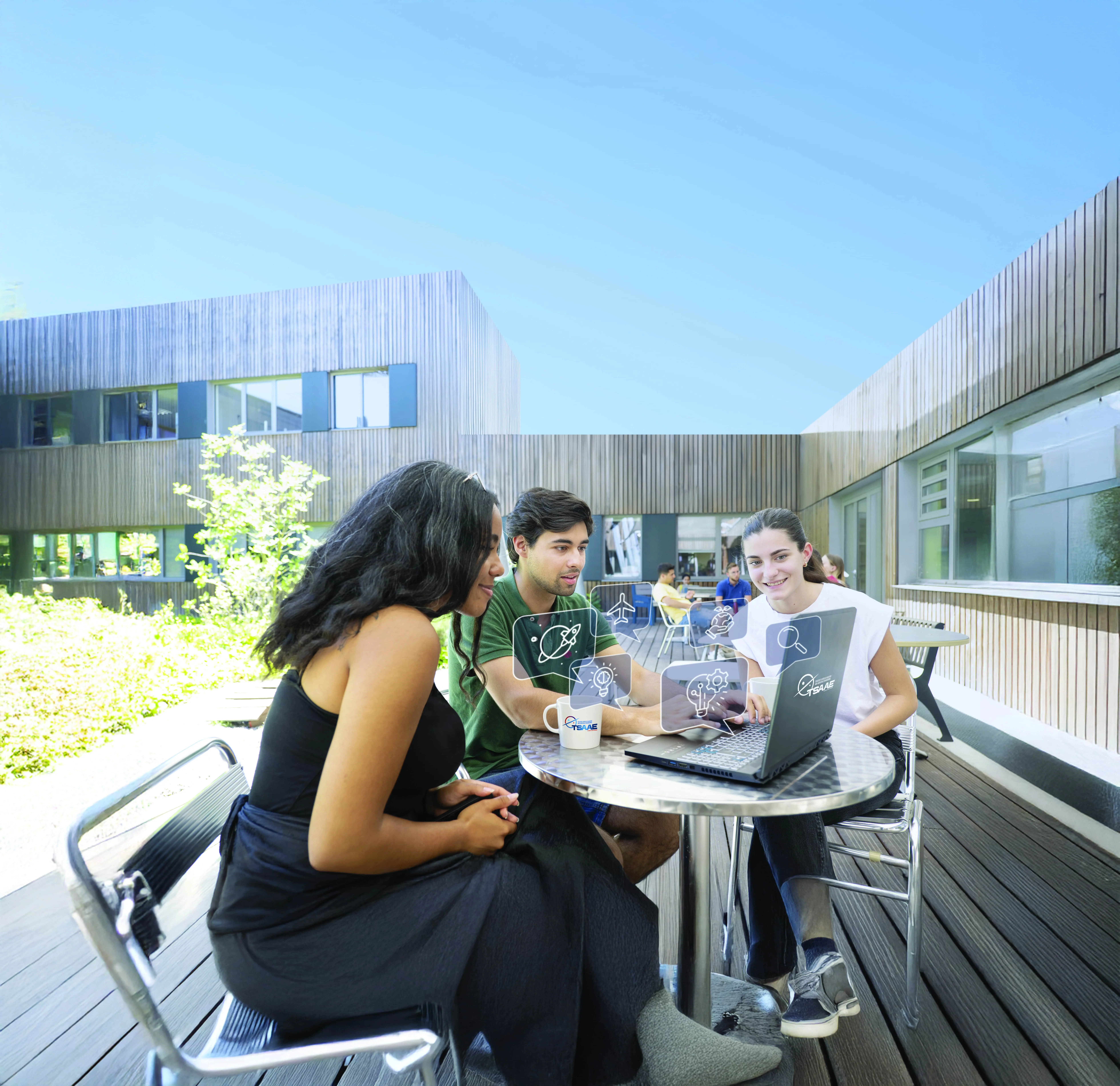
Apply today for a program at ISAE-SUPAERO or ENAC - École Nationale de l'Aviation Civile!The TSAAE application platform is now open: discover our world-renowned programs and apply online for the 2026 academic year before November 28 at midnight (French time)!
Advanced Master
Aeronautics
Aerospace

Testimonials
Testimonial from Maëlle Joseph, student (class of 2025) of the Advanced Master® IEMAerospace
Alumni
Testimonial
Pages
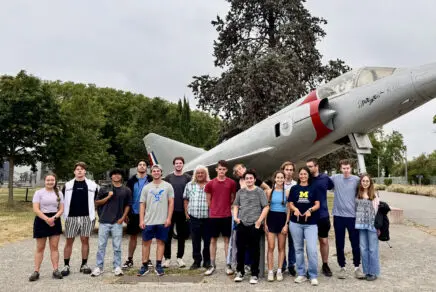
Aerospace Summer ProgrammeEnjoy a unique experience at the heart of aeronautics and space technology with intensive courses, exclusive industrial visits, and an international immersion in Paris, Poitiers and Toulouse.
Aeronautics
Aerospace
Aerospace summer program
News
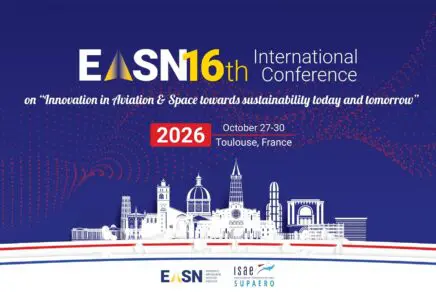
ISAE-SUPAERO is co-hosting the 16th EASN International Conference in ToulouseISAE-SUPAERO is pleased to host the 16th edition of the international conference organized by EASN in Toulouse from October 27 to 30, 2026, dedicated to the theme: “Innovation in Aeronautics and Space for Sustainability Today and Tomorrow.”
Aeronautics
Aerospace
Innovation
News
CASTOR Chair: ISAE-SUPAERO and Liebherr-Aerospace Toulouse celebrate 1 year of partnershipAeronautics
Chair
Partnership
Videos
Sylvestre Maurice, astrophysicist and ISAE-SUPAERO alumnusAwarded a prize by the Académie des Sciences in 2020, Sylvestre Maurice #astrophysicist at the Institut de Recherche en Astrophysique et Planétologie (IRAP) in Toulouse witnessed the landing of the #Perseverance rover on Mars on February 18, 2021. A historic moment for this enthusiast, who is also the scientific manager of the onboard SuperCam instrument. A 1990 graduate of ISAE-SUPAERO, Sylvestre Maurice tells us about his career.
Alumni
Researcher
Space
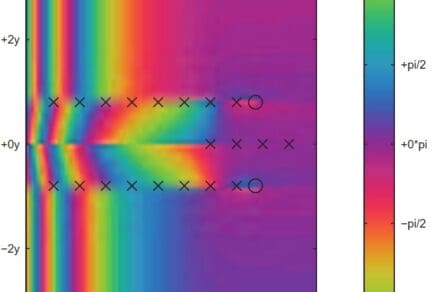
Pages
Applied Mathematics (MA) Scientific GroupThe “Applied Mathematics” (MA) scientific group covers a wide range of topics: Stochastic processes (especially Markov processes), numerical optimization (especially multidisciplinary optimization) and parallel computing, stabilization, control and numerical solution of partial differential equations, and financial engineering.
DISC
Doctoral student
PhD

Events
AASTRA Certificate: presentation webinar on March 25 from 6:00 p.m. to 7:00 p.m.Aeronautics
Aerospace
Air transport
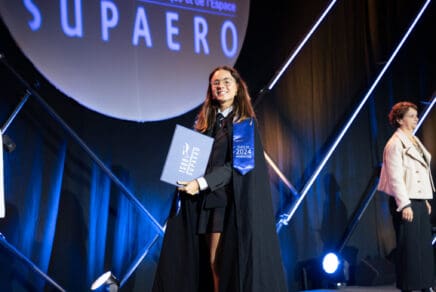
Pages
Prior Experience AccreditationThe validation of prior experience is an individual right enshrined in the French Labor Code and Education Code. It enables candidates to obtain all - or part - of a professional certification (Diploma, Professional Title, Certificate of Professional Qualification), based on their professional, salaried or non-salaried and/or voluntary experience. This scheme can be used if the candidate is seeking personal recognition, or more generally to support a professional project that he or she wishes to put into practice.
Advanced Master
Aeronautics
Aerospace
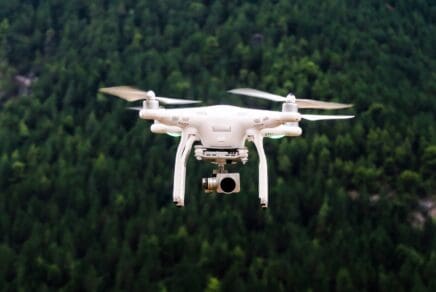
Pages
Design and Analysis of Critical Systems (CASC) Scientific GroupThe “Design and Analysis of Critical Systems” (CASC) scientific group focuses on methods, processes and tools to support System Engineering and Systems Engineering.
DISC
Doctoral student
PhD
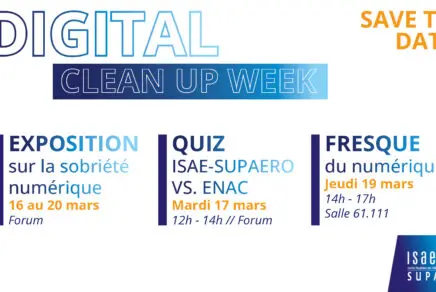
Events
Digital Clean Up WeekEvent
Institute
News
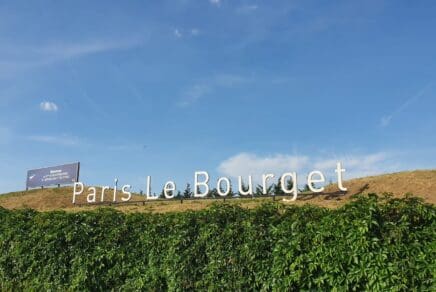
ISAE-SUPAERO will be at the Paris Air Show from June 16 to 22, 2025!Aeronautics
Event
Fair

Testimonials
Testimony of Ernest Chi Tse, alumni class of 2018 of the Advanced Master® ASAAAdvanced Master
Alumni
Testimonial
Videos
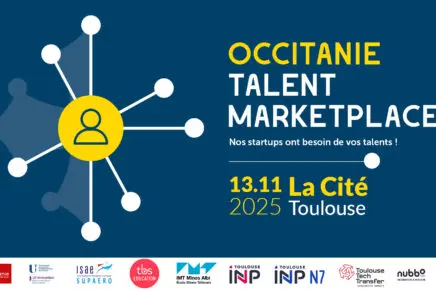
Video recap of the first edition of the Occitanie Talent MarketplaceHave a look back at the Occitanie Talent Marketplace in pictures, a unique event that brought together startups from the university ecosystem of the Occitanie region and the talents & skills eager to join an entrepreneurial adventure. Also, check out the event’s photo album: https://www.flickr.com/photos/194546076@N07/albums/72177720330573098/
Company
Event
Pages
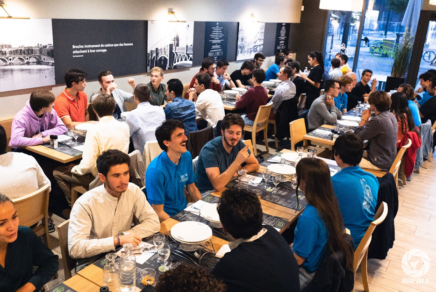
ISAE SUPAERO ENSICA Alumni AssociationISAE SUPAERO ENSICA Alumni is much more than a network of graduates: it's a close-knit, committed and proactive community, driven by a spirit of mutual aid and sharing at the service of society.
Aerospace
Alumni
Association

News
Space: Thomas Pesquet and Arnaud Prost will embark on two unprecedented space missions in 2027France is stepping up its space ambitions. At the Choose France summit, the President of the Republic announced that French astronauts Thomas Pesquet and Arnaud Prost will take part in two commercial space missions in 2027, as part of an agreement between France and the American company Vast.
Alumni
Exploration
Space

News
ISAE-SUPAERO announces new partnership with ESA Academy to support future Master in Aerospace Engineering studentsAerospace
Master in Aerospace Engineering
Scholarship

Testimonials
Testimony from Nathanaël Lecompte, 2021 alumni of the ISAE-SUPAERO engineering programmeAlumni
Sustainability
Testimonial

Events
The "Assises du NewSpace" returns on July 7 & 8, 2026!Event
Space
Pages
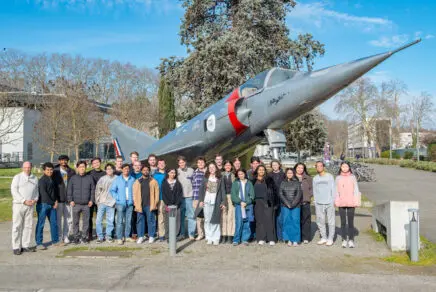
Spring Semester in Aeronautical EngineeringImmerse yourself in the world of aerospace in Toulouse, the European aerospace capital, with a semester taught in English combining excellent courses, cultural immersion, and proximity to major industrial players.
Aeronautics
Aerospace
Aerospace summer program
News
2027 ISAE-SUPAERO Open DayYou used to join us in the fall for our Open Day. The ISAE-SUPAERO Open Day has a new date!
Aerospace
Event
Open day

News
The Origins of SUPAERO: Two Previously Unpublished Archives Offer a Deep Dive into the School’s HistoryNous mettons aujourd'hui à la disposition de toute notre communauté deux documents sur Marc Pélegrin d'une valeur historique rare.
Alumni
Institute
News
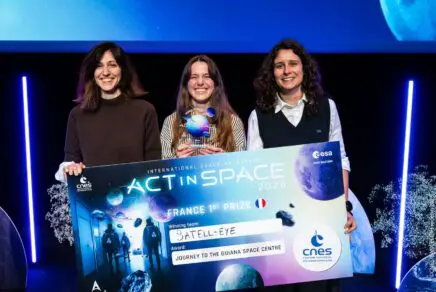
ISAE-SUPAERO and its talented students are once again showcasing Toulouse’s dynamism on the international stageAt ISAE-SUPAERO, talented students continue to distinguish themselves, both in the academic world and in the realm of innovation: a look back at the Amelia Earhart Award won by Elena Lopez-Contreras, a doctoral student at the Neuroergonomics Center, and at the French final of the ActInSpace hackathon, won by her team Solete for their Satell-EYE project.
DCAS
Event
Human factors

News
Mars hit by meteorites more often than previously thoughtTwo researchers from ISAE-SUPAERO contributed to new discoveries based on data from the seismometer sent to Mars during the InSight mission, one of whose main objectives was to measure seismic activity on the Red Planet.
Space

Testimonials
'World Alumni Day': 3 questions for Shriya Kaur Chawla, Master of Aerospace Engineering Class of 2024Alumni
Master in Aerospace Engineering
Testimonial
Pages
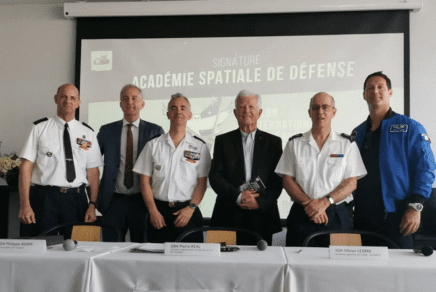
French Space Defence AcademyIn order to drive and implement the ambitions set out in the Space Defence Strategy, the creation of a space defence expertise sector offering attractive programmes is a major challenge. In this regard, the French Space Defence Academy (ASD) offers programmes available within the Armed Forces Ministry and leverages synergies between them to provide a personalised approach to space programmes.
Defence
Education
Partner
Videos
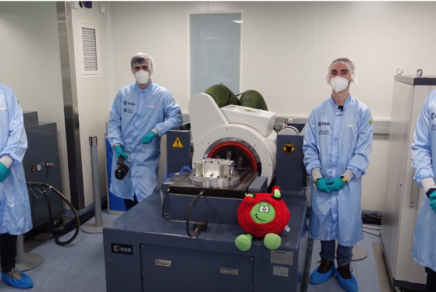
Orbit Your Thesis: ISAE-SUPAERO in zero gravity with the AIM experimentArtery In Microgravity (#AIM), the first student scientific experiment designed and developed in collaboration since 2018 by ISAE-SUPAERO and Polytechnique Turin, was launched on 23 November 2022 by Space X's Dragon cargo ship to the International Space Station (ISS)! Selected by the ESA as part of its ‘Orbit your thesis’ programme, AIM aims to study the behaviour of the heart and its arteries in space, in order to determine whether people with heart problems will one day be able to stay there.
Prize
Space

Testimonials
Testimony of Matthieu LP, student (class of 2025) of the IEM Advanced Master®Aerospace
Alumni
Testimonial
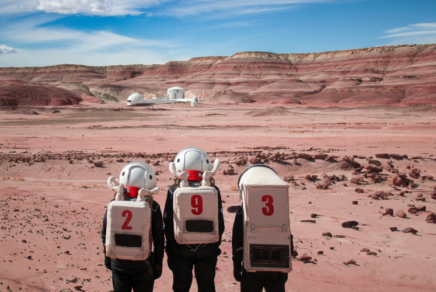
News
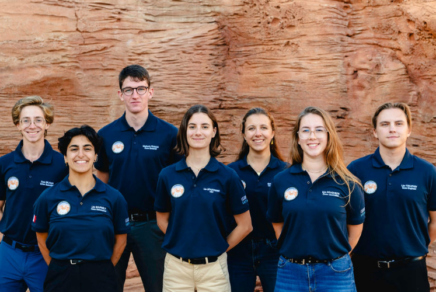
Mars mission simulation: a scientific experiment, a human adventureLike nine other ISAE-SUPAERO crews before them, seven students took part in a simulation of life on Mars in the Utah desert in the United States this winter.
Space
Student club
News
Historical Discovery: Mercury Does Indeed Have Electron Radiation BeltsAn international team of researchers, including a scientist from ISAE-SUPAERO, has just published a study in the journal "Nature Astronomy" revealing the existence of electron radiation belts around Mercury. This discovery, based on an analysis of data from the MESSENGER mission and supported by previously unpublished observations from the BepiColombo mission’s MEA (Mercury Electron Analyzer) instrument, sheds new light on the physics of planetary magnetospheres and raises major challenges for the protection of space missions.
DEOS
Research
Space
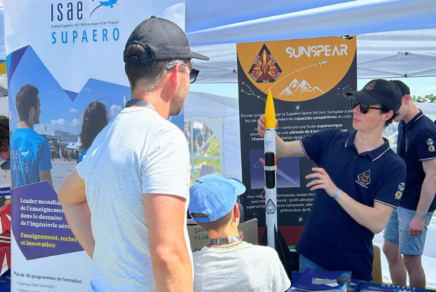
News
3 questions to... Marie-Bertille Mosnier, S-Cube member from 2018 to 2022Meet Marie-Bertille Mosnier, member of the S-Cube - SUPAERO Space Section - ISAE-SUPAERO's experimental rocket club, from 2018 to 2022.
Space
Student club
Student life
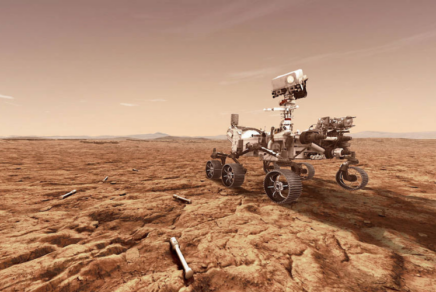
Videos
Perseverance collects first Martian sounds: explanation by Dr. Naomi Murdoch & Dr. Alexander StottDr Naomi Murdoch, researcher in space instrumentation and planetary science, and Dr Alexander Stott, post-doctoral fellow, tell us more about the physical characteristics of Mars' atmosphere, in particular the speed of sound and its attenuation. These analyses were published in Nature on April 1, 2022 by an international team led by a teacher-researcher from Toulouse III - Paul Sabatier University, and including scientists from CNRS and ISAE-SUPAERO.
DEOS
Researcher
Space

Testimonials
Testimony from Valentin Balayn, 2015 graduate of the TAS AERO FTE Advanced Master®Advanced Master
Aeronautics
Alumni

News
Luca Parmitano, Artemis III astronaut: an ISAE-SUPAERO graduate at the heart of the next step in the return to the MoonOn June 9, 2026, NASA announced the crew for Artemis III, a key mission in the U.S. lunar program scheduled for 2027.
Advanced Master
Alumni
Space

Pages
Job offersAeronautics
Aerospace
AI
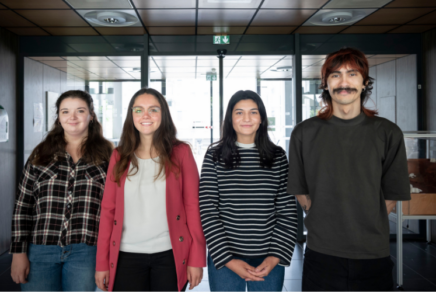
News
DART: ISAE-SUPAERO students publish new scientific findings in Nature CommunicationsNaomi Murdoch, a planetary science researcher at ISAE-SUPAERO, is actively involved in scientific analysis and data interpretation for NASA's DART mission.
DEOS
Space
News
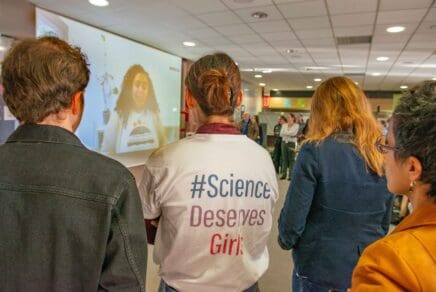
Women's Campus Day 2026 “Inspiring younger generations and young girls”: astronaut Sophie Adenot's commitment continuesThe first edition of ISAE-SUPAERO's “Campus au féminin” days in 2016, attended by astronaut Sophie Adenot, a graduate of the school, was met with great enthusiasm by middle and high school girls. Given its success, the program has become a permanent fixture and now reaches hundreds of young girls every year, allowing them to discover careers in science and engineering.
Diversity program
Equal opportunities
Event
Videos
Training courses: space studiesFind out more about our courses and #information in the field of space! The space dimension is strongly developed within our various training courses, whether in specific streams or dedicated programs. French and international students alike are showing a keen interest in our educational programs in Earth observation and the sciences of the Universe, as well as in the design and operation of space systems. Space research and industry employ many ISAE-SUPAERO engineers. Explore the world of space!
Programme
Space
Videos
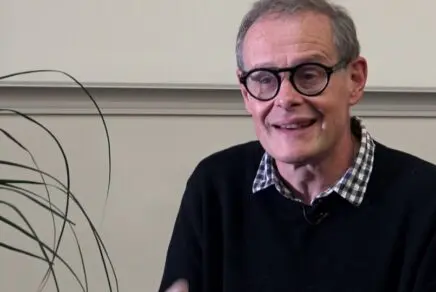
Sylvestre Maurice presents the SUPERCAM / Martian Exploration educational kitThe ‘SUPERCAM - Martian Exploration’ educational kit project was initiated by five partners: ISAE-SUPAERO, the Toulouse Academy, CNRS, CNES and Cité de l'espace. Under the guidance and supervision of astrophysicist Sylvestre Maurice, first-year students at ISAE-SUPAERO developed this educational tool to raise awareness of space exploration in classrooms, from sixth form to final year. This kit is available to middle and high school teachers and can be adapted to offer educational lessons related to this theme.
Diversity program
Equal opportunities
Researcher
News
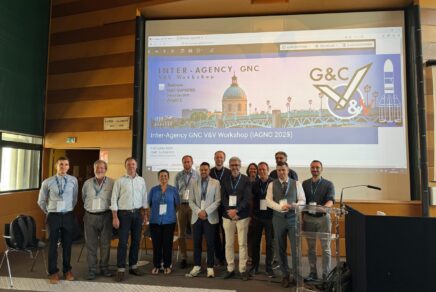
ISAE-SUPAERO hosts the first in-person Inter-Agency GNC V&V WorkshopOn July 9–10, 2025, ISAE-SUPAERO had the honor of hosting the very first in-person edition of the Inter-Agency GNC V&V Workshop, bringing together more than 150 participants from academia, industry, and major international space agencies.
Event
Research
Workshop
Videos
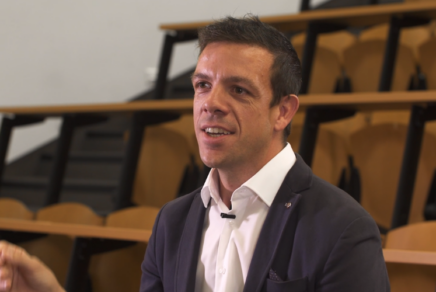
Testimony of Florian Bonte, S2010 ISAE-SUPAERO alumni: creating opportunities through networkingCreating opportunities through networking: a testimonial from Florian Bonte, S2010 ISAE-SUPAERO alumnus! He tells us about our partnership, and the importance of networking and passing on information, as an alumnus of the school, and Sales Manager at Groupe SII, one of the school's partner companies. Our partner companies recently took part in the Village Entreprises, an event held on the ISAE-SUPAERO campus. This not-to-be-missed annual event enables our students to meet, exchange ideas and make contacts with our partner companies! Thanks to the many training options offered by the Institute, and the diversity of their first professional experiences and nationalities, the professional profiles of our students are perfectly adapted to the needs of companies. For our students, it's a unique opportunity to exchange ideas with professionals to identify internship and job opportunities, to refine their project, or to find ideas to bring their projects to fruition.
Alumni
Career
Company
Videos
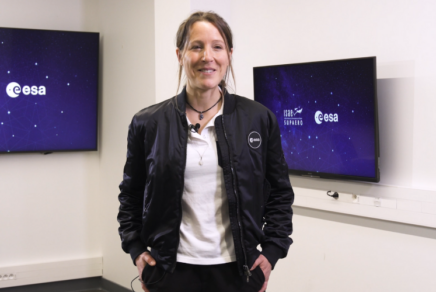
Sophie Adenot: from ISAE-SUPAERO to spaceMeet Sophie Adenot, astronaut at the European Space Agency (ESA) and ISAE-SUPAERO alumna, who answers three questions! 🚀
Alumni
Diversity program
Space

Videos
The Dart mission has hit its target: explanations from Dr Naomi Murdoch, planetary scientist at ISAE-SUPAEROResearchers from ISAE-SUPAERO are participating in this first planetary defence mission. Dr. Naomi Murdoch, a researcher at ISAE-SUPAERO and scientific member of the #DART and #HERA missions, comments on the objectives of DART and those of the European HERA mission, which will arrive in the area in 2026 to characterise the crater left by DART and study the internal structure of the asteroid #Dimorphos!
DEOS
Researcher
Space
Videos
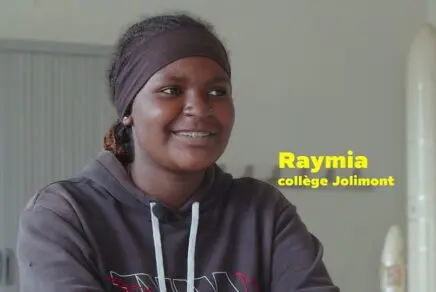
SUPERCAM Educational Kits / Martian Exploration: Students at the controls of the kitsFollow ISAE-SUPAERO students as they create educational kits, a digital educational tool designed to raise awareness of space exploration that can be used in classrooms from Year 7 to Year 13.
Diversity program
Equal opportunities
Space
News
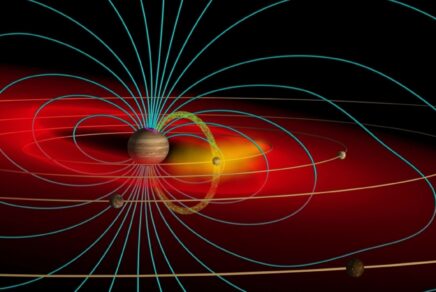
The Jupiter system: a unique laboratory for a major scientific breakthroughNicolas André, teacher-researcher at ISAE-SUPAERO, co-authors a major discovery in Nature Communications.
DEOS
Exploration
Space
Videos
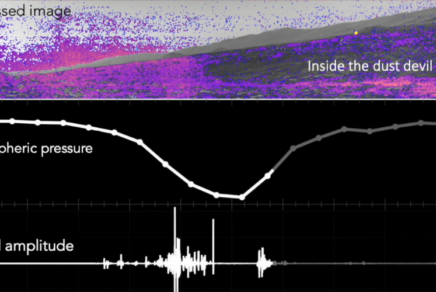
The sound of a Martian dust devil captured by the SuperCam microphone on PerseveranceThis video and audio show the results obtained by NASA's Perseverance Mars rover and its SuperCam microphone when recording the sounds of a Martian dust devil passing overhead on 27 September 2021, the 215th Martian day or sol of the mission. The dust devil was 25 metres wide and at least 118 metres high, moving at a speed of approximately 19 km/h. This is the first time such a recording has been made, as capturing a dust devil requires a bit of luck. Indeed, it flew over the rover at a time when all of Perseverance's sensors measuring wind, pressure, temperature and dust, plus the NavigationXXX (Navcam) camera, were running. This allowed scientists to combine sounds, images and atmospheric data. The unique combination of this data, along with atmospheric modelling, enabled researchers to estimate the dimensions of the dust devil. Scientists cannot accurately predict when these vortices will occur. Rovers such as Perseverance and Curiosity monitor them regularly. When scientists notice that they are more frequent at a certain time of day or approaching from a certain direction, they focus their monitoring to try to capture a dust devil with all the sensors at their disposal. > To better understand the video, it shows three rows of images: - the row
DEOS
Researcher
Space

News
“My summer at NASA’s Jet Propulsion Laboratory”: Axel’s account, a student on the TAS Astro Advanced Master’s programmeSince May, Axel Coulon has been interning at NASA's famous JPL in Los Angeles. He is working on detecting helicopter landing sites on Mars. A student in the MS TAS Astro programme, he recounts this incredible space adventure that took him from his native Lorraine to California.
Internship
Programme
Space
Pages
Space Systems for Planetology and Applications (SSPA) Scientific GroupThe “Space Systems for Planetology and Applications” (SSPA) scientific group focuses on one main area of research: The development of missions and associated technologies for geophysical exploration of the solar system.
DEOS
Doctoral student
PhD

Pages
Learning, Decision, Optimisation (ADO) Scientific GroupDISC
Doctoral student
PhD

Testimonials
Testimony from Alice Fabre, 2021 graduate of the TAS AERO Advanced MasterAeronautics
Alumni
Decarbonization
Events
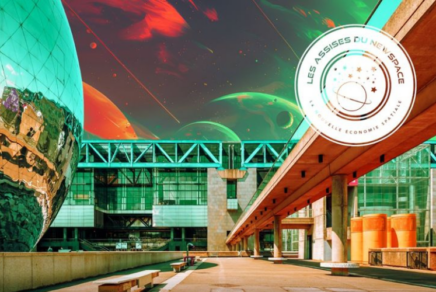
Les Assises du New Space 2025: discussions and debates on NewSpace!The 2025 edition of the Assises du New Space will be held this year on July 8-9, 2025 at the Centre des congrès de la Villette - Cité des sciences et de l'industrie in Paris. Aimed at all players in the French space ecosystem, this event is a unique opportunity to exchange ideas and debate around NewSpace, and to discover the latest technological innovations and project financing opportunities. Registration is now open!
Conference
Event
Round table

Pages
UNIVERSEHUNIVERSEH, the European Space University for Earth and Humanity, is an alliance of European universities created as part of the European Universities initiative launched by the European Commission in 2019.
Education
International
Science
News
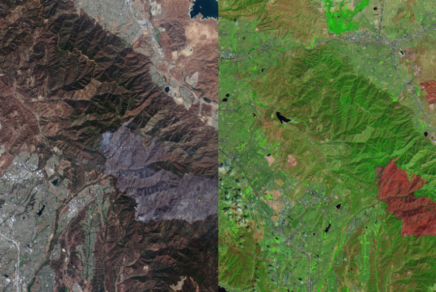
Researchers from ISAE-SUPAERO contributed to the success of the first images from ESA's Sentinel 2c observation satellite.The Sentinel 2c Earth observation satellite, launched on 5 September as part of ESA's Copernicus mission, has delivered its first images. This success is partly due to the image sensor research team (CIMI) at ISAE-SUPAERO, which designed and oversaw the manufacture of the visible image sensors.
DEOS
Space
News
Seven ISAE-SUPAERO students set out to conquer Mars in the Utah desertFor four weeks, seven engineering students will experience a simulation of life on Mars in the Utah desert in the United States. From 18th February to 16th March, they will conduct experiments in collaboration with CNES and several research laboratories at the Mars Desert Research Station (MDRS).
Space
Student club
Events
"Les Entretiens de Toulouse - Training through debate”: April 9 & 10, 2025 on the ISAE-SUPAERO campus"Les Entretiens de Toulouse" has become a must-attend event for the aerospace industry. A forum for the exchange and transmission of skills, this training through debate provides an opening onto subjects with high industrial stakes. The 2025 edition of the Entretiens de Toulouse will take place on April 9 & 10, 2025, in person, at ISAE-SUPAERO!
Aeronautics
Artificial intelligence
Defence
News
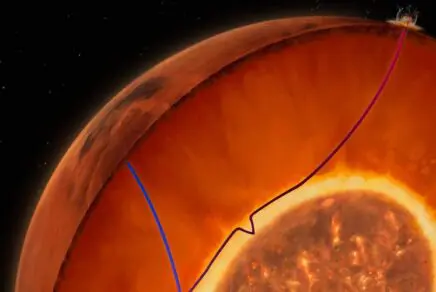
Meteorite impact reveals new insights into MarsIn September 2021, NASA's InSight mission recorded a meteorite impact. Analysis of the data by scientists has revolutionised our understanding of the internal structure of Mars and its evolution. Its mantle is not homogeneous, as previously assumed, but composed of a layer of molten silicates overlying the core. Press release from the IPGP - Institut de Physique du Globe de Paris: ‘The InSight mission reveals a molten layer at the base of the Martian mantle’.
DEOS
Space
Pages
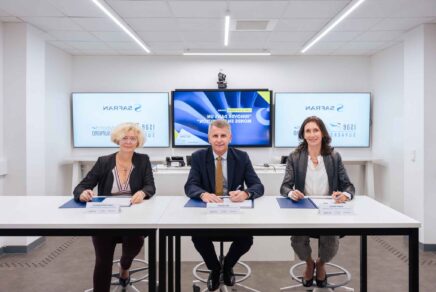
Innovating in a World of Transition - SafranThe challenges facing the aerospace industry (energy transition, New Space, digitalization) are driving a growing need for professionals with the ability to innovate. Against this backdrop, Safran and ISAE-SUPAERO are creating the Innovating in a World in Transition Chair.
Aeronautics
Aerospace
Chair

Events
5th edition of the "Defense and Innovation" ForumConference
Defence
Event
News
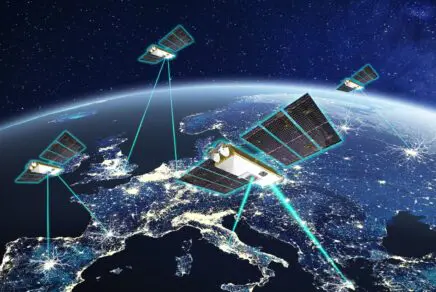
Valentin LELOUP, quantum and optical telecommunications systems engineer: the quantum and space tandemValentin Leloup, R&D engineer at Thales, combines two fields of expertise: quantum physics and space. He holds an engineering degree from ISAE-SUPAERO 2022 and a Master 2 in fundamental physics and applications.
Alumni
News
Research
Testimonials
World Alumni Days 2026: Testimonial from Steven Bouchired, a 1995 graduate of the general engineering programAlumni
International
Testimonial
Events
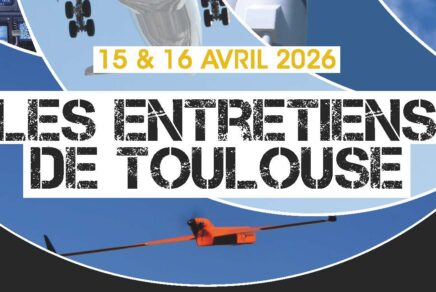
2026 edition of "Les Entretiens de Toulouse"Aeronautics
Aerospace
Event
Events
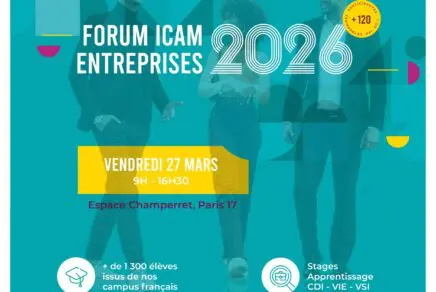
Forum ICAM 2026Company
Event

Testimonials
World Alumni Day: 3 Questions for Sebastien Eskenazi, ENSICA Engineering Double Degree / Mechanical Engineering Master’s Degree Class of 2009Alumni
Testimonial
Testimonials
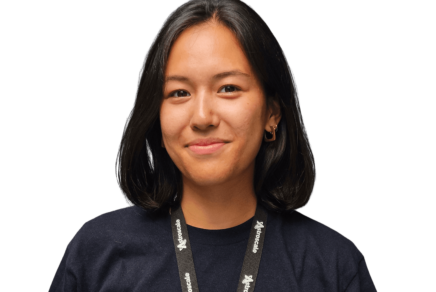
Testimony from Lisa Wong, 2024 graduate of the TAS ASTRO Advanced Master® programme, SEEDS optionAerospace
Alumni
Testimonial
News
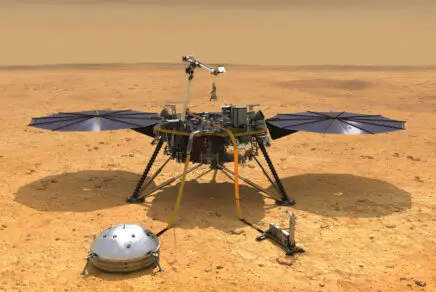
Mission Insight: the contribution of researchers from ISAE-SUPAEROThe InSight lander deployed by NASA recorded two earthquakes that occurred on Mars in 2021, providing scientists with exceptional data, the first direct observations ever made of a planet's core.
DEOS
Space
Events
16th EASN International ConferenceAeronautics
Aerospace
Event

Testimonials
« World alumni Days »: 3 questions to Marie Lambert, alumni 2024 of the Advanced Master APMOn the occasion of World Alumni Day, meet Marie Lambert, alumni 2024 of the Advanced Master APM
Advanced Master
Alumni
Testimonial
News
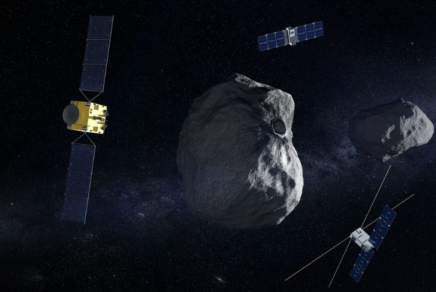
ISAE-SUPAERO back on mission with HeraThe Hera mission, an international planetary defence mission, is on its way to study the asteroid Dimorphos, which will be struck by DART in 2022. ISAE-SUPAERO is actively collaborating in this international planetary defence programme through the research work of Naomi Murdoch and the SSPA team.
DEOS
Space

Testimonials
Testimonial from Sylvain ASSOGBA, an AM IEM student participating in the “Startech Summer School – Space Entrepreneurship: from Business Ideas to Start-Ups” in RomeEducation
International
Space
News
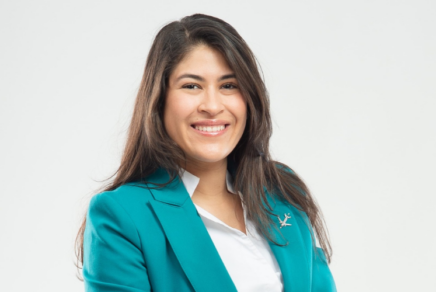
France Alumni Day: 3 questions for Rosa Angélica CARDENAS SIERRA, ISAE-SUPAERO 2018 alumna of the Master in Aerospace Engineering programmeMeet Rosa Angélica Cardenas Sierra, a 20218 alumna who now works as R&T MFT Leader at Airbus Operations SAS.
Alumni
Master in Aerospace Engineering
Portrait
News
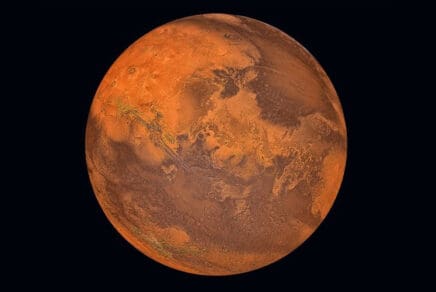
Listening to the Martian past: ISAE-SUPAERO at the heart of the ExoMars missionESA's ExoMars Rosalind Franklin mission to explore Mars will carry a unique instrument for recording sound and atmospheric data from the planet. The Institute has been selected by ESA and CNES for this major scientific collaboration.
DEOS
Researcher
Science
Events
ISAE-SUPAERO will be at the Paris Air Show at Le Bourget from June 16 to 22, 2025ISAE-SUPAERO will be present at the 55ᵉ Salon International de l'Aéronautique et de l'Espace at Le Bourget from June 16 to 22, 2025!
Aeronautics
Aerospace
Event
Videos
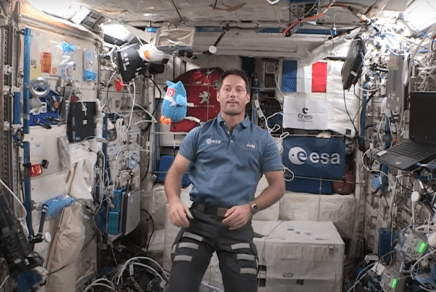
A surprise from elsewhere... from the ISS...?Hello earth? Thomas Pesquet speaking! Thomas Pesquet, French astronaut and famous ISAE-SUPAERO alumnus (class of 2001), is currently in the ISS as part of his new Alpha mission. He sent our students a personalized message from the European laboratory Columbus...
Alumni
Diversity program
Space
News
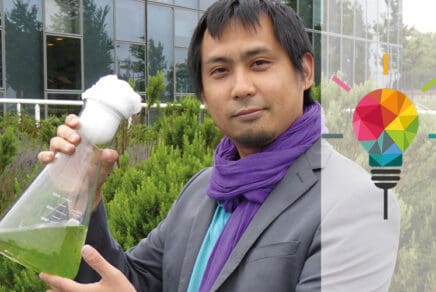
Our alumni have their say: Vinh Ly, co-founder of KyanosAlumni
Career
Startup
News
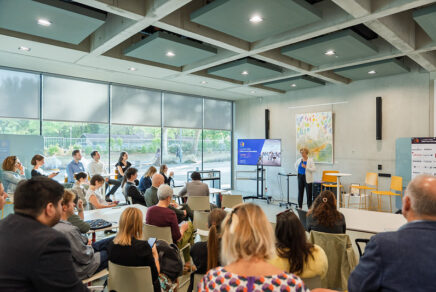
2026 Partner KickoffEvery year, the Partner Kickoff brings together ISAE-SUPAERO and the companies that contribute to the Institute’s activities and support its students. Organized by the Corporate Relations and Alumni Department, this event provides a unique opportunity to share the latest news from the school, present updates on engineering programs, discuss student employability, and align corporate needs with evolving career trends.
Company
Event
Partner
News
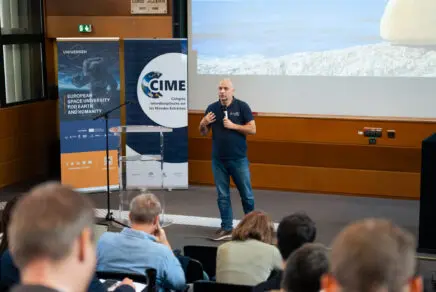
CIME 2025: Where Science Meets Adventure to Push the Limits of ExplorationAt ISAE-SUPAERO, the 2025 Interdisciplinary Congress on Extreme Worlds (CIME) gathers researchers and adventurers determined to push human limits in the planet’s most extreme environments.
Exploration
Innovation
Space
News
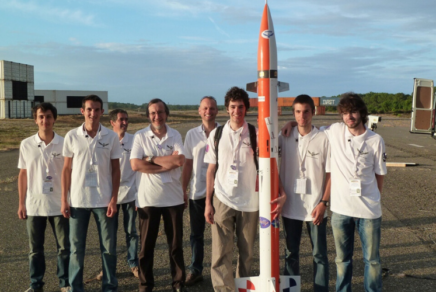
3 questions to... Ervan Kassarian, S-Cube member from 2015 to 2017Meet Ervan Kassarian, member of S-Cube - SUPAERO Space Section - ISAE-SUPAERO's experimental rocket club, from 2015 to 2017.
Space
Student club
Student life
Videos
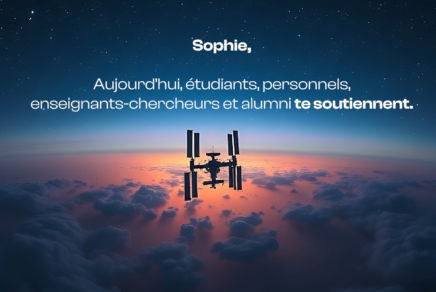
Sophie Adenot is flying out on February 11th for a eight-month mission with Crew-12 on the ISS!Today, the entire ISAE-SUPAERO community is coming together: students, staff, faculty, and alumni are showing their support for Sophie Adenot, European Space Agency (ESA) astronaut and ISAE-SUPAERO alumna, as she embarks on a eight-month mission to the ISS. Sophie is the second French woman, 30 years after Claudie Haigneré, to fly on a long-duration mission. On the ISS, she will conduct around 200 scientific experiments, including 10 French experiments, covering fields such as medicine and materials physics. Have a good flight, Sophie. We will be following you throughout this amazing journey!
Alumni
Exploration
Space
News
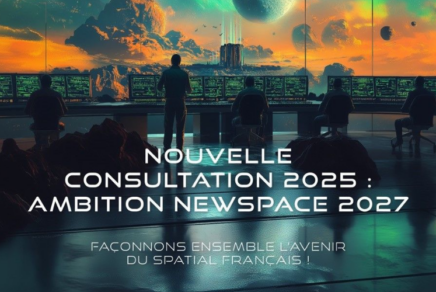
Les Assises du New Space: update of the “Ambition NewSpace 2027” reportIn 2022, the Assises du NewSpace collective - a group of players representing the French space industry - published the report “Ambition NewSpace 2027”. Today, the collective is launching another major national consultation to update this report and shape the future of French space!
Conference
Round table
Space
News
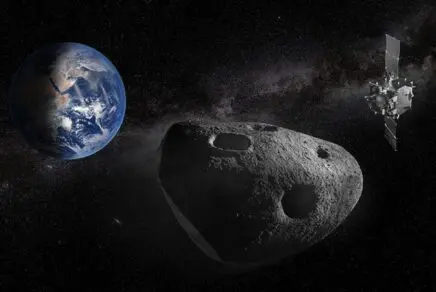
RAMSES: ISAE-SUPAERO at the heart of a historic planetary defense missionLe sismomètre SIA développé par l'ISAE-SUPAERO est une première mondiale pour explorer l'astéroïde Apophis
DEOS
Research
Space
News
Airbus Defence and Space and ISAE-SUPAERO train members of the Peruvian space agencyTwenty engineers from the Peruvian space agency attended a training course in Toulouse, jointly designed by ISAE-SUPAERO and Airbus Defence and Space, to develop their skills in the field of space systems and space missions.
DCAS
Short internship
Space

News
Landing on Mars: a unique experience for seven studentsSeven ISAE-SUPAERO students have been selected to join the Mars Desert Research Station (MDRS) in the United States. This replica of a Martian base will host the crew for four weeks, during which they will live in conditions similar to those found on Mars. The objective is to conduct experiments in situ in collaboration with research partners.
Space
Student club
Student life
Events
First edition of the Occitanie Talent MarketplaceOn November 13, 2025, at the Cité de Toulouse, ISAE-SUPAERO will be taking part in a first-of-its-kind event, the “Occitanie Talent Marketplace”, which will bring together start-ups from the university world in the Occitanie region and talents & skills wishing to take part in an entrepreneurial adventure.
Entrepreneurship
Event
Innovation
Videos
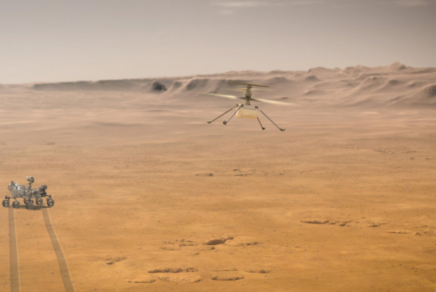
FRENCH SUPERCAM INSTRUMENT RECORDING THE SOUND OF INGENUITY'S 4th FLIGHTLocated 80 meters from the rover at the moment of take-off, the small helicopter rose to 5 meters above the ground before covering a distance of 133 meters before returning to land where it had taken off from. SuperCam's scientific microphone, developed by ISAE-SUPAERO, recorded the sound emitted by the rotation of the Martian drone's blades during its flight. This sound has a characteristic frequency of 84 Hz, equivalent to the low “E” of a piano or the bass voice of a human being. “This is a big surprise for the whole scientific team,” says Naomi Murdoch, a researcher at ISAE-SUPAERO who is studying the data from the microphone. "Tests carried out in a Martian atmosphere simulator to design this instrument, and our theories of sound propagation, indicated that the microphone would have great difficulty picking up the sounds of the helicopter. Indeed, Mars' thin atmosphere strongly attenuates sound transmission. We needed a bit of luck to record the helicopter from such a distance. We're very pleased to have succeeded in obtaining this recording, which is proving to be a goldmine for our understanding of the Martian atmosphere". Developed jointly by ISAE-SUPAERO and a consortium of CNRS laboratories and its partners, coordinated by CNES, SuperCam's microphone is derived from a consumer model adapted to withstand the Martian environment. It pursues 3 substantial scientific and technical objectives of the Mars 2020 mission: Study the sound associated with laser impacts on Martian rocks, to gain a better understanding of their mechanical properties. Improving our understanding of atmospheric phenomena (wind turbulence, dust eddies, wind interactions with the rover, and now with the helicopter). Understanding the sound signature of the rover's various movements (robotic arm and mast operations, driving on normal or uneven ground, pump monitoring, etc.). The microphone was first switched on a few hours after Perseverance landed. It recorded the first Martian sounds generated by turbulence in the atmosphere. It is used daily in conjunction with laser rock ablation for chemical analysis of Mars. ABOUT THE MARS 2020 MISSION: NASA is relying on Caltech's Jet Propulsion Laboratory for the development of the Mars 2020 mission. SuperCam was developed jointly by LANL (Los Alamos National Laboratory, USA) and a consortium of laboratories attached to the CNRS, French universities and research establishments. Several Spanish universities, led by the University of Valladolid, are also contributing to the instrument. CNES is responsible to NASA for the French contribution to SuperCam. The instrument is operated alternately from LANL and the French Operations Center for Science and Exploration (FOCSE) at CNES in Toulouse.
DEOS
Researcher
Space

News
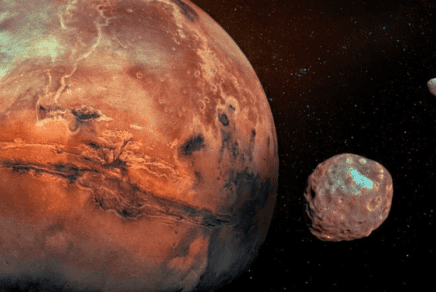
Hera probe captures exceptional images of Mars and its moon DeimosDEOS
Researcher
Science
Pages
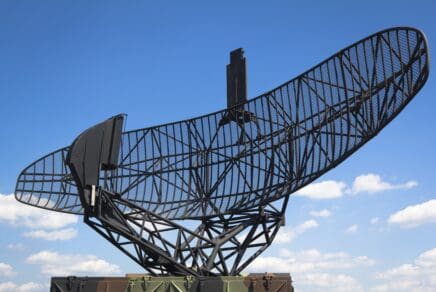
Communication and Information Theory (ComiT) Scientific GroupThe “Communication and Information Theory” (ComiT) scientific group is involved in the disciplines of digital communications, radar, and channel access techniques. Its fields of application include space systems, civil and military aviation, terrestrial cellular networks and the Internet of Things (IoT).
DEOS
Doctoral program
Doctoral student

Pages
Connected Systems (SysCo) Scientific GroupThe scientific dynamic of the “Connected Systems” (SysCo) scientific group focuses primarily on network-related issues in aerospace applications, i.e. space communications, embedded networks and certain types of connected systems.
DISC
Doctoral student
PhD

Testimonials
"World Alumni Day": Three questions for Aude Vignelles, 1991 graduate of ENSICA's Aeronautical Engineering programmeAeronautics
Alumni
Testimonial
News
World Engineer Day 2020: a young alumni puts his engineering skills to work for the climateOn the occasion of ‘World Engineer Day 2020,’ which focuses on the theme of sustainable development, we present the profile of Maxime Efoui Hess.
Alumni
Portrait
Presentation
Pages
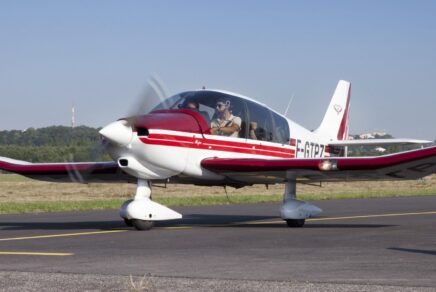
Lasbordes Air Operations Center (COAL)The Department of Design and Operation of Aeronautical and Space Vehicles (DCAS) is part of the Lasbordes Air Operations Center (COAL), located on an airfield a few kilometers from the ISAE-SUPAERO campus. As part of its aeronautical training and research activities, COAL operates a fleet of 8 light aircraft.
DCAS
Doctoral student
PhD
Videos
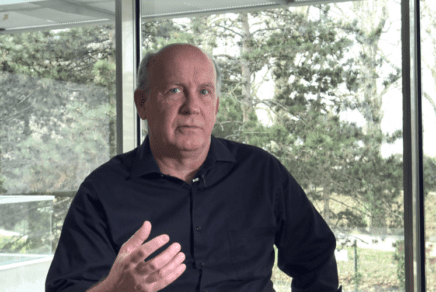
Visiting professors at ISAE-SUPAERO: DAN SCHEERESISAE-SUPAERO est un établissement d'enseignement supérieur axé sur la recherche et l'innovation, qui s'engage à concilier excellence scientifique, visibilité académique et proximité avec les objectifs industriels. Ses activités de recherche ont contribué à faire de l'école un leader international non seulement en termes de programme d'ingénierie aérospatiale, mais aussi de programmes de troisième cycle, notamment ses masters (MSc) et ses programmes de doctorat en sciences de l'ingénierie. C'est pourquoi de nombreux acteurs internationaux clés de la recherche rendent visite à leurs homologues de l'ISAE-SUPAERO. Nous avons rencontré Dan Sheeres, professeur émérite de l'université du Colorado et titulaire de la chaire A. Richard Seebass au département des sciences de l'ingénierie aérospatiale Ann et H.J. Smead de l'université du Colorado à Boulder. Les recherches de Dan Scheeres couvrent des sujets allant de l'astrodynamique et de la navigation spatiale à la science planétaire et à la mécanique céleste, et il a publié de nombreux articles dans ces domaines. L'astéroïde 8887 a été baptisé « Scheeres » en reconnaissance de ses contributions à la compréhension scientifique de l'environnement dynamique des astéroïdes. Pendant son séjour à l'ISAE-SUPAERO, le professeur Scheeres et l'équipe des systèmes spatiaux pour les applications planétaires ont collaboré à l'analyse des données DART et au développement de concepts visant à étudier la structure interne des astéroïdes lors de futures missions spatiales. De plus, Dan Scheeres et l'ISAE-SUPAERO ont publié conjointement plusieurs articles dans « Nature » sur les astéroïdes et la mission DART.
DEOS
Researcher
Space

News
ISAE-SUPAERO's researchers are working on establishing a sustainable human presence on the Moon.While last year marked the 50th anniversary of the Apollo 17 mission, the last manned trip to the Moon, the development of ‘New Space’ has revived the space sector's interest in lunar exploration.
DCAS
Space

Testimonials
"World Alumni Day": 3 questions to Muhamad Abdul Aziz, alumni of the class of 2024 of the Master in Aerospace Engineering, specialising in Aerospace Systems and ControlsAerospace
Alumni
News
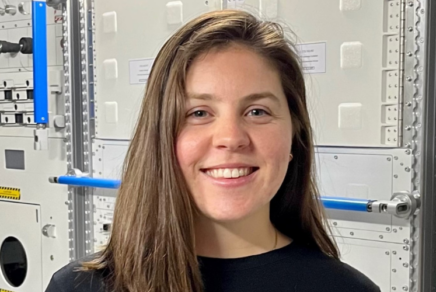
France Alumni Day: 3 questions for Marion Burnichon, ISAE-SUPAERO 2021 alumna of the Master's in Aerospace Engineering programmeMeet Marion Burnichon, 2021 alumna, now a Young Graduate Trainee in Gateway Operations.
Alumni
Master in Aerospace Engineering
Portrait

Testimonials
Testimony from Mathis Putegnat, student (class of 2025) of the APM Advanced Master's programmeAerospace
Alumni
Testimonial

Videos
3 questions to Marie Delaroche, 3ᵉ year student and MDRS 293 crew commanderSince February 18, seven ISAE-SUPAERO engineering students have been living a simulated Martian life and carrying out experiments in collaboration with CNES and several research laboratories at The Mars Society's Mars Desert Research Station (MDRS) in UTAH (USA)! For the second time, the mission is led by a woman: Marie Delaroche, a passionate #spaceexplorer, who was already part of crew 275 departing in 2023. We asked her 3 questions to find out more about the challenges of this mission and her feelings as #flightcommander! Alongside her, three young women and three young men in their 2ᵉ year of #engineering studies have taken on the roles of astronomer, scientist, botanist, journalist, health worker and onboard engineer. They are all members of the Mars Club ISAE-SUPAERO, a student association for the popularization of science focused on the Red Planet and the missions dedicated to its exploration and study. They are currently experimenting with AI4U, the artificial intelligence that assists astronauts in their daily tasks (environmental measurements, voice recognition, emergency exercises). They are also conducting a science popularization experiment in collaboration with secondary school pupils. Inspired by the film The Martian, in which an astronaut grows potatoes on the Red Planet, the aim of this experiment is to compare plant growth in Martian soil with growth in terrestrial soil! To follow their adventure, click here: https://mars.bde-supaero.fr/
Space
Student club
Student life
News
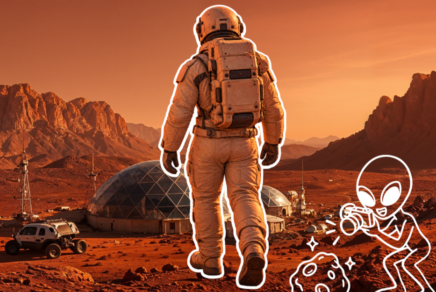
Happy New Year, Martians!Today marks the start of Year 39 on Mars: a Martian year lasts 687 Earth days, which is equivalent to nearly two years on our blue planet. Here’s a look back at the projects, missions, and discoveries that bring ISAE-SUPAERO closer to the Red Planet every day.
Research
Space
News
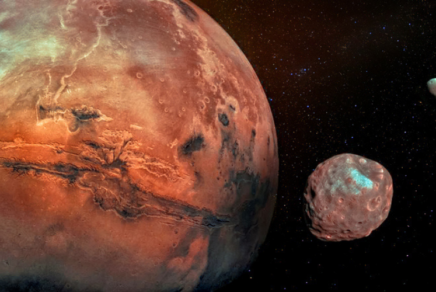
MMX, Idefix® and cameras to understand Mars' moonStudying the formation and origin of Mars' moons and bringing back samples: this is the extraordinary, ambitious international mission led by JAXA, in which ISAE-SUPAERO is participating alongside CNES.
DEOS
Researcher
Space
News
France Alumni Day: 3 questions for Gabrielle Decroix, ISAE-SUPAERO 2022 alumna of the Advanced Master® in Systems EngineeringMeet Gabrielle Decroix, 2022 alumna, now a Model-Based Systems Engineering consultant at Capgemini.
Alumni
Testimonial
News
An exceptional scholarship for an innovative projectNaomi Murdoch, a researcher in physics and planetology at ISAE-SUPAERO, has just been awarded the prestigious Consolidator Grant from the European Research Council (ERC) for her planetary body study project called GRAVITE. This ambitious scientific project aims to design a variable gravity machine that will enable the simulation and study of extraterrestrial soils.
DEOS
Scholarship
Space
News
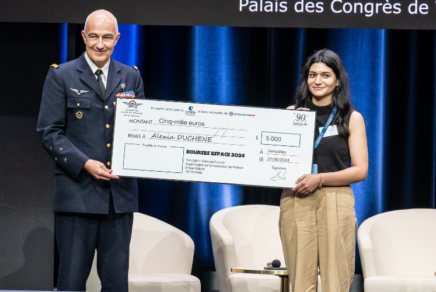
SILOE, an experimental drop tower project selected by ESA and an ESPACE grant for Alexia DuchêneThe SILOE experimental drop tower project aims to study the cohesion of planetary surfaces. This student project is supported by ESA as part of its European ‘Academy Experiments’ program. Alexia Duchêne, SILOE project leader, has been awarded a scholarship of excellence from the Fondation des Ailes de France.
DEOS
Space
News
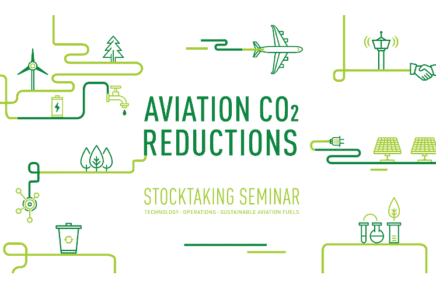
ICAO (International Civil Aviation Organisation) Congress: Laurent Joly, Deputy Director of Research at ISAE-SUPAERO, talks about the Institute's commitmentsEvent
Sustainability
Videos
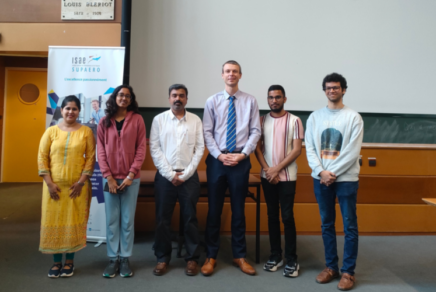
ISAE-SUPAERO and Indian Institute of Space Science & Technology work on student space exploration projectsISAE-SUPAERO received a visit from Professor Shine S R of the Indian Institute of Space Science and Technology (IIST) on December 7 and 8. ISAE-SUPAERO signed a co #cooperation agreement with the Indian Institute of Space Science and Technology in 2020 and this visit was a perfect opportunity to discuss the deepening of #training and #research collaborations between our two institutions. ISAE-SUPAERO and IIST have already been cooperating for 4 years within the framework of Franco-Indian collaborative academic projects, involving students from ISAE-SUPAERO and IIST on subjects related to space exploration missions and with the participation of experts from CNES, IRAP and the Indian space agency (ISRO)!
Space
Pages
Our Short ModulesDerived from the Institute's Advanced Master programmes, our short modules are aimed at professionals wishing to develop specific skills in Aeronautics, Space, Project Management, Systems Engineering, or Digital Systems.
Advanced Master
Aeronautics
Aerospace
News
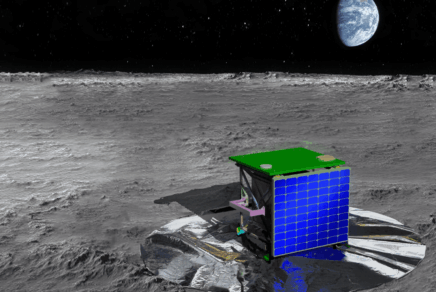
ISAE-SUPAERO contributes to the Artemis IV mission with the SPSS seismology instrumentNASA selects the JPL/CNES instrument suite for the Artemis IV mission, paving the way for unprecedented exploration of the Moon’s internal structure at the South Pole.
DEOS
Exploration
Space

News
Capturing the seismic activity of an asteroid: our Apophis rendezvousDEOS
Research
Space
Events
AASTRA Certificate: Introductory Webinar on May 26 from 6:00 p.m. to 7:00 p.m.Aeronautics
Aerospace
Air transport

Testimonials
Testimony from Rémi Caresche, student (class of 2025) of the TAS ASTRO Advanced Master®Aerospace
Alumni
Testimonial
Testimonials
World Alumni Day: 3 questions for Florian DELPECH, Engineering Cycle – Data and Decision Sciences Track Class of 2022Aerospace
Alumni
Testimonials
World Alumni Day: 3 Questions for Giuseppe Cataldo, ISAE-SUPAERO Ingénieur Programme Class of 2010Alumni
Testimonial
Pages
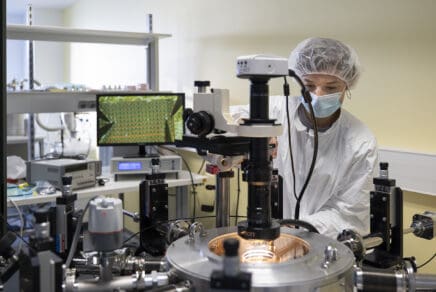
Integrated Image Sensors (CIMI) Scientific GroupThe “Integrated Image Sensors” (CIMI) scientific group, develops and characterizes active-pixel image sensors (CMOS Image Sensors (CIS)) on silicon for visible and infrared radiation.
DEOS
Doctoral student
PhD
Testimonials
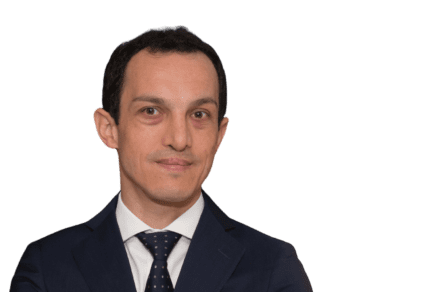
Testimony of Giuseppe Cataldo, alumnus of the 2010 Engineer ISAE-SUPAERO programmeAlumni
Space
Testimonial

Testimonials
Testimony of Juan-Carlos DOLADO-PEREZ, alumni of the 2008 Master's degree in Aerospace EngineeringAlumni
Space
Testimonial

Testimonials
World Alumni Days 2026: Testimonial from Awadh Kapoor, 2017 graduate of the Master’s in Aerospace Engineering programAlumni
International
Testimonial
News
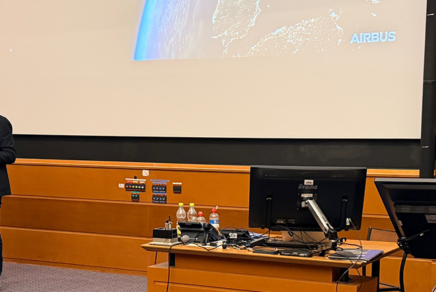
BROMO: the joint venture project involving major European space industry players presented to ISAE-SUPAERO studentsIn December 2025, ISAE-SUPAERO welcomed major players in the European space industry (Airbus, Thales and Leonardo) for an exceptional conference on the BROMO project.
Conference
Space
Pages
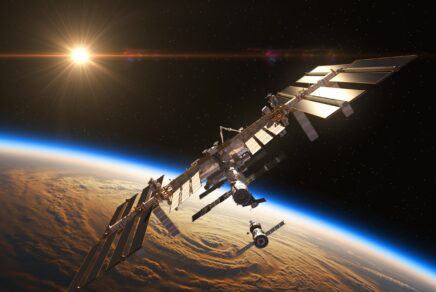
Advanced Space Concepts Laboratory - Airbus DS & ArianeGroupCreated in 2017 and renewed until 2027, this sponsorship partnership brings together Airbus Defense & Space and Ariane Group.
Aerospace
Chair
Company
News
ISAE-SUPAERO is broadcasting the webinar "Air transport in crisis and the climate challenge: towards new paradigms" on campus!Aerospace
Event
Sustainability

News
The COMETES project - Skills and Careers in Space - is launching its website, a platform dedicated to skills and careers in the space sector.The space sector is undergoing profound change driven by New Space, accelerating technological innovation, and environmental challenges. These transformations are leading to rapid changes in the careers and skills required within the industry. In this context, COMETES is launching a platform dedicated to space-related skills, careers, and training.
Education
Space
News
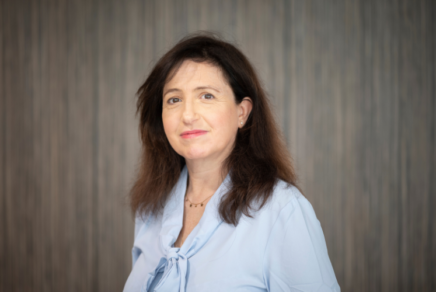
Meeting with Stéphanie Lizy-Destrez, elected member of the Air and Space AcademyAt ISAE-SUPAERO, Stéphanie Lizy-Destrez heads SaCLaB, a research laboratory focusing on future space systems. A professor of space systems engineering, she has just been elected to the French Air and Space Academy.
Award
Space
Teacher researcher

News
"Futurs Proches" Festival in October 9: tickets are now available!ISAE-SUPAERO's CSR department, in partnership with the Toulouse Community of Universities and Establishments (COMUE), invites you to join us on Thursday, October 9 for the 2ᵉ edition of the Festival Futurs Proches, Festival des Campus en transitions!
Corporate responsibility
Decarbonization
Event
Pages
Testimonials« Ingénieur ISAE-SUPAERO » by apprenticeship
Advanced Master
Alumni
News
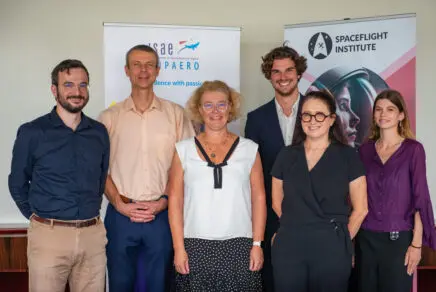
ISAE-SUPAERO and Spaceflight Institute join forces to train tomorrow's manned flight expertsOn July 29, 2025, ISAE-SUPAERO and the Spaceflight Institute signed a partnership agreement for the joint creation of a “Certificate of Advanced Studies in Human Spaceflight”. This new semester-long program aims to train a new generation of space professionals, combining academic excellence with operational expertise.
Certificates of advanced studies
Education
Space
Testimonials
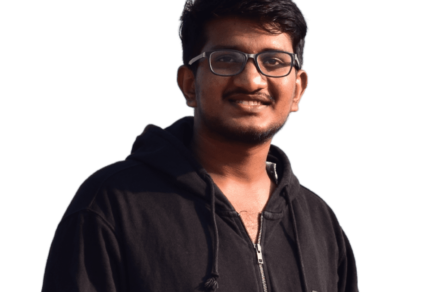
Testimonial from Harshavardhan Narakatla, student (class of 2025) of the AMS E&M Advanced Master®Aerospace
Alumni
Testimonial
News
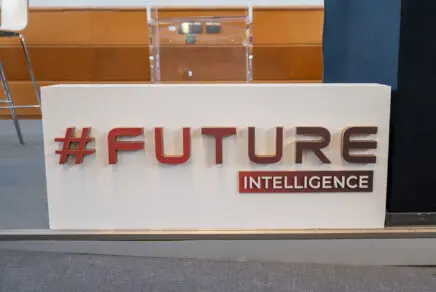
ISAE-SUPAERO at the Forefront of AI Challenges in Defense and SecurityOn March 24, 2026, ISAE-SUPAERO hosted the Future Intelligence Forum, an event dedicated to artificial intelligence applied to the defense, security, and resilience sectors. Public policymakers, experts, researchers, industry leaders, and innovators gathered to share their vision and collectively shape the future of AI in the public interest.
Aerospace
Artificial intelligence
Defence
Pages
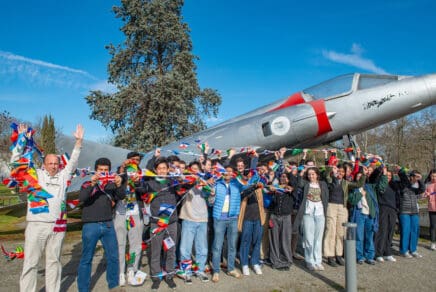
Semester Research ProjectsTake your studies to the next level by participating in a semester-long research project at ISAE-SUPAERO: immerse yourself in cutting-edge laboratories alongside international experts and contribute to advances in aeronautics and space technology.
Aeronautics
Aerospace
Aerospace summer program
Pages
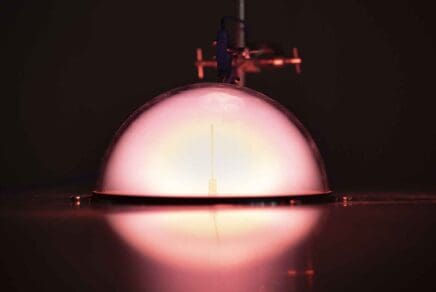
Photonics Antenna Microwave PlasmaA (PAMPA) Scientific GroupThe “Photonics Antenna Microwave PlasmaA” (PAMPA) scientific group is interested in electromagnetism in the fields of microwaves and photonics, as well as wave-plasma interactions.
DEOS
Doctoral student
PhD
News
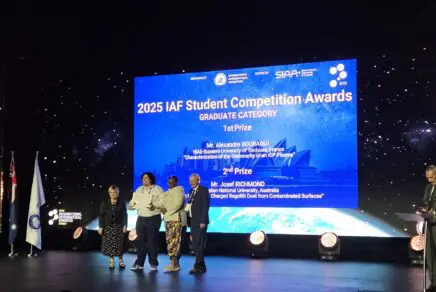
Alexandre Bouraoui Takes Gold at the 2025 International Astronautical CongressFinal-year engineering apprentice, specializing in Industrialisation and Methods for Aeronautics and Space, Alexandre Bouraoui was recently honored at the 76th International Astronautical Congress (IAC 2025) in Sydney, where he won the prestigious Hermann Oberth Gold Medal in the Graduate category. We spoke with him about his award and his studies at ISAE-SUPAERO.
Congress
DEOS
Event

News
Pride, excellence and spirit of promotion: ISAE-SUPAERO is preparing to celebrate its 2025 graduates!Our 2025 graduation ceremonies will celebrate excellence and community pride on 6 December 2025, honouring more than 600 graduates from our programmes, accompanied by distinguished guests and numerous prestigious awards.
Award
Event
News
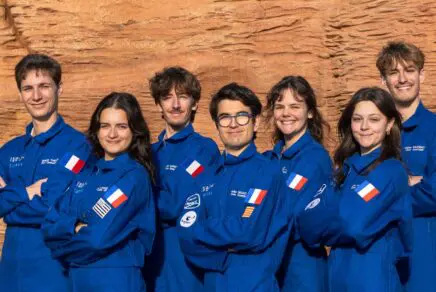
Space Explorers: In a Desert, Six Students Simulate Life on MarsLast spring, for four weeks, six students and one alumnus from ISAE-SUPAERO lived completely self-sufficiently at the Mars Desert Research Station (MDRS). This base, located in the Utah Desert in the United States, is specifically designed to simulate living conditions on Mars.
Space
Student club
Pages
Our Specialised Studies CertificatesOur specialised studies certificates are designed for professionals. They enable you to develop skills and expertise in the fields of digital, aeronautics, space, project management, systems engineering, and artificial intelligence.
Advanced Master
Aeronautics
Aerospace
Videos
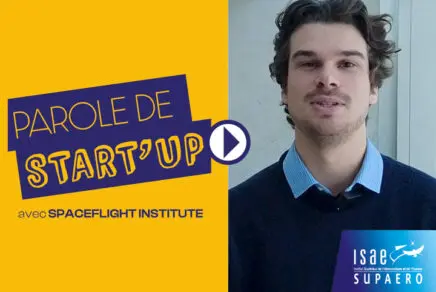
Start-up insights: interview with Ugo Bonnet from the Space Flight InstituteIn recent years, ISAE-SUPAERO has developed a range of services and comprehensive support for its project leaders (students, doctoral students, teacher-researchers, and alumni), earning it the title of incubator. It is in line with this support philosophy that the Institute currently hosts numerous startups that were created within its walls. Today we welcome Ugo Bonnet, CEO of the Space Flight Institute, a company that offers innovative training (in partnership with ISAE-SUPAERO) to future professionals in human spaceflight, whether on Earth or in orbit. Ugo Bonnet discusses the creation of the organization, its major successes, and its plans for the future.
Alumni
Space
Startup

Pages
The “Certificate of Advanced Studies in Human Spaceflight” offered by the Spaceflight Institute in collaboration with ISAE-SUPAEROThe Spaceflight Institute is the first institute dedicated to training in human spaceflight. In partnership with ISAE-SUPAERO, it offers an intensive training program that enables participants to gain a comprehensive understanding of the challenges of human spaceflight and to position themselves within a rapidly expanding ecosystem, marked by future lunar and Martian missions as well as the rapid emergence of commercial space stations and private initiatives in low Earth orbit.
Education
Innovation
Partner

News
ISAE-SUPAERO and ENAC invite you to the “Rendez-vous Aéro de l'Innovation” on Thursday, February 5, 2026!Aeronautics
Event
Innovation

News
« Académie Spatiale de Défense »: A Day of Strategic Reflection on the Future of SpaceOn May 19, 2026, ISAE-SUPAERO and its partners at the Defense Space Academy hosted and organized a day of discussions focused on France’s National Space Strategy. Bringing together government decision-makers, industry representatives, researchers, and military officials, this event provided an opportunity to pool expertise and foster collective reflection on the major challenges of sovereignty, training, and strategic autonomy in the space sector.
Defence
Event
Space

Events
ISAE Group Virtual ForumDefense & Security Engineer
Event
Ingénieur généraliste (MSc)
Pages
Our Semester & Short ProgrammesDiscover ISAE-SUPAERO's academic excellence through our semester and short programmes, open to international students.
Aeronautics
Aerospace
Aerospace summer program

News
Bertrand Joab-Cornu, co-founder of Wingly: "I already had the idea for a flight-sharing platform at ISAE-SUPAERO."A graduate of the ISAE-SUPAERO engineering programme, Bertrand Joab-Cornu co-founded Wingly a year before graduating in 2015. This start-up, which brings aviation into the collaborative economy, quickly became the European leader in flight sharing.
Aeronautics
Alumni
Diversity program
Events
"Futurs Proches" FestivalEvent
Sustainability
Videos
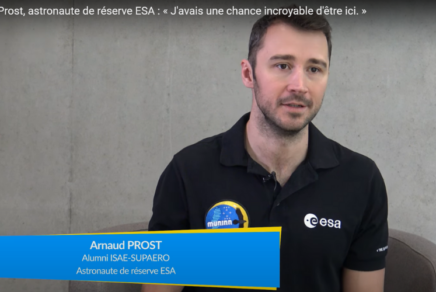
Arnaud Prost, ESA reserve astronaut and ISAE-SUPAERO alumnus: “I was incredibly lucky to be here”Fighter pilot and reserve astronaut with the European Space Agency (ESA), Arnaud Prost returned to his former school on Thursday March 28 to meet 200 secondary school students as part of the ISAE SUPAERO OSE program. It was an opportunity for him to recall the “great memories” of his student experience at ISAE-SUPAERO, his long-standing commitment to the student social outreach program and the “Aquanauts” scheme he set up with OSE l'ISAE-SUPAERO. And in passing, he offers a few words of advice to young people who might dream of following in his footsteps: “Don't let yourself be convinced that one of these paths isn't for you!” A 2017 graduate of ISAE-SUPAERO, Arnaud Prost is among those selected for the ESA Astronaut Class of 2022, alongside Sophie Adenot and Anthea Comellini, both also alumni of the school. They join other illustrious ESA astronauts who have already studied at the school: Thomas Pesquet, Luca Parmitano and Samantha Cristoforetti. Since 1970, ISAE-SUPAERO has contributed to the progress of the space age through its training, research and innovation activities. As the only organization in France to offer degree courses (engineering, master's, specialized master's, doctorate) covering all 22 space-related themes identified by CNES, the Institute offers a royal road to space careers. For Arnaud Prost's full profile: https://www.esa.int/Science_Exploration/Human_and_Robotic_Exploration/Astronauts/A
Alumni
Diversity program
Space

News
CASTOR Chair: Liebherr-Aerospace Toulouse and ISAE-SUPAERO, a win-win partnershipThe official signing of the industrial chair, called CASTOR, between Liebherr-Aerospace Toulouse and ISAE-SUPAERO took place on Tuesday 9 July at the institute's campus. This research partnership contributes to research into carbon-free aircraft.
Aeronautics
Chair
Company

Testimonials
Testimony from Axel Coulon, student (class of 2024) of the TAS ASTRO Advanced Master®Advanced Master
Space
Testimonial

Pages
Theory, Modelling, and Systems Engineering (ThéMIS) Scientific GroupThe “Theory, Modeling and Systems Engineering” (ThéMIS) scientific group is dedicated to the study and development of advanced methods for the design, modeling and validation of complex systems.
DISC
Doctoral student
PhD
News
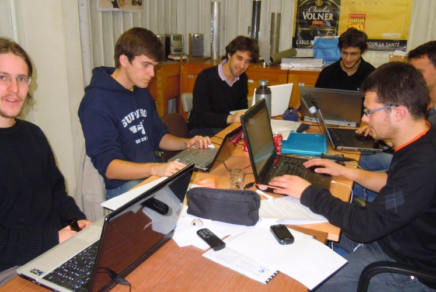
3 questions to... Loïc Jecker, S-Cube member from 2011 to 2013Meet Loïc Jecker, member of S-Cube - SUPAERO Space Section - ISAE-SUPAERO's experimental rocket club, from 2011 to 2013.
Space
Student club
Student life

News
Ariane 6: at ISAE-SUPAERO, researchers are already working on the futureThe European Ariane 6 launcher incorporates major technological innovations such as the Vinci engine, capable of reigniting in space. At ISAE-SUPAERO, researchers are tackling the challenges posed by the rocket engines of tomorrow.
Space
News
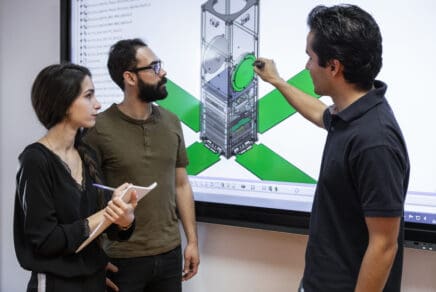
Training new skills for the future of space: COMETES is launched!Company
Job
Space
Videos
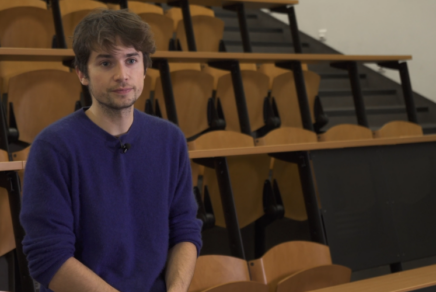
Testimony of Joseph Risson, ingénieur 2024 alumni & co-founder of Viraj H2 From student to entrepreneur: that's the path Joseph Risson, a 2024 graduate, has taken at ISAE-SUPAERO!Co-founder of the startup Viraj H2, created during his 3ᵉ year of engineering studies, Joseph Risson wants to contribute his expertise to the decarbonization of air travel by exploring a new hydrogen propulsion architecture! Joseph and his partner, Paul de Goÿs, were awarded the €1 million Lopez-Loreta Foundation prize in 2023 to continue their research into this innovative propulsion method, and now benefit from the support and expertise of InnovSpace, the school's official incubator, where the startup is currently housed. Like all our alumni, he plays an essential role in creating lasting links between the institution and its former students. They encourage mutual support and the sharing of professional opportunities, help strengthen the community and support future generations with their experience and resources.
Alumni
Career
Company

Events
8th edition of Future IntelligenceAI
Artificial intelligence
Cyber

Testimonials
Testimony from Stéphanie Lizy-Destrez, elected member of the Air and Space AcademyDCAS
Space
Teacher researcher

Events
AASTRA Certificate: Introductory Webinar on July 9 from 6:00 p.m. to 7:00 p.m.Aeronautics
Aerospace
Air transport
Events
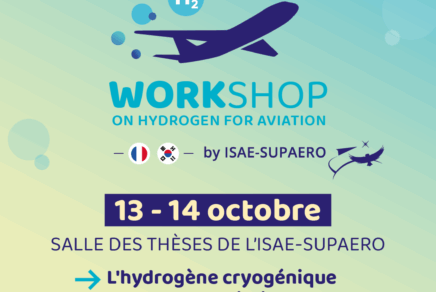
French-Korean workshop: “Cryogenic hydrogen for aviation”.Event
Research
Science

Testimonials
World Alumni Days 2026: Testimonial from Fabien Dubuc, Vice President of R&D at BioconAlumni
Ingénieur généraliste (MSc)
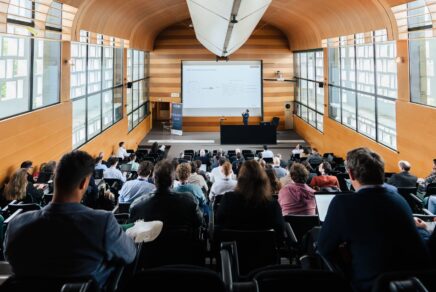
Pages
Support for the Development of the ISAE Group - GIFASGIFAS (Groupement des Industries Françaises Aéronautiques et Spatiales - French Aerospace Industries Group) supports the development of high-level academic and professional education in aerospace systems at the 6 Grandes Écoles that make up the ISAE Group (ISAE-ENSMA, ISAE-SUPMECA, ESTACA, Ecole de l'Air et de l'Espace, ENAC, ISAE-SUPAERO).
Aeronautics
Aerospace
Chair
2027 ISAE-SUPAERO Open Day
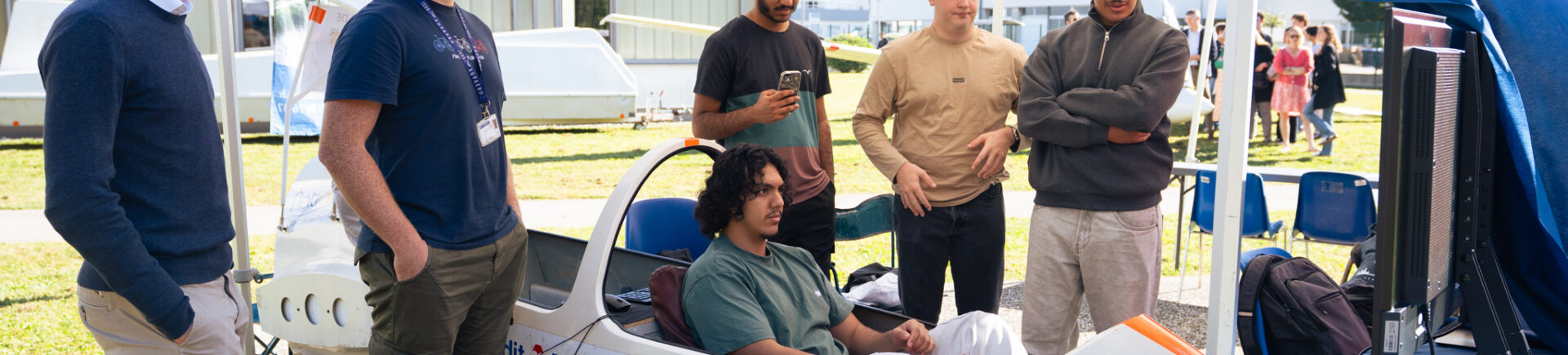
You used to join us in the fall for our Open Day. The ISAE-SUPAERO Open Day has a new date!
Related Content

Events
Destino Francia – ColombiaCome meet representatives from TSAAE, ISAE-SUPAERO, and ENAC in Colombia!
Advanced Master
Aerospace
Fair
News
"Futurs Proches" Festival in October 9: tickets are now available!ISAE-SUPAERO's CSR department, in partnership with the Toulouse Community of Universities and Establishments (COMUE), invites you to join us on Thursday, October 9 for the 2ᵉ edition of the Festival Futurs Proches, Festival des Campus en transitions!
Corporate responsibility
Decarbonization
Event
News
ISAE-SUPAERO is co-hosting the 16th EASN International Conference in ToulouseISAE-SUPAERO is pleased to host the 16th edition of the international conference organized by EASN in Toulouse from October 27 to 30, 2026, dedicated to the theme: “Innovation in Aeronautics and Space for Sustainability Today and Tomorrow.”
Aeronautics
Aerospace
Innovation
Pages
Innovating in a World of Transition - SafranThe challenges facing the aerospace industry (energy transition, New Space, digitalization) are driving a growing need for professionals with the ability to innovate. Against this backdrop, Safran and ISAE-SUPAERO are creating the Innovating in a World in Transition Chair.
Aeronautics
Aerospace
Chair

News
The Toulouse School of Aviation and Aerospace Engineering (TSAAE) launches its official social media accountsIt is now possible to follow news from the 𝐓𝐨𝐮𝐥𝐨𝐮𝐬𝐞 𝐒𝐜𝐡𝐨𝐨𝐥 𝐨𝐟 𝐀𝐯𝐢𝐚𝐭𝐢𝐨𝐧 𝐚𝐧𝐝 𝐀𝐞𝐫𝐨𝐬𝐩𝐚𝐜𝐞 𝐄𝐧𝐠𝐢𝐧𝐞𝐞𝐫𝐢𝐧𝐠 (𝐓𝐒𝐀𝐀𝐄) on social media!
Advanced Master
Aerospace
Communication
Events
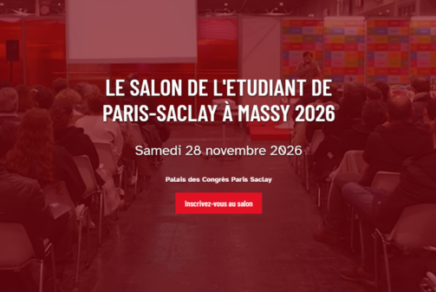
L'Étudiant Paris Saclay Education FairCome meet us in Paris-Saclay!
« Ingénieur ISAE-SUPAERO » by apprenticeship
Aerospace
Defense & Security Engineer
Events
The "Assises du NewSpace" returns on July 7 & 8, 2026!Event
Space

Pages
Our Key FiguresFind out the key figures for ISAE-SUPAERO, a Graduate school of engineering with a multidisciplinary curriculum at the global forefront of higher education and research in aerospace engineering.
Aerospace
Institute
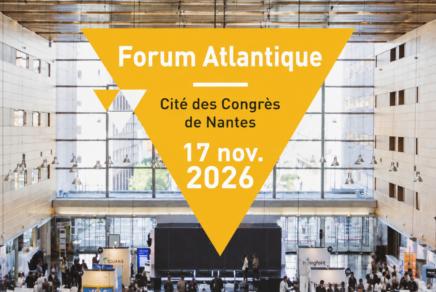
Events
Forum AtlantiqueCome meet representatives from TSAAE and ISAE-SUPAERO in Nantes!
Advanced Master
Aerospace
Forum
Testimonials
Testimony from Rémi Caresche, student (class of 2025) of the TAS ASTRO Advanced Master®Aerospace
Alumni
Testimonial
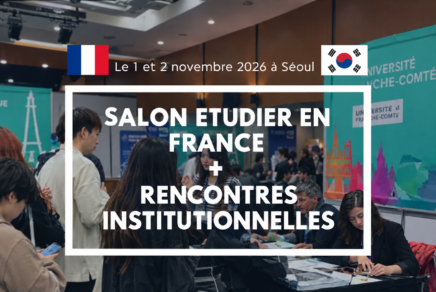
Events
Study in France – KoreaCome meet representatives from TSAAE, ISAE-SUPAERO, and ENAC in Korea!
Advanced Master
Aerospace
Fair
Testimonials
Testimony from Lisa Wong, 2024 graduate of the TAS ASTRO Advanced Master® programme, SEEDS optionAerospace
Alumni
Testimonial
News
« Académie Spatiale de Défense »: A Day of Strategic Reflection on the Future of SpaceOn May 19, 2026, ISAE-SUPAERO and its partners at the Defense Space Academy hosted and organized a day of discussions focused on France’s National Space Strategy. Bringing together government decision-makers, industry representatives, researchers, and military officials, this event provided an opportunity to pool expertise and foster collective reflection on the major challenges of sovereignty, training, and strategic autonomy in the space sector.
Defence
Event
Space
Events
"Futurs Proches" FestivalEvent
Sustainability
News
Investing and committing to training and research to meet the challenges of the energy transitionISAE-SUPAERO and the ISAE-SUPAERO Foundation work together and take their share of responsibility for addressing these major challenges facing our society. Actions include raising awareness and training future aeronautical engineers, and setting up research programmes to better address energy and climate issues.
Aerospace
Sustainability
News
2026 Partner KickoffEvery year, the Partner Kickoff brings together ISAE-SUPAERO and the companies that contribute to the Institute’s activities and support its students. Organized by the Corporate Relations and Alumni Department, this event provides a unique opportunity to share the latest news from the school, present updates on engineering programs, discuss student employability, and align corporate needs with evolving career trends.
Company
Event
Partner
Events
Forum ICAM 2026Company
Event
Events
ISAE-SUPAERO will be at the Paris Air Show at Le Bourget from June 16 to 22, 2025ISAE-SUPAERO will be present at the 55ᵉ Salon International de l'Aéronautique et de l'Espace at Le Bourget from June 16 to 22, 2025!
Aeronautics
Aerospace
Event
Events
5th edition of the "Defense and Innovation" ForumConference
Defence
Event
Events
"Study in Europe, Vietnam 2025" exhibition in VietnamAerospace
Fair
Master in Aerospace Engineering
Events
AASTRA Certificate: Introductory Webinar on July 9 from 6:00 p.m. to 7:00 p.m.Aeronautics
Aerospace
Air transport
News
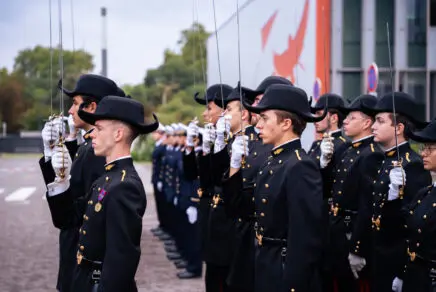
Figures for the start of the 2025 academic year at ISAE-SUPAEROAt the start of the 2025 academic year, ISAE-SUPAERO is welcoming nearly 882 new students from all disciplines!
Aerospace
Institute

Events
"EEFT 2025" trade fair in TaiwanAerospace
Fair
Master in Aerospace Engineering
Testimonials
Testimony of Matthieu LP, student (class of 2025) of the IEM Advanced Master®Aerospace
Alumni
Testimonial
Pages
Advanced Space Concepts Laboratory - Airbus DS & ArianeGroupCreated in 2017 and renewed until 2027, this sponsorship partnership brings together Airbus Defense & Space and Ariane Group.
Aerospace
Chair
Company
Events
Forum Arts et MétiersCome meet representatives from TSAAE and ISAE-SUPAERO in Paris!
Advanced Master
Aerospace
Fair
Pages
Prior Experience AccreditationThe validation of prior experience is an individual right enshrined in the French Labor Code and Education Code. It enables candidates to obtain all - or part - of a professional certification (Diploma, Professional Title, Certificate of Professional Qualification), based on their professional, salaried or non-salaried and/or voluntary experience. This scheme can be used if the candidate is seeking personal recognition, or more generally to support a professional project that he or she wishes to put into practice.
Advanced Master
Aeronautics
Aerospace
Pages
Our EcosystemOur Institute operates at the heart of a leading academic, scientific, and technological ecosystem. Driven by the strength of the ISAE SUPAERO ENSICA Alumni Association network, supported by the ISAE-SUPAERO Foundation, and enriched by EUROSAE's expertise in executive education, our actions are part of a collective dynamic within the University of Toulouse and the ISAE Group. Committed to the major challenges of tomorrow, we are developing major initiatives within the Institute for Sustainable Aviation for sustainable aviation and the Defense Space Academy to meet the strategic challenges of space.
Aerospace
Partner
Partnership
News
Apply today for a program at ISAE-SUPAERO or ENAC - École Nationale de l'Aviation Civile!The TSAAE application platform is now open: discover our world-renowned programs and apply online for the 2026 academic year before November 28 at midnight (French time)!
Advanced Master
Aeronautics
Aerospace
News
The Institute is involved in the ecological transition of the aerospace ecosystemAerospace
Meeting
Sustainability
News
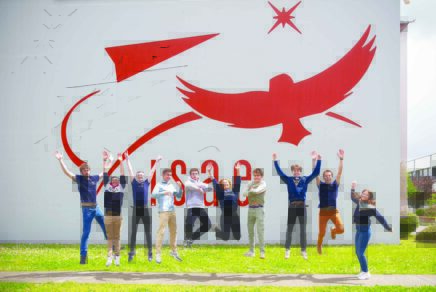
Launch of the new ISAE-SUPAERO website: our showcase for excellence!Aerospace
Institute
Events
Les Assises du New Space 2025: discussions and debates on NewSpace!The 2025 edition of the Assises du New Space will be held this year on July 8-9, 2025 at the Centre des congrès de la Villette - Cité des sciences et de l'industrie in Paris. Aimed at all players in the French space ecosystem, this event is a unique opportunity to exchange ideas and debate around NewSpace, and to discover the latest technological innovations and project financing opportunities. Registration is now open!
Conference
Event
Round table
Events
8th edition of Future IntelligenceAI
Artificial intelligence
Cyber
Videos
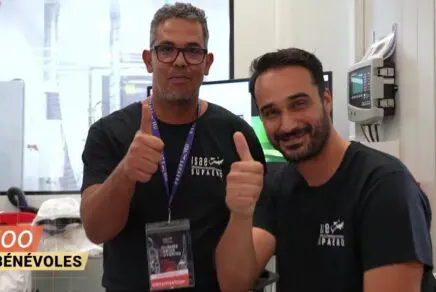
ISAE-SUPAERO Open Day 2023!Open day
Events
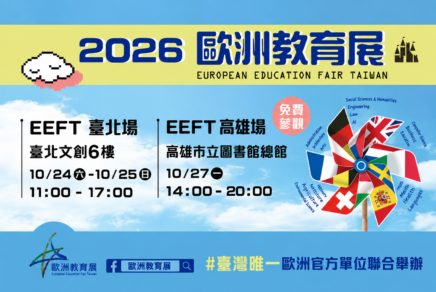
European Education Fair TaiwanCome meet representatives from TSAAE, ISAE-SUPAERO, and ENAC in Taiwan!
Advanced Master
Aerospace
Fair
News
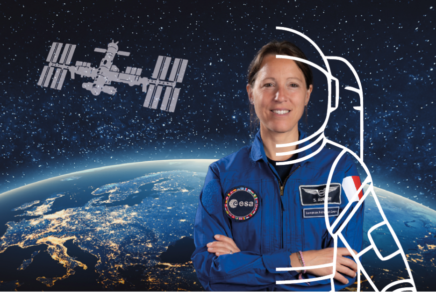
Sophie Adenot Returns to EarthSophie Adenot, an ESA astronaut and ISAE-SUPAERO engineering graduate, is back on Earth after spending nearly 8 months on the ISS for her Epsilon mission.
Alumni
Event
Space
News
ISAE-SUPAERO is broadcasting the webinar "Air transport in crisis and the climate challenge: towards new paradigms" on campus!Aerospace
Event
Sustainability
Events
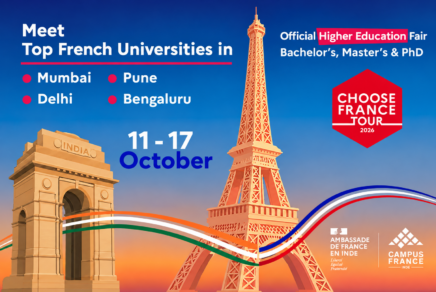
Choose France Tour 2025 - IndiaAdvanced Master
Aerospace
Fair
Events
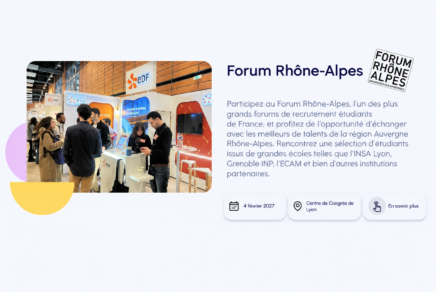
Forum Rhône AlpesCome meet representatives from TSAAE and ISAE-SUPAERO in Lyon!
Advanced Master
Aerospace
Forum
News
ICAO (International Civil Aviation Organisation) Congress: Laurent Joly, Deputy Director of Research at ISAE-SUPAERO, talks about the Institute's commitmentsEvent
Sustainability
Events
First edition of the Occitanie Talent MarketplaceOn November 13, 2025, at the Cité de Toulouse, ISAE-SUPAERO will be taking part in a first-of-its-kind event, the “Occitanie Talent Marketplace”, which will bring together start-ups from the university world in the Occitanie region and talents & skills wishing to take part in an entrepreneurial adventure.
Entrepreneurship
Event
Innovation
Events
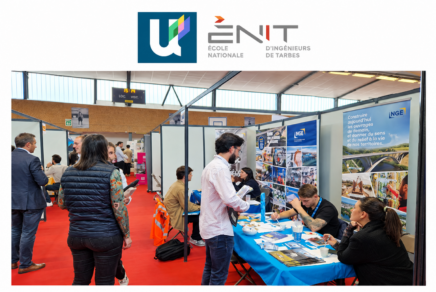
Forum ENI TARBESCome meet representatives from TSAAE and ISAE-SUPAERO in Tarbes!
Advanced Master
Aerospace
Forum
News
ISAE-SUPAERO hosts the first in-person Inter-Agency GNC V&V WorkshopOn July 9–10, 2025, ISAE-SUPAERO had the honor of hosting the very first in-person edition of the Inter-Agency GNC V&V Workshop, bringing together more than 150 participants from academia, industry, and major international space agencies.
Event
Research
Workshop
Events
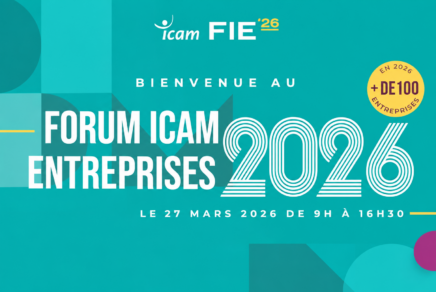
Forum ICAMCome meet representatives from TSAAE and ISAE-SUPAERO in Paris!
Advanced Master
Aerospace
Forum
Events
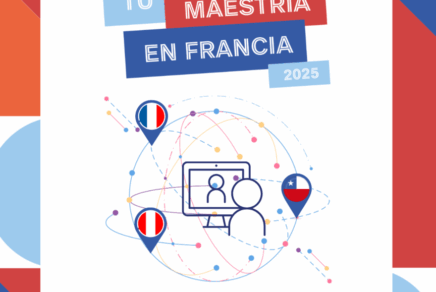
"Tu Masteria en Francia" Peru & Chile edition - online fairAerospace
Fair
Master in Aerospace Engineering
News
ISAE-SUPAERO at the Forefront of AI Challenges in Defense and SecurityOn March 24, 2026, ISAE-SUPAERO hosted the Future Intelligence Forum, an event dedicated to artificial intelligence applied to the defense, security, and resilience sectors. Public policymakers, experts, researchers, industry leaders, and innovators gathered to share their vision and collectively shape the future of AI in the public interest.
Aerospace
Artificial intelligence
Defence

Pages
University of ToulouseSince 1 January 2025, our Institute has been an associate member of the new Université de Toulouse, formerly the Université Toulouse III - Paul Sabatier and heir to the Communauté d'universités et établissements de Toulouse - COMUE de Toulouse. The University of Toulouse is an experimental public institution that has embarked on a collective drive to build a future major institution that will be attractive and visible on the international stage.
Aerospace
Partner
Events
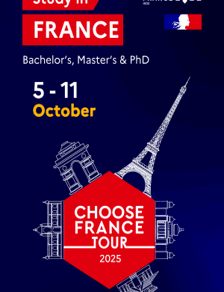
"Choose France Tour 2025" in IndiaAerospace
Fair
Master in Aerospace Engineering
Testimonials
Testimony from Mathis Putegnat, student (class of 2025) of the APM Advanced Master's programmeAerospace
Alumni
Testimonial
Testimonials
Testimony from Alexandre Bouraoui, engineering student by apprenticeship and IAC 2025 Award WinnerFinal-year engineering apprentice, specializing in Industrialisation and Methods for Aeronautics and Space, Alexandre Bouraoui was recently honored at the 76th International Astronautical Congress (IAC 2025) in Sydney, where he won the prestigious Hermann Oberth Gold Medal in the Graduate category. We spoke with him about his award and his studies at ISAE-SUPAERO.
Aeronautics
Aerospace
Congress
Pages
Our Short ModulesDerived from the Institute's Advanced Master programmes, our short modules are aimed at professionals wishing to develop specific skills in Aeronautics, Space, Project Management, Systems Engineering, or Digital Systems.
Advanced Master
Aeronautics
Aerospace
Testimonials
World Alumni Day: 3 questions for Florian DELPECH, Engineering Cycle – Data and Decision Sciences Track Class of 2022Aerospace
Alumni
Pages
Our Semester & Short ProgrammesDiscover ISAE-SUPAERO's academic excellence through our semester and short programmes, open to international students.
Aeronautics
Aerospace
Aerospace summer program
Events
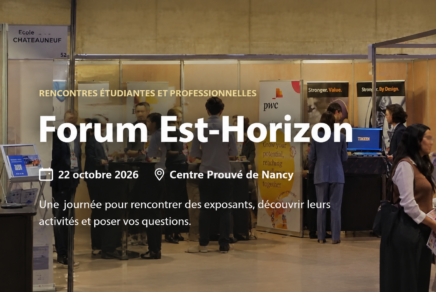
Forum Est HorizonCome meet representatives from TSAAE and ISAE-SUPAERO in Nancy!
Advanced Master
Aerospace
Forum
Events
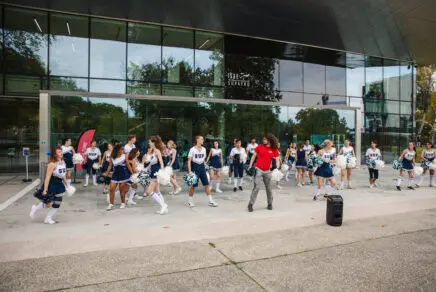
Open Day 2025Open day
News
Pride, excellence and spirit of promotion: ISAE-SUPAERO is preparing to celebrate its 2025 graduates!Our 2025 graduation ceremonies will celebrate excellence and community pride on 6 December 2025, honouring more than 600 graduates from our programmes, accompanied by distinguished guests and numerous prestigious awards.
Award
Event
Pages
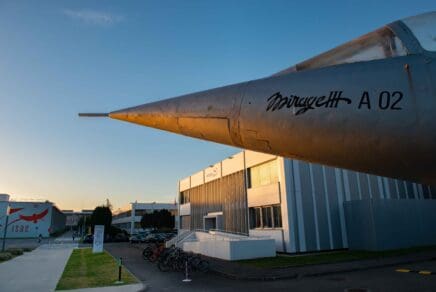
Our Core FoundationsMarie-Hélène Baroux, President of ISAE-SUPAERO, presents the 10 foundations that make our Institute a world leader in higher education and research in aerospace engineering. At ISAE-SUPAERO, students, teachers-researchers, alumni and partners interact to develop innovative solutions to today's technological and industrial challenges. They help to position our Institute as a major player in the transition of the civil and military aerospace sector.
Aerospace
Institute

Pages
An Illustrated History of our SchoolHisis will enable you to follow the many transformations that the ISAE-SUPAERO engineering school has undergone. ISAE-SUPAERO was created in October 2007 from the merger of two engineering schools in Toulouse, the École Nationale Supérieure d'Ingénieurs de Constructions Aéronautiques (ENSICA) and the École Nationale Supérieure de l'Aéronautique et de l'Espace (SUPAERO), both under the supervision of the French Ministry of Defence.
Aerospace
History
Institute
News
ISAE-SUPAERO announces new partnership with ESA Academy to support future Master in Aerospace Engineering studentsAerospace
Master in Aerospace Engineering
Scholarship
Events
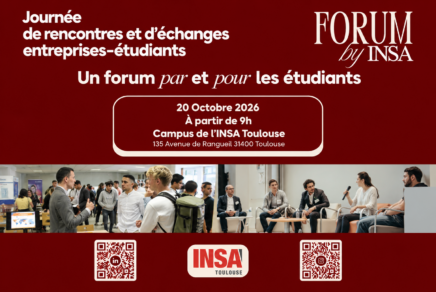
Forum INSA TOULOUSECome meet representatives from TSAAE and ISAE-SUPAERO in Toulouse!
Advanced Master
Aerospace
Forum
Pages
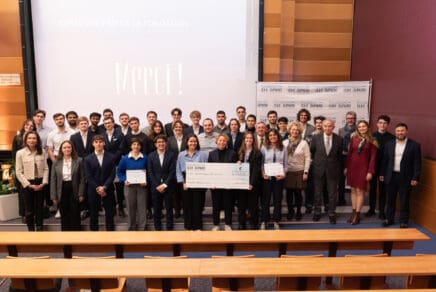
ISAE-SUPAERO FoundationThe ISAE-SUPAERO Foundation works to develop the Institute's influence and global leadership, by proposing and accelerating innovative projects that contribute to a sustainable world.
Aerospace
Commitments
Diversity program
News
ISAE-SUPAERO will be at the Paris Air Show from June 16 to 22, 2025!Aeronautics
Event
Fair
Events
AASTRA Certificate: presentation webinar on March 25 from 6:00 p.m. to 7:00 p.m.Aeronautics
Aerospace
Air transport
News
Women's Campus Day 2026 “Inspiring younger generations and young girls”: astronaut Sophie Adenot's commitment continuesThe first edition of ISAE-SUPAERO's “Campus au féminin” days in 2016, attended by astronaut Sophie Adenot, a graduate of the school, was met with great enthusiasm by middle and high school girls. Given its success, the program has become a permanent fixture and now reaches hundreds of young girls every year, allowing them to discover careers in science and engineering.
Diversity program
Equal opportunities
Event
Pages
Semester Research ProjectsTake your studies to the next level by participating in a semester-long research project at ISAE-SUPAERO: immerse yourself in cutting-edge laboratories alongside international experts and contribute to advances in aeronautics and space technology.
Aeronautics
Aerospace
Aerospace summer program

Pages
Our Labels, Accreditations and CertificationsOur Institute is committed to a quality approach, covering both our programmes and our organisation. As a result, ISAE-SUPAERO has numerous labels, accreditations and certifications, demonstrating that our teaching and structures are adapted to the expectations of our future students and recruiters.
Accréditation
Aerospace
Certification
News
Alexandre Bouraoui Takes Gold at the 2025 International Astronautical CongressFinal-year engineering apprentice, specializing in Industrialisation and Methods for Aeronautics and Space, Alexandre Bouraoui was recently honored at the 76th International Astronautical Congress (IAC 2025) in Sydney, where he won the prestigious Hermann Oberth Gold Medal in the Graduate category. We spoke with him about his award and his studies at ISAE-SUPAERO.
Congress
DEOS
Event
News
ISAE-SUPAERO and its talented students are once again showcasing Toulouse’s dynamism on the international stageAt ISAE-SUPAERO, talented students continue to distinguish themselves, both in the academic world and in the realm of innovation: a look back at the Amelia Earhart Award won by Elena Lopez-Contreras, a doctoral student at the Neuroergonomics Center, and at the French final of the ActInSpace hackathon, won by her team Solete for their Satell-EYE project.
DCAS
Event
Human factors
Pages
Job offersAeronautics
Aerospace
AI
Testimonials
Testimonial of Baptiste Sigal, Advanced Master® TAS ASTRO student (class) 2025Advanced Master
Aerospace
Space
Pages
Support for the Development of the ISAE Group - GIFASGIFAS (Groupement des Industries Françaises Aéronautiques et Spatiales - French Aerospace Industries Group) supports the development of high-level academic and professional education in aerospace systems at the 6 Grandes Écoles that make up the ISAE Group (ISAE-ENSMA, ISAE-SUPMECA, ESTACA, Ecole de l'Air et de l'Espace, ENAC, ISAE-SUPAERO).
Aeronautics
Aerospace
Chair

Pages
Our Partners and NetworksAt ISAE-SUPAERO, we benefit from an exceptional academic, scientific and industrial environment. Our Institute has established privileged relationships with a large number of regional, national and international players in education, research and industry, as well as with public authorities and socio-economic partners. Our institution is heavily involved in scientific networks in our field of activity.
Aerospace
Networks
Partner
Events
ISAE-SUPAERO Open DayYou used to join us in the fall for our Open Day. The ISAE-SUPAERO Open Day has a new date!
Aerospace
Open day
Events
"Les Entretiens de Toulouse - Training through debate”: April 9 & 10, 2025 on the ISAE-SUPAERO campus"Les Entretiens de Toulouse" has become a must-attend event for the aerospace industry. A forum for the exchange and transmission of skills, this training through debate provides an opening onto subjects with high industrial stakes. The 2025 edition of the Entretiens de Toulouse will take place on April 9 & 10, 2025, in person, at ISAE-SUPAERO!
Aeronautics
Artificial intelligence
Defence
Events
Digital Clean Up WeekEvent
Institute
Pages
Aerospace Summer ProgrammeEnjoy a unique experience at the heart of aeronautics and space technology with intensive courses, exclusive industrial visits, and an international immersion in Paris, Poitiers and Toulouse.
Aeronautics
Aerospace
Aerospace summer program
Events
2025 edition of "La nuit des chercheurs"Meet ISAE-SUPAERO researchers at the Nuit des Chercheurs de Toulouse, on October 3 at 6pm at the Halles de la Cartoucherie, on the theme of “Intelligence(s)”!
Aerospace
Researcher
Science
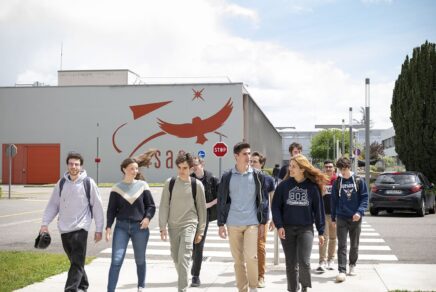
Pages
Our InstituteL’ISAE-SUPAERO est à la pointe mondiale de l’enseignement supérieur et de la recherche dans le domaine de l’ingénierie aérospatiale pour relever le défi de la transition énergétique.
Aerospace
Institute
Events
2026 edition of "Les Entretiens de Toulouse"Aeronautics
Aerospace
Event
News
Interview with Frederico Baptista, co-founder of Zéro, a startup recently incubated by ISAE-SUPAEROZero, a startup created by three aerospace engineers and recently incubated by ISAE-SUPAERO, offers a visual positioning system for drones designed to operate in environments without GPS.
Aerospace
Incubator
Innovation
Testimonials
Testimonial from Harshavardhan Narakatla, student (class of 2025) of the AMS E&M Advanced Master®Aerospace
Alumni
Testimonial
Events
ISAE Group Virtual ForumDefense & Security Engineer
Event
Ingénieur généraliste (MSc)
Testimonials
Testimonial from Maëlle Joseph, student (class of 2025) of the Advanced Master® IEMAerospace
Alumni
Testimonial
Events
French-Korean workshop: “Cryogenic hydrogen for aviation”.Event
Research
Science
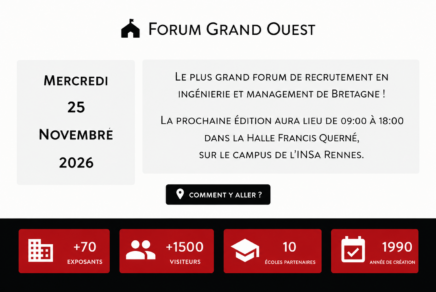
Events
Forum Grand OuestCome meet representatives from TSAAE and ISAE-SUPAERO in Rennes!
Advanced Master
Aerospace
Forum

Events
"Bem-vindo à França 2025" fair in BrazilAerospace
Fair
Master in Aerospace Engineering
Events
AASTRA Certificate: Introductory Webinar on May 26 from 6:00 p.m. to 7:00 p.m.Aeronautics
Aerospace
Air transport
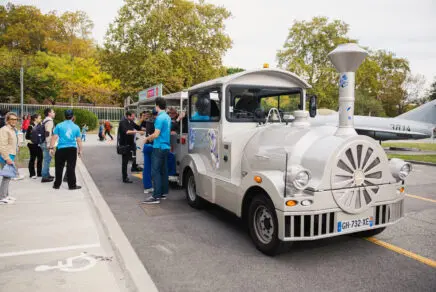
News
Open Day on 11 October 2025oin us on Saturday, 11 October 2025, from 10 a.m. to 6 p.m., at our 19-hectare campus in Toulouse dedicated to innovation, research and training. You will have the opportunity to discover one of the world's leading engineering schools for aeronautics and space from the inside.
Open day
News
ISAE-SUPAERO and ENAC invite you to the “Rendez-vous Aéro de l'Innovation” on Thursday, February 5, 2026!Aeronautics
Event
Innovation
Events
16th EASN International ConferenceAeronautics
Aerospace
Event
Videos
Video recap of the first edition of the Occitanie Talent MarketplaceHave a look back at the Occitanie Talent Marketplace in pictures, a unique event that brought together startups from the university ecosystem of the Occitanie region and the talents & skills eager to join an entrepreneurial adventure. Also, check out the event’s photo album: https://www.flickr.com/photos/194546076@N07/albums/72177720330573098/
Company
Event
Pages
Our Specialised Studies CertificatesOur specialised studies certificates are designed for professionals. They enable you to develop skills and expertise in the fields of digital, aeronautics, space, project management, systems engineering, and artificial intelligence.
Advanced Master
Aeronautics
Aerospace
Testimonials
"World Alumni Day": 3 questions to Muhamad Abdul Aziz, alumni of the class of 2024 of the Master in Aerospace Engineering, specialising in Aerospace Systems and ControlsAerospace
Alumni
Pages
ISAE SUPAERO ENSICA Alumni AssociationISAE SUPAERO ENSICA Alumni is much more than a network of graduates: it's a close-knit, committed and proactive community, driven by a spirit of mutual aid and sharing at the service of society.
Aerospace
Alumni
Association
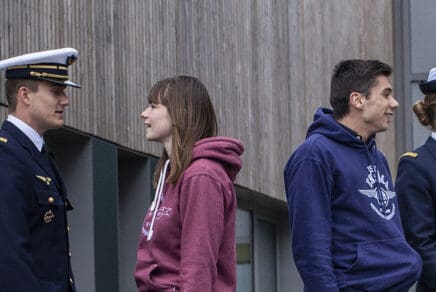
Pages
ISAE GroupCreated in 2011, the ISAE Group now brings together all the leading engineering schools in the Aeronautics, Space and Defence sector. It represents a scientific and educational community that shares the values of excellence, openness and innovation. Every year, the ISAE Group's schools train almost half of the young engineers hired by companies and institutions in the sector.
Aerospace
Education
ISAE Group
Events
Forum FocéenCome meet representatives from TSAAE and ISAE-SUPAERO in Marseille!
Advanced Master
Aerospace
Forum
Pages
Spring Semester in Aeronautical EngineeringImmerse yourself in the world of aerospace in Toulouse, the European aerospace capital, with a semester taught in English combining excellent courses, cultural immersion, and proximity to major industrial players.
Aeronautics
Aerospace
Aerospace summer program
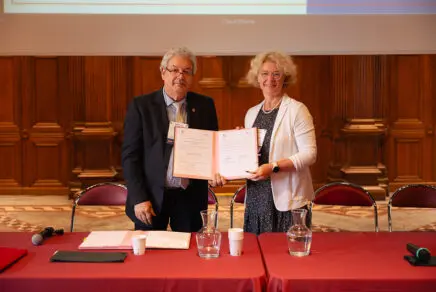
News
ISAE-SUPAERO renews cooperation agreements with ITA and São Paulo institutionsAerospace
Education
Institute
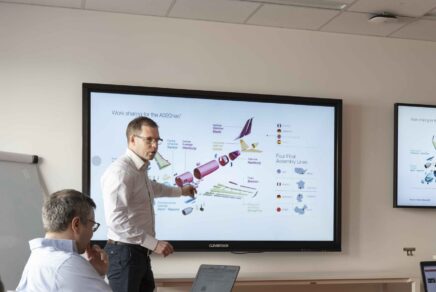
Pages
EUROSAEAt ISAE-SUPAERO, we implement a national and international executive education dynamic policy with EUROSAE, a joint Education and Training Division of ISAE-SUPAERO and ENSTA ParisTech.
Aerospace
EUROSAE
Executive Education

Events
Campus France – ChileCome meet representatives from TSAAE, ISAE-SUPAERO, and ENAC in Chile!
Advanced Master
Aerospace
Fair
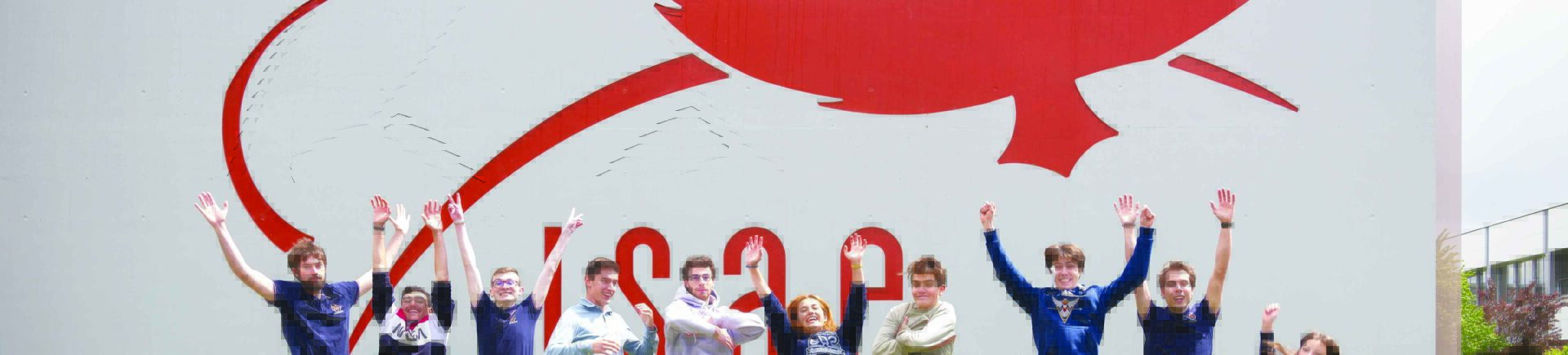
ISAE-SUPAERO Open Day
You used to join us in the fall for our Open Day. The ISAE-SUPAERO Open Day has a new date!
Related Content
Pages
Our Partners and NetworksAt ISAE-SUPAERO, we benefit from an exceptional academic, scientific and industrial environment. Our Institute has established privileged relationships with a large number of regional, national and international players in education, research and industry, as well as with public authorities and socio-economic partners. Our institution is heavily involved in scientific networks in our field of activity.
Aerospace
Networks
Partner
Pages
Semester Research ProjectsTake your studies to the next level by participating in a semester-long research project at ISAE-SUPAERO: immerse yourself in cutting-edge laboratories alongside international experts and contribute to advances in aeronautics and space technology.
Aeronautics
Aerospace
Aerospace summer program
Pages
Prior Experience AccreditationThe validation of prior experience is an individual right enshrined in the French Labor Code and Education Code. It enables candidates to obtain all - or part - of a professional certification (Diploma, Professional Title, Certificate of Professional Qualification), based on their professional, salaried or non-salaried and/or voluntary experience. This scheme can be used if the candidate is seeking personal recognition, or more generally to support a professional project that he or she wishes to put into practice.
Advanced Master
Aeronautics
Aerospace
Testimonials
Testimony from Mathis Putegnat, student (class of 2025) of the APM Advanced Master's programmeAerospace
Alumni
Testimonial
Events
ISAE-SUPAERO will be at the Paris Air Show at Le Bourget from June 16 to 22, 2025ISAE-SUPAERO will be present at the 55ᵉ Salon International de l'Aéronautique et de l'Espace at Le Bourget from June 16 to 22, 2025!
Aeronautics
Aerospace
Event
Events
AASTRA Certificate: Introductory Webinar on May 26 from 6:00 p.m. to 7:00 p.m.Aeronautics
Aerospace
Air transport
News
ISAE-SUPAERO is broadcasting the webinar "Air transport in crisis and the climate challenge: towards new paradigms" on campus!Aerospace
Event
Sustainability
Pages
Our InstituteL’ISAE-SUPAERO est à la pointe mondiale de l’enseignement supérieur et de la recherche dans le domaine de l’ingénierie aérospatiale pour relever le défi de la transition énergétique.
Aerospace
Institute
Pages
Spring Semester in Aeronautical EngineeringImmerse yourself in the world of aerospace in Toulouse, the European aerospace capital, with a semester taught in English combining excellent courses, cultural immersion, and proximity to major industrial players.
Aeronautics
Aerospace
Aerospace summer program
Testimonials
Testimony of Matthieu LP, student (class of 2025) of the IEM Advanced Master®Aerospace
Alumni
Testimonial
News
Open Day on 11 October 2025oin us on Saturday, 11 October 2025, from 10 a.m. to 6 p.m., at our 19-hectare campus in Toulouse dedicated to innovation, research and training. You will have the opportunity to discover one of the world's leading engineering schools for aeronautics and space from the inside.
Open day
Testimonials
Testimonial from Maëlle Joseph, student (class of 2025) of the Advanced Master® IEMAerospace
Alumni
Testimonial
Events
2025 edition of "La nuit des chercheurs"Meet ISAE-SUPAERO researchers at the Nuit des Chercheurs de Toulouse, on October 3 at 6pm at the Halles de la Cartoucherie, on the theme of “Intelligence(s)”!
Aerospace
Researcher
Science
Pages
An Illustrated History of our SchoolHisis will enable you to follow the many transformations that the ISAE-SUPAERO engineering school has undergone. ISAE-SUPAERO was created in October 2007 from the merger of two engineering schools in Toulouse, the École Nationale Supérieure d'Ingénieurs de Constructions Aéronautiques (ENSICA) and the École Nationale Supérieure de l'Aéronautique et de l'Espace (SUPAERO), both under the supervision of the French Ministry of Defence.
Aerospace
History
Institute
News
Investing and committing to training and research to meet the challenges of the energy transitionISAE-SUPAERO and the ISAE-SUPAERO Foundation work together and take their share of responsibility for addressing these major challenges facing our society. Actions include raising awareness and training future aeronautical engineers, and setting up research programmes to better address energy and climate issues.
Aerospace
Sustainability
Pages
ISAE GroupCreated in 2011, the ISAE Group now brings together all the leading engineering schools in the Aeronautics, Space and Defence sector. It represents a scientific and educational community that shares the values of excellence, openness and innovation. Every year, the ISAE Group's schools train almost half of the young engineers hired by companies and institutions in the sector.
Aerospace
Education
ISAE Group
Pages
University of ToulouseSince 1 January 2025, our Institute has been an associate member of the new Université de Toulouse, formerly the Université Toulouse III - Paul Sabatier and heir to the Communauté d'universités et établissements de Toulouse - COMUE de Toulouse. The University of Toulouse is an experimental public institution that has embarked on a collective drive to build a future major institution that will be attractive and visible on the international stage.
Aerospace
Partner
Testimonials
Testimonial from Harshavardhan Narakatla, student (class of 2025) of the AMS E&M Advanced Master®Aerospace
Alumni
Testimonial
Testimonials
"World Alumni Day": 3 questions to Muhamad Abdul Aziz, alumni of the class of 2024 of the Master in Aerospace Engineering, specialising in Aerospace Systems and ControlsAerospace
Alumni
Events
2026 edition of "Les Entretiens de Toulouse"Aeronautics
Aerospace
Event
Events
16th EASN International ConferenceAeronautics
Aerospace
Event
Pages
Our EcosystemOur Institute operates at the heart of a leading academic, scientific, and technological ecosystem. Driven by the strength of the ISAE SUPAERO ENSICA Alumni Association network, supported by the ISAE-SUPAERO Foundation, and enriched by EUROSAE's expertise in executive education, our actions are part of a collective dynamic within the University of Toulouse and the ISAE Group. Committed to the major challenges of tomorrow, we are developing major initiatives within the Institute for Sustainable Aviation for sustainable aviation and the Defense Space Academy to meet the strategic challenges of space.
Aerospace
Partner
Partnership
News
ISAE-SUPAERO is co-hosting the 16th EASN International Conference in ToulouseISAE-SUPAERO is pleased to host the 16th edition of the international conference organized by EASN in Toulouse from October 27 to 30, 2026, dedicated to the theme: “Innovation in Aeronautics and Space for Sustainability Today and Tomorrow.”
Aeronautics
Aerospace
Innovation
Events
Forum AtlantiqueCome meet representatives from TSAAE and ISAE-SUPAERO in Nantes!
Advanced Master
Aerospace
Forum
News
ISAE-SUPAERO renews cooperation agreements with ITA and São Paulo institutionsAerospace
Education
Institute
Events
Forum ICAMCome meet representatives from TSAAE and ISAE-SUPAERO in Paris!
Advanced Master
Aerospace
Forum
Pages
Innovating in a World of Transition - SafranThe challenges facing the aerospace industry (energy transition, New Space, digitalization) are driving a growing need for professionals with the ability to innovate. Against this backdrop, Safran and ISAE-SUPAERO are creating the Innovating in a World in Transition Chair.
Aeronautics
Aerospace
Chair
Events
Forum Grand OuestCome meet representatives from TSAAE and ISAE-SUPAERO in Rennes!
Advanced Master
Aerospace
Forum
News
ISAE-SUPAERO at the Forefront of AI Challenges in Defense and SecurityOn March 24, 2026, ISAE-SUPAERO hosted the Future Intelligence Forum, an event dedicated to artificial intelligence applied to the defense, security, and resilience sectors. Public policymakers, experts, researchers, industry leaders, and innovators gathered to share their vision and collectively shape the future of AI in the public interest.
Aerospace
Artificial intelligence
Defence
Pages
Advanced Space Concepts Laboratory - Airbus DS & ArianeGroupCreated in 2017 and renewed until 2027, this sponsorship partnership brings together Airbus Defense & Space and Ariane Group.
Aerospace
Chair
Company
Events
Destino Francia – ColombiaCome meet representatives from TSAAE, ISAE-SUPAERO, and ENAC in Colombia!
Advanced Master
Aerospace
Fair
Testimonials
Testimonial of Baptiste Sigal, Advanced Master® TAS ASTRO student (class) 2025Advanced Master
Aerospace
Space
Events
Forum Est HorizonCome meet representatives from TSAAE and ISAE-SUPAERO in Nancy!
Advanced Master
Aerospace
Forum
News
ISAE-SUPAERO announces new partnership with ESA Academy to support future Master in Aerospace Engineering studentsAerospace
Master in Aerospace Engineering
Scholarship
News
Interview with Frederico Baptista, co-founder of Zéro, a startup recently incubated by ISAE-SUPAEROZero, a startup created by three aerospace engineers and recently incubated by ISAE-SUPAERO, offers a visual positioning system for drones designed to operate in environments without GPS.
Aerospace
Incubator
Innovation
News
The Institute is involved in the ecological transition of the aerospace ecosystemAerospace
Meeting
Sustainability
Pages
Our Core FoundationsMarie-Hélène Baroux, President of ISAE-SUPAERO, presents the 10 foundations that make our Institute a world leader in higher education and research in aerospace engineering. At ISAE-SUPAERO, students, teachers-researchers, alumni and partners interact to develop innovative solutions to today's technological and industrial challenges. They help to position our Institute as a major player in the transition of the civil and military aerospace sector.
Aerospace
Institute
Pages
Our Semester & Short ProgrammesDiscover ISAE-SUPAERO's academic excellence through our semester and short programmes, open to international students.
Aeronautics
Aerospace
Aerospace summer program
Events
Forum ENI TARBESCome meet representatives from TSAAE and ISAE-SUPAERO in Tarbes!
Advanced Master
Aerospace
Forum
Pages
EUROSAEAt ISAE-SUPAERO, we implement a national and international executive education dynamic policy with EUROSAE, a joint Education and Training Division of ISAE-SUPAERO and ENSTA ParisTech.
Aerospace
EUROSAE
Executive Education
Events
"EEFT 2025" trade fair in TaiwanAerospace
Fair
Master in Aerospace Engineering
Testimonials
Testimony from Alexandre Bouraoui, engineering student by apprenticeship and IAC 2025 Award WinnerFinal-year engineering apprentice, specializing in Industrialisation and Methods for Aeronautics and Space, Alexandre Bouraoui was recently honored at the 76th International Astronautical Congress (IAC 2025) in Sydney, where he won the prestigious Hermann Oberth Gold Medal in the Graduate category. We spoke with him about his award and his studies at ISAE-SUPAERO.
Aeronautics
Aerospace
Congress
Pages
Our Key FiguresFind out the key figures for ISAE-SUPAERO, a Graduate school of engineering with a multidisciplinary curriculum at the global forefront of higher education and research in aerospace engineering.
Aerospace
Institute
Events
Choose France Tour 2025 - IndiaAdvanced Master
Aerospace
Fair
Events
Study in France – KoreaCome meet representatives from TSAAE, ISAE-SUPAERO, and ENAC in Korea!
Advanced Master
Aerospace
Fair
Pages
Our Labels, Accreditations and CertificationsOur Institute is committed to a quality approach, covering both our programmes and our organisation. As a result, ISAE-SUPAERO has numerous labels, accreditations and certifications, demonstrating that our teaching and structures are adapted to the expectations of our future students and recruiters.
Accréditation
Aerospace
Certification
Pages
Our Short ModulesDerived from the Institute's Advanced Master programmes, our short modules are aimed at professionals wishing to develop specific skills in Aeronautics, Space, Project Management, Systems Engineering, or Digital Systems.
Advanced Master
Aeronautics
Aerospace
Events
Campus France – ChileCome meet representatives from TSAAE, ISAE-SUPAERO, and ENAC in Chile!
Advanced Master
Aerospace
Fair
Pages
ISAE-SUPAERO FoundationThe ISAE-SUPAERO Foundation works to develop the Institute's influence and global leadership, by proposing and accelerating innovative projects that contribute to a sustainable world.
Aerospace
Commitments
Diversity program
News
Launch of the new ISAE-SUPAERO website: our showcase for excellence!Aerospace
Institute
Events
Open Day 2025Open day
Events
Forum Rhône AlpesCome meet representatives from TSAAE and ISAE-SUPAERO in Lyon!
Advanced Master
Aerospace
Forum
Events
AASTRA Certificate: Introductory Webinar on July 9 from 6:00 p.m. to 7:00 p.m.Aeronautics
Aerospace
Air transport
Events
"Choose France Tour 2025" in IndiaAerospace
Fair
Master in Aerospace Engineering
Events
"Tu Masteria en Francia" Peru & Chile edition - online fairAerospace
Fair
Master in Aerospace Engineering
News
Figures for the start of the 2025 academic year at ISAE-SUPAEROAt the start of the 2025 academic year, ISAE-SUPAERO is welcoming nearly 882 new students from all disciplines!
Aerospace
Institute
Pages
Job offersAeronautics
Aerospace
AI
Pages
ISAE SUPAERO ENSICA Alumni AssociationISAE SUPAERO ENSICA Alumni is much more than a network of graduates: it's a close-knit, committed and proactive community, driven by a spirit of mutual aid and sharing at the service of society.
Aerospace
Alumni
Association
Events
Forum Arts et MétiersCome meet representatives from TSAAE and ISAE-SUPAERO in Paris!
Advanced Master
Aerospace
Fair
Events
Forum FocéenCome meet representatives from TSAAE and ISAE-SUPAERO in Marseille!
Advanced Master
Aerospace
Forum
Videos
ISAE-SUPAERO Open Day 2023!Open day
Pages
Aerospace Summer ProgrammeEnjoy a unique experience at the heart of aeronautics and space technology with intensive courses, exclusive industrial visits, and an international immersion in Paris, Poitiers and Toulouse.
Aeronautics
Aerospace
Aerospace summer program
Events
Forum INSA TOULOUSECome meet representatives from TSAAE and ISAE-SUPAERO in Toulouse!
Advanced Master
Aerospace
Forum
Testimonials
World Alumni Day: 3 questions for Florian DELPECH, Engineering Cycle – Data and Decision Sciences Track Class of 2022Aerospace
Alumni
News
Apply today for a program at ISAE-SUPAERO or ENAC - École Nationale de l'Aviation Civile!The TSAAE application platform is now open: discover our world-renowned programs and apply online for the 2026 academic year before November 28 at midnight (French time)!
Advanced Master
Aeronautics
Aerospace
Events
"Bem-vindo à França 2025" fair in BrazilAerospace
Fair
Master in Aerospace Engineering
Pages
Our Specialised Studies CertificatesOur specialised studies certificates are designed for professionals. They enable you to develop skills and expertise in the fields of digital, aeronautics, space, project management, systems engineering, and artificial intelligence.
Advanced Master
Aeronautics
Aerospace
Events
AASTRA Certificate: presentation webinar on March 25 from 6:00 p.m. to 7:00 p.m.Aeronautics
Aerospace
Air transport
Events
L'Étudiant Paris Saclay Education FairCome meet us in Paris-Saclay!
« Ingénieur ISAE-SUPAERO » by apprenticeship
Aerospace
Defense & Security Engineer
News
2027 ISAE-SUPAERO Open DayYou used to join us in the fall for our Open Day. The ISAE-SUPAERO Open Day has a new date!
Aerospace
Event
Open day
Events
"Study in Europe, Vietnam 2025" exhibition in VietnamAerospace
Fair
Master in Aerospace Engineering
Testimonials
Testimony from Lisa Wong, 2024 graduate of the TAS ASTRO Advanced Master® programme, SEEDS optionAerospace
Alumni
Testimonial
News
The Toulouse School of Aviation and Aerospace Engineering (TSAAE) launches its official social media accountsIt is now possible to follow news from the 𝐓𝐨𝐮𝐥𝐨𝐮𝐬𝐞 𝐒𝐜𝐡𝐨𝐨𝐥 𝐨𝐟 𝐀𝐯𝐢𝐚𝐭𝐢𝐨𝐧 𝐚𝐧𝐝 𝐀𝐞𝐫𝐨𝐬𝐩𝐚𝐜𝐞 𝐄𝐧𝐠𝐢𝐧𝐞𝐞𝐫𝐢𝐧𝐠 (𝐓𝐒𝐀𝐀𝐄) on social media!
Advanced Master
Aerospace
Communication
Testimonials
Testimony from Rémi Caresche, student (class of 2025) of the TAS ASTRO Advanced Master®Aerospace
Alumni
Testimonial
Events
European Education Fair TaiwanCome meet representatives from TSAAE, ISAE-SUPAERO, and ENAC in Taiwan!
Advanced Master
Aerospace
Fair
Pages
Support for the Development of the ISAE Group - GIFASGIFAS (Groupement des Industries Françaises Aéronautiques et Spatiales - French Aerospace Industries Group) supports the development of high-level academic and professional education in aerospace systems at the 6 Grandes Écoles that make up the ISAE Group (ISAE-ENSMA, ISAE-SUPMECA, ESTACA, Ecole de l'Air et de l'Espace, ENAC, ISAE-SUPAERO).
Aeronautics
Aerospace
Chair
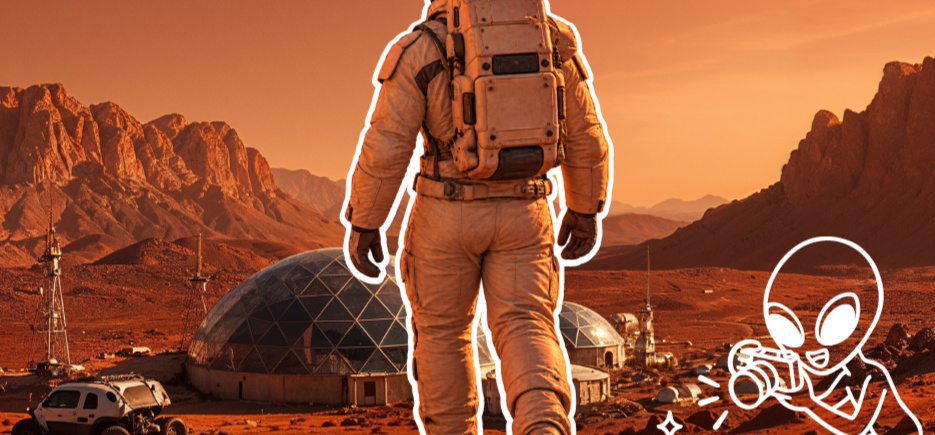
Happy New Year, Martians!
Today marks the start of Year 39 on Mars: a Martian year lasts 687 Earth days, which is equivalent to nearly two years on our blue planet. Here’s a look back at the projects, missions, and discoveries that bring ISAE-SUPAERO closer to the Red Planet every day.
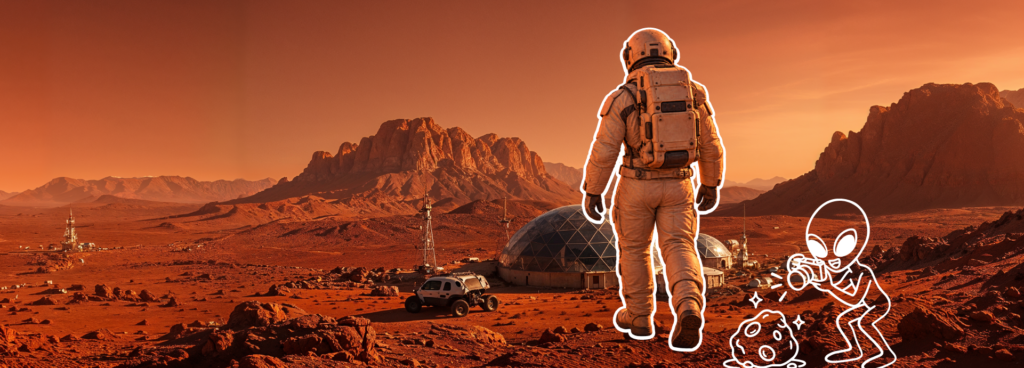
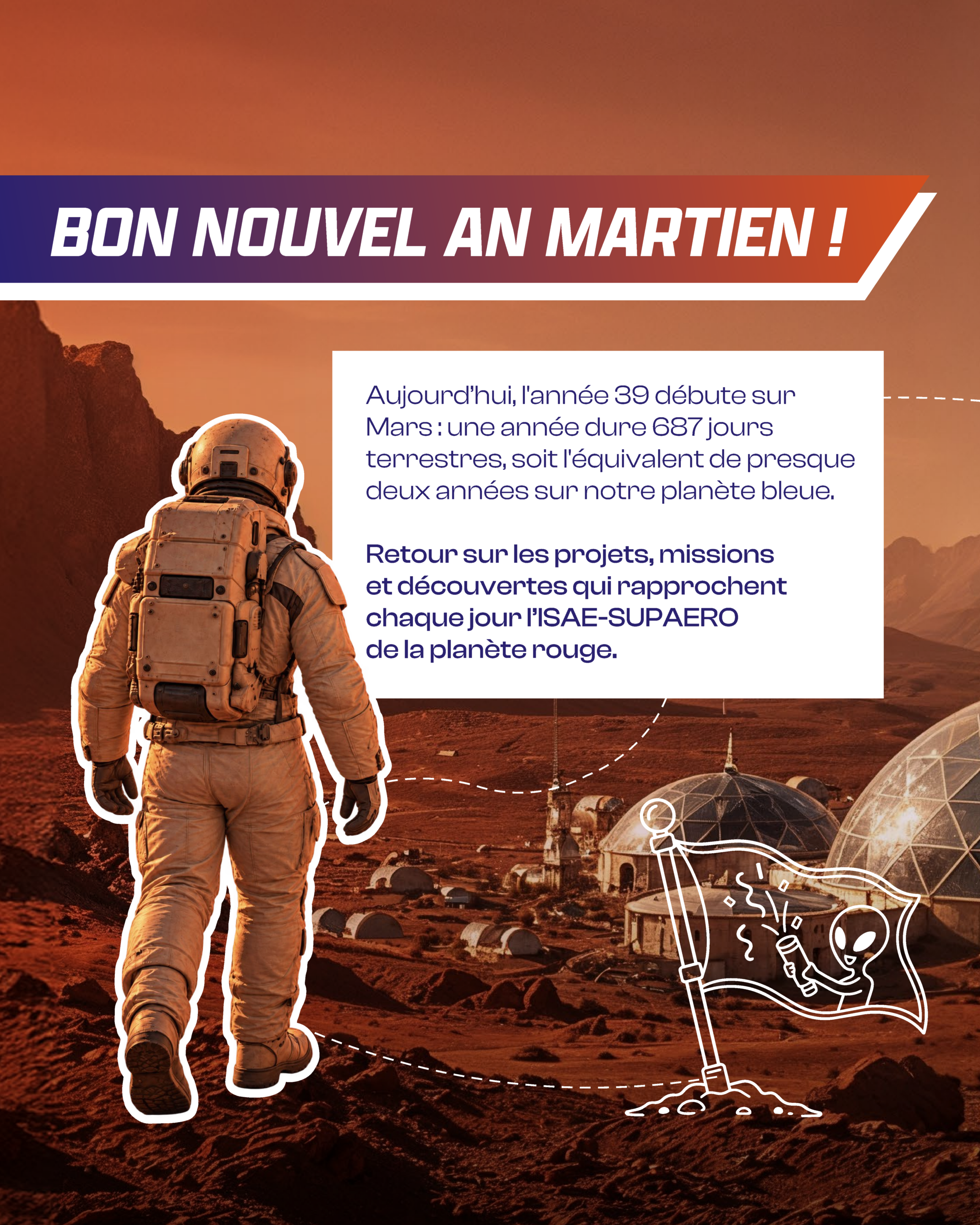
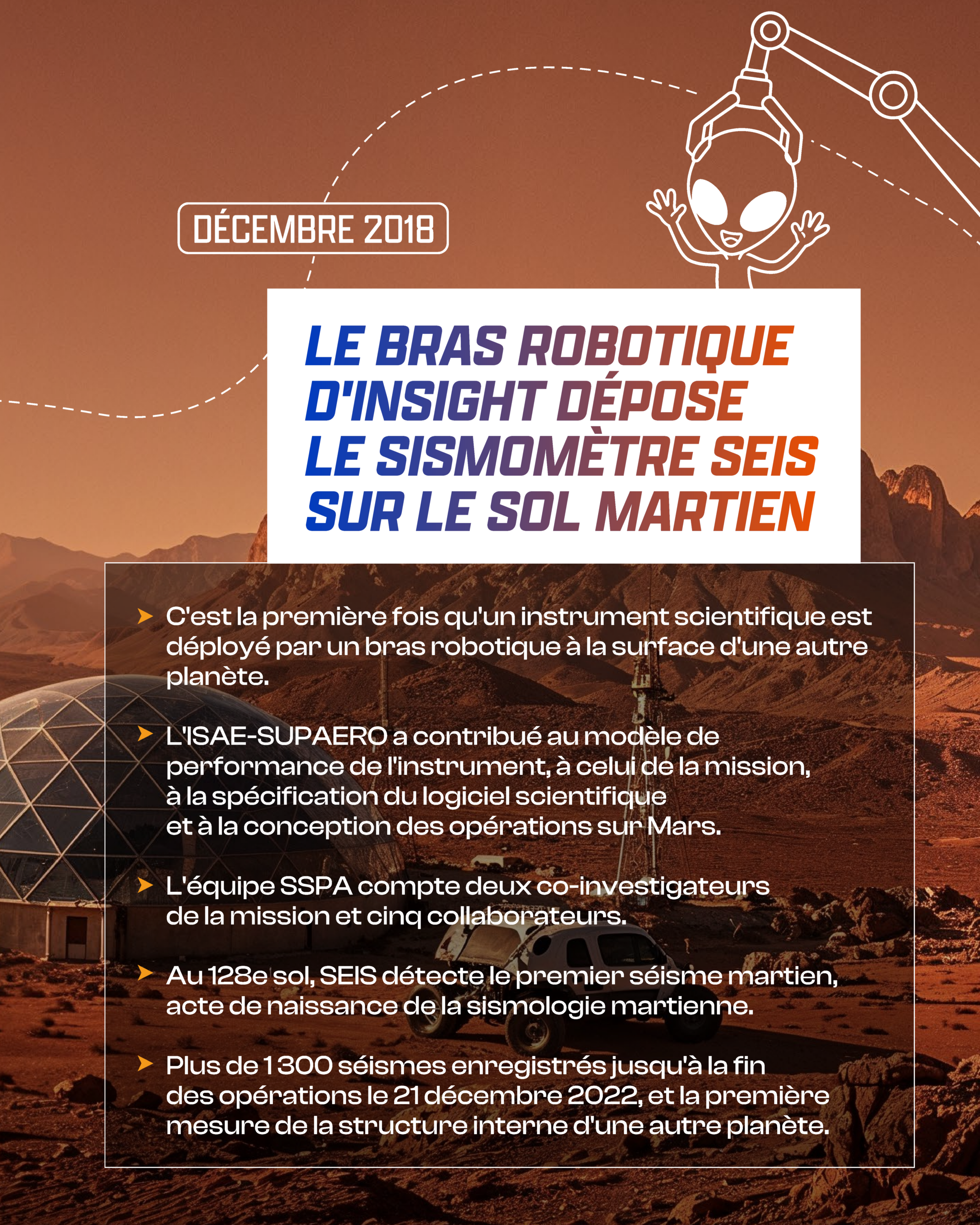
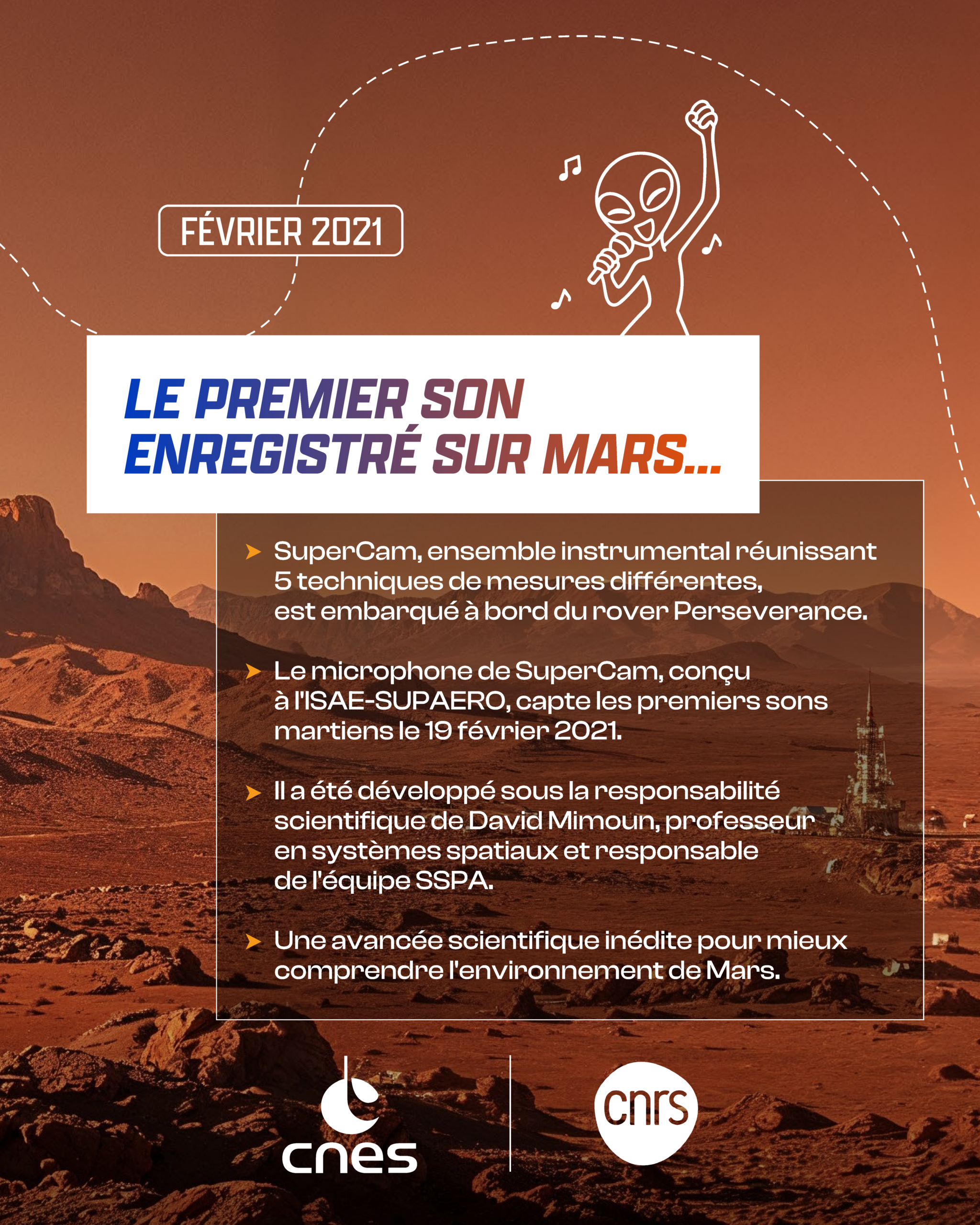
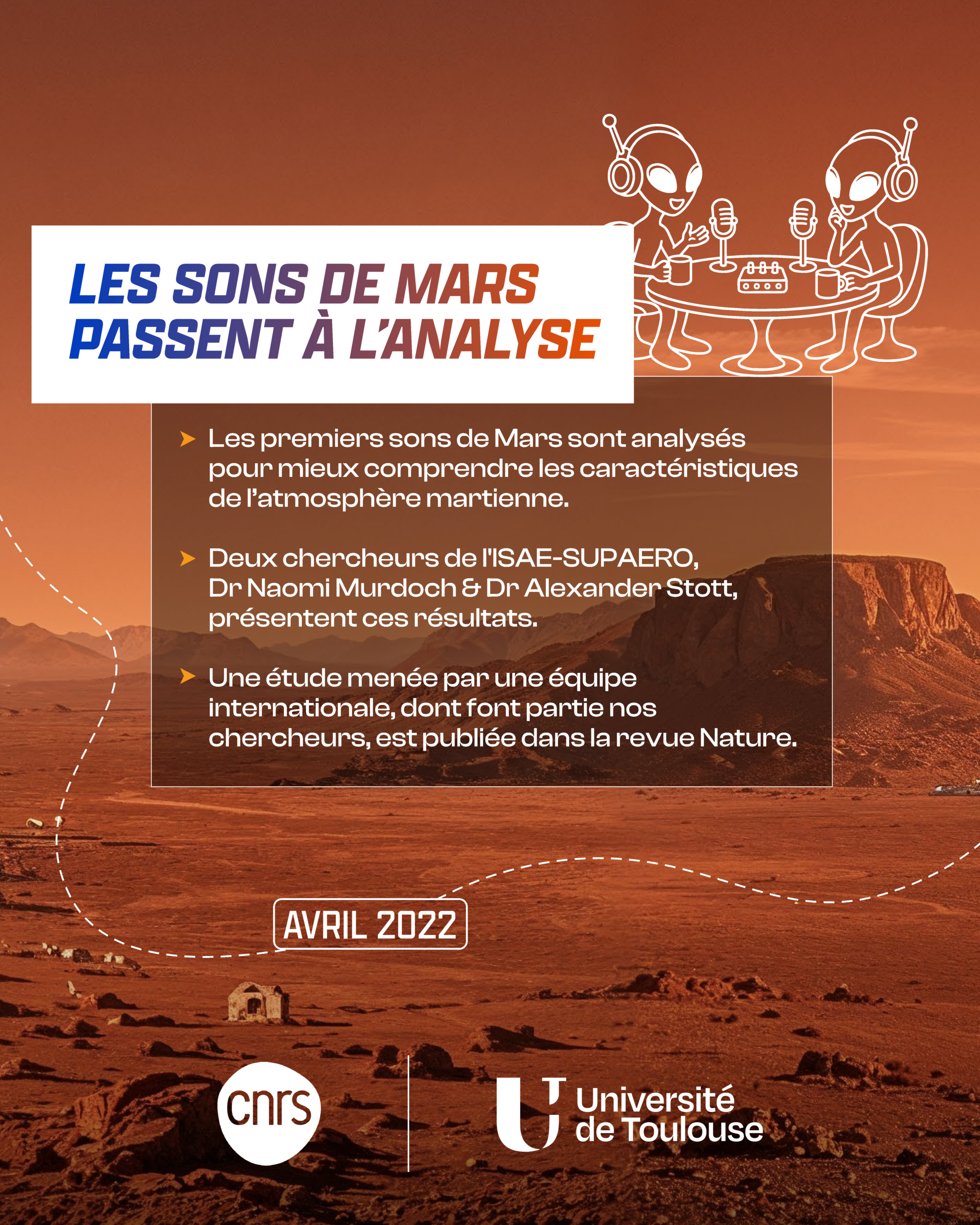
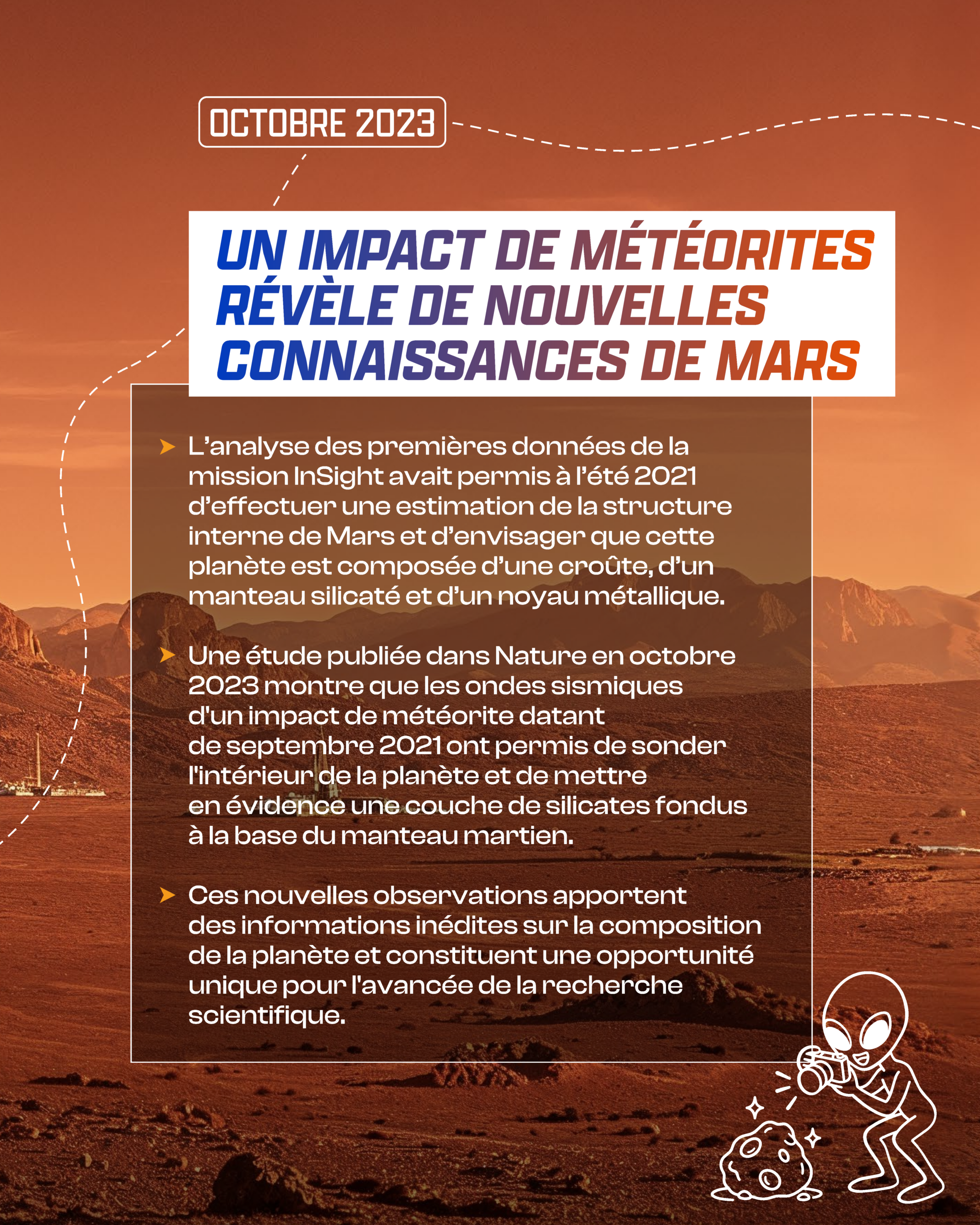
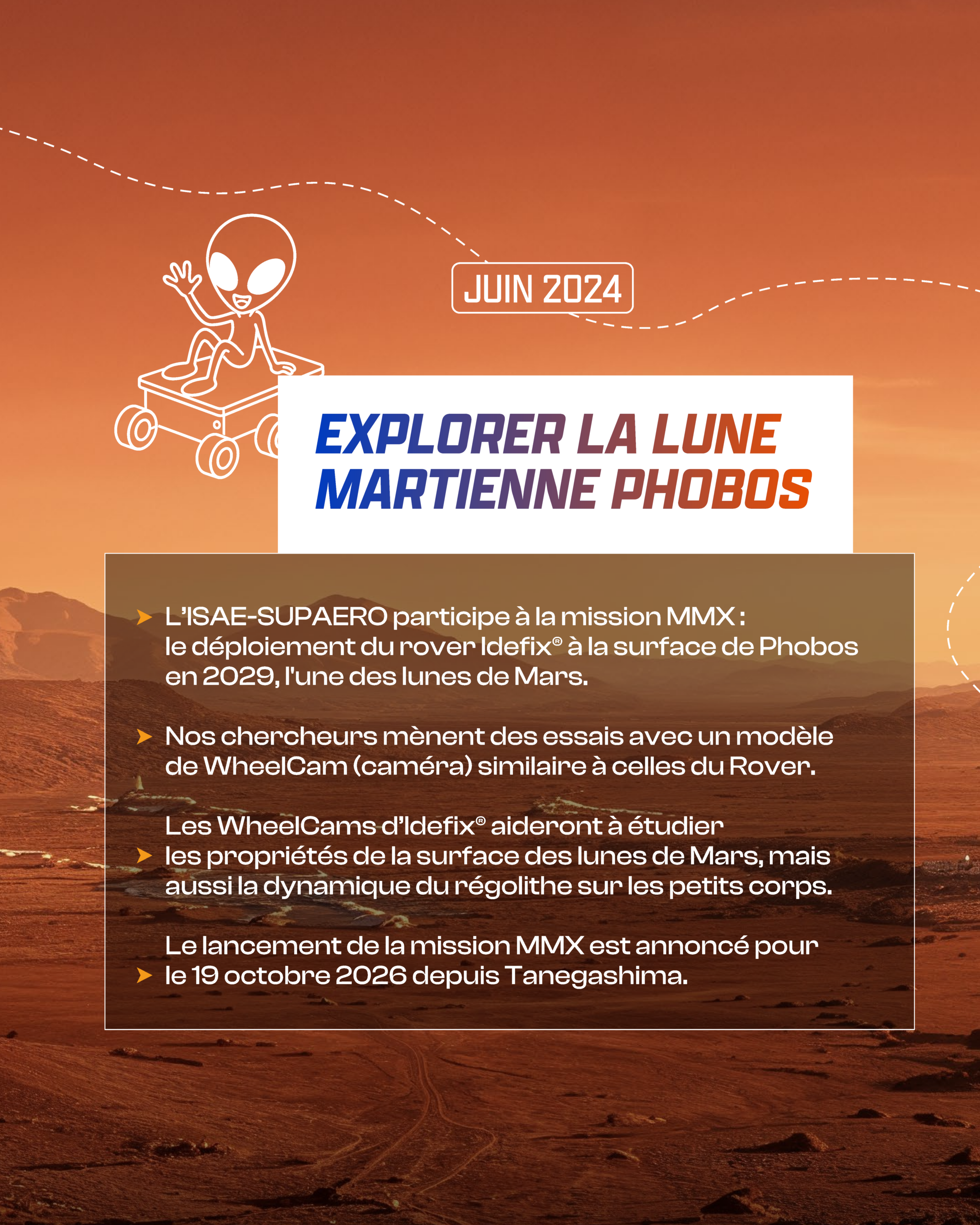
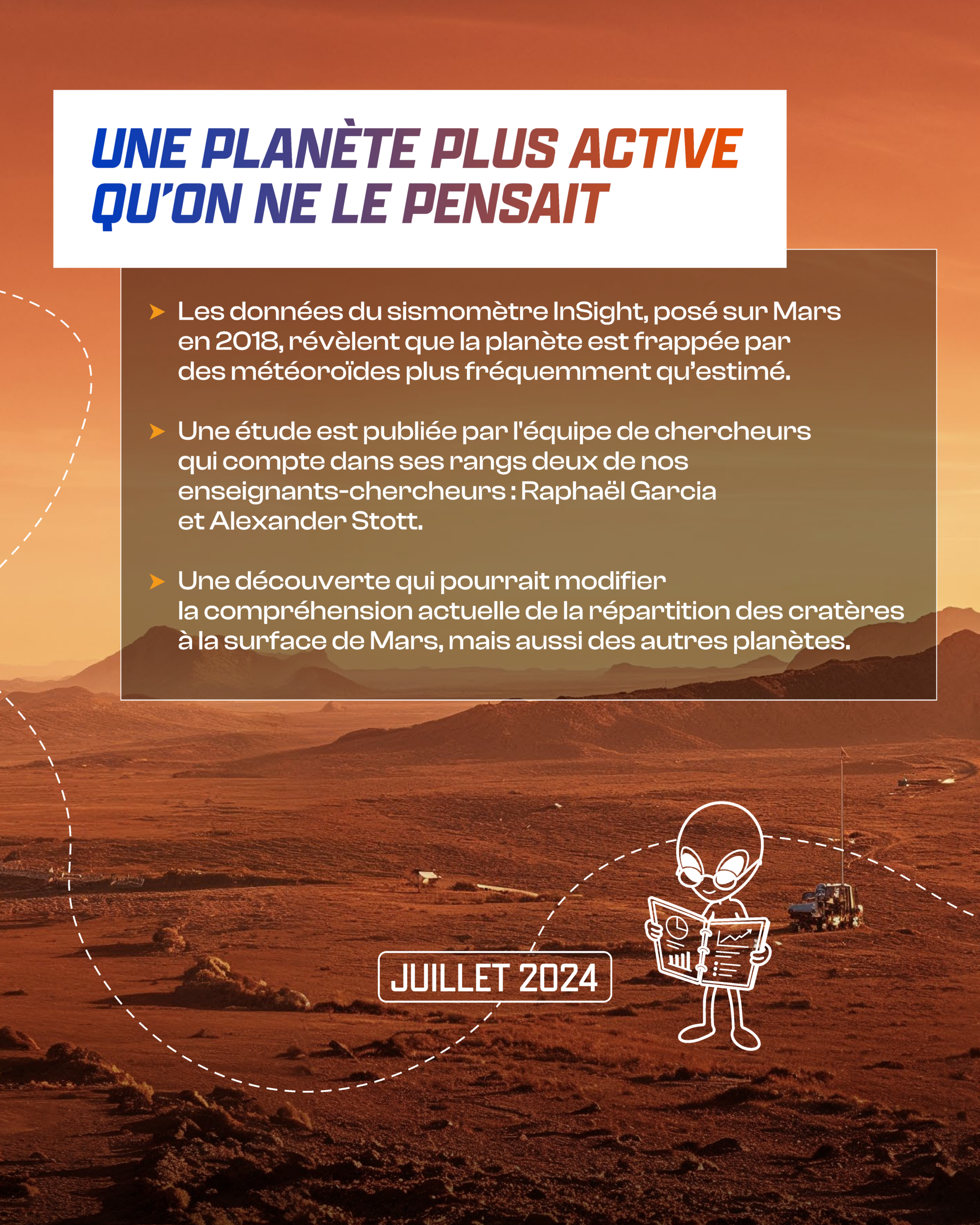
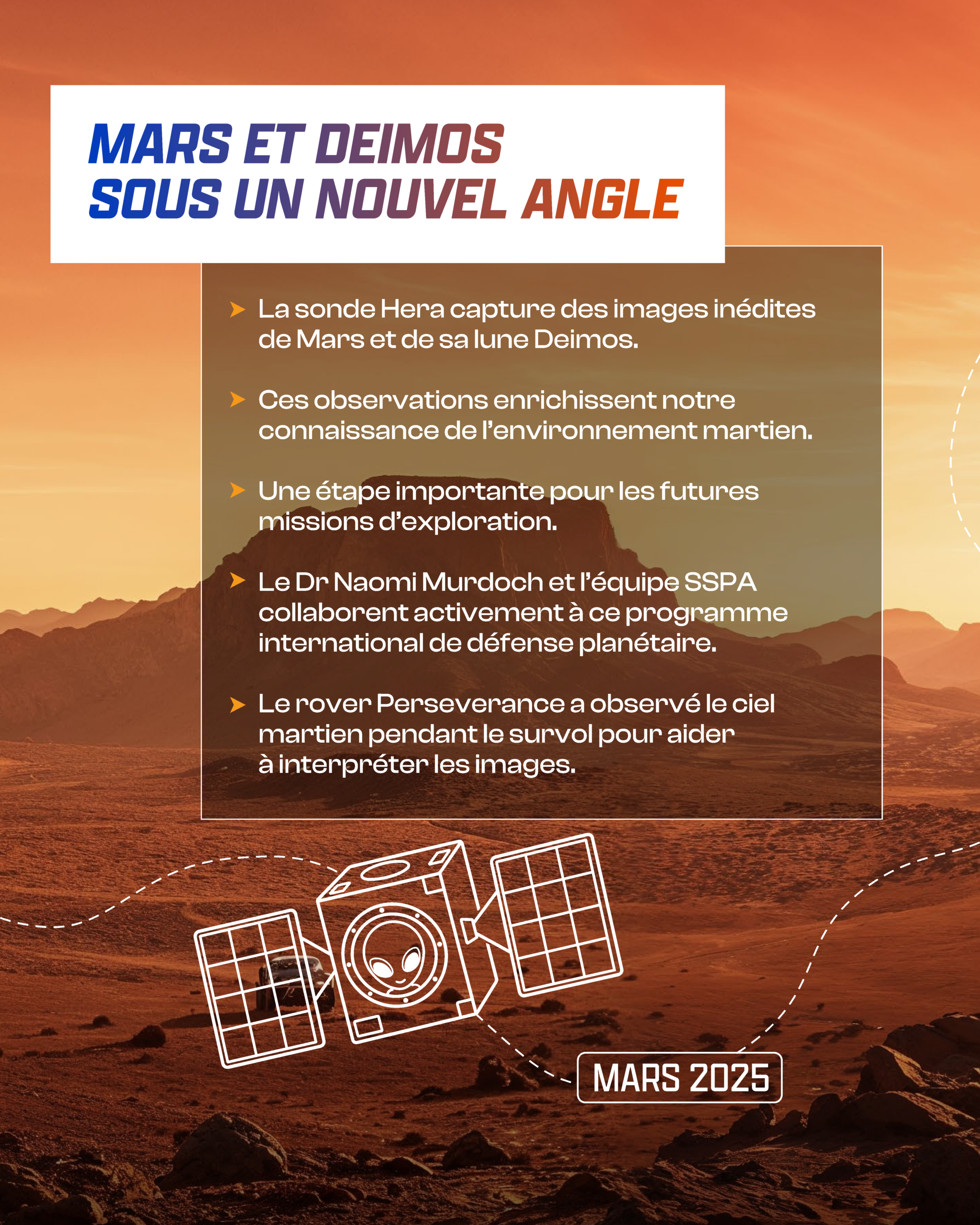
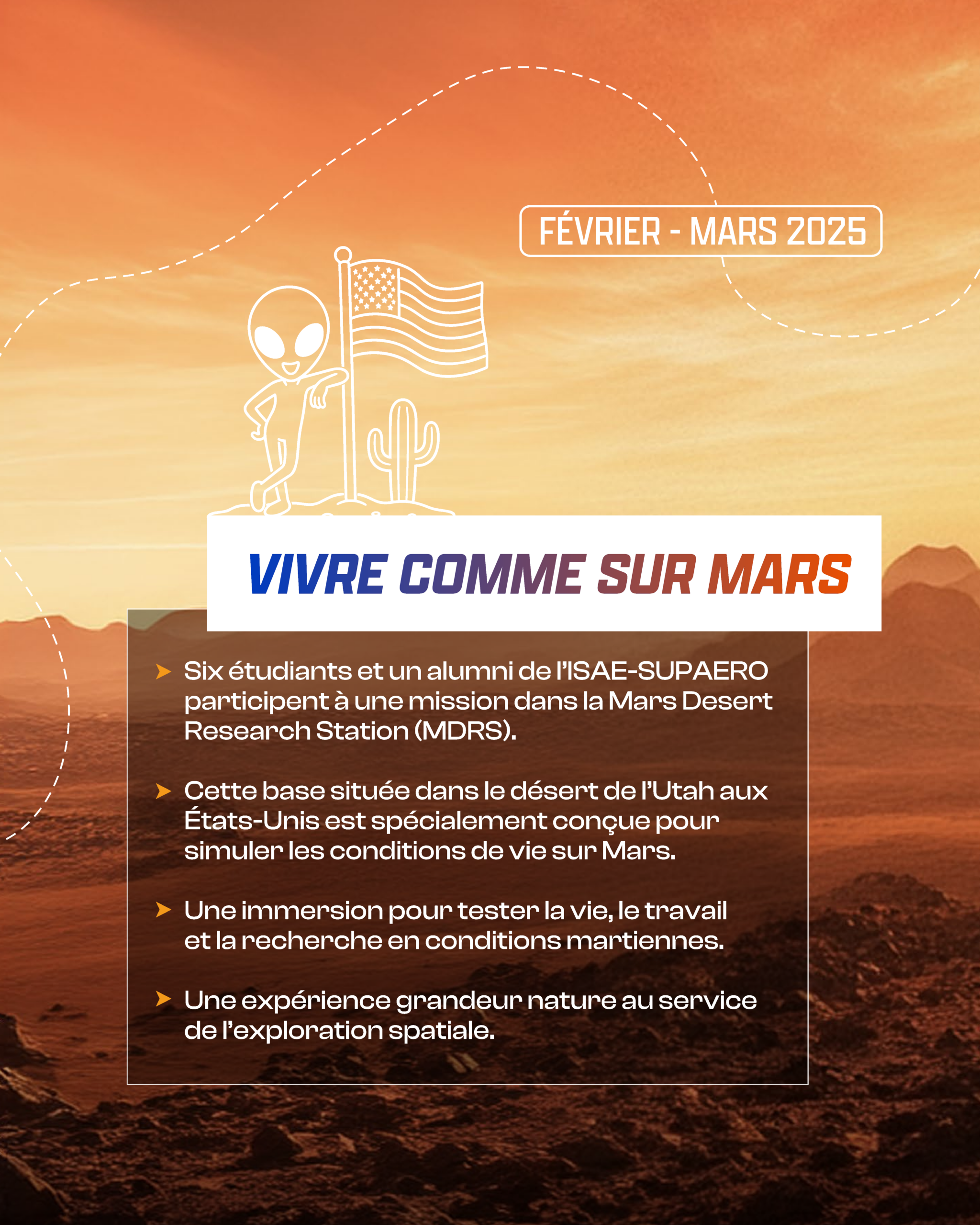
Related Content
News
Seven ISAE-SUPAERO students set out to conquer Mars in the Utah desertFor four weeks, seven engineering students will experience a simulation of life on Mars in the Utah desert in the United States. From 18th February to 16th March, they will conduct experiments in collaboration with CNES and several research laboratories at the Mars Desert Research Station (MDRS).
Space
Student club

News
ISAE-SUPAERO Researchers Receive IEEE NSREC 2025 Outstanding Paper Award for Advance in Space Imaging Sensor PhysicsResearchers from ISAE-SUPAERO and their partners have received the Outstanding Conference Paper Award at the IEEE (Institute of Electrical and Electronics Engineers) Nuclear and Space Radiation Effects Conference 2025 (NSREC) in Nashville, Tenessee, the most important international conference dedicated to radiation effects in electronic systems for space and nuclear applications.
DEOS
Prize
Research
Testimonials
Testimonial of Baptiste Sigal, Advanced Master® TAS ASTRO student (class) 2025Advanced Master
Aerospace
Space
Pages
Photonics Antenna Microwave PlasmaA (PAMPA) Scientific GroupThe “Photonics Antenna Microwave PlasmaA” (PAMPA) scientific group is interested in electromagnetism in the fields of microwaves and photonics, as well as wave-plasma interactions.
DEOS
Doctoral student
PhD
Videos
SUPERCAM Educational Kits / Martian Exploration: Students at the controls of the kitsFollow ISAE-SUPAERO students as they create educational kits, a digital educational tool designed to raise awareness of space exploration that can be used in classrooms from Year 7 to Year 13.
Diversity program
Equal opportunities
Space
Events
AASTRA Certificate: presentation webinar on March 25 from 6:00 p.m. to 7:00 p.m.Aeronautics
Aerospace
Air transport
Events
2026 edition of "Les Entretiens de Toulouse"Aeronautics
Aerospace
Event
News
The COMETES project - Skills and Careers in Space - is launching its website, a platform dedicated to skills and careers in the space sector.The space sector is undergoing profound change driven by New Space, accelerating technological innovation, and environmental challenges. These transformations are leading to rapid changes in the careers and skills required within the industry. In this context, COMETES is launching a platform dedicated to space-related skills, careers, and training.
Education
Space
News
3 questions to... Loïc Jecker, S-Cube member from 2011 to 2013Meet Loïc Jecker, member of S-Cube - SUPAERO Space Section - ISAE-SUPAERO's experimental rocket club, from 2011 to 2013.
Space
Student club
Student life
Pages
Advanced Space Concepts Laboratory - Airbus DS & ArianeGroupCreated in 2017 and renewed until 2027, this sponsorship partnership brings together Airbus Defense & Space and Ariane Group.
Aerospace
Chair
Company
Pages
Support for the Development of the ISAE Group - GIFASGIFAS (Groupement des Industries Françaises Aéronautiques et Spatiales - French Aerospace Industries Group) supports the development of high-level academic and professional education in aerospace systems at the 6 Grandes Écoles that make up the ISAE Group (ISAE-ENSMA, ISAE-SUPMECA, ESTACA, Ecole de l'Air et de l'Espace, ENAC, ISAE-SUPAERO).
Aeronautics
Aerospace
Chair
News
ISAE-SUPAERO is co-hosting the 16th EASN International Conference in ToulouseISAE-SUPAERO is pleased to host the 16th edition of the international conference organized by EASN in Toulouse from October 27 to 30, 2026, dedicated to the theme: “Innovation in Aeronautics and Space for Sustainability Today and Tomorrow.”
Aeronautics
Aerospace
Innovation
News
Ariane 6: at ISAE-SUPAERO, researchers are already working on the futureThe European Ariane 6 launcher incorporates major technological innovations such as the Vinci engine, capable of reigniting in space. At ISAE-SUPAERO, researchers are tackling the challenges posed by the rocket engines of tomorrow.
Space
News
Listening to the Martian past: ISAE-SUPAERO at the heart of the ExoMars missionESA's ExoMars Rosalind Franklin mission to explore Mars will carry a unique instrument for recording sound and atmospheric data from the planet. The Institute has been selected by ESA and CNES for this major scientific collaboration.
DEOS
Researcher
Science
Pages
Navigation, Radar, and Remote Sensing (NAVIR² eS) Scientific GroupThe “Navigation, Radar and Remonte Sensing” (NAVIR² eS) scientific group is interested in the theoretical study of information sources and hybridization approaches for autonomous vehicle navigation applications.
DEOS
Doctoral student
PhD
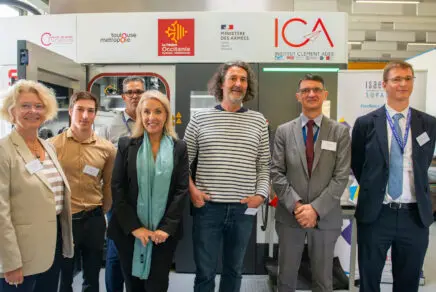
News
ISAE-SUPAERO acquires an innovative new additive manufacturing equipmentISAE-SUPAERO and the Institut Clément Ader (ICA) have just acquired a new Wire Arc Additive Manufacturing (WAAM) machine. This cutting-edge equipment opens up new prospects for research, teaching and innovation in the aeronautical field.
Aeronautics
News
Research
News
Training new skills for the future of space: COMETES is launched!Company
Job
Space
News
ISAE-SUPAERO announces new partnership with ESA Academy to support future Master in Aerospace Engineering studentsAerospace
Master in Aerospace Engineering
Scholarship
Pages
Our Specialised Studies CertificatesOur specialised studies certificates are designed for professionals. They enable you to develop skills and expertise in the fields of digital, aeronautics, space, project management, systems engineering, and artificial intelligence.
Advanced Master
Aeronautics
Aerospace
Videos
Training courses: space studiesFind out more about our courses and #information in the field of space! The space dimension is strongly developed within our various training courses, whether in specific streams or dedicated programs. French and international students alike are showing a keen interest in our educational programs in Earth observation and the sciences of the Universe, as well as in the design and operation of space systems. Space research and industry employ many ISAE-SUPAERO engineers. Explore the world of space!
Programme
Space
Testimonials
Testimony from Stéphanie Lizy-Destrez, elected member of the Air and Space AcademyDCAS
Space
Teacher researcher
News
SILOE, an experimental drop tower project selected by ESA and an ESPACE grant for Alexia DuchêneThe SILOE experimental drop tower project aims to study the cohesion of planetary surfaces. This student project is supported by ESA as part of its European ‘Academy Experiments’ program. Alexia Duchêne, SILOE project leader, has been awarded a scholarship of excellence from the Fondation des Ailes de France.
DEOS
Space
News
CASTOR Chair: Liebherr-Aerospace Toulouse and ISAE-SUPAERO, a win-win partnershipThe official signing of the industrial chair, called CASTOR, between Liebherr-Aerospace Toulouse and ISAE-SUPAERO took place on Tuesday 9 July at the institute's campus. This research partnership contributes to research into carbon-free aircraft.
Aeronautics
Chair
Company
News
ISAE-SUPAERO's researchers are working on establishing a sustainable human presence on the Moon.While last year marked the 50th anniversary of the Apollo 17 mission, the last manned trip to the Moon, the development of ‘New Space’ has revived the space sector's interest in lunar exploration.
DCAS
Space
Events
16th EASN International ConferenceAeronautics
Aerospace
Event
Videos
Start-up insights: interview with Ugo Bonnet from the Space Flight InstituteIn recent years, ISAE-SUPAERO has developed a range of services and comprehensive support for its project leaders (students, doctoral students, teacher-researchers, and alumni), earning it the title of incubator. It is in line with this support philosophy that the Institute currently hosts numerous startups that were created within its walls. Today we welcome Ugo Bonnet, CEO of the Space Flight Institute, a company that offers innovative training (in partnership with ISAE-SUPAERO) to future professionals in human spaceflight, whether on Earth or in orbit. Ugo Bonnet discusses the creation of the organization, its major successes, and its plans for the future.
Alumni
Space
Startup

News
Call for Nominations for the 2027 Lopez-Loreta AwardISAE-SUPAERO is pleased to announce the call for nominations for the 2027 Lopez-Loreta Prize, a €1 million* award for excellence designed to support innovative, high-impact projects led by our graduates in the fields of academic research or entrepreneurship.
Entrepreneurship
Prize
Research
Pages
Prior Experience AccreditationThe validation of prior experience is an individual right enshrined in the French Labor Code and Education Code. It enables candidates to obtain all - or part - of a professional certification (Diploma, Professional Title, Certificate of Professional Qualification), based on their professional, salaried or non-salaried and/or voluntary experience. This scheme can be used if the candidate is seeking personal recognition, or more generally to support a professional project that he or she wishes to put into practice.
Advanced Master
Aeronautics
Aerospace
Events
Les Assises du New Space 2025: discussions and debates on NewSpace!The 2025 edition of the Assises du New Space will be held this year on July 8-9, 2025 at the Centre des congrès de la Villette - Cité des sciences et de l'industrie in Paris. Aimed at all players in the French space ecosystem, this event is a unique opportunity to exchange ideas and debate around NewSpace, and to discover the latest technological innovations and project financing opportunities. Registration is now open!
Conference
Event
Round table
News
Meteorite impact reveals new insights into MarsIn September 2021, NASA's InSight mission recorded a meteorite impact. Analysis of the data by scientists has revolutionised our understanding of the internal structure of Mars and its evolution. Its mantle is not homogeneous, as previously assumed, but composed of a layer of molten silicates overlying the core. Press release from the IPGP - Institut de Physique du Globe de Paris: ‘The InSight mission reveals a molten layer at the base of the Martian mantle’.
DEOS
Space
Videos
The sound of a Martian dust devil captured by the SuperCam microphone on PerseveranceThis video and audio show the results obtained by NASA's Perseverance Mars rover and its SuperCam microphone when recording the sounds of a Martian dust devil passing overhead on 27 September 2021, the 215th Martian day or sol of the mission. The dust devil was 25 metres wide and at least 118 metres high, moving at a speed of approximately 19 km/h. This is the first time such a recording has been made, as capturing a dust devil requires a bit of luck. Indeed, it flew over the rover at a time when all of Perseverance's sensors measuring wind, pressure, temperature and dust, plus the NavigationXXX (Navcam) camera, were running. This allowed scientists to combine sounds, images and atmospheric data. The unique combination of this data, along with atmospheric modelling, enabled researchers to estimate the dimensions of the dust devil. Scientists cannot accurately predict when these vortices will occur. Rovers such as Perseverance and Curiosity monitor them regularly. When scientists notice that they are more frequent at a certain time of day or approaching from a certain direction, they focus their monitoring to try to capture a dust devil with all the sensors at their disposal. > To better understand the video, it shows three rows of images: - the row
DEOS
Researcher
Space
Videos
Sophie Adenot is flying out on February 11th for a eight-month mission with Crew-12 on the ISS!Today, the entire ISAE-SUPAERO community is coming together: students, staff, faculty, and alumni are showing their support for Sophie Adenot, European Space Agency (ESA) astronaut and ISAE-SUPAERO alumna, as she embarks on a eight-month mission to the ISS. Sophie is the second French woman, 30 years after Claudie Haigneré, to fly on a long-duration mission. On the ISS, she will conduct around 200 scientific experiments, including 10 French experiments, covering fields such as medicine and materials physics. Have a good flight, Sophie. We will be following you throughout this amazing journey!
Alumni
Exploration
Space
Videos
A surprise from elsewhere... from the ISS...?Hello earth? Thomas Pesquet speaking! Thomas Pesquet, French astronaut and famous ISAE-SUPAERO alumnus (class of 2001), is currently in the ISS as part of his new Alpha mission. He sent our students a personalized message from the European laboratory Columbus...
Alumni
Diversity program
Space
News
Space Explorers: In a Desert, Six Students Simulate Life on MarsLast spring, for four weeks, six students and one alumnus from ISAE-SUPAERO lived completely self-sufficiently at the Mars Desert Research Station (MDRS). This base, located in the Utah Desert in the United States, is specifically designed to simulate living conditions on Mars.
Space
Student club
News
Researchers from ISAE-SUPAERO contributed to the success of the first images from ESA's Sentinel 2c observation satellite.The Sentinel 2c Earth observation satellite, launched on 5 September as part of ESA's Copernicus mission, has delivered its first images. This success is partly due to the image sensor research team (CIMI) at ISAE-SUPAERO, which designed and oversaw the manufacture of the visible image sensors.
DEOS
Space
Videos
The Dart mission has hit its target: explanations from Dr Naomi Murdoch, planetary scientist at ISAE-SUPAEROResearchers from ISAE-SUPAERO are participating in this first planetary defence mission. Dr. Naomi Murdoch, a researcher at ISAE-SUPAERO and scientific member of the #DART and #HERA missions, comments on the objectives of DART and those of the European HERA mission, which will arrive in the area in 2026 to characterise the crater left by DART and study the internal structure of the asteroid #Dimorphos!
DEOS
Researcher
Space
Pages
Learning, Decision, Optimisation (ADO) Scientific GroupDISC
Doctoral student
PhD
Pages
Aerospace Summer ProgrammeEnjoy a unique experience at the heart of aeronautics and space technology with intensive courses, exclusive industrial visits, and an international immersion in Paris, Poitiers and Toulouse.
Aeronautics
Aerospace
Aerospace summer program
Videos
FRENCH SUPERCAM INSTRUMENT RECORDING THE SOUND OF INGENUITY'S 4th FLIGHTLocated 80 meters from the rover at the moment of take-off, the small helicopter rose to 5 meters above the ground before covering a distance of 133 meters before returning to land where it had taken off from. SuperCam's scientific microphone, developed by ISAE-SUPAERO, recorded the sound emitted by the rotation of the Martian drone's blades during its flight. This sound has a characteristic frequency of 84 Hz, equivalent to the low “E” of a piano or the bass voice of a human being. “This is a big surprise for the whole scientific team,” says Naomi Murdoch, a researcher at ISAE-SUPAERO who is studying the data from the microphone. "Tests carried out in a Martian atmosphere simulator to design this instrument, and our theories of sound propagation, indicated that the microphone would have great difficulty picking up the sounds of the helicopter. Indeed, Mars' thin atmosphere strongly attenuates sound transmission. We needed a bit of luck to record the helicopter from such a distance. We're very pleased to have succeeded in obtaining this recording, which is proving to be a goldmine for our understanding of the Martian atmosphere". Developed jointly by ISAE-SUPAERO and a consortium of CNRS laboratories and its partners, coordinated by CNES, SuperCam's microphone is derived from a consumer model adapted to withstand the Martian environment. It pursues 3 substantial scientific and technical objectives of the Mars 2020 mission: Study the sound associated with laser impacts on Martian rocks, to gain a better understanding of their mechanical properties. Improving our understanding of atmospheric phenomena (wind turbulence, dust eddies, wind interactions with the rover, and now with the helicopter). Understanding the sound signature of the rover's various movements (robotic arm and mast operations, driving on normal or uneven ground, pump monitoring, etc.). The microphone was first switched on a few hours after Perseverance landed. It recorded the first Martian sounds generated by turbulence in the atmosphere. It is used daily in conjunction with laser rock ablation for chemical analysis of Mars. ABOUT THE MARS 2020 MISSION: NASA is relying on Caltech's Jet Propulsion Laboratory for the development of the Mars 2020 mission. SuperCam was developed jointly by LANL (Los Alamos National Laboratory, USA) and a consortium of laboratories attached to the CNRS, French universities and research establishments. Several Spanish universities, led by the University of Valladolid, are also contributing to the instrument. CNES is responsible to NASA for the French contribution to SuperCam. The instrument is operated alternately from LANL and the French Operations Center for Science and Exploration (FOCSE) at CNES in Toulouse.
DEOS
Researcher
Space
News
ISAE-SUPAERO hosts the first in-person Inter-Agency GNC V&V WorkshopOn July 9–10, 2025, ISAE-SUPAERO had the honor of hosting the very first in-person edition of the Inter-Agency GNC V&V Workshop, bringing together more than 150 participants from academia, industry, and major international space agencies.
Event
Research
Workshop
Pages
Our Short ModulesDerived from the Institute's Advanced Master programmes, our short modules are aimed at professionals wishing to develop specific skills in Aeronautics, Space, Project Management, Systems Engineering, or Digital Systems.
Advanced Master
Aeronautics
Aerospace
Testimonials
Testimony of Juan-Carlos DOLADO-PEREZ, alumni of the 2008 Master's degree in Aerospace EngineeringAlumni
Space
Testimonial
News
Mars hit by meteorites more often than previously thoughtTwo researchers from ISAE-SUPAERO contributed to new discoveries based on data from the seismometer sent to Mars during the InSight mission, one of whose main objectives was to measure seismic activity on the Red Planet.
Space
Pages
Integrated Image Sensors (CIMI) Scientific GroupThe “Integrated Image Sensors” (CIMI) scientific group, develops and characterizes active-pixel image sensors (CMOS Image Sensors (CIS)) on silicon for visible and infrared radiation.
DEOS
Doctoral student
PhD
Events
"Les Entretiens de Toulouse - Training through debate”: April 9 & 10, 2025 on the ISAE-SUPAERO campus"Les Entretiens de Toulouse" has become a must-attend event for the aerospace industry. A forum for the exchange and transmission of skills, this training through debate provides an opening onto subjects with high industrial stakes. The 2025 edition of the Entretiens de Toulouse will take place on April 9 & 10, 2025, in person, at ISAE-SUPAERO!
Aeronautics
Artificial intelligence
Defence
Pages
Semester Research ProjectsTake your studies to the next level by participating in a semester-long research project at ISAE-SUPAERO: immerse yourself in cutting-edge laboratories alongside international experts and contribute to advances in aeronautics and space technology.
Aeronautics
Aerospace
Aerospace summer program
News
Luca Parmitano, Artemis III astronaut: an ISAE-SUPAERO graduate at the heart of the next step in the return to the MoonOn June 9, 2026, NASA announced the crew for Artemis III, a key mission in the U.S. lunar program scheduled for 2027.
Advanced Master
Alumni
Space
Videos
Elena Lopez Contreras, a doctoral student in neuroergonomics at ISAE-SUPAERO, has won the Amelia Earhart AwardPrize
Research
Thesis
Pages
UNIVERSEHUNIVERSEH, the European Space University for Earth and Humanity, is an alliance of European universities created as part of the European Universities initiative launched by the European Commission in 2019.
Education
International
Science
News
RAMSES: ISAE-SUPAERO at the heart of a historic planetary defense missionLe sismomètre SIA développé par l'ISAE-SUPAERO est une première mondiale pour explorer l'astéroïde Apophis
DEOS
Research
Space
Videos
Arnaud Prost, ESA reserve astronaut and ISAE-SUPAERO alumnus: “I was incredibly lucky to be here”Fighter pilot and reserve astronaut with the European Space Agency (ESA), Arnaud Prost returned to his former school on Thursday March 28 to meet 200 secondary school students as part of the ISAE SUPAERO OSE program. It was an opportunity for him to recall the “great memories” of his student experience at ISAE-SUPAERO, his long-standing commitment to the student social outreach program and the “Aquanauts” scheme he set up with OSE l'ISAE-SUPAERO. And in passing, he offers a few words of advice to young people who might dream of following in his footsteps: “Don't let yourself be convinced that one of these paths isn't for you!” A 2017 graduate of ISAE-SUPAERO, Arnaud Prost is among those selected for the ESA Astronaut Class of 2022, alongside Sophie Adenot and Anthea Comellini, both also alumni of the school. They join other illustrious ESA astronauts who have already studied at the school: Thomas Pesquet, Luca Parmitano and Samantha Cristoforetti. Since 1970, ISAE-SUPAERO has contributed to the progress of the space age through its training, research and innovation activities. As the only organization in France to offer degree courses (engineering, master's, specialized master's, doctorate) covering all 22 space-related themes identified by CNES, the Institute offers a royal road to space careers. For Arnaud Prost's full profile: https://www.esa.int/Science_Exploration/Human_and_Robotic_Exploration/Astronauts/A
Alumni
Diversity program
Space
Testimonials
Testimony of Giuseppe Cataldo, alumnus of the 2010 Engineer ISAE-SUPAERO programmeAlumni
Space
Testimonial
Testimonials
Testimonial from Sylvain ASSOGBA, an AM IEM student participating in the “Startech Summer School – Space Entrepreneurship: from Business Ideas to Start-Ups” in RomeEducation
International
Space
Events
French-Korean workshop: “Cryogenic hydrogen for aviation”.Event
Research
Science
Pages
The “Certificate of Advanced Studies in Human Spaceflight” offered by the Spaceflight Institute in collaboration with ISAE-SUPAEROThe Spaceflight Institute is the first institute dedicated to training in human spaceflight. In partnership with ISAE-SUPAERO, it offers an intensive training program that enables participants to gain a comprehensive understanding of the challenges of human spaceflight and to position themselves within a rapidly expanding ecosystem, marked by future lunar and Martian missions as well as the rapid emergence of commercial space stations and private initiatives in low Earth orbit.
Education
Innovation
Partner
Videos
Sophie Adenot: from ISAE-SUPAERO to spaceMeet Sophie Adenot, astronaut at the European Space Agency (ESA) and ISAE-SUPAERO alumna, who answers three questions! 🚀
Alumni
Diversity program
Space
News
Meeting with Stéphanie Lizy-Destrez, elected member of the Air and Space AcademyAt ISAE-SUPAERO, Stéphanie Lizy-Destrez heads SaCLaB, a research laboratory focusing on future space systems. A professor of space systems engineering, she has just been elected to the French Air and Space Academy.
Award
Space
Teacher researcher
Videos
Sylvestre Maurice, astrophysicist and ISAE-SUPAERO alumnusAwarded a prize by the Académie des Sciences in 2020, Sylvestre Maurice #astrophysicist at the Institut de Recherche en Astrophysique et Planétologie (IRAP) in Toulouse witnessed the landing of the #Perseverance rover on Mars on February 18, 2021. A historic moment for this enthusiast, who is also the scientific manager of the onboard SuperCam instrument. A 1990 graduate of ISAE-SUPAERO, Sylvestre Maurice tells us about his career.
Alumni
Researcher
Space
Videos
Sylvestre Maurice presents the SUPERCAM / Martian Exploration educational kitThe ‘SUPERCAM - Martian Exploration’ educational kit project was initiated by five partners: ISAE-SUPAERO, the Toulouse Academy, CNRS, CNES and Cité de l'espace. Under the guidance and supervision of astrophysicist Sylvestre Maurice, first-year students at ISAE-SUPAERO developed this educational tool to raise awareness of space exploration in classrooms, from sixth form to final year. This kit is available to middle and high school teachers and can be adapted to offer educational lessons related to this theme.
Diversity program
Equal opportunities
Researcher
News
An exceptional scholarship for an innovative projectNaomi Murdoch, a researcher in physics and planetology at ISAE-SUPAERO, has just been awarded the prestigious Consolidator Grant from the European Research Council (ERC) for her planetary body study project called GRAVITE. This ambitious scientific project aims to design a variable gravity machine that will enable the simulation and study of extraterrestrial soils.
DEOS
Scholarship
Space
News
Apply today for a program at ISAE-SUPAERO or ENAC - École Nationale de l'Aviation Civile!The TSAAE application platform is now open: discover our world-renowned programs and apply online for the 2026 academic year before November 28 at midnight (French time)!
Advanced Master
Aeronautics
Aerospace
Videos
ISAE-SUPAERO and Airbus Defence and Space organize an international training course on space systemsTwenty engineers from the Peruvian space agency CONIDA (Comisión Nacional de Investigación y Desarrollo Aeroespacial) attended a training course in Toulouse designed jointly by ISAE-SUPAERO and Airbus Defence and Space! The aim? To develop their skills in space systems and space missions. The entire program was placed under the academic responsibility of AnnaFederica Urbano, a lecturer and researcher in space systems and launchers at ISAE-SUPAERO. The engineers took part in a preliminary satellite design project. At the end of the five-week course, they all obtained the Certificate of Advanced Studies awarded by ISAE-SUPAERO. For ISAE-SUPAERO and Airbus Defence and Space, this experience opens up prospects for future collaborations in training courses of this type for international customers and industrial and institutional partners. For more information: https://www.isae-supaero.fr/fr/actualites/airbus-defence-and-space-et-l-isae-supaero-forment-des-membres-de-l-agence/
Programme
Space
News
MMX, Idefix® and cameras to understand Mars' moonStudying the formation and origin of Mars' moons and bringing back samples: this is the extraordinary, ambitious international mission led by JAXA, in which ISAE-SUPAERO is participating alongside CNES.
DEOS
Researcher
Space
News
ISAE-SUPAERO will be at the Paris Air Show from June 16 to 22, 2025!Aeronautics
Event
Fair
News
Hera probe captures exceptional images of Mars and its moon DeimosDEOS
Researcher
Science
News
3 questions to... Ervan Kassarian, S-Cube member from 2015 to 2017Meet Ervan Kassarian, member of S-Cube - SUPAERO Space Section - ISAE-SUPAERO's experimental rocket club, from 2015 to 2017.
Space
Student club
Student life

News
ICCAS 2026: Artificial Intelligence for Operational Decision-MakingThe fourth edition of ICCAS (International Conference on Cognitive Aircraft Systems) was held on June 11–12, organized in partnership with the ISAE-SUPAERO Foundation and Dassault Aviation, as part of the Chair in Design and Architecture of Cognitive Aircraft Systems (CASAC).
Aeronautics
Aviation
Conference
News
Les Assises du New Space: update of the “Ambition NewSpace 2027” reportIn 2022, the Assises du NewSpace collective - a group of players representing the French space industry - published the report “Ambition NewSpace 2027”. Today, the collective is launching another major national consultation to update this report and shape the future of French space!
Conference
Round table
Space

Pages
Institute for Sustainable AviationCreated in 2021 on the initiative of internationally renowned academic institutions with longstanding academic expertise in aeronautics and air transport, the ISA is an institute dedicated to the challenges of aviation's transition to sustainability.
Aeronautics
Aviation
Decarbonization
Pages
Lasbordes Air Operations Center (COAL)The Department of Design and Operation of Aeronautical and Space Vehicles (DCAS) is part of the Lasbordes Air Operations Center (COAL), located on an airfield a few kilometers from the ISAE-SUPAERO campus. As part of its aeronautical training and research activities, COAL operates a fleet of 8 light aircraft.
DCAS
Doctoral student
PhD

News
The Age of Pioneers: Reinventing Aviation with HydrogenFor the past ten years at ISAE-SUPAERO, research into hydrogen has established itself as a major focus of innovation in support of the aviation sector’s energy transition. Now, more than ever, the pioneering spirit drives the Institute’s researchers. The Mermoz hydrogen-powered drone project builds on the legendary legacy of the Aéropostale and Jean Mermoz’s 1930 flight across the South Atlantic. Almost a century later, "Défi Mermoz" is in turn taking up a technological challenge, closely aligned with industrial priorities, without waiting until 2050!
Aviation
DAEP
Decarbonization
Videos
3 questions to Marie Delaroche, 3ᵉ year student and MDRS 293 crew commanderSince February 18, seven ISAE-SUPAERO engineering students have been living a simulated Martian life and carrying out experiments in collaboration with CNES and several research laboratories at The Mars Society's Mars Desert Research Station (MDRS) in UTAH (USA)! For the second time, the mission is led by a woman: Marie Delaroche, a passionate #spaceexplorer, who was already part of crew 275 departing in 2023. We asked her 3 questions to find out more about the challenges of this mission and her feelings as #flightcommander! Alongside her, three young women and three young men in their 2ᵉ year of #engineering studies have taken on the roles of astronomer, scientist, botanist, journalist, health worker and onboard engineer. They are all members of the Mars Club ISAE-SUPAERO, a student association for the popularization of science focused on the Red Planet and the missions dedicated to its exploration and study. They are currently experimenting with AI4U, the artificial intelligence that assists astronauts in their daily tasks (environmental measurements, voice recognition, emergency exercises). They are also conducting a science popularization experiment in collaboration with secondary school pupils. Inspired by the film The Martian, in which an astronaut grows potatoes on the Red Planet, the aim of this experiment is to compare plant growth in Martian soil with growth in terrestrial soil! To follow their adventure, click here: https://mars.bde-supaero.fr/
Space
Student club
Student life
News
3 questions to... Marie-Bertille Mosnier, S-Cube member from 2018 to 2022Meet Marie-Bertille Mosnier, member of the S-Cube - SUPAERO Space Section - ISAE-SUPAERO's experimental rocket club, from 2018 to 2022.
Space
Student club
Student life
Videos
Visiting professors at ISAE-SUPAERO: DAN SCHEERESISAE-SUPAERO est un établissement d'enseignement supérieur axé sur la recherche et l'innovation, qui s'engage à concilier excellence scientifique, visibilité académique et proximité avec les objectifs industriels. Ses activités de recherche ont contribué à faire de l'école un leader international non seulement en termes de programme d'ingénierie aérospatiale, mais aussi de programmes de troisième cycle, notamment ses masters (MSc) et ses programmes de doctorat en sciences de l'ingénierie. C'est pourquoi de nombreux acteurs internationaux clés de la recherche rendent visite à leurs homologues de l'ISAE-SUPAERO. Nous avons rencontré Dan Sheeres, professeur émérite de l'université du Colorado et titulaire de la chaire A. Richard Seebass au département des sciences de l'ingénierie aérospatiale Ann et H.J. Smead de l'université du Colorado à Boulder. Les recherches de Dan Scheeres couvrent des sujets allant de l'astrodynamique et de la navigation spatiale à la science planétaire et à la mécanique céleste, et il a publié de nombreux articles dans ces domaines. L'astéroïde 8887 a été baptisé « Scheeres » en reconnaissance de ses contributions à la compréhension scientifique de l'environnement dynamique des astéroïdes. Pendant son séjour à l'ISAE-SUPAERO, le professeur Scheeres et l'équipe des systèmes spatiaux pour les applications planétaires ont collaboré à l'analyse des données DART et au développement de concepts visant à étudier la structure interne des astéroïdes lors de futures missions spatiales. De plus, Dan Scheeres et l'ISAE-SUPAERO ont publié conjointement plusieurs articles dans « Nature » sur les astéroïdes et la mission DART.
DEOS
Researcher
Space
Videos
ISAE-SUPAERO and Indian Institute of Space Science & Technology work on student space exploration projectsISAE-SUPAERO received a visit from Professor Shine S R of the Indian Institute of Space Science and Technology (IIST) on December 7 and 8. ISAE-SUPAERO signed a co #cooperation agreement with the Indian Institute of Space Science and Technology in 2020 and this visit was a perfect opportunity to discuss the deepening of #training and #research collaborations between our two institutions. ISAE-SUPAERO and IIST have already been cooperating for 4 years within the framework of Franco-Indian collaborative academic projects, involving students from ISAE-SUPAERO and IIST on subjects related to space exploration missions and with the participation of experts from CNES, IRAP and the Indian space agency (ISRO)!
Space
News
Historical Discovery: Mercury Does Indeed Have Electron Radiation BeltsAn international team of researchers, including a scientist from ISAE-SUPAERO, has just published a study in the journal "Nature Astronomy" revealing the existence of electron radiation belts around Mercury. This discovery, based on an analysis of data from the MESSENGER mission and supported by previously unpublished observations from the BepiColombo mission’s MEA (Mercury Electron Analyzer) instrument, sheds new light on the physics of planetary magnetospheres and raises major challenges for the protection of space missions.
DEOS
Research
Space
Pages
Communication and Information Theory (ComiT) Scientific GroupThe “Communication and Information Theory” (ComiT) scientific group is involved in the disciplines of digital communications, radar, and channel access techniques. Its fields of application include space systems, civil and military aviation, terrestrial cellular networks and the Internet of Things (IoT).
DEOS
Doctoral program
Doctoral student
News
Mars mission simulation: a scientific experiment, a human adventureLike nine other ISAE-SUPAERO crews before them, seven students took part in a simulation of life on Mars in the Utah desert in the United States this winter.
Space
Student club
News
“My summer at NASA’s Jet Propulsion Laboratory”: Axel’s account, a student on the TAS Astro Advanced Master’s programmeSince May, Axel Coulon has been interning at NASA's famous JPL in Los Angeles. He is working on detecting helicopter landing sites on Mars. A student in the MS TAS Astro programme, he recounts this incredible space adventure that took him from his native Lorraine to California.
Internship
Programme
Space
News
Henry DE PLINVAL, portrait of ISAE-SUPAERO's new Director of Research and Educational ResourcesHenry de Plinval arrived on the ISAE-SUPAERO campus last August, and has taken up his new post as the school's Director of Research and Educational Resources. Portrait of Henry Plinval.
News
Portrait
Research
News
ISAE-SUPAERO and Spaceflight Institute join forces to train tomorrow's manned flight expertsOn July 29, 2025, ISAE-SUPAERO and the Spaceflight Institute signed a partnership agreement for the joint creation of a “Certificate of Advanced Studies in Human Spaceflight”. This new semester-long program aims to train a new generation of space professionals, combining academic excellence with operational expertise.
Certificates of advanced studies
Education
Space
Pages
Design and Analysis of Critical Systems (CASC) Scientific GroupThe “Design and Analysis of Critical Systems” (CASC) scientific group focuses on methods, processes and tools to support System Engineering and Systems Engineering.
DISC
Doctoral student
PhD
Pages
Theory, Modelling, and Systems Engineering (ThéMIS) Scientific GroupThe “Theory, Modeling and Systems Engineering” (ThéMIS) scientific group is dedicated to the study and development of advanced methods for the design, modeling and validation of complex systems.
DISC
Doctoral student
PhD
News
Space: Thomas Pesquet and Arnaud Prost will embark on two unprecedented space missions in 2027France is stepping up its space ambitions. At the Choose France summit, the President of the Republic announced that French astronauts Thomas Pesquet and Arnaud Prost will take part in two commercial space missions in 2027, as part of an agreement between France and the American company Vast.
Alumni
Exploration
Space
Pages
French Space Defence AcademyIn order to drive and implement the ambitions set out in the Space Defence Strategy, the creation of a space defence expertise sector offering attractive programmes is a major challenge. In this regard, the French Space Defence Academy (ASD) offers programmes available within the Armed Forces Ministry and leverages synergies between them to provide a personalised approach to space programmes.
Defence
Education
Partner
Pages
Innovating in a World of Transition - SafranThe challenges facing the aerospace industry (energy transition, New Space, digitalization) are driving a growing need for professionals with the ability to innovate. Against this backdrop, Safran and ISAE-SUPAERO are creating the Innovating in a World in Transition Chair.
Aeronautics
Aerospace
Chair
News
Mission Insight: the contribution of researchers from ISAE-SUPAEROThe InSight lander deployed by NASA recorded two earthquakes that occurred on Mars in 2021, providing scientists with exceptional data, the first direct observations ever made of a planet's core.
DEOS
Space
News
Valentin LELOUP, quantum and optical telecommunications systems engineer: the quantum and space tandemValentin Leloup, R&D engineer at Thales, combines two fields of expertise: quantum physics and space. He holds an engineering degree from ISAE-SUPAERO 2022 and a Master 2 in fundamental physics and applications.
Alumni
News
Research
News
Sophie Adenot Returns to EarthSophie Adenot, an ESA astronaut and ISAE-SUPAERO engineering graduate, is back on Earth after spending nearly 8 months on the ISS for her Epsilon mission.
Alumni
Event
Space
News
Landing on Mars: a unique experience for seven studentsSeven ISAE-SUPAERO students have been selected to join the Mars Desert Research Station (MDRS) in the United States. This replica of a Martian base will host the crew for four weeks, during which they will live in conditions similar to those found on Mars. The objective is to conduct experiments in situ in collaboration with research partners.
Space
Student club
Student life
Videos
Perseverance collects first Martian sounds: explanation by Dr. Naomi Murdoch & Dr. Alexander StottDr Naomi Murdoch, researcher in space instrumentation and planetary science, and Dr Alexander Stott, post-doctoral fellow, tell us more about the physical characteristics of Mars' atmosphere, in particular the speed of sound and its attenuation. These analyses were published in Nature on April 1, 2022 by an international team led by a teacher-researcher from Toulouse III - Paul Sabatier University, and including scientists from CNRS and ISAE-SUPAERO.
DEOS
Researcher
Space
News
Airbus Defence and Space and ISAE-SUPAERO train members of the Peruvian space agencyTwenty engineers from the Peruvian space agency attended a training course in Toulouse, jointly designed by ISAE-SUPAERO and Airbus Defence and Space, to develop their skills in the field of space systems and space missions.
DCAS
Short internship
Space
Events
ISAE-SUPAERO will be at the Paris Air Show at Le Bourget from June 16 to 22, 2025ISAE-SUPAERO will be present at the 55ᵉ Salon International de l'Aéronautique et de l'Espace at Le Bourget from June 16 to 22, 2025!
Aeronautics
Aerospace
Event
Testimonials
Testimony from Axel Coulon, student (class of 2024) of the TAS ASTRO Advanced Master®Advanced Master
Space
Testimonial

News
A team of researchers from the École de l'Air et de l'Espace and ISAE-SUPAERO received the Best Paper Award from the journal "Aviation Psychology and Applied Human Factors"A team of researchers from Ecole de l'air et de l'Espace and ISAE-SUPAERO and their partners have received the Best Paper Award in the Aviation Psychology and Applied Human Factors journal. The official award ceremony will take place during the European Conference on Aviation Psychology (EAAP) in The Hague in September 2026.
Aviation
DCAS
Human factors
Pages
Space Systems for Planetology and Applications (SSPA) Scientific GroupThe “Space Systems for Planetology and Applications” (SSPA) scientific group focuses on one main area of research: The development of missions and associated technologies for geophysical exploration of the solar system.
DEOS
Doctoral student
PhD
News
CIME 2025: Where Science Meets Adventure to Push the Limits of ExplorationAt ISAE-SUPAERO, the 2025 Interdisciplinary Congress on Extreme Worlds (CIME) gathers researchers and adventurers determined to push human limits in the planet’s most extreme environments.
Exploration
Innovation
Space
Pages
Applied Mathematics (MA) Scientific GroupThe “Applied Mathematics” (MA) scientific group covers a wide range of topics: Stochastic processes (especially Markov processes), numerical optimization (especially multidisciplinary optimization) and parallel computing, stabilization, control and numerical solution of partial differential equations, and financial engineering.
DISC
Doctoral student
PhD
Events
The "Assises du NewSpace" returns on July 7 & 8, 2026!Event
Space
News
The 2025 Edmond Brun Prize from the French Academy of Sciences awarded to Annafederica Urbano, professor at ISAE-SUPAEROOn October 28, 2025, the Academy of Sciences awarded the Edmond Brun Prize to Annafederica Urbano, professor of space launch vehicles at ISAE-SUPAERO. This biennial physics award recognizes her entire body of work in the field of space propulsion.
DCAS
News
Prize

News
An ISAE-SUPAERO PhD student has been awarded the ONERA 2026 PhD Student PrizeLucie Schwoebel, a third-year doctoral student at ISAE-SUPAERO working on a thesis co-funded by ONERA, has been awarded the 2026 Doctoral Student Prize in the field of Fluid Mechanics and Energy. This award recognizes the excellence of her research on the acoustics of sound-absorbing materials used in aeronautics.
PhD
Prize
Research
News
« Académie Spatiale de Défense »: A Day of Strategic Reflection on the Future of SpaceOn May 19, 2026, ISAE-SUPAERO and its partners at the Defense Space Academy hosted and organized a day of discussions focused on France’s National Space Strategy. Bringing together government decision-makers, industry representatives, researchers, and military officials, this event provided an opportunity to pool expertise and foster collective reflection on the major challenges of sovereignty, training, and strategic autonomy in the space sector.
Defence
Event
Space
News
ISAE-SUPAERO back on mission with HeraThe Hera mission, an international planetary defence mission, is on its way to study the asteroid Dimorphos, which will be struck by DART in 2022. ISAE-SUPAERO is actively collaborating in this international planetary defence programme through the research work of Naomi Murdoch and the SSPA team.
DEOS
Space
Pages
Connected Systems (SysCo) Scientific GroupThe scientific dynamic of the “Connected Systems” (SysCo) scientific group focuses primarily on network-related issues in aerospace applications, i.e. space communications, embedded networks and certain types of connected systems.
DISC
Doctoral student
PhD
News
DART: ISAE-SUPAERO students publish new scientific findings in Nature CommunicationsNaomi Murdoch, a planetary science researcher at ISAE-SUPAERO, is actively involved in scientific analysis and data interpretation for NASA's DART mission.
DEOS
Space
Events
AASTRA Certificate: Introductory Webinar on July 9 from 6:00 p.m. to 7:00 p.m.Aeronautics
Aerospace
Air transport
News
BROMO: the joint venture project involving major European space industry players presented to ISAE-SUPAERO studentsIn December 2025, ISAE-SUPAERO welcomed major players in the European space industry (Airbus, Thales and Leonardo) for an exceptional conference on the BROMO project.
Conference
Space
News
Capturing the seismic activity of an asteroid: our Apophis rendezvousDEOS
Research
Space
Videos
Orbit Your Thesis: ISAE-SUPAERO in zero gravity with the AIM experimentArtery In Microgravity (#AIM), the first student scientific experiment designed and developed in collaboration since 2018 by ISAE-SUPAERO and Polytechnique Turin, was launched on 23 November 2022 by Space X's Dragon cargo ship to the International Space Station (ISS)! Selected by the ESA as part of its ‘Orbit your thesis’ programme, AIM aims to study the behaviour of the heart and its arteries in space, in order to determine whether people with heart problems will one day be able to stay there.
Prize
Space
News
The Jupiter system: a unique laboratory for a major scientific breakthroughNicolas André, teacher-researcher at ISAE-SUPAERO, co-authors a major discovery in Nature Communications.
DEOS
Exploration
Space
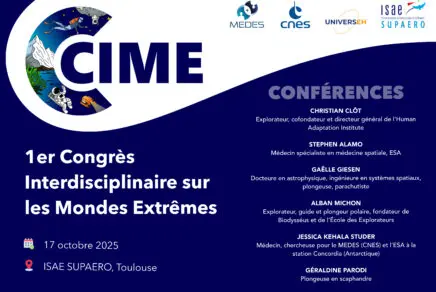
Events
Interdisciplinary Congress on Extreme Worlds - CIMEDo you work in or on extreme environments? Come and take part in the first edition of the Interdisciplinary Congress on Extreme Worlds (CIME)!
Congress
Research
Science
News
CASTOR Chair: ISAE-SUPAERO and Liebherr-Aerospace Toulouse celebrate 1 year of partnershipAeronautics
Chair
Partnership

News
“Without research, we wouldn’t be able to train our students to this standard” In-depth interview with Xavier Carbonneau, Deputy Director of ResearchXavier Carbonneau is the Deputy Director of Research and Pedagogical Resources at ISAE-SUPAERO. A professor specialising in propulsion and the former head of the Aerodynamics, Energetics and Propulsion Department, he has been supporting the growing role of hydrogen in the Institute’s teaching and research activities for several years.
Research
Pages
Spring Semester in Aeronautical EngineeringImmerse yourself in the world of aerospace in Toulouse, the European aerospace capital, with a semester taught in English combining excellent courses, cultural immersion, and proximity to major industrial players.
Aeronautics
Aerospace
Aerospace summer program
Pages
Our Semester & Short ProgrammesDiscover ISAE-SUPAERO's academic excellence through our semester and short programmes, open to international students.
Aeronautics
Aerospace
Aerospace summer program
News
ISAE-SUPAERO contributes to the Artemis IV mission with the SPSS seismology instrumentNASA selects the JPL/CNES instrument suite for the Artemis IV mission, paving the way for unprecedented exploration of the Moon’s internal structure at the South Pole.
DEOS
Exploration
Space
Events
AASTRA Certificate: Introductory Webinar on May 26 from 6:00 p.m. to 7:00 p.m.Aeronautics
Aerospace
Air transport
Pages
Job offersAeronautics
Aerospace
AI
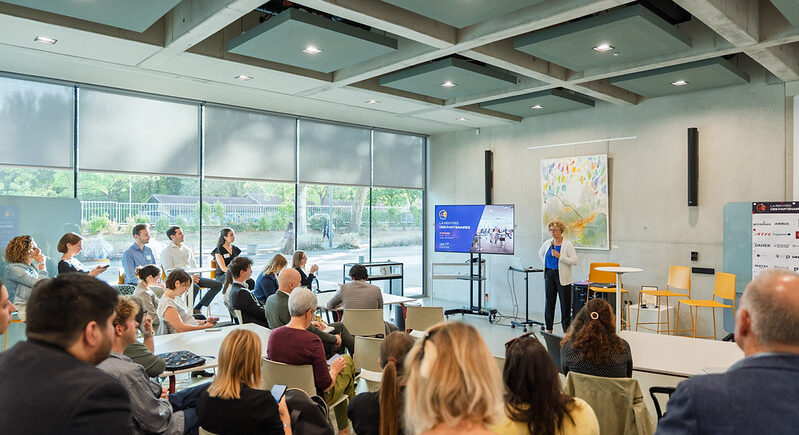
2026 Partner Kickoff
Every year, the Partner Kickoff brings together ISAE-SUPAERO and the companies that contribute to the Institute’s activities and support its students. Organized by the Corporate Relations and Alumni Department, this event provides a unique opportunity to share the latest news from the school, present updates on engineering programs, discuss student employability, and align corporate needs with evolving career trends.
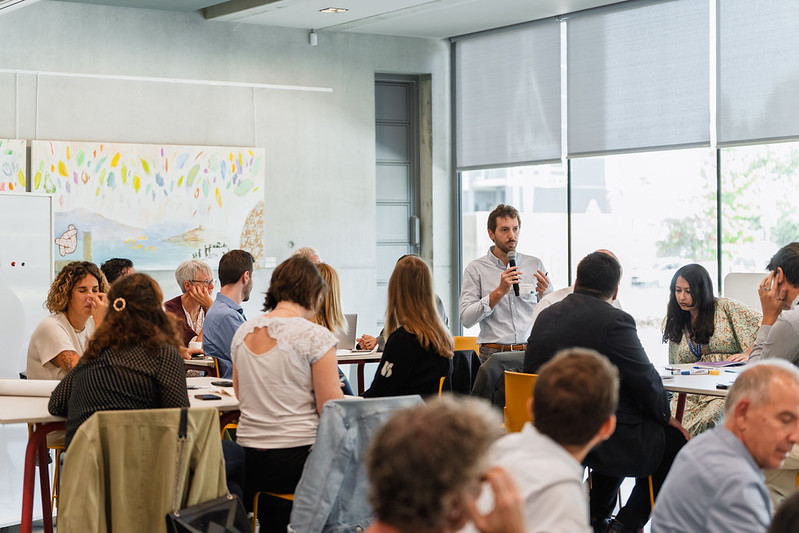
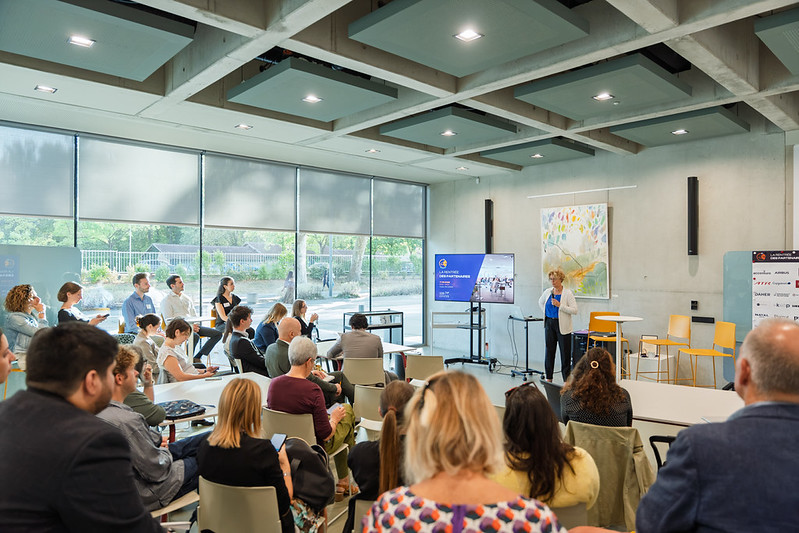
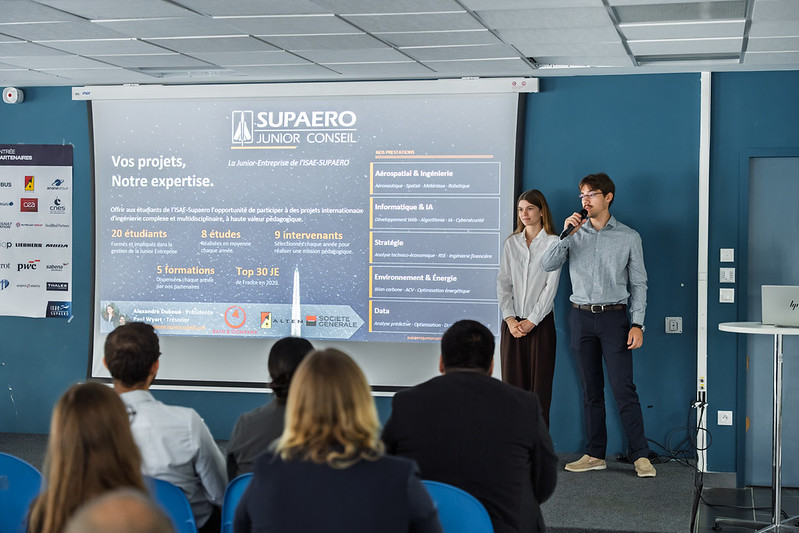
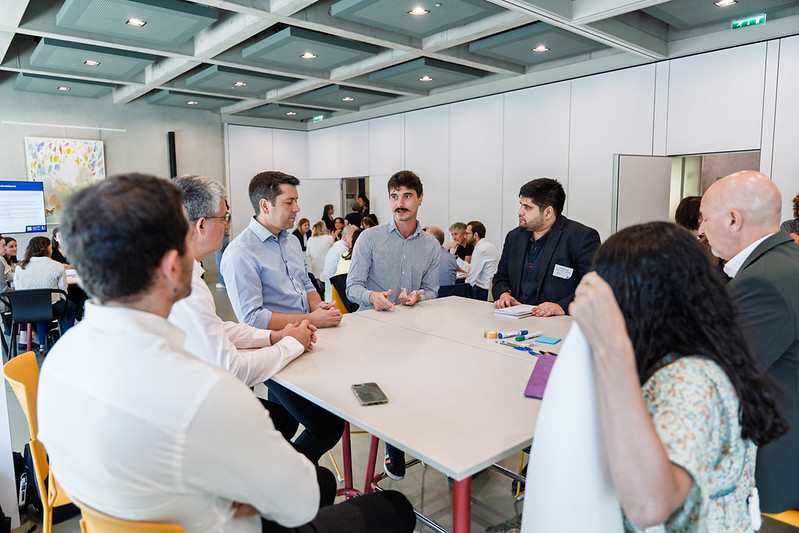
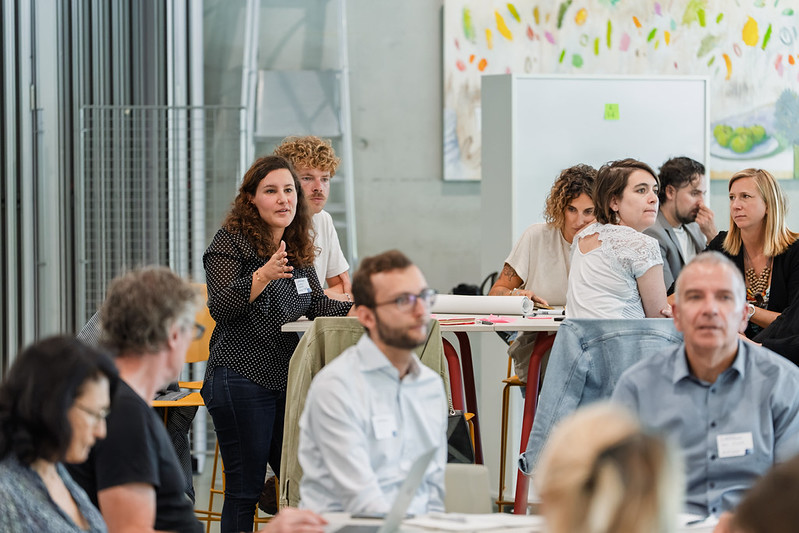
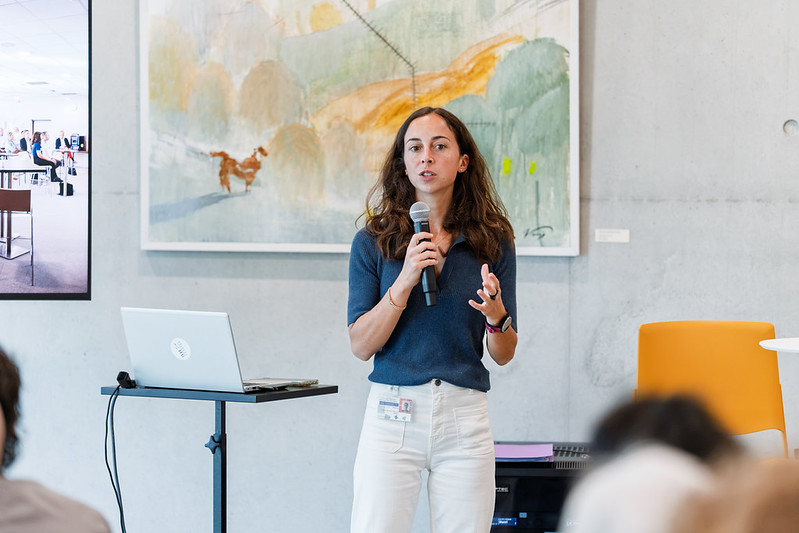
Related Content
News
CASTOR Chair: Liebherr-Aerospace Toulouse and ISAE-SUPAERO, a win-win partnershipThe official signing of the industrial chair, called CASTOR, between Liebherr-Aerospace Toulouse and ISAE-SUPAERO took place on Tuesday 9 July at the institute's campus. This research partnership contributes to research into carbon-free aircraft.
Aeronautics
Chair
Company
Events
Digital Clean Up WeekEvent
Institute
Events
ISAE Group Virtual ForumDefense & Security Engineer
Event
Ingénieur généraliste (MSc)
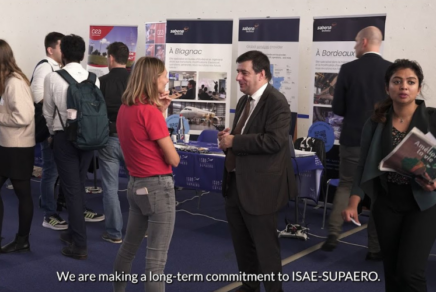
Videos
Testimony of Eric Vicente, Director of Human Resources at Sabina TechnicsEric Vicente tells us about Sabena Technics, a company specializing in aircraft maintenance, repair and overhaul (MRO), which was present at the Village Entreprises to meet students from ISAE-SUPAERO, experts in aeronautics and trained in innovation in this field! Their aim is to offer them professional opportunities and internships. These meetings also enable them to strengthen their presence among future engineers, and to propose future partnerships for the Institute's research and development (R&D) projects.
Career
Company
Partner
Pages
Our EcosystemOur Institute operates at the heart of a leading academic, scientific, and technological ecosystem. Driven by the strength of the ISAE SUPAERO ENSICA Alumni Association network, supported by the ISAE-SUPAERO Foundation, and enriched by EUROSAE's expertise in executive education, our actions are part of a collective dynamic within the University of Toulouse and the ISAE Group. Committed to the major challenges of tomorrow, we are developing major initiatives within the Institute for Sustainable Aviation for sustainable aviation and the Defense Space Academy to meet the strategic challenges of space.
Aerospace
Partner
Partnership
Pages
Advanced Space Concepts Laboratory - Airbus DS & ArianeGroupCreated in 2017 and renewed until 2027, this sponsorship partnership brings together Airbus Defense & Space and Ariane Group.
Aerospace
Chair
Company
Pages
Train Your Staff in FranceThe constant evolution of the technology and methods to be deployed in an increasingly complex environment requires lifelong learning for managers in the industrial sector, particularly in aerospace.
Career
Chair
Civic service
News
ISAE-SUPAERO is broadcasting the webinar "Air transport in crisis and the climate challenge: towards new paradigms" on campus!Aerospace
Event
Sustainability
Pages
The “Certificate of Advanced Studies in Human Spaceflight” offered by the Spaceflight Institute in collaboration with ISAE-SUPAEROThe Spaceflight Institute is the first institute dedicated to training in human spaceflight. In partnership with ISAE-SUPAERO, it offers an intensive training program that enables participants to gain a comprehensive understanding of the challenges of human spaceflight and to position themselves within a rapidly expanding ecosystem, marked by future lunar and Martian missions as well as the rapid emergence of commercial space stations and private initiatives in low Earth orbit.
Education
Innovation
Partner
News
Training new skills for the future of space: COMETES is launched!Company
Job
Space
Pages
Our ChairsSupporting ISAE-SUPAERO through corporate sponsorship means supporting the development of new skills and resources, future talent and innovative projects.
Chair
Company
Partner
Pages
EUROSAEAt ISAE-SUPAERO, we implement a national and international executive education dynamic policy with EUROSAE, a joint Education and Training Division of ISAE-SUPAERO and ENSTA ParisTech.
Aerospace
EUROSAE
Executive Education
Videos
Meeting with Christophe Henno (S 1991) Director of Programs for Airbus AtlanticMeeting with Christophe Henno (S 1991) Director of Programs for Airbus Atlantic
Career
Company
Partner
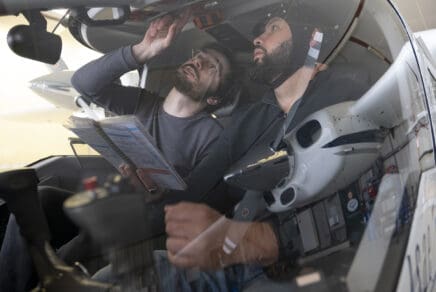
News
Dassault Aviation and ISAE-SUPAERO renew their collaboration on the "Design and Architecture of Cognitive Air Systems" Research ChairThe "Design and Architecture of Cognitive Air Systems" teaching and research chair, initiated in 2016 by Dassault Aviation, ISAE-SUPAERO and its Foundation, aims at rethinking the relationship between crews and systems used in aviation. After some first promising results, the two aviation actors have decided to renew their partnership for another three years.
Chair
Company
Partnership
News
ICAO (International Civil Aviation Organisation) Congress: Laurent Joly, Deputy Director of Research at ISAE-SUPAERO, talks about the Institute's commitmentsEvent
Sustainability
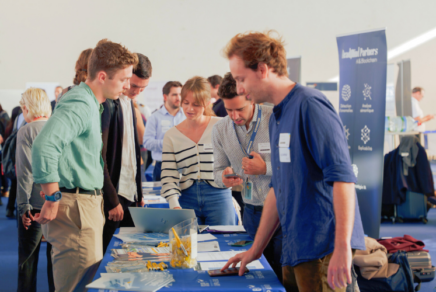
News
A look back at the 2024 Enterprise VillageThe Village Entreprises was held at ISAE-SUPAERO on November 7. The event is organized every year to enable our students to meet, exchange ideas and make contacts with our partner companies.
Career
Company
Internship
Pages
French Space Defence AcademyIn order to drive and implement the ambitions set out in the Space Defence Strategy, the creation of a space defence expertise sector offering attractive programmes is a major challenge. In this regard, the French Space Defence Academy (ASD) offers programmes available within the Armed Forces Ministry and leverages synergies between them to provide a personalised approach to space programmes.
Defence
Education
Partner
News
Sophie Adenot Returns to EarthSophie Adenot, an ESA astronaut and ISAE-SUPAERO engineering graduate, is back on Earth after spending nearly 8 months on the ISS for her Epsilon mission.
Alumni
Event
Space
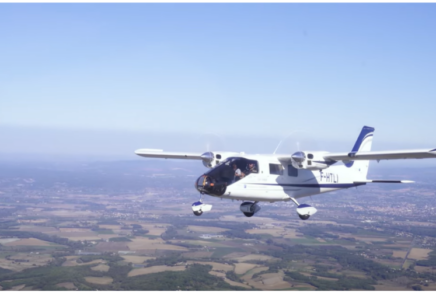
Videos
ISAAR DAHER/ ISAE-SUPAERO Chair: presentation of the Chair's workDesign and certification of CS-23 category aircraft ✈ In collaboration with our sponsor #daher and with the support of the ISAE-SUPAERO Foundation, discover the latest advances in the work of the #ISAAR Chair (Innovative Solutions for Aviation Architecture & Regulation). Aircraft design is inherently multidisciplinary. It relies on a systemic approach to understanding certification needs and requirements and on a comprehensive analysis of possible vehicle architectures. Current and future environmental, societal and mobility challenges further reinforce this need to integrate disciplines in order to better optimise aircraft and to better reconcile safety, performance, environmental protection, market economics and the needs of passengers and crew. For more information: https://www.isae-supaero.fr/fr/isae-s... FAST-OAD: https://github.com/supaero-aircraft-d...
Aeronautics
Chair
Company
News
Pride, excellence and spirit of promotion: ISAE-SUPAERO is preparing to celebrate its 2025 graduates!Our 2025 graduation ceremonies will celebrate excellence and community pride on 6 December 2025, honouring more than 600 graduates from our programmes, accompanied by distinguished guests and numerous prestigious awards.
Award
Event
Events
First edition of the Occitanie Talent MarketplaceOn November 13, 2025, at the Cité de Toulouse, ISAE-SUPAERO will be taking part in a first-of-its-kind event, the “Occitanie Talent Marketplace”, which will bring together start-ups from the university world in the Occitanie region and talents & skills wishing to take part in an entrepreneurial adventure.
Entrepreneurship
Event
Innovation
News
Women's Campus Day 2026 “Inspiring younger generations and young girls”: astronaut Sophie Adenot's commitment continuesThe first edition of ISAE-SUPAERO's “Campus au féminin” days in 2016, attended by astronaut Sophie Adenot, a graduate of the school, was met with great enthusiasm by middle and high school girls. Given its success, the program has become a permanent fixture and now reaches hundreds of young girls every year, allowing them to discover careers in science and engineering.
Diversity program
Equal opportunities
Event
News
"Futurs Proches" Festival in October 9: tickets are now available!ISAE-SUPAERO's CSR department, in partnership with the Toulouse Community of Universities and Establishments (COMUE), invites you to join us on Thursday, October 9 for the 2ᵉ edition of the Festival Futurs Proches, Festival des Campus en transitions!
Corporate responsibility
Decarbonization
Event
Videos
Pierre-Eric Pommellet, CEO of Naval Group: European leader in naval defense and partner of ISAE-SUPAERODiscover the interview with Pierre-Eric Pommellet, Chairman and CEO of Naval Group and ISAE-SUPAERO alumnus, who talks about cooperation between schools and companies.
Career
Company
Partner
Events
"Les Entretiens de Toulouse - Training through debate”: April 9 & 10, 2025 on the ISAE-SUPAERO campus"Les Entretiens de Toulouse" has become a must-attend event for the aerospace industry. A forum for the exchange and transmission of skills, this training through debate provides an opening onto subjects with high industrial stakes. The 2025 edition of the Entretiens de Toulouse will take place on April 9 & 10, 2025, in person, at ISAE-SUPAERO!
Aeronautics
Artificial intelligence
Defence
Events
2026 edition of "Les Entretiens de Toulouse"Aeronautics
Aerospace
Event
Videos
Testimony of Pauline Heuze, Recruitment Assistant at Liebherr Aerospace and TransportationLiebherr develops, manufactures and maintains innovative air systems for the aerospace industry. Sustainable aviation has become a major challenge for the aeronautics industry, requiring close collaboration between companies and ISAE-SUPAERO, particularly through its training courses. At the Village Entreprises, ISAE-SUPAERO was able to talk to our students and present various internship programs, collaborative projects and career opportunities. To develop its innovation policy, Liebherr needs young engineers ready to take up the challenges of sustainable aviation, but also skilled in the fields of sustainable technologies, alternative propulsion systems and resource management.
Career
Company
Partner
Events
ISAE-SUPAERO will be at the Paris Air Show at Le Bourget from June 16 to 22, 2025ISAE-SUPAERO will be present at the 55ᵉ Salon International de l'Aéronautique et de l'Espace at Le Bourget from June 16 to 22, 2025!
Aeronautics
Aerospace
Event
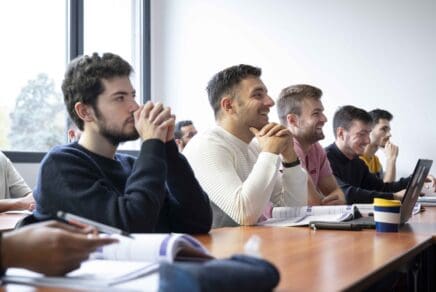
News
ISAE-SUPAERO, ENAC, and Airbus Launch an Advanced Master programme for Ethiopian AirlinesISAE-SUPAERO, ENAC, and Airbus are partnering with Ethiopian Airlines to launch an Advanced Master programme in Aviation Management for 30 executives from the airline. This one-year program, offered in Addis Ababa, aims to support the development of skills and leadership in the African aviation sector.
Advanced Master
Aeronautics
Company
News
ISAE-SUPAERO at the Forefront of AI Challenges in Defense and SecurityOn March 24, 2026, ISAE-SUPAERO hosted the Future Intelligence Forum, an event dedicated to artificial intelligence applied to the defense, security, and resilience sectors. Public policymakers, experts, researchers, industry leaders, and innovators gathered to share their vision and collectively shape the future of AI in the public interest.
Aerospace
Artificial intelligence
Defence
News
ISAE-SUPAERO hosts the first in-person Inter-Agency GNC V&V WorkshopOn July 9–10, 2025, ISAE-SUPAERO had the honor of hosting the very first in-person edition of the Inter-Agency GNC V&V Workshop, bringing together more than 150 participants from academia, industry, and major international space agencies.
Event
Research
Workshop
Pages
CompaniesCareer
Chair
Civic service
Pages
Prior Experience AccreditationThe validation of prior experience is an individual right enshrined in the French Labor Code and Education Code. It enables candidates to obtain all - or part - of a professional certification (Diploma, Professional Title, Certificate of Professional Qualification), based on their professional, salaried or non-salaried and/or voluntary experience. This scheme can be used if the candidate is seeking personal recognition, or more generally to support a professional project that he or she wishes to put into practice.
Advanced Master
Aeronautics
Aerospace
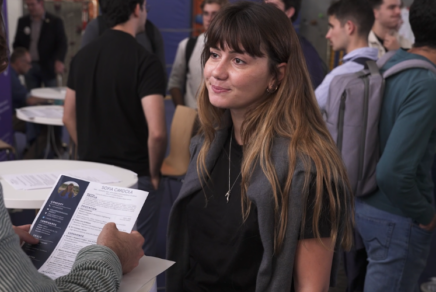
Videos
Testimonials from Alex Dejoie and Sofia Cardola, engineering and master in aerospace engineering studentsISAE-SUPAERO recently welcomed some 40 companies from a wide range of industrial and service sectors to its campus. These companies, represented by alumni and HR managers, were able to share internship and job opportunities with over 500 students in attendance. The event also provided an opportunity for privileged exchanges between students and professionals on current and future challenges and projects. These close encounters were particularly enriching, providing young talent with sound advice and a mutual understanding of needs and expectations! The Enterprise Village is a fantastic opportunity to forge links and develop your professional network, while at the same time widening the field of possibilities. Through this initiative, ISAE-SUPAERO, at the heart of our students' training, has reaffirmed its central role in guiding them towards the professional world. Read the testimonials of Alex Dejoie, a student engineer specializing in astrophysics and space, and Sofia Cardola, a student in the Master in Aerospace Engineering program.
Career
Company
Testimonial
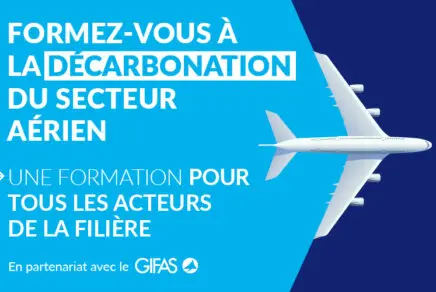
News
ISAE-SUPAERO and GIFAS offer training to accelerate the decarbonization of air transportFaced with the challenges of climate change and the imperatives of energy transition, ISAE-SUPAERO and GIFAS have joined forces to offer a unique training program dedicated to decarbonizing the aviation sector.
Aeronautics
Company
Decarbonization
News
2027 ISAE-SUPAERO Open DayYou used to join us in the fall for our Open Day. The ISAE-SUPAERO Open Day has a new date!
Aerospace
Event
Open day
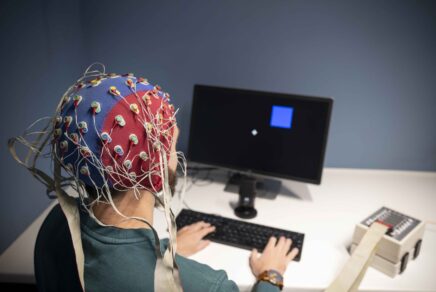
Pages
Human Factors and Neuroergonomics for Aviation Safety - AXAThe AXA Chair aims to advance research into human factors and, more specifically, human-machine interfaces, with a view to improving air safety.
Aeronautics
Chair
Company
News
« Académie Spatiale de Défense »: A Day of Strategic Reflection on the Future of SpaceOn May 19, 2026, ISAE-SUPAERO and its partners at the Defense Space Academy hosted and organized a day of discussions focused on France’s National Space Strategy. Bringing together government decision-makers, industry representatives, researchers, and military officials, this event provided an opportunity to pool expertise and foster collective reflection on the major challenges of sovereignty, training, and strategic autonomy in the space sector.
Defence
Event
Space
Pages
University of ToulouseSince 1 January 2025, our Institute has been an associate member of the new Université de Toulouse, formerly the Université Toulouse III - Paul Sabatier and heir to the Communauté d'universités et établissements de Toulouse - COMUE de Toulouse. The University of Toulouse is an experimental public institution that has embarked on a collective drive to build a future major institution that will be attractive and visible on the international stage.
Aerospace
Partner
Events
The "Assises du NewSpace" returns on July 7 & 8, 2026!Event
Space
Events
8th edition of Future IntelligenceAI
Artificial intelligence
Cyber
Videos
Testimony of Florian Bonte, S2010 ISAE-SUPAERO alumni: creating opportunities through networkingCreating opportunities through networking: a testimonial from Florian Bonte, S2010 ISAE-SUPAERO alumnus! He tells us about our partnership, and the importance of networking and passing on information, as an alumnus of the school, and Sales Manager at Groupe SII, one of the school's partner companies. Our partner companies recently took part in the Village Entreprises, an event held on the ISAE-SUPAERO campus. This not-to-be-missed annual event enables our students to meet, exchange ideas and make contacts with our partner companies! Thanks to the many training options offered by the Institute, and the diversity of their first professional experiences and nationalities, the professional profiles of our students are perfectly adapted to the needs of companies. For our students, it's a unique opportunity to exchange ideas with professionals to identify internship and job opportunities, to refine their project, or to find ideas to bring their projects to fruition.
Alumni
Career
Company
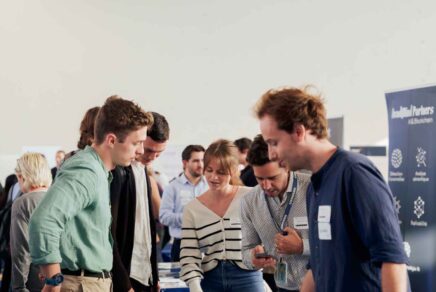
Pages
Become a PartnerCompany
Partnership
Sponsorship
Events
Forum ICAM 2026Company
Event
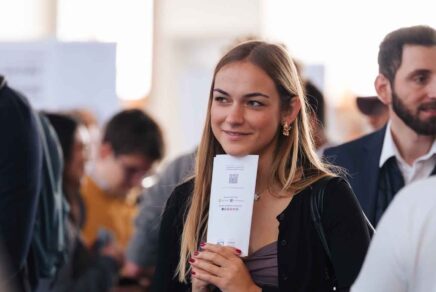
Pages
Recruit Your Future TalentThroughout the year, ISAE-SUPAERO offers meetings and events to enable you to identify, attract, and recruit the best talent from among our future graduates and our alumni network.
Company
News
Alexandre Bouraoui Takes Gold at the 2025 International Astronautical CongressFinal-year engineering apprentice, specializing in Industrialisation and Methods for Aeronautics and Space, Alexandre Bouraoui was recently honored at the 76th International Astronautical Congress (IAC 2025) in Sydney, where he won the prestigious Hermann Oberth Gold Medal in the Graduate category. We spoke with him about his award and his studies at ISAE-SUPAERO.
Congress
DEOS
Event
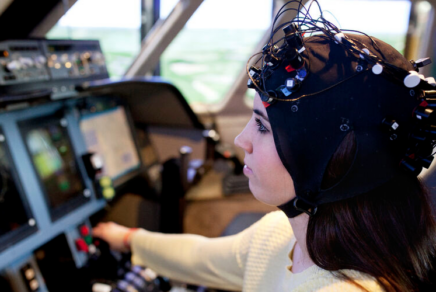
News
10 years of progress in neuroergonomics at ISAE-SUPAERO supported by AXA Fonds pour la RechercheThe 20-year AXA - ISAE-SUPAERO “Neuroergonomics for Aviation Safety” Chair is the first philanthropic chair signed by the Institute. An exceptional collaboration between the AXA Research Fund, ISAE-SUPAERO and the Fondation ISAE-SUPAERO.
Chair
Company
Partnership
News
ISAE-SUPAERO and ENAC invite you to the “Rendez-vous Aéro de l'Innovation” on Thursday, February 5, 2026!Aeronautics
Event
Innovation
Events
"Futurs Proches" FestivalEvent
Sustainability
Pages
Train Your Customers, Partners, and Employees InternationallyExplore our international solutions for companies and organisations! ISAE-SUPAERO leverages its expertise in aeronautical and space engineering by supporting industrial, academic, and institutional players in the aeronautical and space sector, both civil and defence, in terms of education and human capital development.
Company
Partner
Partnership
Events
Les Assises du New Space 2025: discussions and debates on NewSpace!The 2025 edition of the Assises du New Space will be held this year on July 8-9, 2025 at the Centre des congrès de la Villette - Cité des sciences et de l'industrie in Paris. Aimed at all players in the French space ecosystem, this event is a unique opportunity to exchange ideas and debate around NewSpace, and to discover the latest technological innovations and project financing opportunities. Registration is now open!
Conference
Event
Round table
Events
16th EASN International ConferenceAeronautics
Aerospace
Event
Videos
Testimony of Joseph Risson, ingénieur 2024 alumni & co-founder of Viraj H2 From student to entrepreneur: that's the path Joseph Risson, a 2024 graduate, has taken at ISAE-SUPAERO!Co-founder of the startup Viraj H2, created during his 3ᵉ year of engineering studies, Joseph Risson wants to contribute his expertise to the decarbonization of air travel by exploring a new hydrogen propulsion architecture! Joseph and his partner, Paul de Goÿs, were awarded the €1 million Lopez-Loreta Foundation prize in 2023 to continue their research into this innovative propulsion method, and now benefit from the support and expertise of InnovSpace, the school's official incubator, where the startup is currently housed. Like all our alumni, he plays an essential role in creating lasting links between the institution and its former students. They encourage mutual support and the sharing of professional opportunities, help strengthen the community and support future generations with their experience and resources.
Alumni
Career
Company
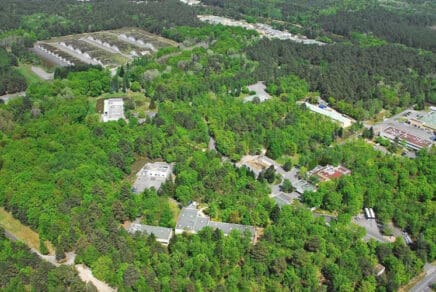
News
Our partners are going green!Partner
Sustainability
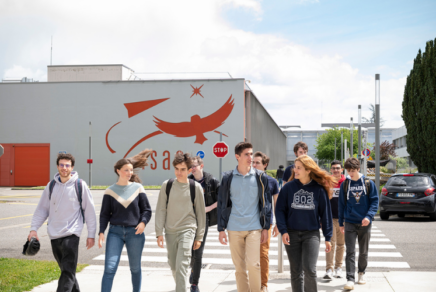
News
Apprenticeship tax: invest in the future by supporting ISAE-SUPAERO!Are you a company, organisation or entity subject to corporate tax? By allocating all or part of your apprenticeship tax to ISAE-SUPAERO, you will play an essential role in our mission to offer a comprehensive and unique range of high-level scientific training in the field of aerospace engineering and to participate in the transformation of aviation and its decarbonisation for a sustainable future! By choosing ISAE-SUPAERO as the beneficiary, you are encouraging the success of tomorrow's talents!
Company
Sponsorship
News
ISAE-SUPAERO and its talented students are once again showcasing Toulouse’s dynamism on the international stageAt ISAE-SUPAERO, talented students continue to distinguish themselves, both in the academic world and in the realm of innovation: a look back at the Amelia Earhart Award won by Elena Lopez-Contreras, a doctoral student at the Neuroergonomics Center, and at the French final of the ActInSpace hackathon, won by her team Solete for their Satell-EYE project.
DCAS
Event
Human factors
Events
French-Korean workshop: “Cryogenic hydrogen for aviation”.Event
Research
Science
Events
5th edition of the "Defense and Innovation" ForumConference
Defence
Event
News
ISAE-SUPAERO will be at the Paris Air Show from June 16 to 22, 2025!Aeronautics
Event
Fair
Videos
Video recap of the first edition of the Occitanie Talent MarketplaceHave a look back at the Occitanie Talent Marketplace in pictures, a unique event that brought together startups from the university ecosystem of the Occitanie region and the talents & skills eager to join an entrepreneurial adventure. Also, check out the event’s photo album: https://www.flickr.com/photos/194546076@N07/albums/72177720330573098/
Company
Event
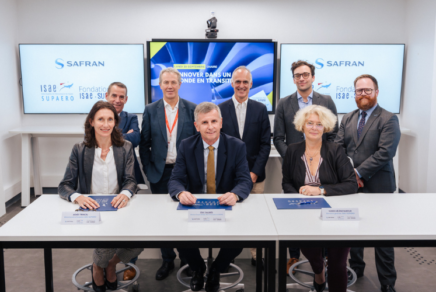
News
ISAE-SUPAERO and Safran inaugurate an innovation chair to train the engineers of tomorrowThe three-year "Innovating in a Changing World" Chair aims to support the training of engineers capable of innovating in a changing world.
Chair
Company
Ingénieur généraliste (MSc)
Pages
Our Partners and NetworksAt ISAE-SUPAERO, we benefit from an exceptional academic, scientific and industrial environment. Our Institute has established privileged relationships with a large number of regional, national and international players in education, research and industry, as well as with public authorities and socio-economic partners. Our institution is heavily involved in scientific networks in our field of activity.
Aerospace
Networks
Partner
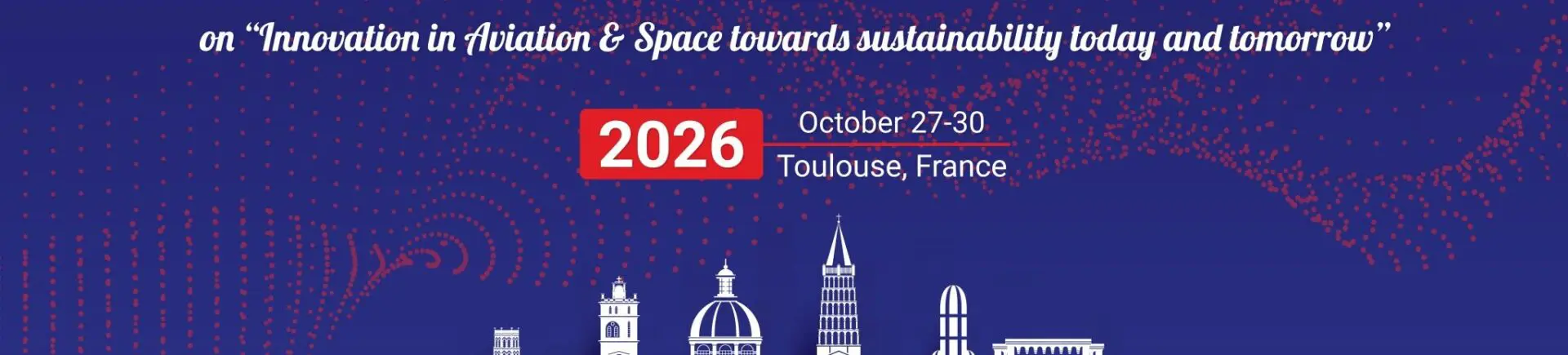
ISAE-SUPAERO is co-hosting the 16th EASN International Conference in Toulouse
ISAE-SUPAERO is pleased to host the 16th edition of the international conference organized by EASN in Toulouse from October 27 to 30, 2026, dedicated to the theme: “Innovation in Aeronautics and Space for Sustainability Today and Tomorrow.”
Related Content
News
Space: Thomas Pesquet and Arnaud Prost will embark on two unprecedented space missions in 2027France is stepping up its space ambitions. At the Choose France summit, the President of the Republic announced that French astronauts Thomas Pesquet and Arnaud Prost will take part in two commercial space missions in 2027, as part of an agreement between France and the American company Vast.
Alumni
Exploration
Space
News
The Institute is involved in the ecological transition of the aerospace ecosystemAerospace
Meeting
Sustainability
News
3 questions to... Ervan Kassarian, S-Cube member from 2015 to 2017Meet Ervan Kassarian, member of S-Cube - SUPAERO Space Section - ISAE-SUPAERO's experimental rocket club, from 2015 to 2017.
Space
Student club
Student life
Pages
Integrated Image Sensors (CIMI) Scientific GroupThe “Integrated Image Sensors” (CIMI) scientific group, develops and characterizes active-pixel image sensors (CMOS Image Sensors (CIS)) on silicon for visible and infrared radiation.
DEOS
Doctoral student
PhD
Testimonials
Testimony from Mathis Putegnat, student (class of 2025) of the APM Advanced Master's programmeAerospace
Alumni
Testimonial
Events
Forum Est HorizonCome meet representatives from TSAAE and ISAE-SUPAERO in Nancy!
Advanced Master
Aerospace
Forum
Events
Destino Francia – ColombiaCome meet representatives from TSAAE, ISAE-SUPAERO, and ENAC in Colombia!
Advanced Master
Aerospace
Fair
News
The 2025 Edmond Brun Prize from the French Academy of Sciences awarded to Annafederica Urbano, professor at ISAE-SUPAEROOn October 28, 2025, the Academy of Sciences awarded the Edmond Brun Prize to Annafederica Urbano, professor of space launch vehicles at ISAE-SUPAERO. This biennial physics award recognizes her entire body of work in the field of space propulsion.
DCAS
News
Prize
Pages
ISAE SUPAERO ENSICA Alumni AssociationISAE SUPAERO ENSICA Alumni is much more than a network of graduates: it's a close-knit, committed and proactive community, driven by a spirit of mutual aid and sharing at the service of society.
Aerospace
Alumni
Association
Pages
ISAE GroupCreated in 2011, the ISAE Group now brings together all the leading engineering schools in the Aeronautics, Space and Defence sector. It represents a scientific and educational community that shares the values of excellence, openness and innovation. Every year, the ISAE Group's schools train almost half of the young engineers hired by companies and institutions in the sector.
Aerospace
Education
ISAE Group
Videos
FRENCH SUPERCAM INSTRUMENT RECORDING THE SOUND OF INGENUITY'S 4th FLIGHTLocated 80 meters from the rover at the moment of take-off, the small helicopter rose to 5 meters above the ground before covering a distance of 133 meters before returning to land where it had taken off from. SuperCam's scientific microphone, developed by ISAE-SUPAERO, recorded the sound emitted by the rotation of the Martian drone's blades during its flight. This sound has a characteristic frequency of 84 Hz, equivalent to the low “E” of a piano or the bass voice of a human being. “This is a big surprise for the whole scientific team,” says Naomi Murdoch, a researcher at ISAE-SUPAERO who is studying the data from the microphone. "Tests carried out in a Martian atmosphere simulator to design this instrument, and our theories of sound propagation, indicated that the microphone would have great difficulty picking up the sounds of the helicopter. Indeed, Mars' thin atmosphere strongly attenuates sound transmission. We needed a bit of luck to record the helicopter from such a distance. We're very pleased to have succeeded in obtaining this recording, which is proving to be a goldmine for our understanding of the Martian atmosphere". Developed jointly by ISAE-SUPAERO and a consortium of CNRS laboratories and its partners, coordinated by CNES, SuperCam's microphone is derived from a consumer model adapted to withstand the Martian environment. It pursues 3 substantial scientific and technical objectives of the Mars 2020 mission: Study the sound associated with laser impacts on Martian rocks, to gain a better understanding of their mechanical properties. Improving our understanding of atmospheric phenomena (wind turbulence, dust eddies, wind interactions with the rover, and now with the helicopter). Understanding the sound signature of the rover's various movements (robotic arm and mast operations, driving on normal or uneven ground, pump monitoring, etc.). The microphone was first switched on a few hours after Perseverance landed. It recorded the first Martian sounds generated by turbulence in the atmosphere. It is used daily in conjunction with laser rock ablation for chemical analysis of Mars. ABOUT THE MARS 2020 MISSION: NASA is relying on Caltech's Jet Propulsion Laboratory for the development of the Mars 2020 mission. SuperCam was developed jointly by LANL (Los Alamos National Laboratory, USA) and a consortium of laboratories attached to the CNRS, French universities and research establishments. Several Spanish universities, led by the University of Valladolid, are also contributing to the instrument. CNES is responsible to NASA for the French contribution to SuperCam. The instrument is operated alternately from LANL and the French Operations Center for Science and Exploration (FOCSE) at CNES in Toulouse.
DEOS
Researcher
Space
Events
Forum Arts et MétiersCome meet representatives from TSAAE and ISAE-SUPAERO in Paris!
Advanced Master
Aerospace
Fair
News
RAMSES: ISAE-SUPAERO at the heart of a historic planetary defense missionLe sismomètre SIA développé par l'ISAE-SUPAERO est une première mondiale pour explorer l'astéroïde Apophis
DEOS
Research
Space
Testimonials
"World Alumni Day": 3 questions to Muhamad Abdul Aziz, alumni of the class of 2024 of the Master in Aerospace Engineering, specialising in Aerospace Systems and ControlsAerospace
Alumni
Pages
Spring Semester in Aeronautical EngineeringImmerse yourself in the world of aerospace in Toulouse, the European aerospace capital, with a semester taught in English combining excellent courses, cultural immersion, and proximity to major industrial players.
Aeronautics
Aerospace
Aerospace summer program
Pages
Semester Research ProjectsTake your studies to the next level by participating in a semester-long research project at ISAE-SUPAERO: immerse yourself in cutting-edge laboratories alongside international experts and contribute to advances in aeronautics and space technology.
Aeronautics
Aerospace
Aerospace summer program
News
Les Assises du New Space: update of the “Ambition NewSpace 2027” reportIn 2022, the Assises du NewSpace collective - a group of players representing the French space industry - published the report “Ambition NewSpace 2027”. Today, the collective is launching another major national consultation to update this report and shape the future of French space!
Conference
Round table
Space
Pages
University of ToulouseSince 1 January 2025, our Institute has been an associate member of the new Université de Toulouse, formerly the Université Toulouse III - Paul Sabatier and heir to the Communauté d'universités et établissements de Toulouse - COMUE de Toulouse. The University of Toulouse is an experimental public institution that has embarked on a collective drive to build a future major institution that will be attractive and visible on the international stage.
Aerospace
Partner
Events
ISAE-SUPAERO Open DayYou used to join us in the fall for our Open Day. The ISAE-SUPAERO Open Day has a new date!
Aerospace
Open day
News
Space Explorers: In a Desert, Six Students Simulate Life on MarsLast spring, for four weeks, six students and one alumnus from ISAE-SUPAERO lived completely self-sufficiently at the Mars Desert Research Station (MDRS). This base, located in the Utah Desert in the United States, is specifically designed to simulate living conditions on Mars.
Space
Student club
Videos
Entrepreneurship and Innovation at ISAE-SUPAERO“Who wants to be my partner?” at the ISAE-SUPAERO Aérothèque! In the spirit of the M6 TV show, Romain Buquet, Professor of Innovation and Entrepreneurship, and the team from ISAE-SUPAERO's #innovation and #entrepreneurship department organized a first-of-its-kind #businessentrepreneurial event: ⇾ eight “Made in ISAE-SUPAERO” entrepreneurs had the opportunity to pitch their project to a panel of investors: talented Business Angel Stéphanie Delestre (Volubile), Lucie Baillif (Baillif), Pierre Carli (Capitole Angels), Jean-Michel Darroy (Aerospace Angels) and Emma Ribes (IRDI Capital Investissement). To prepare for the exercise, our entrepreneurs had the opportunity to be trained on the mechanics of fund-raising by Aram Attar, the coach of the successful show. With some valuable and benevolent advice: "I have three values in mind that have carried me along: hard work, audacity and courage. If you can do all that, you'll be the best entrepreneurs and the best innovators. So don't give up, because the entrepreneurial life is really worth it!" - Stéphanie Delestre "The only limit is, don't go too far & take care of your psychological well-being" - Aram Attar The start-ups VIRAJ H2, ELDA Technology, TIDAV Aero, EMBRYA, SOLTEO, Nelson Mobility & Allergenius are passionately driven by ISAE-SUPAERO students and researchers in various fields, including low-carbon aviation, snow management in ski resorts, solutions for solar panel installers and electrification of corporate fleets.
Entrepreneurship
Innovation
Startup

News
ISAE-SUPAERO Environmental Engineering Certificate: training engineers in the challenges of environmental and energy transitionsAeronautics
Certification
Sustainability
Videos
Sylvestre Maurice presents the SUPERCAM / Martian Exploration educational kitThe ‘SUPERCAM - Martian Exploration’ educational kit project was initiated by five partners: ISAE-SUPAERO, the Toulouse Academy, CNRS, CNES and Cité de l'espace. Under the guidance and supervision of astrophysicist Sylvestre Maurice, first-year students at ISAE-SUPAERO developed this educational tool to raise awareness of space exploration in classrooms, from sixth form to final year. This kit is available to middle and high school teachers and can be adapted to offer educational lessons related to this theme.
Diversity program
Equal opportunities
Researcher
News
Launch of the new ISAE-SUPAERO website: our showcase for excellence!Aerospace
Institute
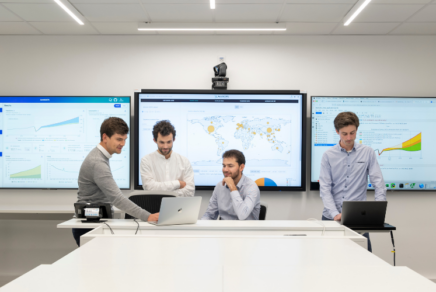
News
AeroMAPS: the go-to tool for exploring the possible futures of aviationThe AeroMAPS tool, developed by researchers at ISAE-SUPAERO, makes it possible to assess the environmental impacts of air transport and the effectiveness or limitations of levers for decarbonising the sector.
Aeronautics
DCAS
Decarbonization
News
Interview with Frederico Baptista, co-founder of Zéro, a startup recently incubated by ISAE-SUPAEROZero, a startup created by three aerospace engineers and recently incubated by ISAE-SUPAERO, offers a visual positioning system for drones designed to operate in environments without GPS.
Aerospace
Incubator
Innovation
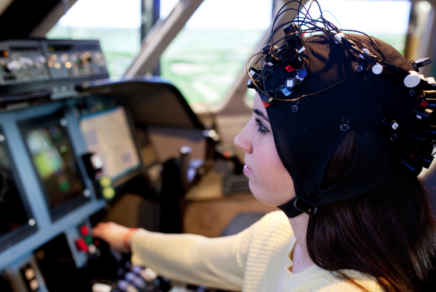
News
The cockpits of the future at the heart of research at ISAE-SUPAEROResearchers at ISAE-SUPAERO have been studying cognitive airborne systems, the virtual assistants that will help pilots in the cockpits of the future, for many years.
Aeronautics
DCAS
Events
Forum Grand OuestCome meet representatives from TSAAE and ISAE-SUPAERO in Rennes!
Advanced Master
Aerospace
Forum
News
An exceptional scholarship for an innovative projectNaomi Murdoch, a researcher in physics and planetology at ISAE-SUPAERO, has just been awarded the prestigious Consolidator Grant from the European Research Council (ERC) for her planetary body study project called GRAVITE. This ambitious scientific project aims to design a variable gravity machine that will enable the simulation and study of extraterrestrial soils.
DEOS
Scholarship
Space
News
« Académie Spatiale de Défense »: A Day of Strategic Reflection on the Future of SpaceOn May 19, 2026, ISAE-SUPAERO and its partners at the Defense Space Academy hosted and organized a day of discussions focused on France’s National Space Strategy. Bringing together government decision-makers, industry representatives, researchers, and military officials, this event provided an opportunity to pool expertise and foster collective reflection on the major challenges of sovereignty, training, and strategic autonomy in the space sector.
Defence
Event
Space
News
2027 ISAE-SUPAERO Open DayYou used to join us in the fall for our Open Day. The ISAE-SUPAERO Open Day has a new date!
Aerospace
Event
Open day
News
Mars hit by meteorites more often than previously thoughtTwo researchers from ISAE-SUPAERO contributed to new discoveries based on data from the seismometer sent to Mars during the InSight mission, one of whose main objectives was to measure seismic activity on the Red Planet.
Space
Videos
Sophie Adenot is flying out on February 11th for a eight-month mission with Crew-12 on the ISS!Today, the entire ISAE-SUPAERO community is coming together: students, staff, faculty, and alumni are showing their support for Sophie Adenot, European Space Agency (ESA) astronaut and ISAE-SUPAERO alumna, as she embarks on a eight-month mission to the ISS. Sophie is the second French woman, 30 years after Claudie Haigneré, to fly on a long-duration mission. On the ISS, she will conduct around 200 scientific experiments, including 10 French experiments, covering fields such as medicine and materials physics. Have a good flight, Sophie. We will be following you throughout this amazing journey!
Alumni
Exploration
Space
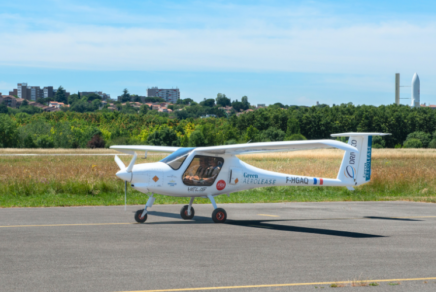
News
Electric aircraft flights to raise awareness of carbon-free aviationIn June, twenty-four students and staff members from ISAE-SUPAERO had the opportunity to fly on the Velis Electro, the world's first certified 100% electric aircraft.
Aeronautics
Decarbonization
Sustainability
Testimonials
Testimony from Lisa Wong, 2024 graduate of the TAS ASTRO Advanced Master® programme, SEEDS optionAerospace
Alumni
Testimonial
Pages
Prior Experience AccreditationThe validation of prior experience is an individual right enshrined in the French Labor Code and Education Code. It enables candidates to obtain all - or part - of a professional certification (Diploma, Professional Title, Certificate of Professional Qualification), based on their professional, salaried or non-salaried and/or voluntary experience. This scheme can be used if the candidate is seeking personal recognition, or more generally to support a professional project that he or she wishes to put into practice.
Advanced Master
Aeronautics
Aerospace
News
Apply today for a program at ISAE-SUPAERO or ENAC - École Nationale de l'Aviation Civile!The TSAAE application platform is now open: discover our world-renowned programs and apply online for the 2026 academic year before November 28 at midnight (French time)!
Advanced Master
Aeronautics
Aerospace
Pages
Aerospace Summer ProgrammeEnjoy a unique experience at the heart of aeronautics and space technology with intensive courses, exclusive industrial visits, and an international immersion in Paris, Poitiers and Toulouse.
Aeronautics
Aerospace
Aerospace summer program
Pages
Connected Systems (SysCo) Scientific GroupThe scientific dynamic of the “Connected Systems” (SysCo) scientific group focuses primarily on network-related issues in aerospace applications, i.e. space communications, embedded networks and certain types of connected systems.
DISC
Doctoral student
PhD
Events
Forum AtlantiqueCome meet representatives from TSAAE and ISAE-SUPAERO in Nantes!
Advanced Master
Aerospace
Forum
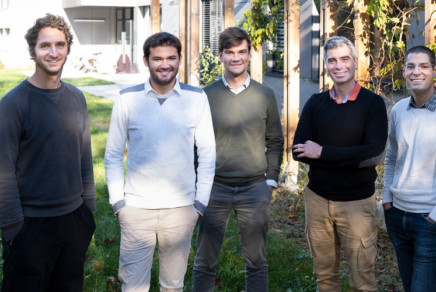
News
Aviation and Climate: an assessment of transition scenarios for sustainable aviation compatible with the Paris AgreementIn 2021, ISAE-SUPAERO researchers Scott Delbecq, Jérôme Fontane, Nicolas Gourdain, Florian Simatos and Thomas Planès published the ‘Aviation and Climate’ report, summarising international scientific publications in order to provide the scientific information needed to understand the challenges of decarbonising air transport.
Aeronautics
DCAS
Decarbonization
Pages
Our Key FiguresFind out the key figures for ISAE-SUPAERO, a Graduate school of engineering with a multidisciplinary curriculum at the global forefront of higher education and research in aerospace engineering.
Aerospace
Institute
Testimonials
Testimony of Matthieu LP, student (class of 2025) of the IEM Advanced Master®Aerospace
Alumni
Testimonial
Events
The "Assises du NewSpace" returns on July 7 & 8, 2026!Event
Space
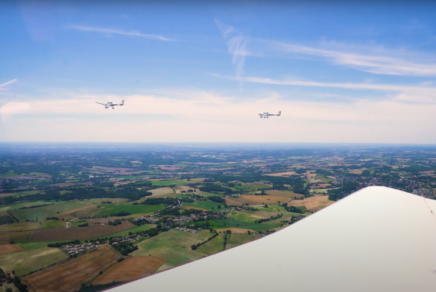
Videos
From classroom to cockpit: flying activities at ISAE-SUPAEROTake a video tour of the school's Lasbordes Air Operations Center (COAL). With a fleet of 9 light aircraft, the COAL offers 3 types of activities: - Pilot training to obtain the Private Pilot's License (PPL), which enables students to fly single-engine aircraft. - Practical work directly linked to the school's teaching programs, from flight mechanics to an introduction to flight test techniques for continuing education. - Research into human factors and pilot cognitive mechanisms in real time during flight. At ISAE-SUPAERO, engineering and Master's students are lucky enough to be able to take their pilot's license just a few kilometers from the campus. Several instructors accompany them and train them to fly. All are members of the Aerospace Vehicle Design and Operation Research Department, headed by Valérie Budinger.
Aeronautics
Programme
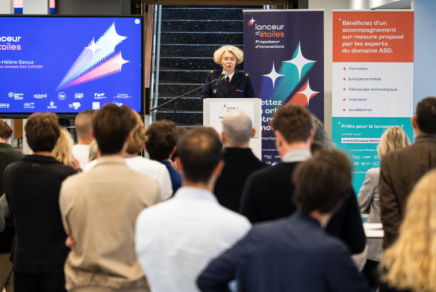
Videos
The "Lanceurs d'étoiles" startup support programmeDiscover the “Lanceur d'étoiles” startup support program! Born of the association of thirteen national and regional partners, experts in DSA and Deeptech startup creation (academic institutions, national organizations, SATT, regional incubators and gas pedals) and brought together in a consortium, “Lanceur d'étoiles” aims to guide and help project leaders propel their innovative technologies through value-creating startups. The program is led and coordinated by Toulouse Tech Transfer on behalf of its partners, under the impetus of the University of Toulouse. It is supported by the PUI UT Innovation, one of whose key actions is to stimulate the creation of deeptech startups through tailor-made support for project leaders. Find out more about the “lanceur d'étoiles” support program and the startups it hosts: https://www.isae-supaero.fr/IMG/pdf/lanceur-dossier_de_presse-0310.pdf Video credit: Toulouse Tech Transfer.
Entrepreneurship
Innovation
Startup
Pages
An Illustrated History of our SchoolHisis will enable you to follow the many transformations that the ISAE-SUPAERO engineering school has undergone. ISAE-SUPAERO was created in October 2007 from the merger of two engineering schools in Toulouse, the École Nationale Supérieure d'Ingénieurs de Constructions Aéronautiques (ENSICA) and the École Nationale Supérieure de l'Aéronautique et de l'Espace (SUPAERO), both under the supervision of the French Ministry of Defence.
Aerospace
History
Institute
Testimonials
Testimonial from Sylvain ASSOGBA, an AM IEM student participating in the “Startech Summer School – Space Entrepreneurship: from Business Ideas to Start-Ups” in RomeEducation
International
Space
Videos
The Dart mission has hit its target: explanations from Dr Naomi Murdoch, planetary scientist at ISAE-SUPAEROResearchers from ISAE-SUPAERO are participating in this first planetary defence mission. Dr. Naomi Murdoch, a researcher at ISAE-SUPAERO and scientific member of the #DART and #HERA missions, comments on the objectives of DART and those of the European HERA mission, which will arrive in the area in 2026 to characterise the crater left by DART and study the internal structure of the asteroid #Dimorphos!
DEOS
Researcher
Space
Events
Choose France Tour 2025 - IndiaAdvanced Master
Aerospace
Fair
Events
5th edition of the "Defense and Innovation" ForumConference
Defence
Event
Pages
Space Systems for Planetology and Applications (SSPA) Scientific GroupThe “Space Systems for Planetology and Applications” (SSPA) scientific group focuses on one main area of research: The development of missions and associated technologies for geophysical exploration of the solar system.
DEOS
Doctoral student
PhD
Events
L'Étudiant Paris Saclay Education FairCome meet us in Paris-Saclay!
« Ingénieur ISAE-SUPAERO » by apprenticeship
Aerospace
Defense & Security Engineer
Events
First edition of the Occitanie Talent MarketplaceOn November 13, 2025, at the Cité de Toulouse, ISAE-SUPAERO will be taking part in a first-of-its-kind event, the “Occitanie Talent Marketplace”, which will bring together start-ups from the university world in the Occitanie region and talents & skills wishing to take part in an entrepreneurial adventure.
Entrepreneurship
Event
Innovation
Testimonials
Testimonial from Maëlle Joseph, student (class of 2025) of the Advanced Master® IEMAerospace
Alumni
Testimonial
News
Investing and committing to training and research to meet the challenges of the energy transitionISAE-SUPAERO and the ISAE-SUPAERO Foundation work together and take their share of responsibility for addressing these major challenges facing our society. Actions include raising awareness and training future aeronautical engineers, and setting up research programmes to better address energy and climate issues.
Aerospace
Sustainability
Events
AASTRA Certificate: presentation webinar on March 25 from 6:00 p.m. to 7:00 p.m.Aeronautics
Aerospace
Air transport
Pages
Navigation, Radar, and Remote Sensing (NAVIR² eS) Scientific GroupThe “Navigation, Radar and Remonte Sensing” (NAVIR² eS) scientific group is interested in the theoretical study of information sources and hybridization approaches for autonomous vehicle navigation applications.
DEOS
Doctoral student
PhD
Events
AASTRA Certificate: Introductory Webinar on July 9 from 6:00 p.m. to 7:00 p.m.Aeronautics
Aerospace
Air transport
Videos
Training courses: space studiesFind out more about our courses and #information in the field of space! The space dimension is strongly developed within our various training courses, whether in specific streams or dedicated programs. French and international students alike are showing a keen interest in our educational programs in Earth observation and the sciences of the Universe, as well as in the design and operation of space systems. Space research and industry employ many ISAE-SUPAERO engineers. Explore the world of space!
Programme
Space
News
MMX, Idefix® and cameras to understand Mars' moonStudying the formation and origin of Mars' moons and bringing back samples: this is the extraordinary, ambitious international mission led by JAXA, in which ISAE-SUPAERO is participating alongside CNES.
DEOS
Researcher
Space
Testimonials
Testimony from Axel Coulon, student (class of 2024) of the TAS ASTRO Advanced Master®Advanced Master
Space
Testimonial
Pages
Our Semester & Short ProgrammesDiscover ISAE-SUPAERO's academic excellence through our semester and short programmes, open to international students.
Aeronautics
Aerospace
Aerospace summer program
News
Listening to the Martian past: ISAE-SUPAERO at the heart of the ExoMars missionESA's ExoMars Rosalind Franklin mission to explore Mars will carry a unique instrument for recording sound and atmospheric data from the planet. The Institute has been selected by ESA and CNES for this major scientific collaboration.
DEOS
Researcher
Science
Events
2026 edition of "Les Entretiens de Toulouse"Aeronautics
Aerospace
Event
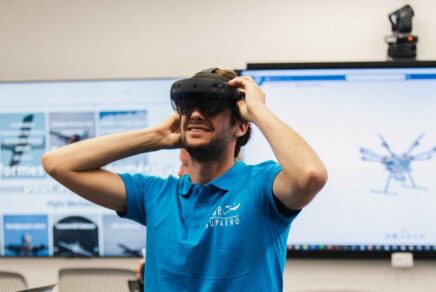
Pages
Innovation & Entrepreneuship at ISAE-SUPAEROEntrepreneurship
Fablab
Incubator
News
3 questions to... Marie-Bertille Mosnier, S-Cube member from 2018 to 2022Meet Marie-Bertille Mosnier, member of the S-Cube - SUPAERO Space Section - ISAE-SUPAERO's experimental rocket club, from 2018 to 2022.
Space
Student club
Student life
Videos
Sylvestre Maurice, astrophysicist and ISAE-SUPAERO alumnusAwarded a prize by the Académie des Sciences in 2020, Sylvestre Maurice #astrophysicist at the Institut de Recherche en Astrophysique et Planétologie (IRAP) in Toulouse witnessed the landing of the #Perseverance rover on Mars on February 18, 2021. A historic moment for this enthusiast, who is also the scientific manager of the onboard SuperCam instrument. A 1990 graduate of ISAE-SUPAERO, Sylvestre Maurice tells us about his career.
Alumni
Researcher
Space
Videos
A surprise from elsewhere... from the ISS...?Hello earth? Thomas Pesquet speaking! Thomas Pesquet, French astronaut and famous ISAE-SUPAERO alumnus (class of 2001), is currently in the ISS as part of his new Alpha mission. He sent our students a personalized message from the European laboratory Columbus...
Alumni
Diversity program
Space
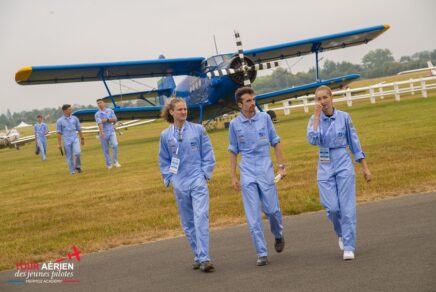
News
TAJP 2026: Five ISAE-SUPAERO Students at the Light Aviation EventEvery two years, the Young Pilots’ Air Tour (TAJP) brings together 45 young pilots. In 2026, five ISAE-SUPAERO students—Camille Oudot, Aurélien Dalot, Lucie Duval, Marc Vincent, and Auguste Chauviré—were selected to participate in this adventure organized by the French Aeronautical Federation (FFA). Their participation was particularly notable for Camille’s victory; he finished first in the final standings after two weeks of challenges, navigation exercises, and encounters across France. Camille, Aurélien, and Lucie reflect on their preparation, the highlights of this year’s event, the lessons they’ve learned, and how this experience fits into their careers in aviation.
Aeronautics
Aviation
Student life
Events
Forum INSA TOULOUSECome meet representatives from TSAAE and ISAE-SUPAERO in Toulouse!
Advanced Master
Aerospace
Forum
News
Historical Discovery: Mercury Does Indeed Have Electron Radiation BeltsAn international team of researchers, including a scientist from ISAE-SUPAERO, has just published a study in the journal "Nature Astronomy" revealing the existence of electron radiation belts around Mercury. This discovery, based on an analysis of data from the MESSENGER mission and supported by previously unpublished observations from the BepiColombo mission’s MEA (Mercury Electron Analyzer) instrument, sheds new light on the physics of planetary magnetospheres and raises major challenges for the protection of space missions.
DEOS
Research
Space
Pages
Our Core FoundationsMarie-Hélène Baroux, President of ISAE-SUPAERO, presents the 10 foundations that make our Institute a world leader in higher education and research in aerospace engineering. At ISAE-SUPAERO, students, teachers-researchers, alumni and partners interact to develop innovative solutions to today's technological and industrial challenges. They help to position our Institute as a major player in the transition of the civil and military aerospace sector.
Aerospace
Institute
News
The Jupiter system: a unique laboratory for a major scientific breakthroughNicolas André, teacher-researcher at ISAE-SUPAERO, co-authors a major discovery in Nature Communications.
DEOS
Exploration
Space
News
Luca Parmitano, Artemis III astronaut: an ISAE-SUPAERO graduate at the heart of the next step in the return to the MoonOn June 9, 2026, NASA announced the crew for Artemis III, a key mission in the U.S. lunar program scheduled for 2027.
Advanced Master
Alumni
Space
News
Mission Insight: the contribution of researchers from ISAE-SUPAEROThe InSight lander deployed by NASA recorded two earthquakes that occurred on Mars in 2021, providing scientists with exceptional data, the first direct observations ever made of a planet's core.
DEOS
Space
Events
AASTRA Certificate: Introductory Webinar on May 26 from 6:00 p.m. to 7:00 p.m.Aeronautics
Aerospace
Air transport
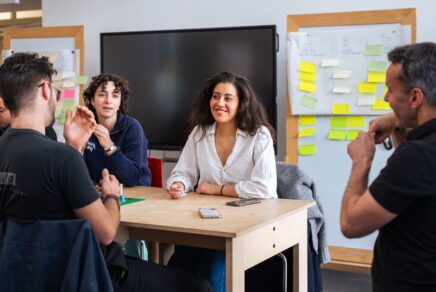
Pages
Our Innovation & Entrepreneurship PolicyCommitted to a dynamic of invention, it is with passion and commitment that we provide the keys for everyone to train, research, initiate, innovate, and undertake innovation and entrepreneurship projects!
Fablab
Incubator
Innovation
News
ISAE-SUPAERO, ENAC, and Airbus Launch an Advanced Master programme for Ethiopian AirlinesISAE-SUPAERO, ENAC, and Airbus are partnering with Ethiopian Airlines to launch an Advanced Master programme in Aviation Management for 30 executives from the airline. This one-year program, offered in Addis Ababa, aims to support the development of skills and leadership in the African aviation sector.
Advanced Master
Aeronautics
Company
Testimonials
Testimony from Stéphanie Lizy-Destrez, elected member of the Air and Space AcademyDCAS
Space
Teacher researcher
News
Airbus Defence and Space and ISAE-SUPAERO train members of the Peruvian space agencyTwenty engineers from the Peruvian space agency attended a training course in Toulouse, jointly designed by ISAE-SUPAERO and Airbus Defence and Space, to develop their skills in the field of space systems and space missions.
DCAS
Short internship
Space
News
ISAE-SUPAERO's researchers are working on establishing a sustainable human presence on the Moon.While last year marked the 50th anniversary of the Apollo 17 mission, the last manned trip to the Moon, the development of ‘New Space’ has revived the space sector's interest in lunar exploration.
DCAS
Space
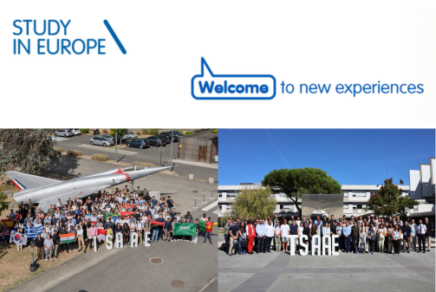
Events
Study in Europe Fair 2026Come meet representatives from TSAAE and ISAE-SUPAERO online!
Advanced Master
Aeronautics
Fair
News
Meeting with Yves Gourinat, elected as a full member of the Air and Space AcademyYves Gourinat is a professor of structural physics in the Structural Mechanics and Materials Department (DMSM) at ISAE-SUPAERO. Already a corresponding member since 2019, he has just been elected a full member of the French Academy of Aeronautics and Space.
Aeronautics
Award
Teacher researcher
Pages
Our InstituteL’ISAE-SUPAERO est à la pointe mondiale de l’enseignement supérieur et de la recherche dans le domaine de l’ingénierie aérospatiale pour relever le défi de la transition énergétique.
Aerospace
Institute
News
DART: ISAE-SUPAERO students publish new scientific findings in Nature CommunicationsNaomi Murdoch, a planetary science researcher at ISAE-SUPAERO, is actively involved in scientific analysis and data interpretation for NASA's DART mission.
DEOS
Space
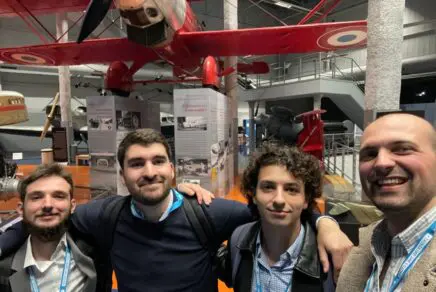
News
"Défi Aérospatial Étudiant 2025": Dassault Aviation Prize awarded to an ISAE-SUPAERO student teamAs part of the integrated team project of the Institute's TAS ASTRO master's program, a team of student engineers developed the OSIRIS space shuttle, taking part in the Student Aerospace Challenge, an international competition. The team was awarded the Dassault Aviation Prize for the technical quality of its project.
Advanced Master
Aeronautics
Prize
News
ISAE-SUPAERO back on mission with HeraThe Hera mission, an international planetary defence mission, is on its way to study the asteroid Dimorphos, which will be struck by DART in 2022. ISAE-SUPAERO is actively collaborating in this international planetary defence programme through the research work of Naomi Murdoch and the SSPA team.
DEOS
Space
Testimonials
Testimony from Alexandre Bouraoui, engineering student by apprenticeship and IAC 2025 Award WinnerFinal-year engineering apprentice, specializing in Industrialisation and Methods for Aeronautics and Space, Alexandre Bouraoui was recently honored at the 76th International Astronautical Congress (IAC 2025) in Sydney, where he won the prestigious Hermann Oberth Gold Medal in the Graduate category. We spoke with him about his award and his studies at ISAE-SUPAERO.
Aeronautics
Aerospace
Congress
Events
Les Assises du New Space 2025: discussions and debates on NewSpace!The 2025 edition of the Assises du New Space will be held this year on July 8-9, 2025 at the Centre des congrès de la Villette - Cité des sciences et de l'industrie in Paris. Aimed at all players in the French space ecosystem, this event is a unique opportunity to exchange ideas and debate around NewSpace, and to discover the latest technological innovations and project financing opportunities. Registration is now open!
Conference
Event
Round table
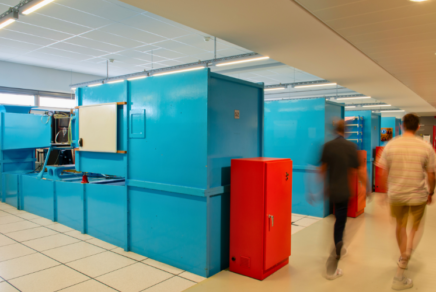
News
Focus on subsonic wind tunnels, aerodynamics in practiceThe subsonic wind tunnels at ISAE-SUPAERO are used to study airflow over objects such as aircraft wing profiles. This equipment, supervised by a technical team, is used by both students and researchers in the Aerodynamics, Energy and Propulsion Department (DAEP).
Aeronautics
DAEP
Events
2025 edition of "La nuit des chercheurs"Meet ISAE-SUPAERO researchers at the Nuit des Chercheurs de Toulouse, on October 3 at 6pm at the Halles de la Cartoucherie, on the theme of “Intelligence(s)”!
Aerospace
Researcher
Science
News
ISAE-SUPAERO and Spaceflight Institute join forces to train tomorrow's manned flight expertsOn July 29, 2025, ISAE-SUPAERO and the Spaceflight Institute signed a partnership agreement for the joint creation of a “Certificate of Advanced Studies in Human Spaceflight”. This new semester-long program aims to train a new generation of space professionals, combining academic excellence with operational expertise.
Certificates of advanced studies
Education
Space
Videos
Research, Innovation & Training supporting Aviation Sustainability: web Conference by TSAAEAeronautics
Aviation
Conference
Pages
Photonics Antenna Microwave PlasmaA (PAMPA) Scientific GroupThe “Photonics Antenna Microwave PlasmaA” (PAMPA) scientific group is interested in electromagnetism in the fields of microwaves and photonics, as well as wave-plasma interactions.
DEOS
Doctoral student
PhD
Events
16th EASN International ConferenceAeronautics
Aerospace
Event
Events
"EEFT 2025" trade fair in TaiwanAerospace
Fair
Master in Aerospace Engineering
News
Training new skills for the future of space: COMETES is launched!Company
Job
Space
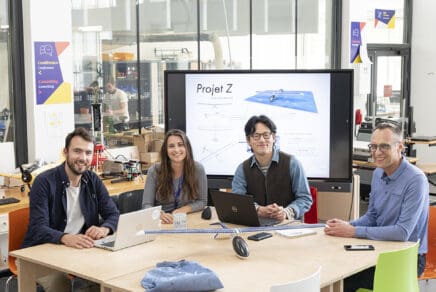
Pages
Our StartupsAI
Entrepreneurship
Fablab
News
Happy New Year, Martians!Today marks the start of Year 39 on Mars: a Martian year lasts 687 Earth days, which is equivalent to nearly two years on our blue planet. Here’s a look back at the projects, missions, and discoveries that bring ISAE-SUPAERO closer to the Red Planet every day.
Research
Space
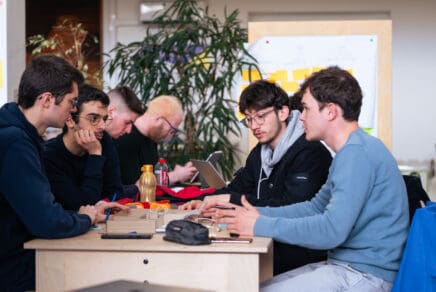
Pages
Our NetworkAI
Artificial intelligence
Entrepreneurship
Videos
Orbit Your Thesis: ISAE-SUPAERO in zero gravity with the AIM experimentArtery In Microgravity (#AIM), the first student scientific experiment designed and developed in collaboration since 2018 by ISAE-SUPAERO and Polytechnique Turin, was launched on 23 November 2022 by Space X's Dragon cargo ship to the International Space Station (ISS)! Selected by the ESA as part of its ‘Orbit your thesis’ programme, AIM aims to study the behaviour of the heart and its arteries in space, in order to determine whether people with heart problems will one day be able to stay there.
Prize
Space

News
Envision responsible air transportAeronautics
Sustainability
Events
"Bem-vindo à França 2025" fair in BrazilAerospace
Fair
Master in Aerospace Engineering

Testimonials
Meeting with Edoardo Mariani Placidi, student of the HADA Advanced Master's programmeA motorsport lover, Edoardo Mariani Placidi started his career in the automotive industry in R&D, V&V, quality, manufacturing, and metallurgy.
Advanced Master
Aeronautics
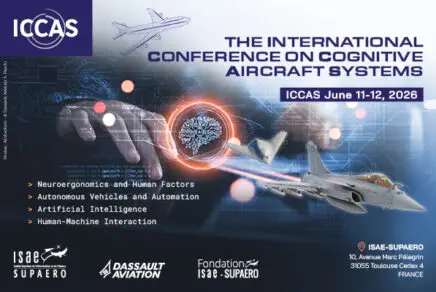
News
ICCAS, organized jointly by ISAE-SUPAERO, the ISAE-SUPAERO Foundation, and Dassault Aviation, will take place on June 11 and 12, 2026Following the success of the 2022 and 2024 editions, we are delighted to announce 𝐈𝐂𝐂𝐀𝐒 𝟐𝟎𝟐𝟔, organized jointly by ISAE-SUPAERO, the ISAE-SUPAERO Foundation, and Dassault Aviation.
Aeronautics
Artificial intelligence
Aviation
News
The COMETES project - Skills and Careers in Space - is launching its website, a platform dedicated to skills and careers in the space sector.The space sector is undergoing profound change driven by New Space, accelerating technological innovation, and environmental challenges. These transformations are leading to rapid changes in the careers and skills required within the industry. In this context, COMETES is launching a platform dedicated to space-related skills, careers, and training.
Education
Space
News
ISAE-SUPAERO acquires an innovative new additive manufacturing equipmentISAE-SUPAERO and the Institut Clément Ader (ICA) have just acquired a new Wire Arc Additive Manufacturing (WAAM) machine. This cutting-edge equipment opens up new prospects for research, teaching and innovation in the aeronautical field.
Aeronautics
News
Research
Pages
Human Factors and Neuroergonomics for Aviation Safety - AXAThe AXA Chair aims to advance research into human factors and, more specifically, human-machine interfaces, with a view to improving air safety.
Aeronautics
Chair
Company
News
Landing on Mars: a unique experience for seven studentsSeven ISAE-SUPAERO students have been selected to join the Mars Desert Research Station (MDRS) in the United States. This replica of a Martian base will host the crew for four weeks, during which they will live in conditions similar to those found on Mars. The objective is to conduct experiments in situ in collaboration with research partners.
Space
Student club
Student life
Testimonials
Testimony from Alice Fabre, 2021 graduate of the TAS AERO Advanced MasterAeronautics
Alumni
Decarbonization
Pages
Our EcosystemOur Institute operates at the heart of a leading academic, scientific, and technological ecosystem. Driven by the strength of the ISAE SUPAERO ENSICA Alumni Association network, supported by the ISAE-SUPAERO Foundation, and enriched by EUROSAE's expertise in executive education, our actions are part of a collective dynamic within the University of Toulouse and the ISAE Group. Committed to the major challenges of tomorrow, we are developing major initiatives within the Institute for Sustainable Aviation for sustainable aviation and the Defense Space Academy to meet the strategic challenges of space.
Aerospace
Partner
Partnership

Pages
Our Incubation SitesCommitted to innovation, we are passionate and dedicated to providing everyone with the keys to training, researching, initiating, innovating, and pursuing entrepreneurship!
Fablab
Incubator
Innovation
News
ISAE-SUPAERO and its talented students are once again showcasing Toulouse’s dynamism on the international stageAt ISAE-SUPAERO, talented students continue to distinguish themselves, both in the academic world and in the realm of innovation: a look back at the Amelia Earhart Award won by Elena Lopez-Contreras, a doctoral student at the Neuroergonomics Center, and at the French final of the ActInSpace hackathon, won by her team Solete for their Satell-EYE project.
DCAS
Event
Human factors
Videos
Sophie Adenot: from ISAE-SUPAERO to spaceMeet Sophie Adenot, astronaut at the European Space Agency (ESA) and ISAE-SUPAERO alumna, who answers three questions! 🚀
Alumni
Diversity program
Space
Events
Study in France – KoreaCome meet representatives from TSAAE, ISAE-SUPAERO, and ENAC in Korea!
Advanced Master
Aerospace
Fair
News
Mattéo Gouzien: itinerary of an award-winning engineer and PhD student committed to decarbonized aviation!Mattéo Gouzien, a graduate of ISAE-SUPAERO and currently a doctoral student at IMS Bordeaux and ONERA, has been passionate about science from an early age. His remarkable academic and personal career has been guided by a relentless desire for knowledge and a quest for meaning. Winner of the SEE's André Blanc-Lapierre national prize and of the PEGASUS 2025 student conference, Mattéo talks about his rich career path: from preparatory school to his thesis on reducing aviation emissions.
Aeronautics
Ingénieur généraliste (MSc)
Portrait
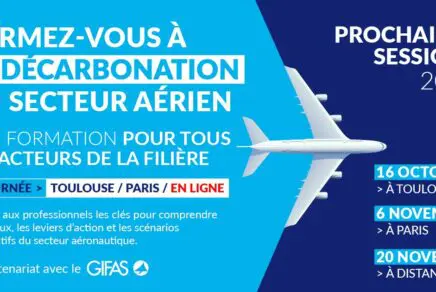
Events
Decarbonization of the aviation sector trainingISAE-SUPAERO and GIFAS open new training sessions dedicated to decarbonizing the aviation sector.
Aeronautics
Aviation
Decarbonization
News
Figures for the start of the 2025 academic year at ISAE-SUPAEROAt the start of the 2025 academic year, ISAE-SUPAERO is welcoming nearly 882 new students from all disciplines!
Aerospace
Institute
News
ISAE-SUPAERO is broadcasting the webinar "Air transport in crisis and the climate challenge: towards new paradigms" on campus!Aerospace
Event
Sustainability
Events
ICCAS, organized jointly by ISAE-SUPAERO, the ISAE-SUPAERO Foundation, and Dassault Aviation, will take place on June 11 and 12, 2026Aeronautics
AI
Artificial intelligence
Videos
Arnaud Prost, ESA reserve astronaut and ISAE-SUPAERO alumnus: “I was incredibly lucky to be here”Fighter pilot and reserve astronaut with the European Space Agency (ESA), Arnaud Prost returned to his former school on Thursday March 28 to meet 200 secondary school students as part of the ISAE SUPAERO OSE program. It was an opportunity for him to recall the “great memories” of his student experience at ISAE-SUPAERO, his long-standing commitment to the student social outreach program and the “Aquanauts” scheme he set up with OSE l'ISAE-SUPAERO. And in passing, he offers a few words of advice to young people who might dream of following in his footsteps: “Don't let yourself be convinced that one of these paths isn't for you!” A 2017 graduate of ISAE-SUPAERO, Arnaud Prost is among those selected for the ESA Astronaut Class of 2022, alongside Sophie Adenot and Anthea Comellini, both also alumni of the school. They join other illustrious ESA astronauts who have already studied at the school: Thomas Pesquet, Luca Parmitano and Samantha Cristoforetti. Since 1970, ISAE-SUPAERO has contributed to the progress of the space age through its training, research and innovation activities. As the only organization in France to offer degree courses (engineering, master's, specialized master's, doctorate) covering all 22 space-related themes identified by CNES, the Institute offers a royal road to space careers. For Arnaud Prost's full profile: https://www.esa.int/Science_Exploration/Human_and_Robotic_Exploration/Astronauts/A
Alumni
Diversity program
Space
Pages
Applied Mathematics (MA) Scientific GroupThe “Applied Mathematics” (MA) scientific group covers a wide range of topics: Stochastic processes (especially Markov processes), numerical optimization (especially multidisciplinary optimization) and parallel computing, stabilization, control and numerical solution of partial differential equations, and financial engineering.
DISC
Doctoral student
PhD
Videos
ISAE-SUPAERO and Indian Institute of Space Science & Technology work on student space exploration projectsISAE-SUPAERO received a visit from Professor Shine S R of the Indian Institute of Space Science and Technology (IIST) on December 7 and 8. ISAE-SUPAERO signed a co #cooperation agreement with the Indian Institute of Space Science and Technology in 2020 and this visit was a perfect opportunity to discuss the deepening of #training and #research collaborations between our two institutions. ISAE-SUPAERO and IIST have already been cooperating for 4 years within the framework of Franco-Indian collaborative academic projects, involving students from ISAE-SUPAERO and IIST on subjects related to space exploration missions and with the participation of experts from CNES, IRAP and the Indian space agency (ISRO)!
Space
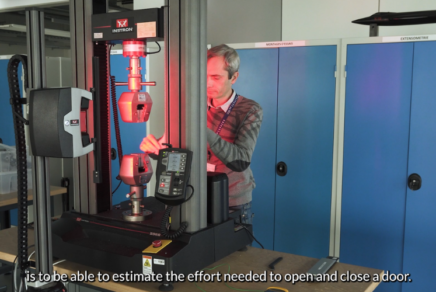
Videos
Feedback: a Latecoere engineer in the ISAE-SUPAERO laboratoriesTo strengthen the links between industry and research, more than 10 industrial R&D engineers have been made available to ISAE-SUPAERO as part of the France Relance plan! Cyril Geneste, research engineer at Latecoere, is one of them. Together with Miguel Charlotte, Associate Professor at the Institute, he looks back on this fruitful two-year collaboration. Their work, carried out in the ISAE-SUPAERO laboratories, focused on the behavior of aircraft door seals, which ensure cabin airtightness. Thanks to the Institute's cutting-edge equipment and academic expertise, Cyril Geneste was able in particular to carry out numerical modeling of seals in order to test their behavior. Students in their 3rdᵉ year of engineering studies were also involved in this work.
Aeronautics
Researcher
Pages
EUROSAEAt ISAE-SUPAERO, we implement a national and international executive education dynamic policy with EUROSAE, a joint Education and Training Division of ISAE-SUPAERO and ENSTA ParisTech.
Aerospace
EUROSAE
Executive Education
News
CASTOR Chair: ISAE-SUPAERO and Liebherr-Aerospace Toulouse celebrate 1 year of partnershipAeronautics
Chair
Partnership
Videos
The sound of a Martian dust devil captured by the SuperCam microphone on PerseveranceThis video and audio show the results obtained by NASA's Perseverance Mars rover and its SuperCam microphone when recording the sounds of a Martian dust devil passing overhead on 27 September 2021, the 215th Martian day or sol of the mission. The dust devil was 25 metres wide and at least 118 metres high, moving at a speed of approximately 19 km/h. This is the first time such a recording has been made, as capturing a dust devil requires a bit of luck. Indeed, it flew over the rover at a time when all of Perseverance's sensors measuring wind, pressure, temperature and dust, plus the NavigationXXX (Navcam) camera, were running. This allowed scientists to combine sounds, images and atmospheric data. The unique combination of this data, along with atmospheric modelling, enabled researchers to estimate the dimensions of the dust devil. Scientists cannot accurately predict when these vortices will occur. Rovers such as Perseverance and Curiosity monitor them regularly. When scientists notice that they are more frequent at a certain time of day or approaching from a certain direction, they focus their monitoring to try to capture a dust devil with all the sensors at their disposal. > To better understand the video, it shows three rows of images: - the row
DEOS
Researcher
Space
News
Researchers from ISAE-SUPAERO contributed to the success of the first images from ESA's Sentinel 2c observation satellite.The Sentinel 2c Earth observation satellite, launched on 5 September as part of ESA's Copernicus mission, has delivered its first images. This success is partly due to the image sensor research team (CIMI) at ISAE-SUPAERO, which designed and oversaw the manufacture of the visible image sensors.
DEOS
Space
Videos
Romain Buquet - Head of the IEM Advanced Master programmeAdvanced Master
Education
Entrepreneurship
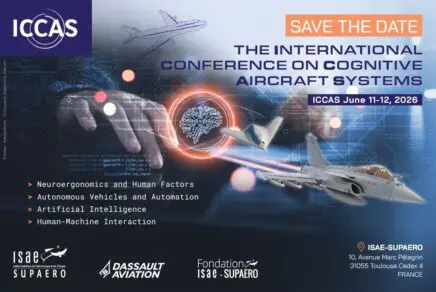
News
ICCAS 2026, jointly organized by ISAE-SUPAERO, the ISAE-SUPAERO Foundation, and Dassault Aviation, will take place on June 11-12, 2026.Following the success of the 2022 and 2024 editions, we are delighted to announce 𝐈𝐂𝐂𝐀𝐒 𝟐𝟎𝟐𝟔, organized jointly by ISAE-SUPAERO, the ISAE-SUPAERO Foundation, and Dassault Aviation!
Aeronautics
Artificial intelligence
Aviation
News
Let's make together a durable commitment to new horizonsAeronautics
Horizons
Sustainability
News
Hera probe captures exceptional images of Mars and its moon DeimosDEOS
Researcher
Science
News
CIME 2025: Where Science Meets Adventure to Push the Limits of ExplorationAt ISAE-SUPAERO, the 2025 Interdisciplinary Congress on Extreme Worlds (CIME) gathers researchers and adventurers determined to push human limits in the planet’s most extreme environments.
Exploration
Innovation
Space
Pages
Theory, Modelling, and Systems Engineering (ThéMIS) Scientific GroupThe “Theory, Modeling and Systems Engineering” (ThéMIS) scientific group is dedicated to the study and development of advanced methods for the design, modeling and validation of complex systems.
DISC
Doctoral student
PhD
News
ISAE-SUPAERO contributes to the Artemis IV mission with the SPSS seismology instrumentNASA selects the JPL/CNES instrument suite for the Artemis IV mission, paving the way for unprecedented exploration of the Moon’s internal structure at the South Pole.
DEOS
Exploration
Space
Videos
Perseverance collects first Martian sounds: explanation by Dr. Naomi Murdoch & Dr. Alexander StottDr Naomi Murdoch, researcher in space instrumentation and planetary science, and Dr Alexander Stott, post-doctoral fellow, tell us more about the physical characteristics of Mars' atmosphere, in particular the speed of sound and its attenuation. These analyses were published in Nature on April 1, 2022 by an international team led by a teacher-researcher from Toulouse III - Paul Sabatier University, and including scientists from CNRS and ISAE-SUPAERO.
DEOS
Researcher
Space

News
Decarbonisation of aviation: ISAE-SUPAERO launches training programme for professionals with GIFASThis one-day training course aims to help employees in the aeronautics sector play an active and informed role in the decarbonisation of the sector. The first two sessions will be held on Thursday 3 April 2025 in Toulouse and Thursday 10 April 2025 in Paris.
Aeronautics
Decarbonization
Programme
Testimonials
World Alumni Day: 3 questions for Florian DELPECH, Engineering Cycle – Data and Decision Sciences Track Class of 2022Aerospace
Alumni
Pages
The “Certificate of Advanced Studies in Human Spaceflight” offered by the Spaceflight Institute in collaboration with ISAE-SUPAEROThe Spaceflight Institute is the first institute dedicated to training in human spaceflight. In partnership with ISAE-SUPAERO, it offers an intensive training program that enables participants to gain a comprehensive understanding of the challenges of human spaceflight and to position themselves within a rapidly expanding ecosystem, marked by future lunar and Martian missions as well as the rapid emergence of commercial space stations and private initiatives in low Earth orbit.
Education
Innovation
Partner
Testimonials
Testimonial from Harshavardhan Narakatla, student (class of 2025) of the AMS E&M Advanced Master®Aerospace
Alumni
Testimonial
Pages
Learning, Decision, Optimisation (ADO) Scientific GroupDISC
Doctoral student
PhD
Pages
Support for the Development of the ISAE Group - GIFASGIFAS (Groupement des Industries Françaises Aéronautiques et Spatiales - French Aerospace Industries Group) supports the development of high-level academic and professional education in aerospace systems at the 6 Grandes Écoles that make up the ISAE Group (ISAE-ENSMA, ISAE-SUPMECA, ESTACA, Ecole de l'Air et de l'Espace, ENAC, ISAE-SUPAERO).
Aeronautics
Aerospace
Chair
News
First edition of the Occitanie Talent Marketplace fairEntrepreneurship
Fair
Innovation
Testimonials
Testimony from Rémi Caresche, student (class of 2025) of the TAS ASTRO Advanced Master®Aerospace
Alumni
Testimonial
News
ISAE-SUPAERO and ENAC invite you to the “Rendez-vous Aéro de l'Innovation” on Thursday, February 5, 2026!Aeronautics
Event
Innovation
Pages
Design and Analysis of Critical Systems (CASC) Scientific GroupThe “Design and Analysis of Critical Systems” (CASC) scientific group focuses on methods, processes and tools to support System Engineering and Systems Engineering.
DISC
Doctoral student
PhD
News
ISAE-SUPAERO and GIFAS offer training to accelerate the decarbonization of air transportFaced with the challenges of climate change and the imperatives of energy transition, ISAE-SUPAERO and GIFAS have joined forces to offer a unique training program dedicated to decarbonizing the aviation sector.
Aeronautics
Company
Decarbonization
Pages
Chair for Eco-Design of AiRcraft – AirbusThe CEDAR Chair, a response to environmental issues in the aeronautics sector.
Aeronautics
Chair
Pages
Our Specialised Studies CertificatesOur specialised studies certificates are designed for professionals. They enable you to develop skills and expertise in the fields of digital, aeronautics, space, project management, systems engineering, and artificial intelligence.
Advanced Master
Aeronautics
Aerospace
News
ISAE-SUPAERO at the Forefront of AI Challenges in Defense and SecurityOn March 24, 2026, ISAE-SUPAERO hosted the Future Intelligence Forum, an event dedicated to artificial intelligence applied to the defense, security, and resilience sectors. Public policymakers, experts, researchers, industry leaders, and innovators gathered to share their vision and collectively shape the future of AI in the public interest.
Aerospace
Artificial intelligence
Defence
Events
Forum FocéenCome meet representatives from TSAAE and ISAE-SUPAERO in Marseille!
Advanced Master
Aerospace
Forum
Events
Forum Rhône AlpesCome meet representatives from TSAAE and ISAE-SUPAERO in Lyon!
Advanced Master
Aerospace
Forum
Pages
Lasbordes Air Operations Center (COAL)The Department of Design and Operation of Aeronautical and Space Vehicles (DCAS) is part of the Lasbordes Air Operations Center (COAL), located on an airfield a few kilometers from the ISAE-SUPAERO campus. As part of its aeronautical training and research activities, COAL operates a fleet of 8 light aircraft.
DCAS
Doctoral student
PhD
Testimonials
"World Alumni Day": Three questions for Aude Vignelles, 1991 graduate of ENSICA's Aeronautical Engineering programmeAeronautics
Alumni
Testimonial
Videos
“We spark the future”: a new label for ISAE-SUPAERO startupsConvinced that innovation, intrapreneurship and entrepreneurship, combined with a strong technical culture, are essential levers for addressing today's major challenges, ISAE-SUPAERO develops its students' spirit of innovation and supports business creation. The Institute is today launching its ‘We spark the future’ label, awarded to start-ups ‘by ISAE-SUPAERO’. Discover our support and our offer.
Entrepreneurship
Innovation
Label
News
Ariane 6: at ISAE-SUPAERO, researchers are already working on the futureThe European Ariane 6 launcher incorporates major technological innovations such as the Vinci engine, capable of reigniting in space. At ISAE-SUPAERO, researchers are tackling the challenges posed by the rocket engines of tomorrow.
Space
Videos
3 questions to Marie Delaroche, 3ᵉ year student and MDRS 293 crew commanderSince February 18, seven ISAE-SUPAERO engineering students have been living a simulated Martian life and carrying out experiments in collaboration with CNES and several research laboratories at The Mars Society's Mars Desert Research Station (MDRS) in UTAH (USA)! For the second time, the mission is led by a woman: Marie Delaroche, a passionate #spaceexplorer, who was already part of crew 275 departing in 2023. We asked her 3 questions to find out more about the challenges of this mission and her feelings as #flightcommander! Alongside her, three young women and three young men in their 2ᵉ year of #engineering studies have taken on the roles of astronomer, scientist, botanist, journalist, health worker and onboard engineer. They are all members of the Mars Club ISAE-SUPAERO, a student association for the popularization of science focused on the Red Planet and the missions dedicated to its exploration and study. They are currently experimenting with AI4U, the artificial intelligence that assists astronauts in their daily tasks (environmental measurements, voice recognition, emergency exercises). They are also conducting a science popularization experiment in collaboration with secondary school pupils. Inspired by the film The Martian, in which an astronaut grows potatoes on the Red Planet, the aim of this experiment is to compare plant growth in Martian soil with growth in terrestrial soil! To follow their adventure, click here: https://mars.bde-supaero.fr/
Space
Student club
Student life
Events
8th edition of Future IntelligenceAI
Artificial intelligence
Cyber
Testimonials
Testimony of Juan-Carlos DOLADO-PEREZ, alumni of the 2008 Master's degree in Aerospace EngineeringAlumni
Space
Testimonial
Pages
Job offersAeronautics
Aerospace
AI
News
CASTOR Chair: Liebherr-Aerospace Toulouse and ISAE-SUPAERO, a win-win partnershipThe official signing of the industrial chair, called CASTOR, between Liebherr-Aerospace Toulouse and ISAE-SUPAERO took place on Tuesday 9 July at the institute's campus. This research partnership contributes to research into carbon-free aircraft.
Aeronautics
Chair
Company
News
Capturing the seismic activity of an asteroid: our Apophis rendezvousDEOS
Research
Space
News
ISAE-SUPAERO announces new partnership with ESA Academy to support future Master in Aerospace Engineering studentsAerospace
Master in Aerospace Engineering
Scholarship
Videos
Visiting professors at ISAE-SUPAERO: DAN SCHEERESISAE-SUPAERO est un établissement d'enseignement supérieur axé sur la recherche et l'innovation, qui s'engage à concilier excellence scientifique, visibilité académique et proximité avec les objectifs industriels. Ses activités de recherche ont contribué à faire de l'école un leader international non seulement en termes de programme d'ingénierie aérospatiale, mais aussi de programmes de troisième cycle, notamment ses masters (MSc) et ses programmes de doctorat en sciences de l'ingénierie. C'est pourquoi de nombreux acteurs internationaux clés de la recherche rendent visite à leurs homologues de l'ISAE-SUPAERO. Nous avons rencontré Dan Sheeres, professeur émérite de l'université du Colorado et titulaire de la chaire A. Richard Seebass au département des sciences de l'ingénierie aérospatiale Ann et H.J. Smead de l'université du Colorado à Boulder. Les recherches de Dan Scheeres couvrent des sujets allant de l'astrodynamique et de la navigation spatiale à la science planétaire et à la mécanique céleste, et il a publié de nombreux articles dans ces domaines. L'astéroïde 8887 a été baptisé « Scheeres » en reconnaissance de ses contributions à la compréhension scientifique de l'environnement dynamique des astéroïdes. Pendant son séjour à l'ISAE-SUPAERO, le professeur Scheeres et l'équipe des systèmes spatiaux pour les applications planétaires ont collaboré à l'analyse des données DART et au développement de concepts visant à étudier la structure interne des astéroïdes lors de futures missions spatiales. De plus, Dan Scheeres et l'ISAE-SUPAERO ont publié conjointement plusieurs articles dans « Nature » sur les astéroïdes et la mission DART.
DEOS
Researcher
Space
Testimonials
Testimonial of Baptiste Sigal, Advanced Master® TAS ASTRO student (class) 2025Advanced Master
Aerospace
Space
Videos
ISAE-SUPAERO and Airbus Defence and Space organize an international training course on space systemsTwenty engineers from the Peruvian space agency CONIDA (Comisión Nacional de Investigación y Desarrollo Aeroespacial) attended a training course in Toulouse designed jointly by ISAE-SUPAERO and Airbus Defence and Space! The aim? To develop their skills in space systems and space missions. The entire program was placed under the academic responsibility of AnnaFederica Urbano, a lecturer and researcher in space systems and launchers at ISAE-SUPAERO. The engineers took part in a preliminary satellite design project. At the end of the five-week course, they all obtained the Certificate of Advanced Studies awarded by ISAE-SUPAERO. For ISAE-SUPAERO and Airbus Defence and Space, this experience opens up prospects for future collaborations in training courses of this type for international customers and industrial and institutional partners. For more information: https://www.isae-supaero.fr/fr/actualites/airbus-defence-and-space-et-l-isae-supaero-forment-des-membres-de-l-agence/
Programme
Space
Testimonials
Testimony from Valentin Balayn, 2015 graduate of the TAS AERO FTE Advanced Master®Advanced Master
Aeronautics
Alumni
Events
Campus France – ChileCome meet representatives from TSAAE, ISAE-SUPAERO, and ENAC in Chile!
Advanced Master
Aerospace
Fair
News
Valentin LELOUP, quantum and optical telecommunications systems engineer: the quantum and space tandemValentin Leloup, R&D engineer at Thales, combines two fields of expertise: quantum physics and space. He holds an engineering degree from ISAE-SUPAERO 2022 and a Master 2 in fundamental physics and applications.
Alumni
News
Research
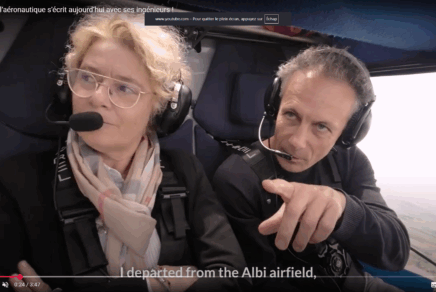
Videos
The future of aeronautics is being written today by its engineers!At the controls of an electric aircraft, the President of ISAE-SUPAERO speaks to us and embodies a new era of pioneers: that of more sustainable, more responsible aviation. This symbolic flight marks the Institute's commitment to the ecological transition of the aviation sector and illustrates the conviction that decarbonization is not only a technological challenge, but also a human and collective adventure. ISAE-SUPAERO, alongside its academic and industrial partners, trains the engineers who will invent the aviation of the future—silent, efficient, and environmentally friendly. ✈️ Discover this exciting moment and join us in transforming the skies.
Aeronautics
Aviation
Decarbonization
News
Sophie Adenot Returns to EarthSophie Adenot, an ESA astronaut and ISAE-SUPAERO engineering graduate, is back on Earth after spending nearly 8 months on the ISS for her Epsilon mission.
Alumni
Event
Space
News
ISAE-SUPAERO will be at the Paris Air Show from June 16 to 22, 2025!Aeronautics
Event
Fair
Videos
Start-up insights: interview with Ugo Bonnet from the Space Flight InstituteIn recent years, ISAE-SUPAERO has developed a range of services and comprehensive support for its project leaders (students, doctoral students, teacher-researchers, and alumni), earning it the title of incubator. It is in line with this support philosophy that the Institute currently hosts numerous startups that were created within its walls. Today we welcome Ugo Bonnet, CEO of the Space Flight Institute, a company that offers innovative training (in partnership with ISAE-SUPAERO) to future professionals in human spaceflight, whether on Earth or in orbit. Ugo Bonnet discusses the creation of the organization, its major successes, and its plans for the future.
Alumni
Space
Startup
Pages
Institute for Sustainable AviationCreated in 2021 on the initiative of internationally renowned academic institutions with longstanding academic expertise in aeronautics and air transport, the ISA is an institute dedicated to the challenges of aviation's transition to sustainability.
Aeronautics
Aviation
Decarbonization
News
Bertrand Joab-Cornu, co-founder of Wingly: "I already had the idea for a flight-sharing platform at ISAE-SUPAERO."A graduate of the ISAE-SUPAERO engineering programme, Bertrand Joab-Cornu co-founded Wingly a year before graduating in 2015. This start-up, which brings aviation into the collaborative economy, quickly became the European leader in flight sharing.
Aeronautics
Alumni
Diversity program
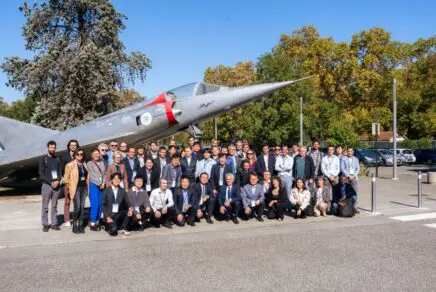
News
The first Franco-Korean workshop dedicated to the challenges of cryogenic hydrogenThe global aviation industry is facing an urgent challenge: significantly reducing its greenhouse gas emissions. Hydrogen, thanks to its unique properties and considerable energy potential, appears to be a promising solution and could play a key role in the aviation sector's energy transition.
Aeronautics
Decarbonization
News
Pages
Design and Architecture of Cognitive Air Systems Research Chair - Dassault AviationThe CASAC Chair, supported by the Neuroergonomics Centre at ISAE-SUPAERO, is backed by Dassault Aviation, which is affirming its commitment to the mastery of complex systems.
Aeronautics
Chair
News
SILOE, an experimental drop tower project selected by ESA and an ESPACE grant for Alexia DuchêneThe SILOE experimental drop tower project aims to study the cohesion of planetary surfaces. This student project is supported by ESA as part of its European ‘Academy Experiments’ program. Alexia Duchêne, SILOE project leader, has been awarded a scholarship of excellence from the Fondation des Ailes de France.
DEOS
Space
Events
ISAE-SUPAERO will be at the Paris Air Show at Le Bourget from June 16 to 22, 2025ISAE-SUPAERO will be present at the 55ᵉ Salon International de l'Aéronautique et de l'Espace at Le Bourget from June 16 to 22, 2025!
Aeronautics
Aerospace
Event
News
ICCAS 2026: Artificial Intelligence for Operational Decision-MakingThe fourth edition of ICCAS (International Conference on Cognitive Aircraft Systems) was held on June 11–12, organized in partnership with the ISAE-SUPAERO Foundation and Dassault Aviation, as part of the Chair in Design and Architecture of Cognitive Aircraft Systems (CASAC).
Aeronautics
Aviation
Conference
News
ISAE-SUPAERO renews cooperation agreements with ITA and São Paulo institutionsAerospace
Education
Institute
Events
"Study in Europe, Vietnam 2025" exhibition in VietnamAerospace
Fair
Master in Aerospace Engineering
News
Meeting with Stéphanie Lizy-Destrez, elected member of the Air and Space AcademyAt ISAE-SUPAERO, Stéphanie Lizy-Destrez heads SaCLaB, a research laboratory focusing on future space systems. A professor of space systems engineering, she has just been elected to the French Air and Space Academy.
Award
Space
Teacher researcher
Events
"Tu Masteria en Francia" Peru & Chile edition - online fairAerospace
Fair
Master in Aerospace Engineering
News
Seven ISAE-SUPAERO students set out to conquer Mars in the Utah desertFor four weeks, seven engineering students will experience a simulation of life on Mars in the Utah desert in the United States. From 18th February to 16th March, they will conduct experiments in collaboration with CNES and several research laboratories at the Mars Desert Research Station (MDRS).
Space
Student club
Testimonials
Testimony of Giuseppe Cataldo, alumnus of the 2010 Engineer ISAE-SUPAERO programmeAlumni
Space
Testimonial
Pages
Advanced Space Concepts Laboratory - Airbus DS & ArianeGroupCreated in 2017 and renewed until 2027, this sponsorship partnership brings together Airbus Defense & Space and Ariane Group.
Aerospace
Chair
Company
News
3 questions to... Loïc Jecker, S-Cube member from 2011 to 2013Meet Loïc Jecker, member of S-Cube - SUPAERO Space Section - ISAE-SUPAERO's experimental rocket club, from 2011 to 2013.
Space
Student club
Student life
News
Meteorite impact reveals new insights into MarsIn September 2021, NASA's InSight mission recorded a meteorite impact. Analysis of the data by scientists has revolutionised our understanding of the internal structure of Mars and its evolution. Its mantle is not homogeneous, as previously assumed, but composed of a layer of molten silicates overlying the core. Press release from the IPGP - Institut de Physique du Globe de Paris: ‘The InSight mission reveals a molten layer at the base of the Martian mantle’.
DEOS
Space
Events
Forum ICAMCome meet representatives from TSAAE and ISAE-SUPAERO in Paris!
Advanced Master
Aerospace
Forum
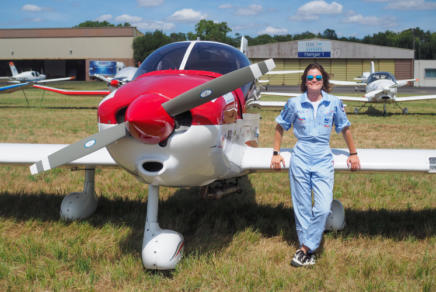
News
Meet Camille, an engineering student selected for the Young Pilots Air TourCamille Delesalle, 20, has just completed her first year of the General Engineering programme at ISAE-SUPAERO. She is one of 45 pilots aged 18 to 24 selected by the French Aeronautical Federation to take part in the Young Pilots Air Tour.
Aeronautics
Ingénieur généraliste (MSc)
Programme
Pages
Communication and Information Theory (ComiT) Scientific GroupThe “Communication and Information Theory” (ComiT) scientific group is involved in the disciplines of digital communications, radar, and channel access techniques. Its fields of application include space systems, civil and military aviation, terrestrial cellular networks and the Internet of Things (IoT).
DEOS
Doctoral program
Doctoral student
News
Mars mission simulation: a scientific experiment, a human adventureLike nine other ISAE-SUPAERO crews before them, seven students took part in a simulation of life on Mars in the Utah desert in the United States this winter.
Space
Student club
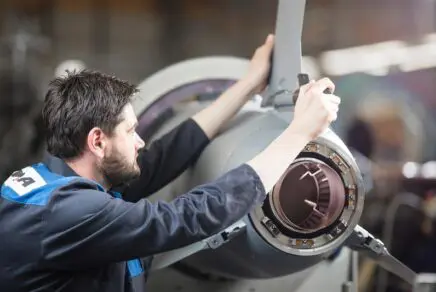
Pages
MBDA – Excellence scholarshipsMBDA, a European leader in missile and missile system design, wishes to support the training of engineers and managers for the aerospace and defense industry through the award of excellence scholarships.
Aeronautics
Chair
Defence
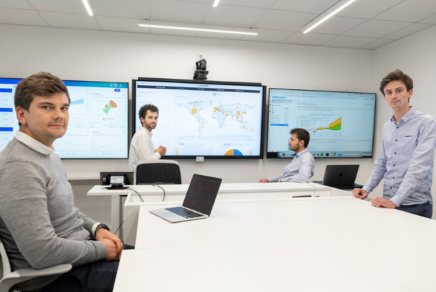
News
AeroSCOPE, the first open-source database for exploring CO2 emissions from air transportA doctoral student at ISAE-SUPAERO, Antoine Salgas has produced a photograph of CO2 emissions from air transport by country and by region. This unique work feeds into AeroMAPS, an open reference platform aimed at exploring scenarios for decarbonising air transport.
Aeronautics
Decarbonization
Sustainability
Pages
Our Short ModulesDerived from the Institute's Advanced Master programmes, our short modules are aimed at professionals wishing to develop specific skills in Aeronautics, Space, Project Management, Systems Engineering, or Digital Systems.
Advanced Master
Aeronautics
Aerospace
Events
European Education Fair TaiwanCome meet representatives from TSAAE, ISAE-SUPAERO, and ENAC in Taiwan!
Advanced Master
Aerospace
Fair
News
BROMO: the joint venture project involving major European space industry players presented to ISAE-SUPAERO studentsIn December 2025, ISAE-SUPAERO welcomed major players in the European space industry (Airbus, Thales and Leonardo) for an exceptional conference on the BROMO project.
Conference
Space
Videos
ISAAR DAHER/ ISAE-SUPAERO Chair: presentation of the Chair's workDesign and certification of CS-23 category aircraft ✈ In collaboration with our sponsor #daher and with the support of the ISAE-SUPAERO Foundation, discover the latest advances in the work of the #ISAAR Chair (Innovative Solutions for Aviation Architecture & Regulation). Aircraft design is inherently multidisciplinary. It relies on a systemic approach to understanding certification needs and requirements and on a comprehensive analysis of possible vehicle architectures. Current and future environmental, societal and mobility challenges further reinforce this need to integrate disciplines in order to better optimise aircraft and to better reconcile safety, performance, environmental protection, market economics and the needs of passengers and crew. For more information: https://www.isae-supaero.fr/fr/isae-s... FAST-OAD: https://github.com/supaero-aircraft-d...
Aeronautics
Chair
Company
Events
"Les Entretiens de Toulouse - Training through debate”: April 9 & 10, 2025 on the ISAE-SUPAERO campus"Les Entretiens de Toulouse" has become a must-attend event for the aerospace industry. A forum for the exchange and transmission of skills, this training through debate provides an opening onto subjects with high industrial stakes. The 2025 edition of the Entretiens de Toulouse will take place on April 9 & 10, 2025, in person, at ISAE-SUPAERO!
Aeronautics
Artificial intelligence
Defence
Videos
SUPERCAM Educational Kits / Martian Exploration: Students at the controls of the kitsFollow ISAE-SUPAERO students as they create educational kits, a digital educational tool designed to raise awareness of space exploration that can be used in classrooms from Year 7 to Year 13.
Diversity program
Equal opportunities
Space
News
The Toulouse School of Aviation and Aerospace Engineering (TSAAE) launches its official social media accountsIt is now possible to follow news from the 𝐓𝐨𝐮𝐥𝐨𝐮𝐬𝐞 𝐒𝐜𝐡𝐨𝐨𝐥 𝐨𝐟 𝐀𝐯𝐢𝐚𝐭𝐢𝐨𝐧 𝐚𝐧𝐝 𝐀𝐞𝐫𝐨𝐬𝐩𝐚𝐜𝐞 𝐄𝐧𝐠𝐢𝐧𝐞𝐞𝐫𝐢𝐧𝐠 (𝐓𝐒𝐀𝐀𝐄) on social media!
Advanced Master
Aerospace
Communication
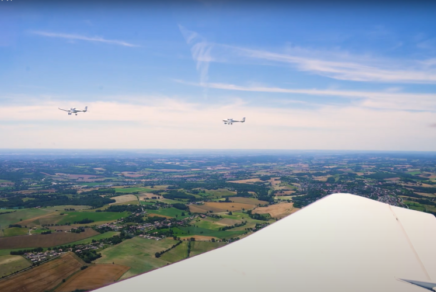
News
From classroom to cockpit: flying activities at ISAE-SUPAEROWatch a video of the school's Lasbordes Air Operations Center (COAL).
Aeronautics
Programme
Pages
Our Partners and NetworksAt ISAE-SUPAERO, we benefit from an exceptional academic, scientific and industrial environment. Our Institute has established privileged relationships with a large number of regional, national and international players in education, research and industry, as well as with public authorities and socio-economic partners. Our institution is heavily involved in scientific networks in our field of activity.
Aerospace
Networks
Partner
Events
Forum ENI TARBESCome meet representatives from TSAAE and ISAE-SUPAERO in Tarbes!
Advanced Master
Aerospace
Forum
Pages
Innovating in a World of Transition - SafranThe challenges facing the aerospace industry (energy transition, New Space, digitalization) are driving a growing need for professionals with the ability to innovate. Against this backdrop, Safran and ISAE-SUPAERO are creating the Innovating in a World in Transition Chair.
Aeronautics
Aerospace
Chair
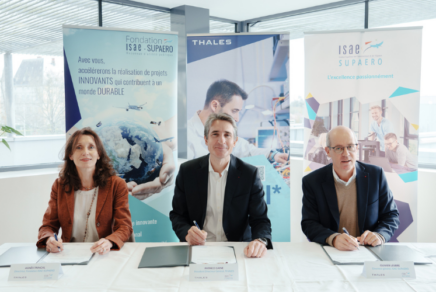
News
Thales and ISAE-SUPAERO strengthen ties to work towards a more sustainable air transport systemThe French high-tech group supports the Institute through a research chair. The prize: a thesis on an integrated approach to air transport and eleven scholarships of excellence to support high-achieving European students.
Aeronautics
Decarbonization
Partnership
Pages
ISAE-SUPAERO FoundationThe ISAE-SUPAERO Foundation works to develop the Institute's influence and global leadership, by proposing and accelerating innovative projects that contribute to a sustainable world.
Aerospace
Commitments
Diversity program
Pages
Our Labels, Accreditations and CertificationsOur Institute is committed to a quality approach, covering both our programmes and our organisation. As a result, ISAE-SUPAERO has numerous labels, accreditations and certifications, demonstrating that our teaching and structures are adapted to the expectations of our future students and recruiters.
Accréditation
Aerospace
Certification
Events
"Choose France Tour 2025" in IndiaAerospace
Fair
Master in Aerospace Engineering
Pages
French Space Defence AcademyIn order to drive and implement the ambitions set out in the Space Defence Strategy, the creation of a space defence expertise sector offering attractive programmes is a major challenge. In this regard, the French Space Defence Academy (ASD) offers programmes available within the Armed Forces Ministry and leverages synergies between them to provide a personalised approach to space programmes.
Defence
Education
Partner
News
“My summer at NASA’s Jet Propulsion Laboratory”: Axel’s account, a student on the TAS Astro Advanced Master’s programmeSince May, Axel Coulon has been interning at NASA's famous JPL in Los Angeles. He is working on detecting helicopter landing sites on Mars. A student in the MS TAS Astro programme, he recounts this incredible space adventure that took him from his native Lorraine to California.
Internship
Programme
Space
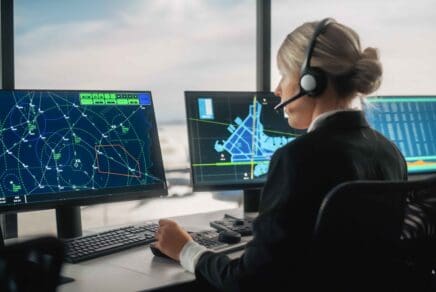
Pages
Integrated Air Transport System - ThalèsThis sponsorship, research and teaching chair draws on ISAE-SUPAERO's expertise in flight operations optimisation and systems approach, and on the Thalès Group's expertise in flight avionics, connectivity and air traffic control.
Aeronautics
Chair
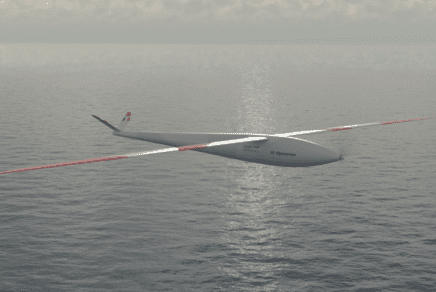
News
The project for an unmanned, zero-emission aircraft to cross the South AtlanticInnovation
Researcher
Sustainability
Pages
UNIVERSEHUNIVERSEH, the European Space University for Earth and Humanity, is an alliance of European universities created as part of the European Universities initiative launched by the European Commission in 2019.
Education
International
Science
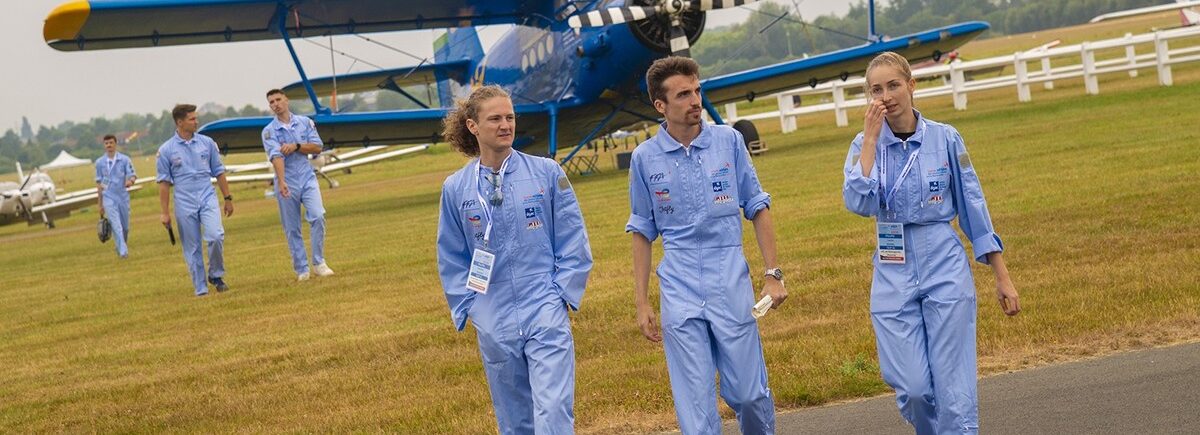
TAJP 2026: Five ISAE-SUPAERO Students at the Light Aviation Event
Every two years, the Young Pilots’ Air Tour (TAJP) brings together 45 young pilots. In 2026, five ISAE-SUPAERO students—Camille Oudot, Aurélien Dalot, Lucie Duval, Marc Vincent, and Auguste Chauviré—were selected to participate in this adventure organized by the French Aeronautical Federation (FFA). Their participation was particularly notable for Camille’s victory; he finished first in the final standings after two weeks of challenges, navigation exercises, and encounters across France. Camille, Aurélien, and Lucie reflect on their preparation, the highlights of this year’s event, the lessons they’ve learned, and how this experience fits into their careers in aviation.
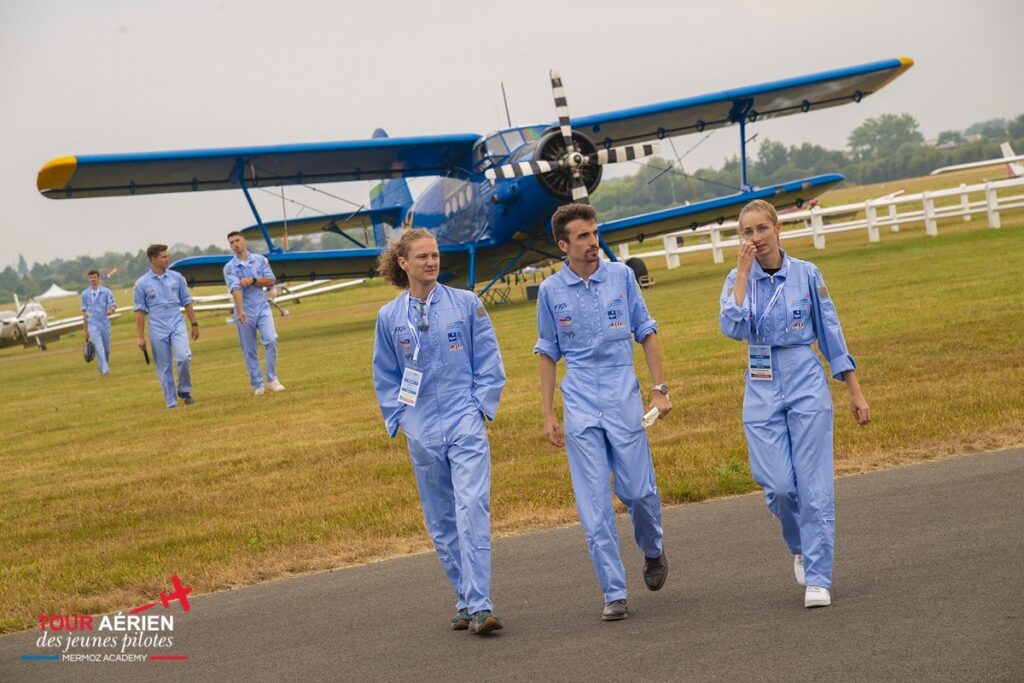
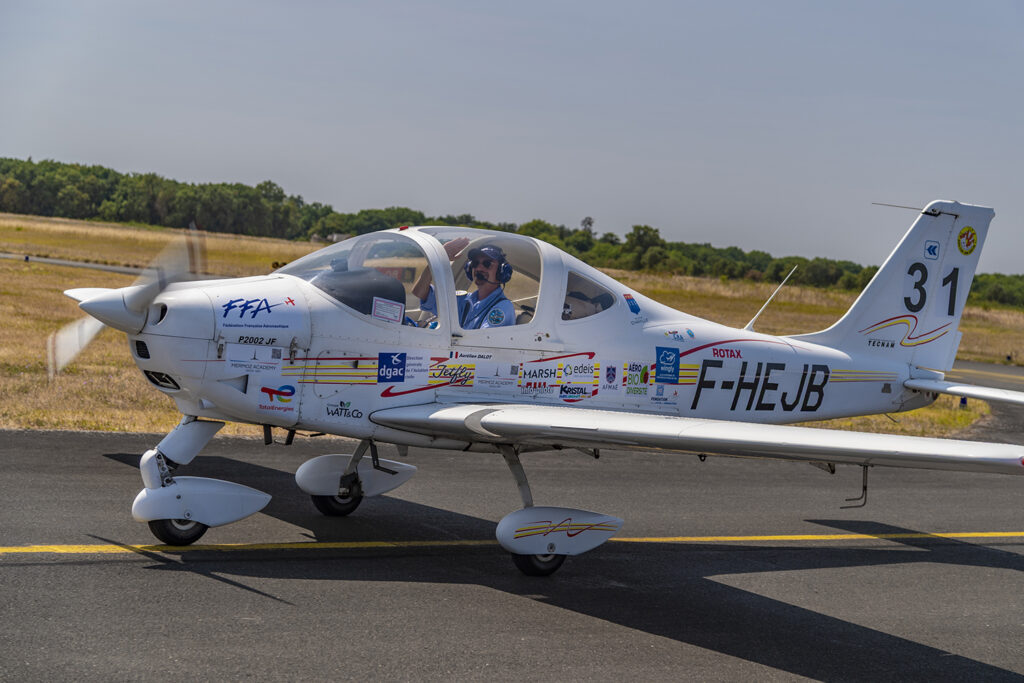
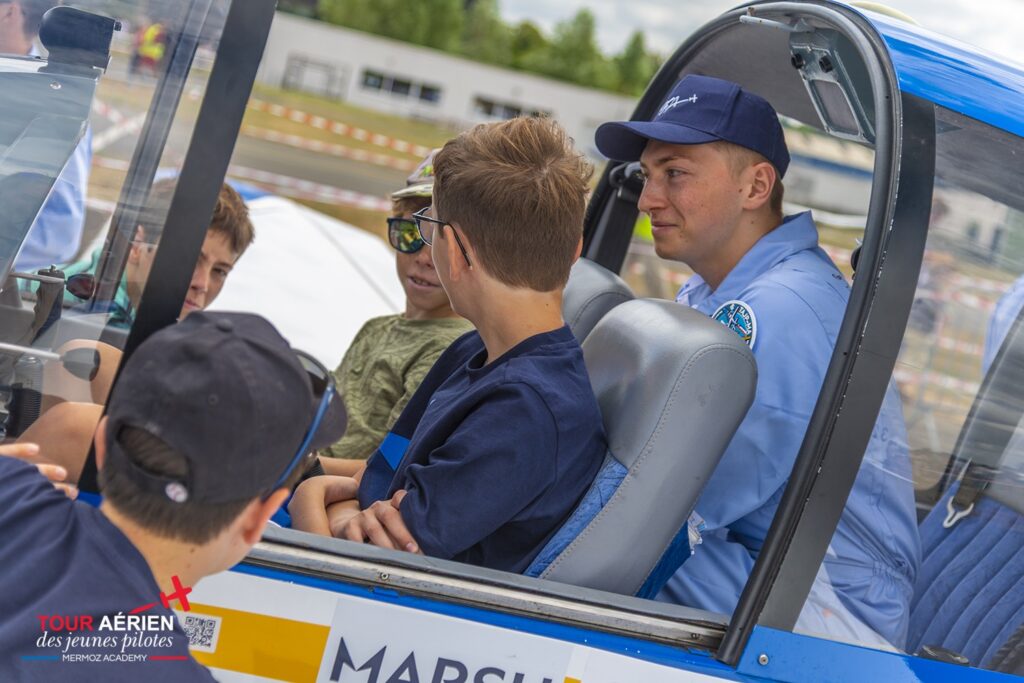
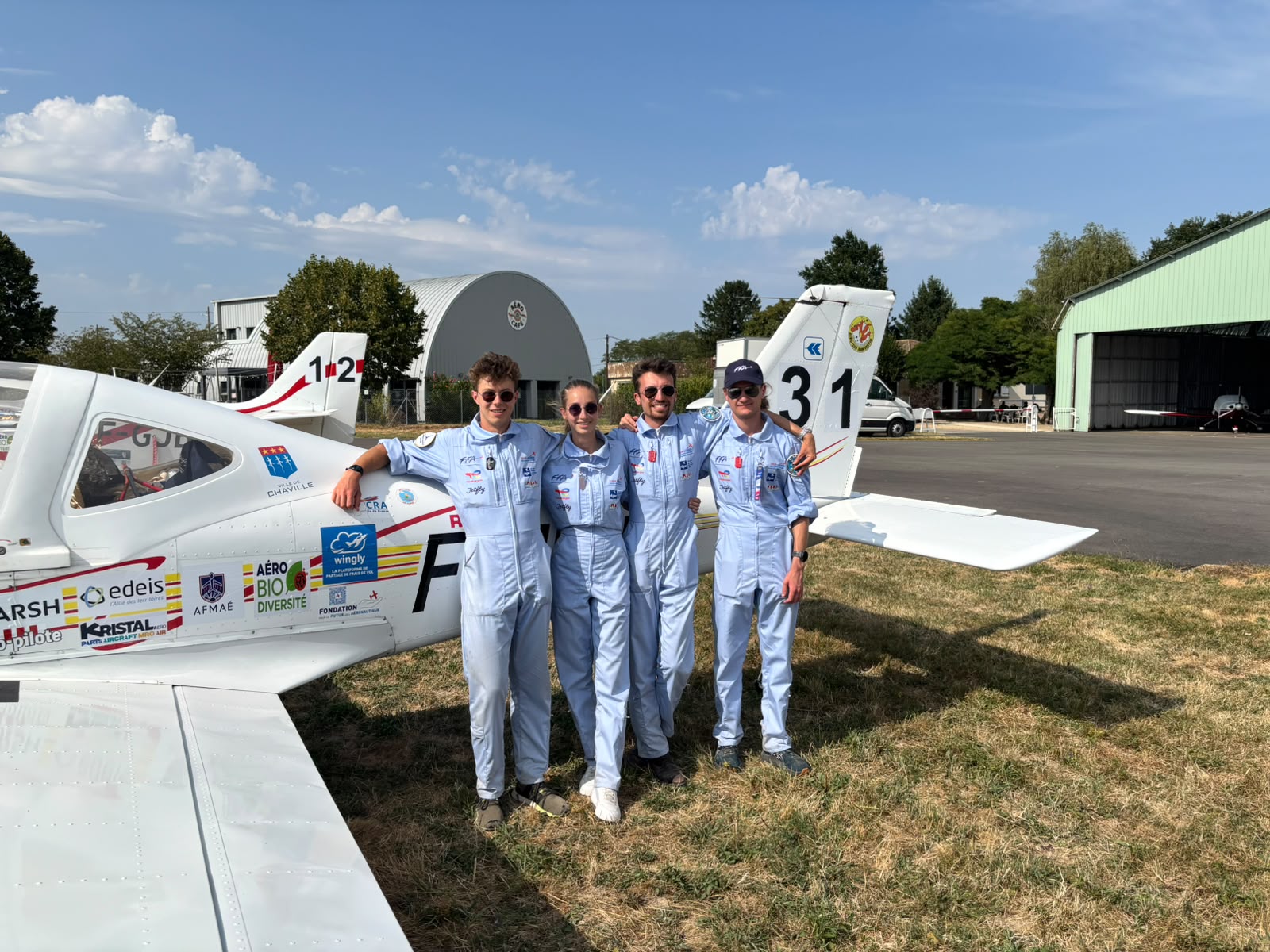
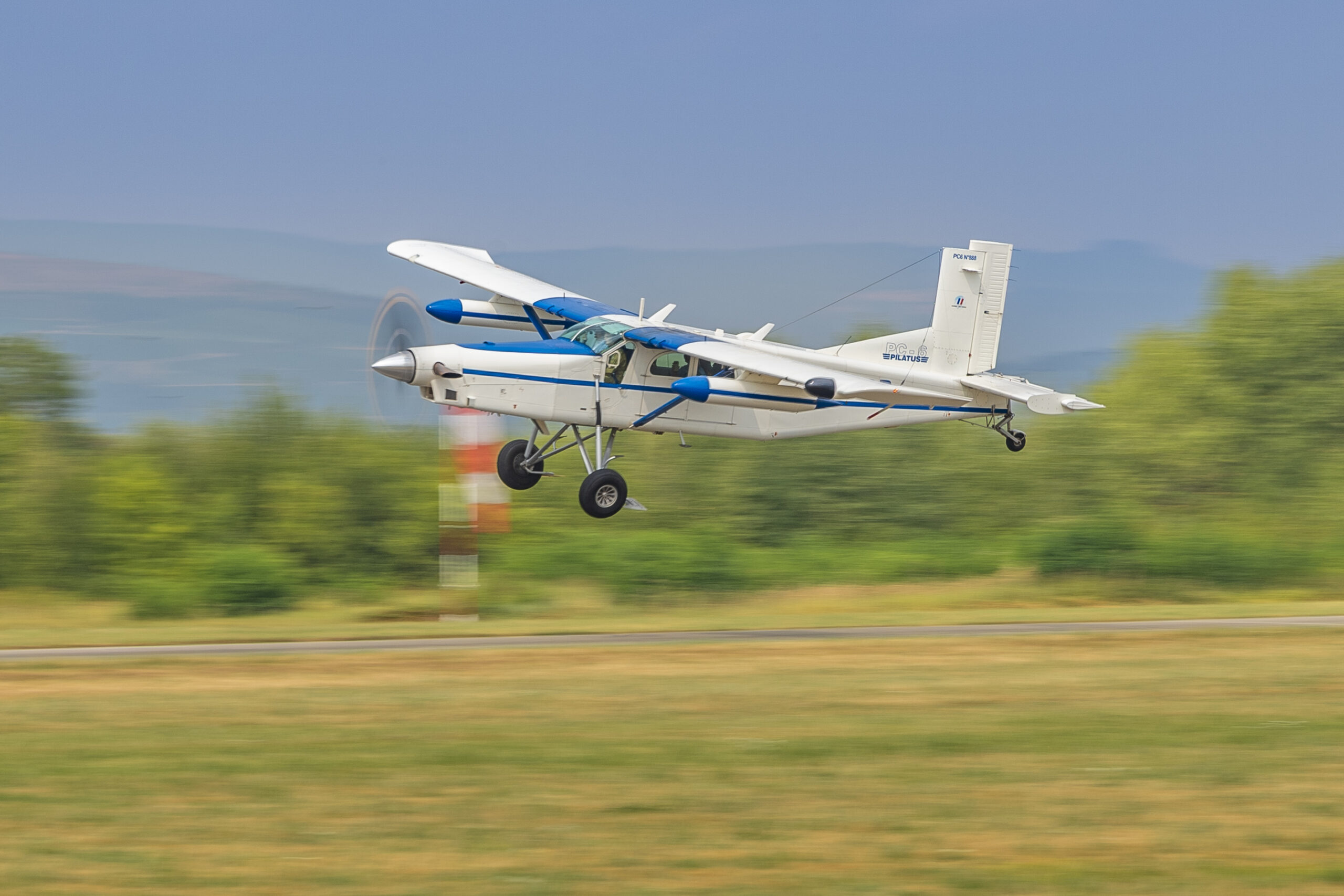
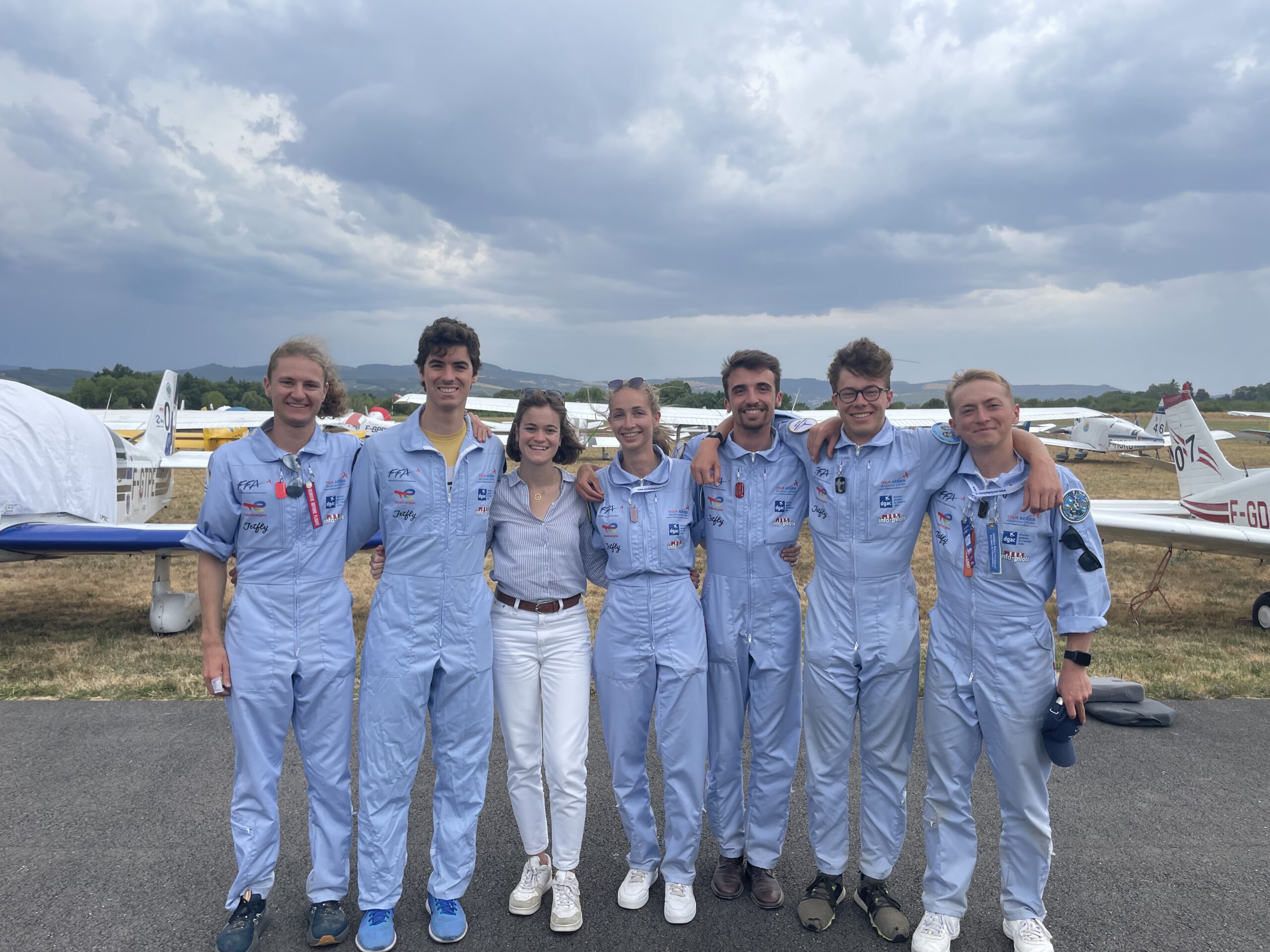
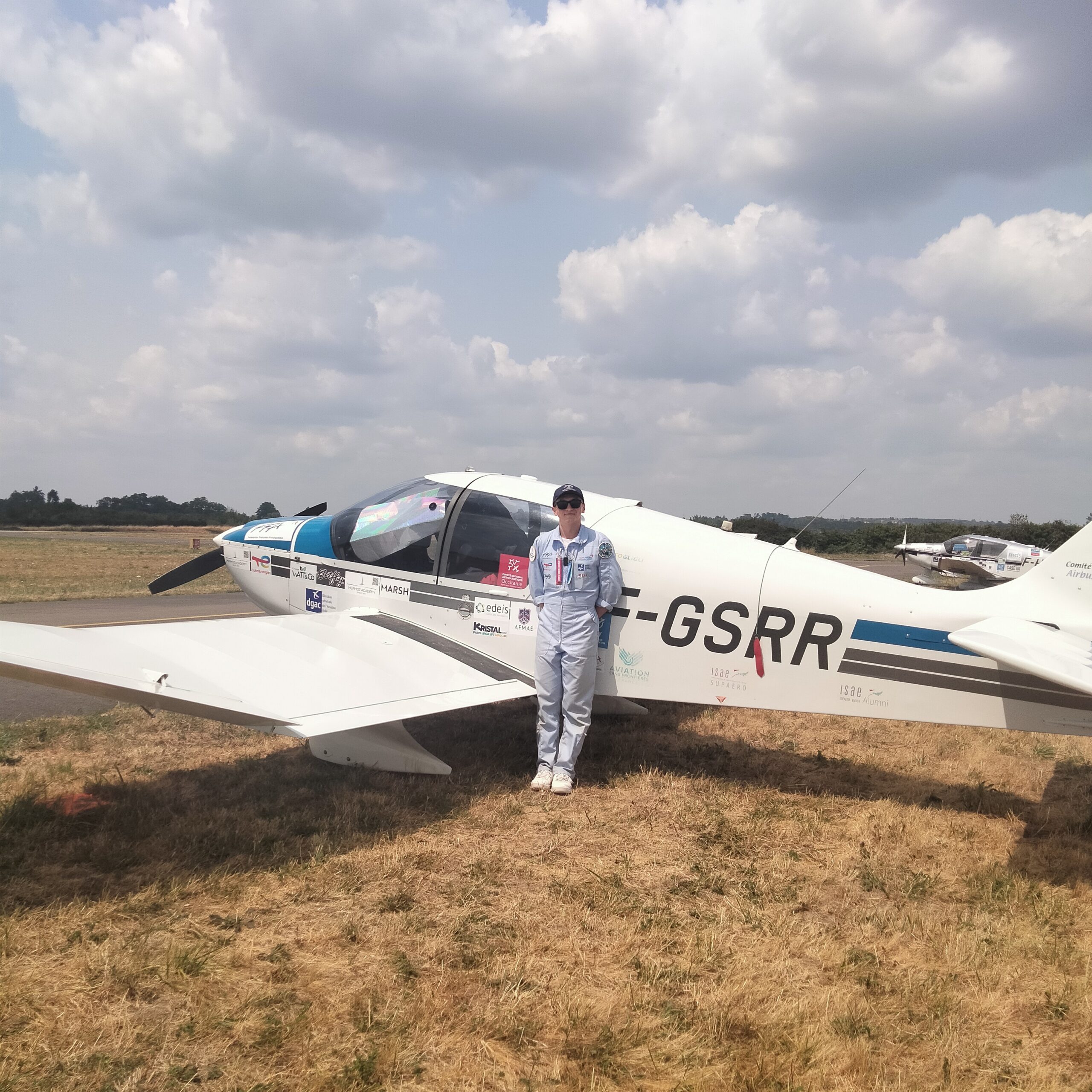
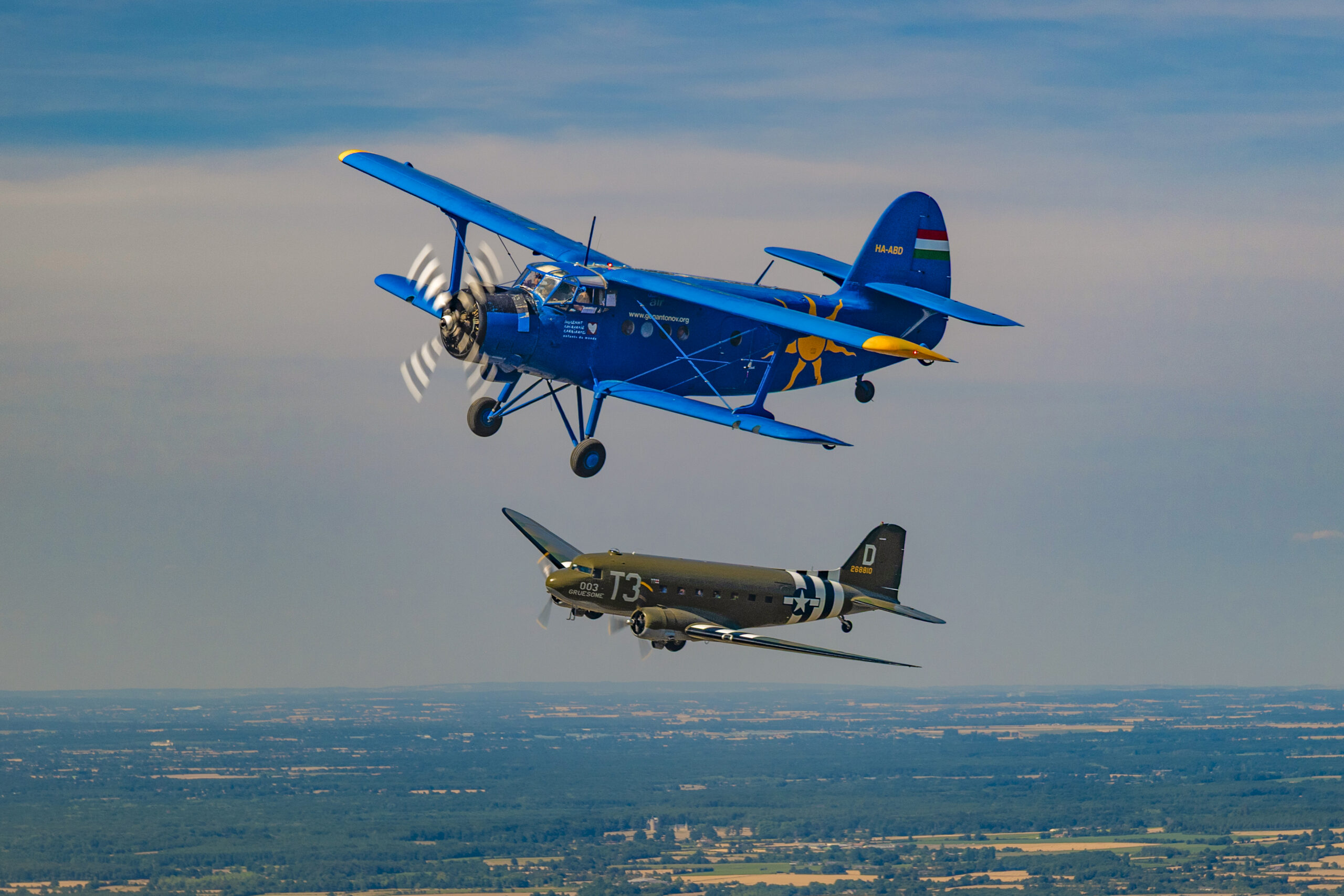
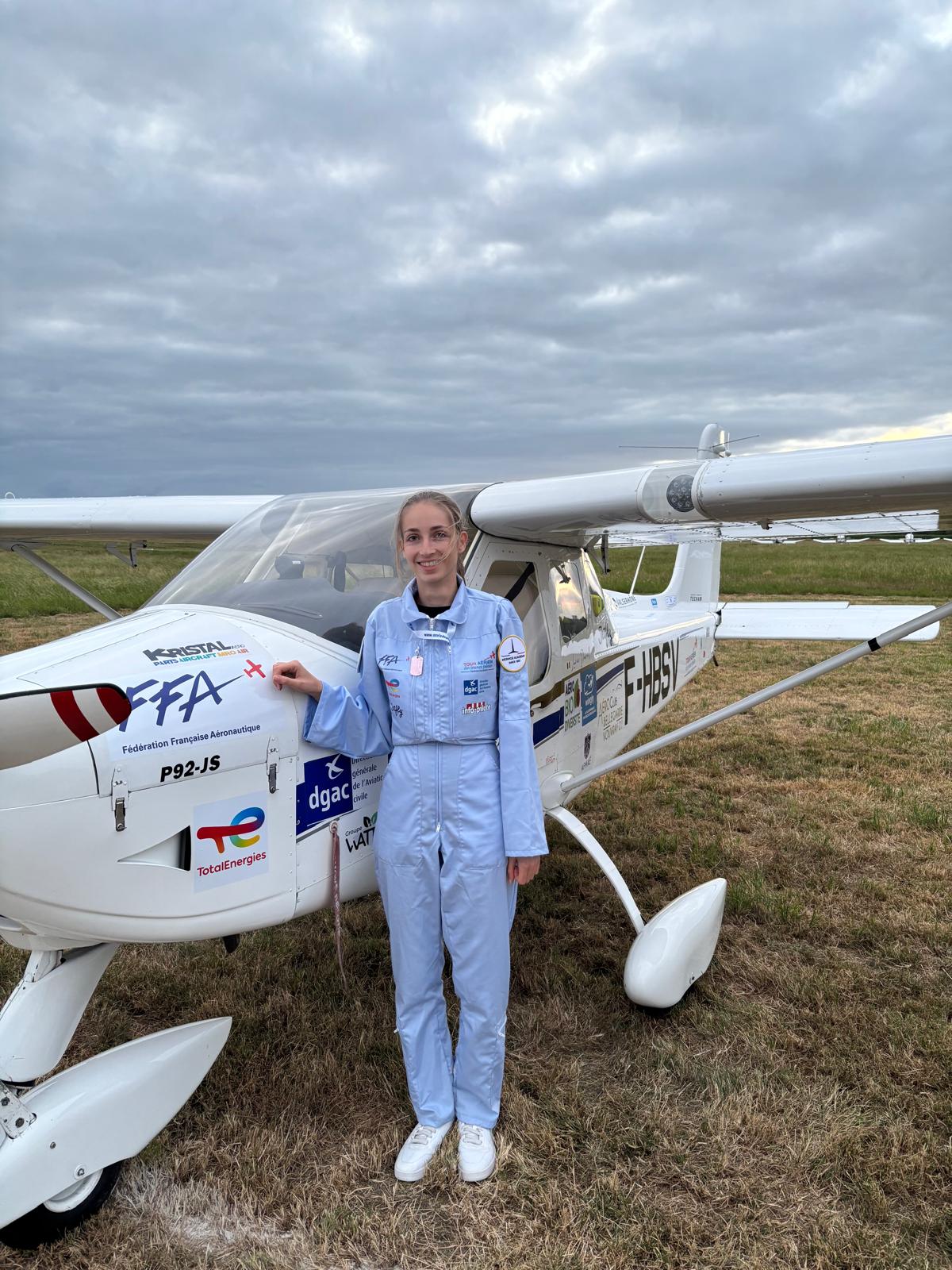
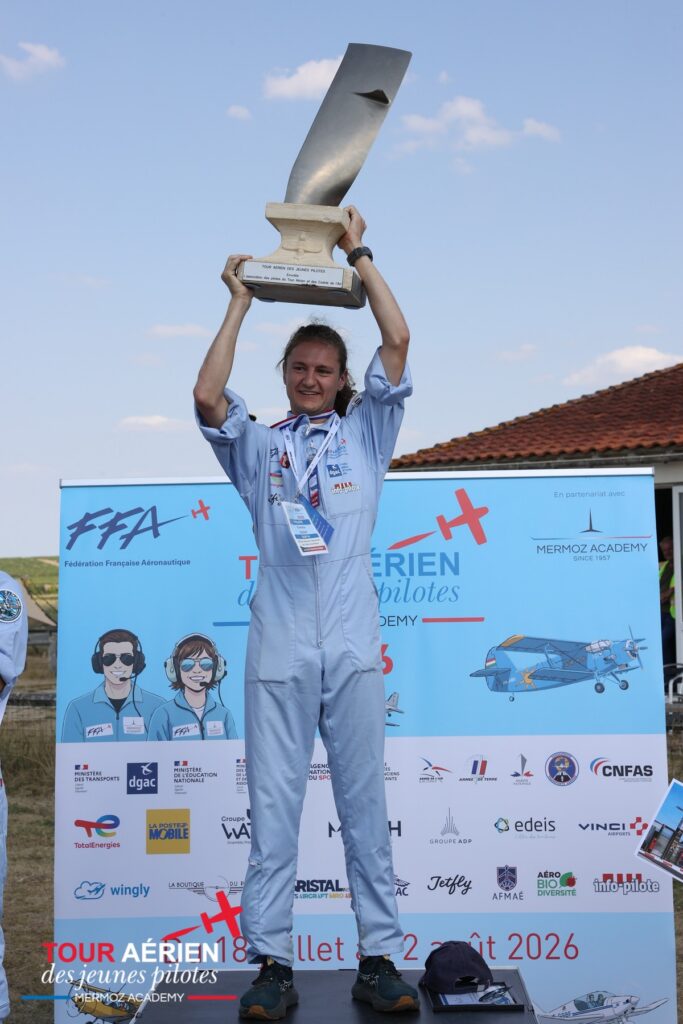
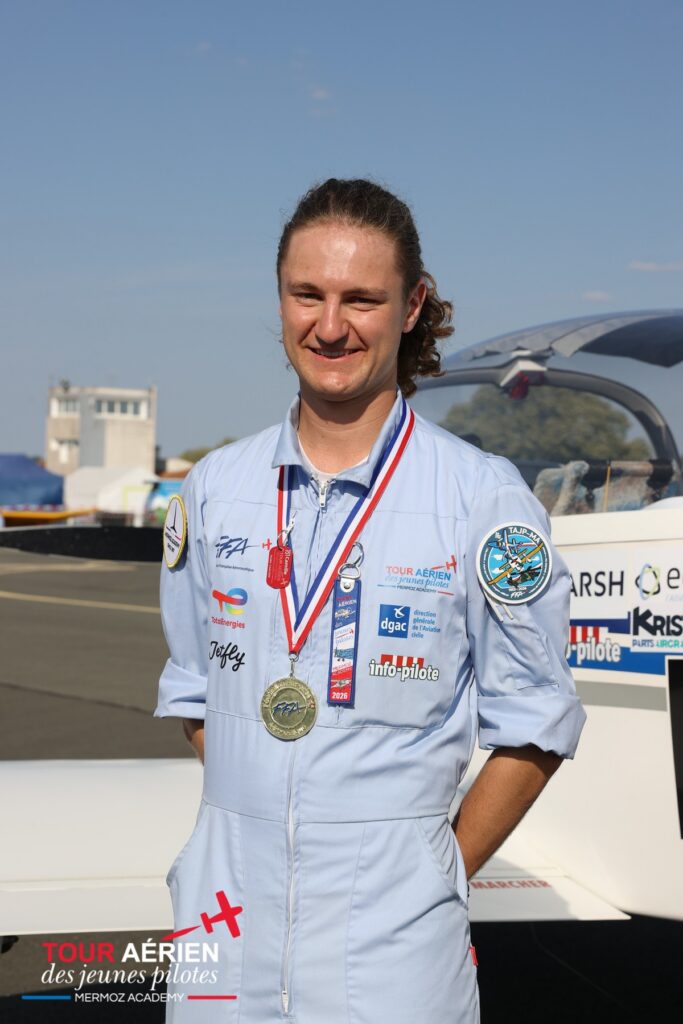
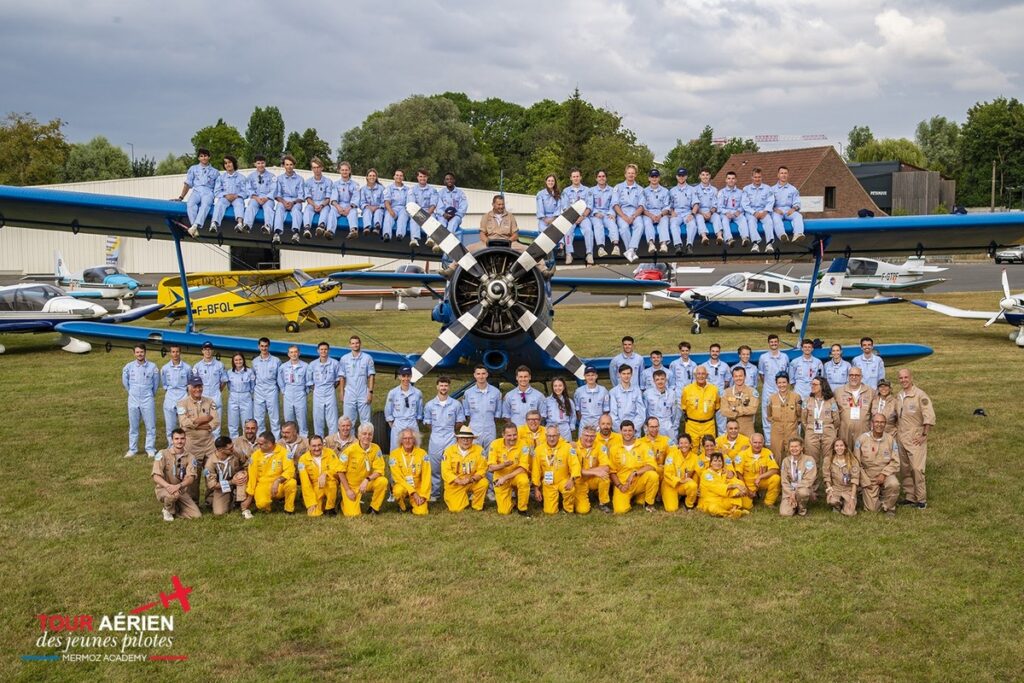
Related Content
News
Decarbonisation of aviation: ISAE-SUPAERO launches training programme for professionals with GIFASThis one-day training course aims to help employees in the aeronautics sector play an active and informed role in the decarbonisation of the sector. The first two sessions will be held on Thursday 3 April 2025 in Toulouse and Thursday 10 April 2025 in Paris.
Aeronautics
Decarbonization
Programme
News
Let's make together a durable commitment to new horizonsAeronautics
Horizons
Sustainability
News
Focus on subsonic wind tunnels, aerodynamics in practiceThe subsonic wind tunnels at ISAE-SUPAERO are used to study airflow over objects such as aircraft wing profiles. This equipment, supervised by a technical team, is used by both students and researchers in the Aerodynamics, Energy and Propulsion Department (DAEP).
Aeronautics
DAEP
Pages
Human Factors and Neuroergonomics for Aviation Safety - AXAThe AXA Chair aims to advance research into human factors and, more specifically, human-machine interfaces, with a view to improving air safety.
Aeronautics
Chair
Company
Events
2026 edition of "Les Entretiens de Toulouse"Aeronautics
Aerospace
Event
Testimonials
Testimony from Valentin Balayn, 2015 graduate of the TAS AERO FTE Advanced Master®Advanced Master
Aeronautics
Alumni
News
ISAE-SUPAERO, ENAC, and Airbus Launch an Advanced Master programme for Ethiopian AirlinesISAE-SUPAERO, ENAC, and Airbus are partnering with Ethiopian Airlines to launch an Advanced Master programme in Aviation Management for 30 executives from the airline. This one-year program, offered in Addis Ababa, aims to support the development of skills and leadership in the African aviation sector.
Advanced Master
Aeronautics
Company
News
ISAE-SUPAERO and GIFAS offer training to accelerate the decarbonization of air transportFaced with the challenges of climate change and the imperatives of energy transition, ISAE-SUPAERO and GIFAS have joined forces to offer a unique training program dedicated to decarbonizing the aviation sector.
Aeronautics
Company
Decarbonization
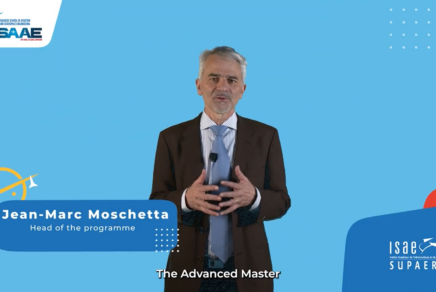
Videos
Jean-Marc Moschetta - Head of the HADA Advanced Master programmeAdvanced Master
Aviation
Education
News
Aviation and Climate: an assessment of transition scenarios for sustainable aviation compatible with the Paris AgreementIn 2021, ISAE-SUPAERO researchers Scott Delbecq, Jérôme Fontane, Nicolas Gourdain, Florian Simatos and Thomas Planès published the ‘Aviation and Climate’ report, summarising international scientific publications in order to provide the scientific information needed to understand the challenges of decarbonising air transport.
Aeronautics
DCAS
Decarbonization
News
3 questions to... Loïc Jecker, S-Cube member from 2011 to 2013Meet Loïc Jecker, member of S-Cube - SUPAERO Space Section - ISAE-SUPAERO's experimental rocket club, from 2011 to 2013.
Space
Student club
Student life
Events
Decarbonization of the aviation sector trainingISAE-SUPAERO and GIFAS open new training sessions dedicated to decarbonizing the aviation sector.
Aeronautics
Aviation
Decarbonization
Pages
Our Short ModulesDerived from the Institute's Advanced Master programmes, our short modules are aimed at professionals wishing to develop specific skills in Aeronautics, Space, Project Management, Systems Engineering, or Digital Systems.
Advanced Master
Aeronautics
Aerospace
News
Mattéo Gouzien: itinerary of an award-winning engineer and PhD student committed to decarbonized aviation!Mattéo Gouzien, a graduate of ISAE-SUPAERO and currently a doctoral student at IMS Bordeaux and ONERA, has been passionate about science from an early age. His remarkable academic and personal career has been guided by a relentless desire for knowledge and a quest for meaning. Winner of the SEE's André Blanc-Lapierre national prize and of the PEGASUS 2025 student conference, Mattéo talks about his rich career path: from preparatory school to his thesis on reducing aviation emissions.
Aeronautics
Ingénieur généraliste (MSc)
Portrait
Videos
3 questions to Marie Delaroche, 3ᵉ year student and MDRS 293 crew commanderSince February 18, seven ISAE-SUPAERO engineering students have been living a simulated Martian life and carrying out experiments in collaboration with CNES and several research laboratories at The Mars Society's Mars Desert Research Station (MDRS) in UTAH (USA)! For the second time, the mission is led by a woman: Marie Delaroche, a passionate #spaceexplorer, who was already part of crew 275 departing in 2023. We asked her 3 questions to find out more about the challenges of this mission and her feelings as #flightcommander! Alongside her, three young women and three young men in their 2ᵉ year of #engineering studies have taken on the roles of astronomer, scientist, botanist, journalist, health worker and onboard engineer. They are all members of the Mars Club ISAE-SUPAERO, a student association for the popularization of science focused on the Red Planet and the missions dedicated to its exploration and study. They are currently experimenting with AI4U, the artificial intelligence that assists astronauts in their daily tasks (environmental measurements, voice recognition, emergency exercises). They are also conducting a science popularization experiment in collaboration with secondary school pupils. Inspired by the film The Martian, in which an astronaut grows potatoes on the Red Planet, the aim of this experiment is to compare plant growth in Martian soil with growth in terrestrial soil! To follow their adventure, click here: https://mars.bde-supaero.fr/
Space
Student club
Student life

Pages
Living in ToulouseStudent life
News
ICCAS 2026: Artificial Intelligence for Operational Decision-MakingThe fourth edition of ICCAS (International Conference on Cognitive Aircraft Systems) was held on June 11–12, organized in partnership with the ISAE-SUPAERO Foundation and Dassault Aviation, as part of the Chair in Design and Architecture of Cognitive Aircraft Systems (CASAC).
Aeronautics
Aviation
Conference
News
ISAE-SUPAERO obtains the HappyAtSchool®label!ISAE-SUPAERO has been awarded the Happy At School label, given to schools offering the best student experience.
Label
Student life
Pages
Aerospace Summer ProgrammeEnjoy a unique experience at the heart of aeronautics and space technology with intensive courses, exclusive industrial visits, and an international immersion in Paris, Poitiers and Toulouse.
Aeronautics
Aerospace
Aerospace summer program
Pages
CampusAssociation
Student club
Student life
News
AeroMAPS: the go-to tool for exploring the possible futures of aviationThe AeroMAPS tool, developed by researchers at ISAE-SUPAERO, makes it possible to assess the environmental impacts of air transport and the effectiveness or limitations of levers for decarbonising the sector.
Aeronautics
DCAS
Decarbonization
News
The HappyAtSchool® label renewed: happy students at ISAE-SUPAERO!For the second consecutive year, ISAE-SUPAERO has been awarded the Happy At School label, given to schools offering the best student experience.
Label
Student life
News
A team of researchers from the École de l'Air et de l'Espace and ISAE-SUPAERO received the Best Paper Award from the journal "Aviation Psychology and Applied Human Factors"A team of researchers from Ecole de l'air et de l'Espace and ISAE-SUPAERO and their partners have received the Best Paper Award in the Aviation Psychology and Applied Human Factors journal. The official award ceremony will take place during the European Conference on Aviation Psychology (EAAP) in The Hague in September 2026.
Aviation
DCAS
Human factors
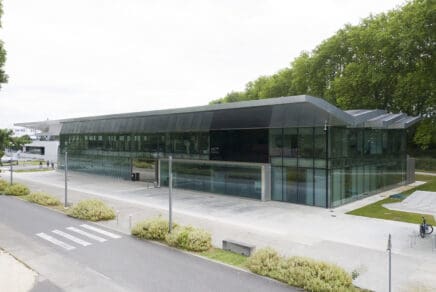
Pages
Marie Marvingt AerothequeLocated in the centre of the ISAE-SUPAERO campus, the Marie Marvingt Aerotheque is a space dedicated to knowledge and cultural exchange. It is open to students and the general public alike.
Association
Student club
Student life
News
CASTOR Chair: ISAE-SUPAERO and Liebherr-Aerospace Toulouse celebrate 1 year of partnershipAeronautics
Chair
Partnership
Events
16th EASN International ConferenceAeronautics
Aerospace
Event
Events
AASTRA Certificate: presentation webinar on March 25 from 6:00 p.m. to 7:00 p.m.Aeronautics
Aerospace
Air transport
Events
ICCAS, organized jointly by ISAE-SUPAERO, the ISAE-SUPAERO Foundation, and Dassault Aviation, will take place on June 11 and 12, 2026Aeronautics
AI
Artificial intelligence
Events
Web conference "Research, Innovation & Training supporting Aviation Sustainability" - TSAAE by ISAE-SUPAERO & ENACWould you like to discover how ISAE-SUPAER and ENAC have fully integrated the challenges of sustainable aviation ?
Aviation
Conference
Decarbonization
News
3 questions to... Ervan Kassarian, S-Cube member from 2015 to 2017Meet Ervan Kassarian, member of S-Cube - SUPAERO Space Section - ISAE-SUPAERO's experimental rocket club, from 2015 to 2017.
Space
Student club
Student life
Pages
Semester Research ProjectsTake your studies to the next level by participating in a semester-long research project at ISAE-SUPAERO: immerse yourself in cutting-edge laboratories alongside international experts and contribute to advances in aeronautics and space technology.
Aeronautics
Aerospace
Aerospace summer program
News
3 questions to... Marie-Bertille Mosnier, S-Cube member from 2018 to 2022Meet Marie-Bertille Mosnier, member of the S-Cube - SUPAERO Space Section - ISAE-SUPAERO's experimental rocket club, from 2018 to 2022.
Space
Student club
Student life
News
ISAE-SUPAERO will be at the Paris Air Show from June 16 to 22, 2025!Aeronautics
Event
Fair
News
Electric aircraft flights to raise awareness of carbon-free aviationIn June, twenty-four students and staff members from ISAE-SUPAERO had the opportunity to fly on the Velis Electro, the world's first certified 100% electric aircraft.
Aeronautics
Decarbonization
Sustainability
News
From classroom to cockpit: flying activities at ISAE-SUPAEROWatch a video of the school's Lasbordes Air Operations Center (COAL).
Aeronautics
Programme
News
Bertrand Joab-Cornu, co-founder of Wingly: "I already had the idea for a flight-sharing platform at ISAE-SUPAERO."A graduate of the ISAE-SUPAERO engineering programme, Bertrand Joab-Cornu co-founded Wingly a year before graduating in 2015. This start-up, which brings aviation into the collaborative economy, quickly became the European leader in flight sharing.
Aeronautics
Alumni
Diversity program
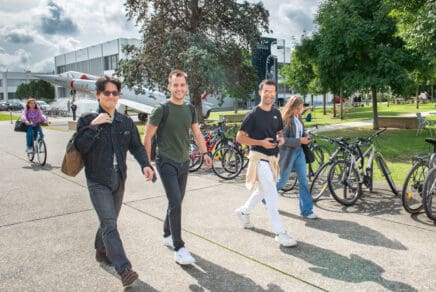
News
Admissibles 2025: all the info!Education
Student life
Pages
Chair for Eco-Design of AiRcraft – AirbusThe CEDAR Chair, a response to environmental issues in the aeronautics sector.
Aeronautics
Chair
Events
ISAE-SUPAERO will be at the Paris Air Show at Le Bourget from June 16 to 22, 2025ISAE-SUPAERO will be present at the 55ᵉ Salon International de l'Aéronautique et de l'Espace at Le Bourget from June 16 to 22, 2025!
Aeronautics
Aerospace
Event
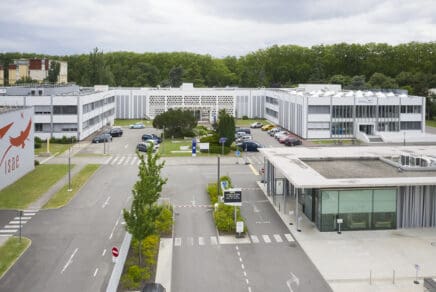
Pages
Getting to CampusHow do I get to the ISAE-SUPAERO campus?
Association
Student club
Student life
Pages
Spring Semester in Aeronautical EngineeringImmerse yourself in the world of aerospace in Toulouse, the European aerospace capital, with a semester taught in English combining excellent courses, cultural immersion, and proximity to major industrial players.
Aeronautics
Aerospace
Aerospace summer program
Videos
Feedback: a Latecoere engineer in the ISAE-SUPAERO laboratoriesTo strengthen the links between industry and research, more than 10 industrial R&D engineers have been made available to ISAE-SUPAERO as part of the France Relance plan! Cyril Geneste, research engineer at Latecoere, is one of them. Together with Miguel Charlotte, Associate Professor at the Institute, he looks back on this fruitful two-year collaboration. Their work, carried out in the ISAE-SUPAERO laboratories, focused on the behavior of aircraft door seals, which ensure cabin airtightness. Thanks to the Institute's cutting-edge equipment and academic expertise, Cyril Geneste was able in particular to carry out numerical modeling of seals in order to test their behavior. Students in their 3rdᵉ year of engineering studies were also involved in this work.
Aeronautics
Researcher

Videos
Trailer FLE 2022 singing conferenceAround 350 international students take French courses organized by the institute. These courses are aimed at students in the “Ingénieur ISAE-SUPAERO” program and in the Master of Science in Aerospace Engineering program. They are also open to doctoral students and interns from the institute's various departments. The aim of these courses is to facilitate students' social, cultural and academic integration.
LACS
Student life
News
Apply today for a program at ISAE-SUPAERO or ENAC - École Nationale de l'Aviation Civile!The TSAAE application platform is now open: discover our world-renowned programs and apply online for the 2026 academic year before November 28 at midnight (French time)!
Advanced Master
Aeronautics
Aerospace
News
The cockpits of the future at the heart of research at ISAE-SUPAEROResearchers at ISAE-SUPAERO have been studying cognitive airborne systems, the virtual assistants that will help pilots in the cockpits of the future, for many years.
Aeronautics
DCAS
Pages
Prior Experience AccreditationThe validation of prior experience is an individual right enshrined in the French Labor Code and Education Code. It enables candidates to obtain all - or part - of a professional certification (Diploma, Professional Title, Certificate of Professional Qualification), based on their professional, salaried or non-salaried and/or voluntary experience. This scheme can be used if the candidate is seeking personal recognition, or more generally to support a professional project that he or she wishes to put into practice.
Advanced Master
Aeronautics
Aerospace
Pages
Our Specialised Studies CertificatesOur specialised studies certificates are designed for professionals. They enable you to develop skills and expertise in the fields of digital, aeronautics, space, project management, systems engineering, and artificial intelligence.
Advanced Master
Aeronautics
Aerospace
Events
AASTRA Certificate: Introductory Webinar on July 9 from 6:00 p.m. to 7:00 p.m.Aeronautics
Aerospace
Air transport
Videos
ISAAR DAHER/ ISAE-SUPAERO Chair: presentation of the Chair's workDesign and certification of CS-23 category aircraft ✈ In collaboration with our sponsor #daher and with the support of the ISAE-SUPAERO Foundation, discover the latest advances in the work of the #ISAAR Chair (Innovative Solutions for Aviation Architecture & Regulation). Aircraft design is inherently multidisciplinary. It relies on a systemic approach to understanding certification needs and requirements and on a comprehensive analysis of possible vehicle architectures. Current and future environmental, societal and mobility challenges further reinforce this need to integrate disciplines in order to better optimise aircraft and to better reconcile safety, performance, environmental protection, market economics and the needs of passengers and crew. For more information: https://www.isae-supaero.fr/fr/isae-s... FAST-OAD: https://github.com/supaero-aircraft-d...
Aeronautics
Chair
Company
News
Meeting with Yves Gourinat, elected as a full member of the Air and Space AcademyYves Gourinat is a professor of structural physics in the Structural Mechanics and Materials Department (DMSM) at ISAE-SUPAERO. Already a corresponding member since 2019, he has just been elected a full member of the French Academy of Aeronautics and Space.
Aeronautics
Award
Teacher researcher
News
ICCAS 2026, jointly organized by ISAE-SUPAERO, the ISAE-SUPAERO Foundation, and Dassault Aviation, will take place on June 11-12, 2026.Following the success of the 2022 and 2024 editions, we are delighted to announce 𝐈𝐂𝐂𝐀𝐒 𝟐𝟎𝟐𝟔, organized jointly by ISAE-SUPAERO, the ISAE-SUPAERO Foundation, and Dassault Aviation!
Aeronautics
Artificial intelligence
Aviation
Videos
Research, Innovation & Training supporting Aviation Sustainability: web Conference by TSAAEAeronautics
Aviation
Conference
News
Meet Camille, an engineering student selected for the Young Pilots Air TourCamille Delesalle, 20, has just completed her first year of the General Engineering programme at ISAE-SUPAERO. She is one of 45 pilots aged 18 to 24 selected by the French Aeronautical Federation to take part in the Young Pilots Air Tour.
Aeronautics
Ingénieur généraliste (MSc)
Programme
News
ICCAS, organized jointly by ISAE-SUPAERO, the ISAE-SUPAERO Foundation, and Dassault Aviation, will take place on June 11 and 12, 2026Following the success of the 2022 and 2024 editions, we are delighted to announce 𝐈𝐂𝐂𝐀𝐒 𝟐𝟎𝟐𝟔, organized jointly by ISAE-SUPAERO, the ISAE-SUPAERO Foundation, and Dassault Aviation.
Aeronautics
Artificial intelligence
Aviation
Pages
Institute for Sustainable AviationCreated in 2021 on the initiative of internationally renowned academic institutions with longstanding academic expertise in aeronautics and air transport, the ISA is an institute dedicated to the challenges of aviation's transition to sustainability.
Aeronautics
Aviation
Decarbonization
Videos
From classroom to cockpit: flying activities at ISAE-SUPAEROTake a video tour of the school's Lasbordes Air Operations Center (COAL). With a fleet of 9 light aircraft, the COAL offers 3 types of activities: - Pilot training to obtain the Private Pilot's License (PPL), which enables students to fly single-engine aircraft. - Practical work directly linked to the school's teaching programs, from flight mechanics to an introduction to flight test techniques for continuing education. - Research into human factors and pilot cognitive mechanisms in real time during flight. At ISAE-SUPAERO, engineering and Master's students are lucky enough to be able to take their pilot's license just a few kilometers from the campus. Several instructors accompany them and train them to fly. All are members of the Aerospace Vehicle Design and Operation Research Department, headed by Valérie Budinger.
Aeronautics
Programme
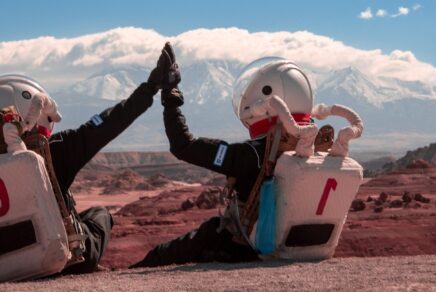
Pages
Enjoy Student Life at ISAE-SUPAEROAssociation
Student club
Student life
News
ISAE-SUPAERO Environmental Engineering Certificate: training engineers in the challenges of environmental and energy transitionsAeronautics
Certification
Sustainability
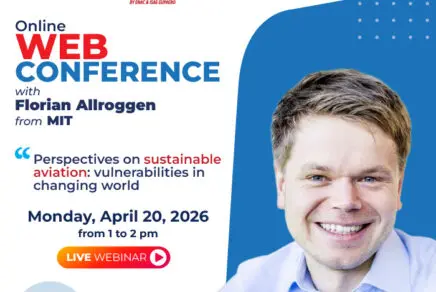
Events
Webconference: Perspectives on Sustainable Aviation from TSAAE x MIT - “Vulnerabilities in a Changing World”Aviation
Conference
Decarbonization
Events
Study in Europe Fair 2026Come meet representatives from TSAAE and ISAE-SUPAERO online!
Advanced Master
Aeronautics
Fair
Pages
MBDA – Excellence scholarshipsMBDA, a European leader in missile and missile system design, wishes to support the training of engineers and managers for the aerospace and defense industry through the award of excellence scholarships.
Aeronautics
Chair
Defence
Testimonials
Testimony from Alice Fabre, 2021 graduate of the TAS AERO Advanced MasterAeronautics
Alumni
Decarbonization
News
ISAE-SUPAERO and ENAC invite you to the “Rendez-vous Aéro de l'Innovation” on Thursday, February 5, 2026!Aeronautics
Event
Innovation
Pages
Support for the Development of the ISAE Group - GIFASGIFAS (Groupement des Industries Françaises Aéronautiques et Spatiales - French Aerospace Industries Group) supports the development of high-level academic and professional education in aerospace systems at the 6 Grandes Écoles that make up the ISAE Group (ISAE-ENSMA, ISAE-SUPMECA, ESTACA, Ecole de l'Air et de l'Espace, ENAC, ISAE-SUPAERO).
Aeronautics
Aerospace
Chair
Testimonials
Testimony from Alexandre Bouraoui, engineering student by apprenticeship and IAC 2025 Award WinnerFinal-year engineering apprentice, specializing in Industrialisation and Methods for Aeronautics and Space, Alexandre Bouraoui was recently honored at the 76th International Astronautical Congress (IAC 2025) in Sydney, where he won the prestigious Hermann Oberth Gold Medal in the Graduate category. We spoke with him about his award and his studies at ISAE-SUPAERO.
Aeronautics
Aerospace
Congress
News
ISAE-SUPAERO is co-hosting the 16th EASN International Conference in ToulouseISAE-SUPAERO is pleased to host the 16th edition of the international conference organized by EASN in Toulouse from October 27 to 30, 2026, dedicated to the theme: “Innovation in Aeronautics and Space for Sustainability Today and Tomorrow.”
Aeronautics
Aerospace
Innovation
Testimonials
"World Alumni Day": Three questions for Aude Vignelles, 1991 graduate of ENSICA's Aeronautical Engineering programmeAeronautics
Alumni
Testimonial
Pages
Our Semester & Short ProgrammesDiscover ISAE-SUPAERO's academic excellence through our semester and short programmes, open to international students.
Aeronautics
Aerospace
Aerospace summer program
News
The Age of Pioneers: Reinventing Aviation with HydrogenFor the past ten years at ISAE-SUPAERO, research into hydrogen has established itself as a major focus of innovation in support of the aviation sector’s energy transition. Now, more than ever, the pioneering spirit drives the Institute’s researchers. The Mermoz hydrogen-powered drone project builds on the legendary legacy of the Aéropostale and Jean Mermoz’s 1930 flight across the South Atlantic. Almost a century later, "Défi Mermoz" is in turn taking up a technological challenge, closely aligned with industrial priorities, without waiting until 2050!
Aviation
DAEP
Decarbonization
Events
AASTRA Certificate: Introductory Webinar on May 26 from 6:00 p.m. to 7:00 p.m.Aeronautics
Aerospace
Air transport
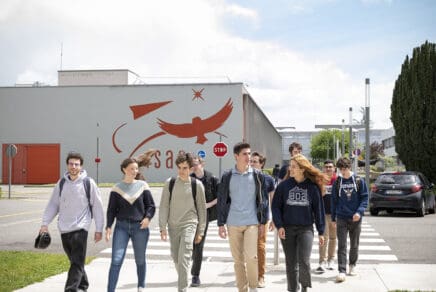
Pages
Living on Our CampusAssociation
Student club
Student life
News
“My summer at NASA’s Jet Propulsion Laboratory”: Axel’s account, a student on the TAS Astro Advanced Master’s programmeSince May, Axel Coulon has been interning at NASA's famous JPL in Los Angeles. He is working on detecting helicopter landing sites on Mars. A student in the MS TAS Astro programme, he recounts this incredible space adventure that took him from his native Lorraine to California.
Internship
Programme
Space
Pages
Design and Architecture of Cognitive Air Systems Research Chair - Dassault AviationThe CASAC Chair, supported by the Neuroergonomics Centre at ISAE-SUPAERO, is backed by Dassault Aviation, which is affirming its commitment to the mastery of complex systems.
Aeronautics
Chair
News
ISAE-SUPAERO acquires an innovative new additive manufacturing equipmentISAE-SUPAERO and the Institut Clément Ader (ICA) have just acquired a new Wire Arc Additive Manufacturing (WAAM) machine. This cutting-edge equipment opens up new prospects for research, teaching and innovation in the aeronautical field.
Aeronautics
News
Research
Pages
Innovating in a World of Transition - SafranThe challenges facing the aerospace industry (energy transition, New Space, digitalization) are driving a growing need for professionals with the ability to innovate. Against this backdrop, Safran and ISAE-SUPAERO are creating the Innovating in a World in Transition Chair.
Aeronautics
Aerospace
Chair
Testimonials
Meeting with Edoardo Mariani Placidi, student of the HADA Advanced Master's programmeA motorsport lover, Edoardo Mariani Placidi started his career in the automotive industry in R&D, V&V, quality, manufacturing, and metallurgy.
Advanced Master
Aeronautics
Pages
Our LibraryThe ISAE-SUPAERO library is open to the general public. Anyone registered with the Réseau des Bibliothèques de l’Université Fédérale de Midi-Pyrénées can borrow from our libraries.
Association
Student club
Student life
Pages
Job offersAeronautics
Aerospace
AI
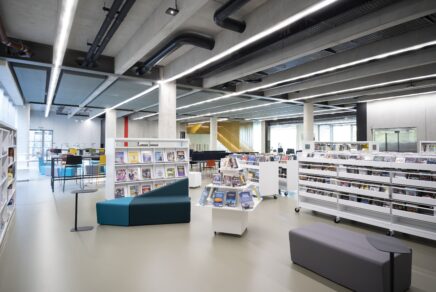
Pages
Our CollectionsThe library team offers high-quality documentary resources to support research and studies. The digital offering is constantly growing, with millions of documents available online.
Association
Student club
Student life
News
Landing on Mars: a unique experience for seven studentsSeven ISAE-SUPAERO students have been selected to join the Mars Desert Research Station (MDRS) in the United States. This replica of a Martian base will host the crew for four weeks, during which they will live in conditions similar to those found on Mars. The objective is to conduct experiments in situ in collaboration with research partners.
Space
Student club
Student life
News
AeroSCOPE, the first open-source database for exploring CO2 emissions from air transportA doctoral student at ISAE-SUPAERO, Antoine Salgas has produced a photograph of CO2 emissions from air transport by country and by region. This unique work feeds into AeroMAPS, an open reference platform aimed at exploring scenarios for decarbonising air transport.
Aeronautics
Decarbonization
Sustainability
Videos
The future of aeronautics is being written today by its engineers!At the controls of an electric aircraft, the President of ISAE-SUPAERO speaks to us and embodies a new era of pioneers: that of more sustainable, more responsible aviation. This symbolic flight marks the Institute's commitment to the ecological transition of the aviation sector and illustrates the conviction that decarbonization is not only a technological challenge, but also a human and collective adventure. ISAE-SUPAERO, alongside its academic and industrial partners, trains the engineers who will invent the aviation of the future—silent, efficient, and environmentally friendly. ✈️ Discover this exciting moment and join us in transforming the skies.
Aeronautics
Aviation
Decarbonization
News
The first Franco-Korean workshop dedicated to the challenges of cryogenic hydrogenThe global aviation industry is facing an urgent challenge: significantly reducing its greenhouse gas emissions. Hydrogen, thanks to its unique properties and considerable energy potential, appears to be a promising solution and could play a key role in the aviation sector's energy transition.
Aeronautics
Decarbonization
News
News
Envision responsible air transportAeronautics
Sustainability
News
CASTOR Chair: Liebherr-Aerospace Toulouse and ISAE-SUPAERO, a win-win partnershipThe official signing of the industrial chair, called CASTOR, between Liebherr-Aerospace Toulouse and ISAE-SUPAERO took place on Tuesday 9 July at the institute's campus. This research partnership contributes to research into carbon-free aircraft.
Aeronautics
Chair
Company
Events
"Les Entretiens de Toulouse - Training through debate”: April 9 & 10, 2025 on the ISAE-SUPAERO campus"Les Entretiens de Toulouse" has become a must-attend event for the aerospace industry. A forum for the exchange and transmission of skills, this training through debate provides an opening onto subjects with high industrial stakes. The 2025 edition of the Entretiens de Toulouse will take place on April 9 & 10, 2025, in person, at ISAE-SUPAERO!
Aeronautics
Artificial intelligence
Defence
News
Thales and ISAE-SUPAERO strengthen ties to work towards a more sustainable air transport systemThe French high-tech group supports the Institute through a research chair. The prize: a thesis on an integrated approach to air transport and eleven scholarships of excellence to support high-achieving European students.
Aeronautics
Decarbonization
Partnership
News
ISAE-SUPAERO launches its Student Life Master Plan for 2026–2031Having a rich, fulfilling, and globally minded student life is part of ISAE-SUPAERO's DNA. To further enhance this experience, the Institute has now adopted a Student Life Master Plan (SDVE) for the period 2026-2031, a unique roadmap that embodies its strategic vision and supports its ambition: to offer an attractive, inclusive living environment that is conducive to the success of every student.
Institute
Student life
News
"Défi Aérospatial Étudiant 2025": Dassault Aviation Prize awarded to an ISAE-SUPAERO student teamAs part of the integrated team project of the Institute's TAS ASTRO master's program, a team of student engineers developed the OSIRIS space shuttle, taking part in the Student Aerospace Challenge, an international competition. The team was awarded the Dassault Aviation Prize for the technical quality of its project.
Advanced Master
Aeronautics
Prize
Pages
Integrated Air Transport System - ThalèsThis sponsorship, research and teaching chair draws on ISAE-SUPAERO's expertise in flight operations optimisation and systems approach, and on the Thalès Group's expertise in flight avionics, connectivity and air traffic control.
Aeronautics
Chair
A New Academic Year Highlighting the Pic du Midi and Its Observatory’s World Heritage Nomination
To mark the start of the 2026–2027 academic year, the University of Toulouse is highlighting the nomination of the Pic du Midi and its observatory for World Heritage status. ISAE-SUPAERO, as a member of the EPE University of Toulouse, is joining forces with and fully supporting this unifying project that brings together heritage, cutting-edge research, education, and the local region.

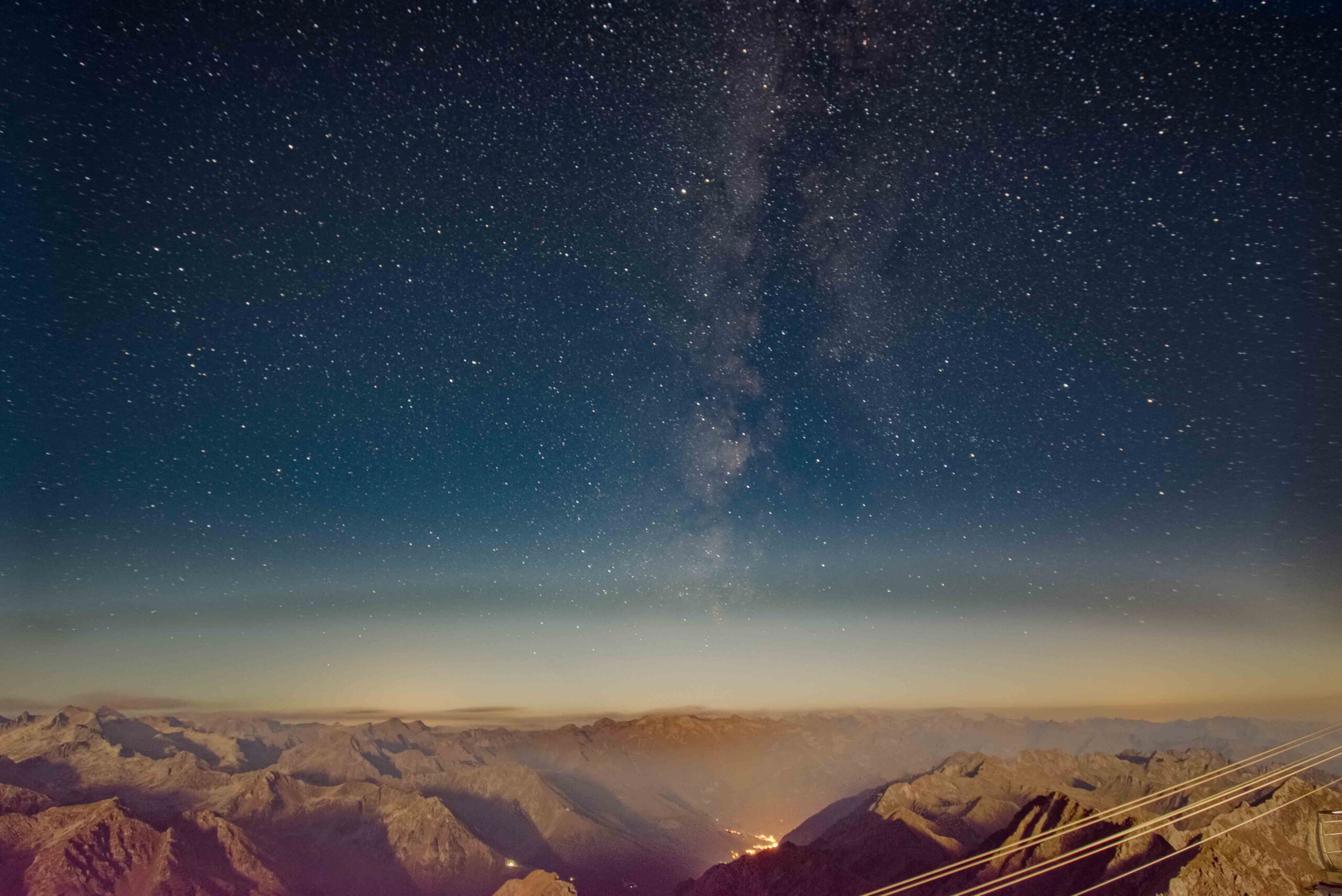
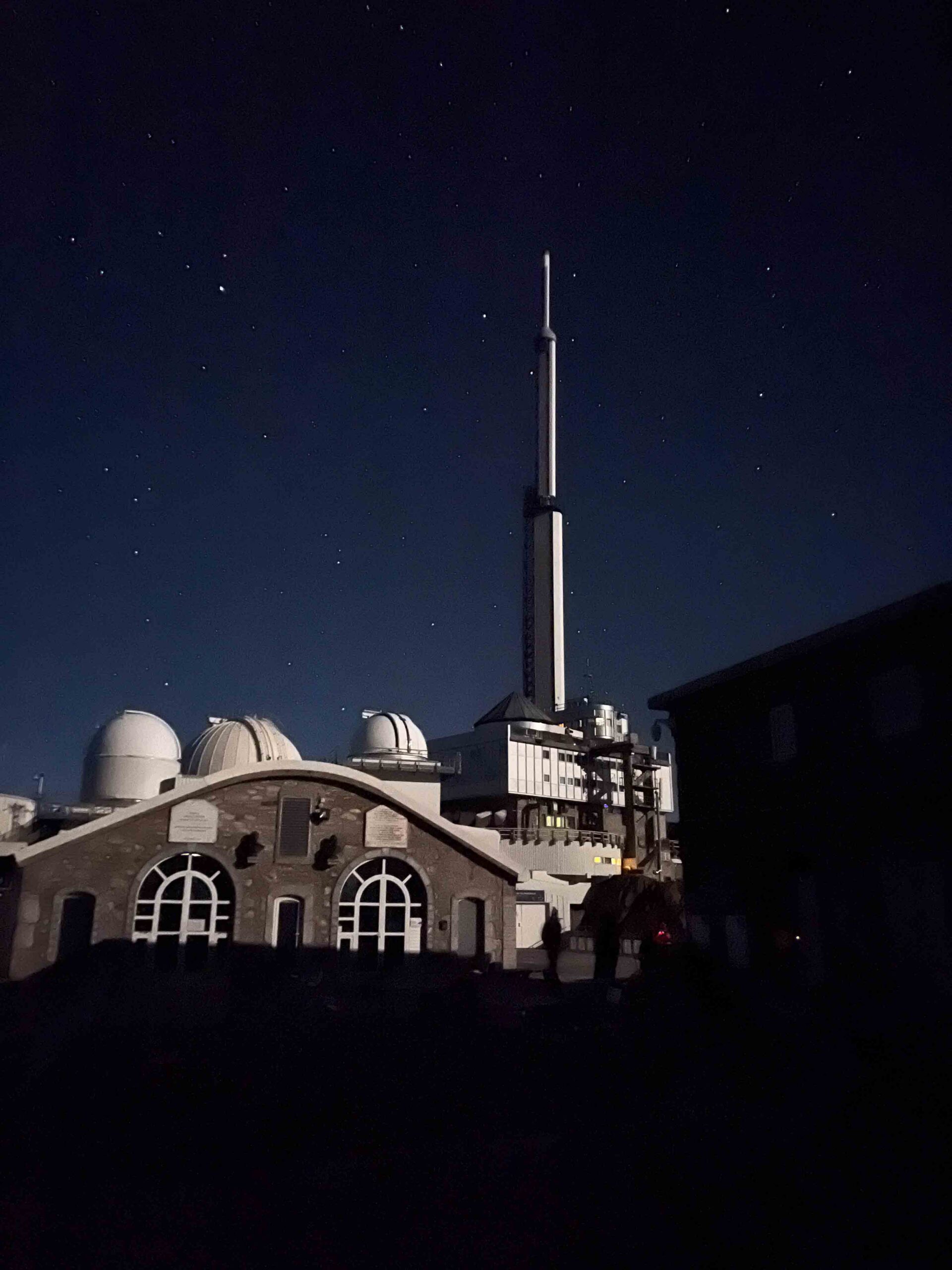
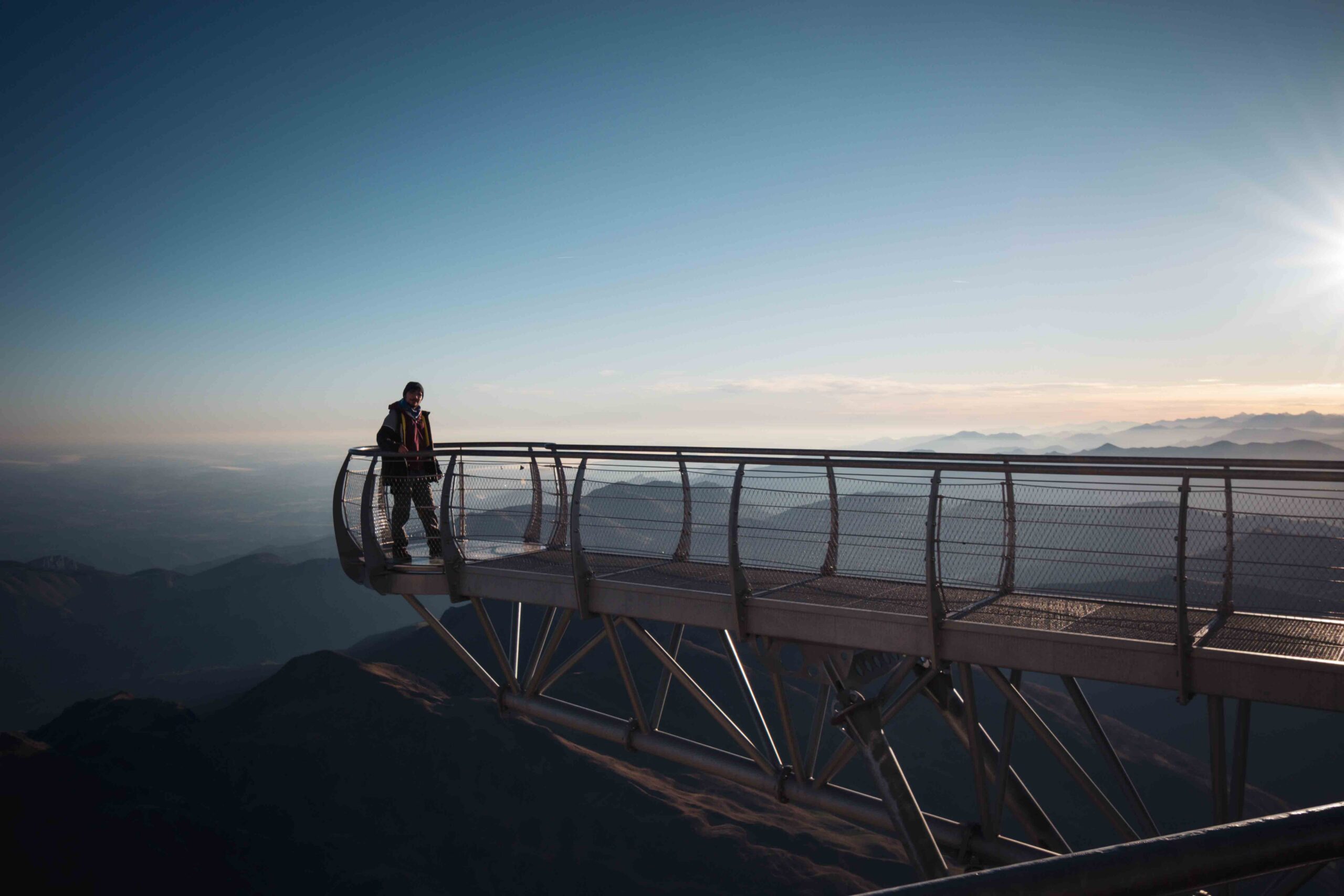
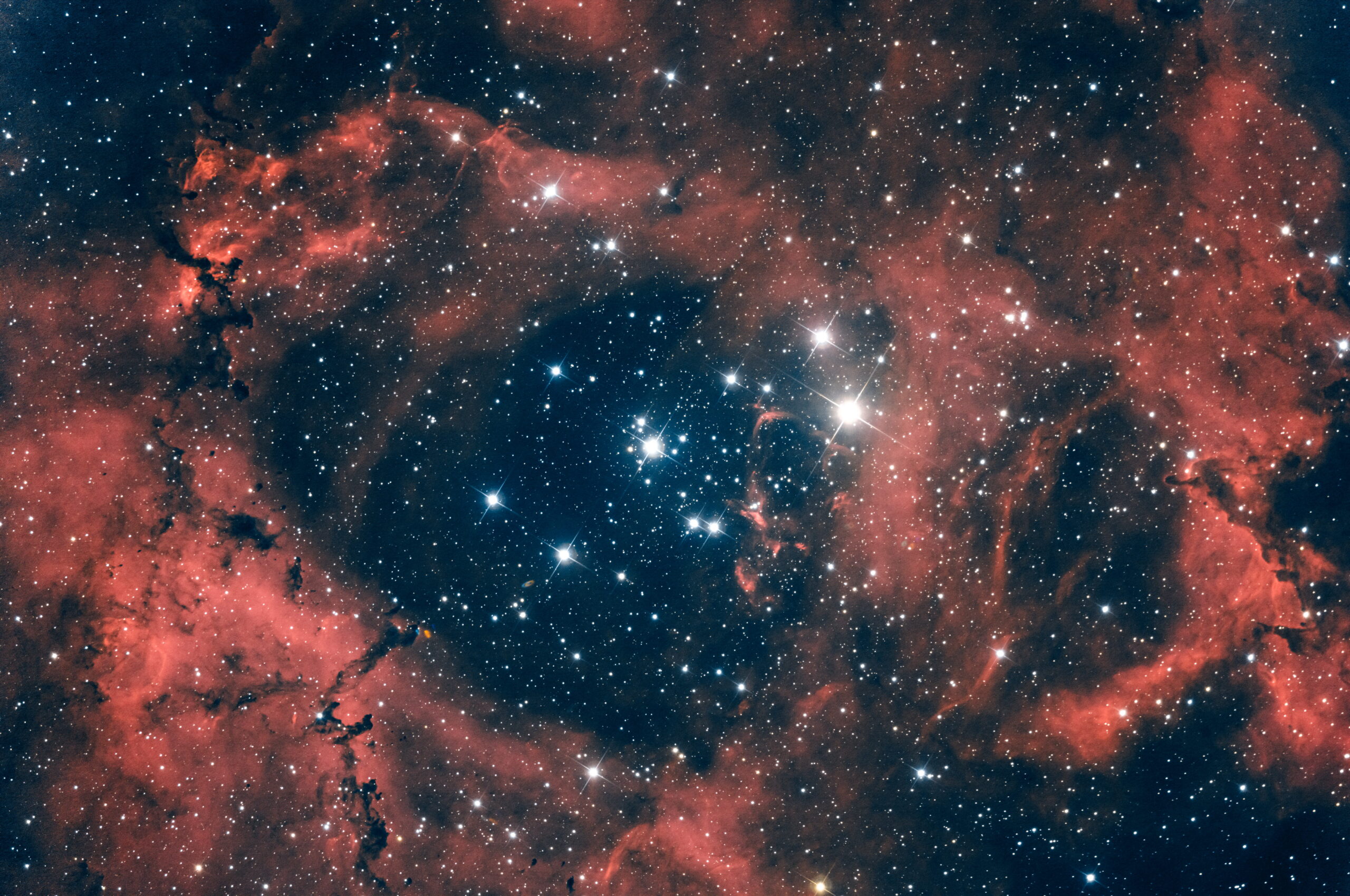
Related Content
News
ISAE-SUPAERO acquires an innovative new additive manufacturing equipmentISAE-SUPAERO and the Institut Clément Ader (ICA) have just acquired a new Wire Arc Additive Manufacturing (WAAM) machine. This cutting-edge equipment opens up new prospects for research, teaching and innovation in the aeronautical field.
Aeronautics
News
Research
News
Henry DE PLINVAL, portrait of ISAE-SUPAERO's new Director of Research and Educational ResourcesHenry de Plinval arrived on the ISAE-SUPAERO campus last August, and has taken up his new post as the school's Director of Research and Educational Resources. Portrait of Henry Plinval.
News
Portrait
Research

Pages
BrochuresAn electronic document library allows you to view our brochures online. You can also download them in .pdf format. Please note that our training brochures are available on the pages of our ‘Programmes’ section.
« Ingénieur ISAE-SUPAERO » by apprenticeship
Advanced Master
Brochure

News
The ISAE Group welcomes ENSPIMA, a Graduate School specialising in aeronautical maintenanceThe ISAE Group has taken a new step forward by welcoming ENSPIMA (École Nationale Supérieure pour la Performance Industrielle et la Maintenance Aéronautique) as a partner school. This integration, formalised by the signing of an agreement on 11 February 2026 between Loïc Lavigne, President of ENSPIMA, and Marie-Hélène Baroux, President of ISAE-SUPAERO, strengthens the group's expertise in the strategic field of civil and military aircraft maintenance.
Institute
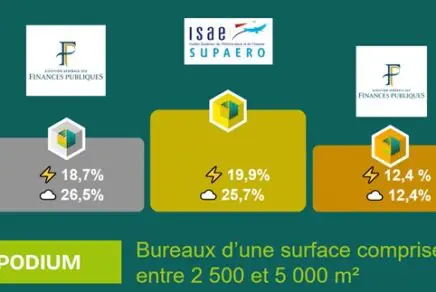
News
CUBE ÉTAT Awards Ceremony: ISAE-SUPAERO Takes the Top SpotFrom November 2024 to November 2025, ISAE-SUPAERO participated in the second edition of the CUBE État competition. This national challenge pits government buildings against one another with a noble goal: to achieve maximum energy savings by focusing solely on adjustments and usage patterns.
Corporate responsibility
Institute
Prize
Pages
An Illustrated History of our SchoolHisis will enable you to follow the many transformations that the ISAE-SUPAERO engineering school has undergone. ISAE-SUPAERO was created in October 2007 from the merger of two engineering schools in Toulouse, the École Nationale Supérieure d'Ingénieurs de Constructions Aéronautiques (ENSICA) and the École Nationale Supérieure de l'Aéronautique et de l'Espace (SUPAERO), both under the supervision of the French Ministry of Defence.
Aerospace
History
Institute
News
The first Franco-Korean workshop dedicated to the challenges of cryogenic hydrogenThe global aviation industry is facing an urgent challenge: significantly reducing its greenhouse gas emissions. Hydrogen, thanks to its unique properties and considerable energy potential, appears to be a promising solution and could play a key role in the aviation sector's energy transition.
Aeronautics
Decarbonization
News
News
Valentin LELOUP, quantum and optical telecommunications systems engineer: the quantum and space tandemValentin Leloup, R&D engineer at Thales, combines two fields of expertise: quantum physics and space. He holds an engineering degree from ISAE-SUPAERO 2022 and a Master 2 in fundamental physics and applications.
Alumni
News
Research
Pages
Our logosOur ISAE-SUPAERO logo must be used as is, without alteration of shape or colour as specified in our brand manual. Download our logos.
Communication
Institute

Pages
NewsStay informed with all our news on education, research, and innovation.
News
Pages
Our Key FiguresFind out the key figures for ISAE-SUPAERO, a Graduate school of engineering with a multidisciplinary curriculum at the global forefront of higher education and research in aerospace engineering.
Aerospace
Institute
Pages
Our InstituteL’ISAE-SUPAERO est à la pointe mondiale de l’enseignement supérieur et de la recherche dans le domaine de l’ingénierie aérospatiale pour relever le défi de la transition énergétique.
Aerospace
Institute
News
The 2025 Edmond Brun Prize from the French Academy of Sciences awarded to Annafederica Urbano, professor at ISAE-SUPAEROOn October 28, 2025, the Academy of Sciences awarded the Edmond Brun Prize to Annafederica Urbano, professor of space launch vehicles at ISAE-SUPAERO. This biennial physics award recognizes her entire body of work in the field of space propulsion.
DCAS
News
Prize
News
2026 marks a new chapter in ISAE-SUPAERO's visual identityCommunication
Institute
News
The Origins of SUPAERO: Two Previously Unpublished Archives Offer a Deep Dive into the School’s HistoryNous mettons aujourd'hui à la disposition de toute notre communauté deux documents sur Marc Pélegrin d'une valeur historique rare.
Alumni
Institute
News
Women's Campus Day 2026 “Inspiring younger generations and young girls”: astronaut Sophie Adenot's commitment continuesThe first edition of ISAE-SUPAERO's “Campus au féminin” days in 2016, attended by astronaut Sophie Adenot, a graduate of the school, was met with great enthusiasm by middle and high school girls. Given its success, the program has become a permanent fixture and now reaches hundreds of young girls every year, allowing them to discover careers in science and engineering.
Diversity program
Equal opportunities
Event
News
ISAE-SUPAERO renews cooperation agreements with ITA and São Paulo institutionsAerospace
Education
Institute
News
Launch of the new ISAE-SUPAERO website: our showcase for excellence!Aerospace
Institute
Pages
Our Labels, Accreditations and CertificationsOur Institute is committed to a quality approach, covering both our programmes and our organisation. As a result, ISAE-SUPAERO has numerous labels, accreditations and certifications, demonstrating that our teaching and structures are adapted to the expectations of our future students and recruiters.
Accréditation
Aerospace
Certification
News
ISAE-SUPAERO launches its Student Life Master Plan for 2026–2031Having a rich, fulfilling, and globally minded student life is part of ISAE-SUPAERO's DNA. To further enhance this experience, the Institute has now adopted a Student Life Master Plan (SDVE) for the period 2026-2031, a unique roadmap that embodies its strategic vision and supports its ambition: to offer an attractive, inclusive living environment that is conducive to the success of every student.
Institute
Student life
News
"Futurs Proches" Festival in October 9: tickets are now available!ISAE-SUPAERO's CSR department, in partnership with the Toulouse Community of Universities and Establishments (COMUE), invites you to join us on Thursday, October 9 for the 2ᵉ edition of the Festival Futurs Proches, Festival des Campus en transitions!
Corporate responsibility
Decarbonization
Event

News
Ministerial Visit to ISAE-SUPAERODuring a ministerial visit to Toulouse on Friday, June 5, 2026, ISAE-SUPAERO had the privilege of welcoming Mr. Philippe Baptiste, Minister of Higher Education, Research, and Space. This official visit led to high-level discussions on the institution’s priorities: aerospace engineering education, scientific excellence, national innovation, and student diversity.
Institute

Pages
Our RankingsFor over 100 years, ISAE-SUPAERO has been committed to excellence. Forerunners and inventors, our alumni have been at the forefront of many technological innovations in the aerospace industry. True to our mission of training engineers of the highest scientific level who are innovative, committed and capable of mastering the complex challenges of tomorrow's world, we rank among the top engineering schools by many national and international criteria.
Institute
Prize
Ranking
Events
Digital Clean Up WeekEvent
Institute
Pages
Our Core FoundationsMarie-Hélène Baroux, President of ISAE-SUPAERO, presents the 10 foundations that make our Institute a world leader in higher education and research in aerospace engineering. At ISAE-SUPAERO, students, teachers-researchers, alumni and partners interact to develop innovative solutions to today's technological and industrial challenges. They help to position our Institute as a major player in the transition of the civil and military aerospace sector.
Aerospace
Institute
News
Figures for the start of the 2025 academic year at ISAE-SUPAEROAt the start of the 2025 academic year, ISAE-SUPAERO is welcoming nearly 882 new students from all disciplines!
Aerospace
Institute

Pages
Our NewsroomIn our Newsroom, you can access all the information you need to find out more about our brand, our logos, our rankings, our news, our carousels of videos and testimonials, read our press releases and view our main communication media (brochures).
Networks
News
Press
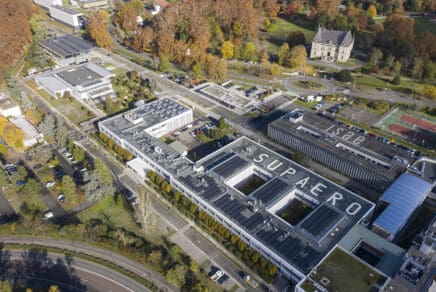
Pages
Our GovernanceThe Institut Supérieur de l'Aéronautique et de l'Espace is a public scientific, cultural and professional establishment under the supervision of the Minister for the Armed Forces, constituted as a grand établissement within the meaning of article L. 717-1 of the French Education Code. Our Institute is administered by a Board of Directors and managed by a President, assisted by a Training Council and a Research Council. Our governance bodies at ISAE-SUPAERO give pride of place to representatives of industry, academic institutions and alumni.
Governance
Institute

Historical Discovery: Mercury Does Indeed Have Electron Radiation Belts
An international team of researchers, including a scientist from ISAE-SUPAERO, has just published a study in the journal "Nature Astronomy" revealing the existence of electron radiation belts around Mercury. This discovery, based on an analysis of data from the MESSENGER mission and supported by previously unpublished observations from the BepiColombo mission’s MEA (Mercury Electron Analyzer) instrument, sheds new light on the physics of planetary magnetospheres and raises major challenges for the protection of space missions.

Related Content
Pages
Connected Systems (SysCo) Scientific GroupThe scientific dynamic of the “Connected Systems” (SysCo) scientific group focuses primarily on network-related issues in aerospace applications, i.e. space communications, embedded networks and certain types of connected systems.
DISC
Doctoral student
PhD
News
Capturing the seismic activity of an asteroid: our Apophis rendezvousDEOS
Research
Space
Pages
Integrated Image Sensors (CIMI) Scientific GroupThe “Integrated Image Sensors” (CIMI) scientific group, develops and characterizes active-pixel image sensors (CMOS Image Sensors (CIS)) on silicon for visible and infrared radiation.
DEOS
Doctoral student
PhD
Pages
UNIVERSEHUNIVERSEH, the European Space University for Earth and Humanity, is an alliance of European universities created as part of the European Universities initiative launched by the European Commission in 2019.
Education
International
Science
News
ISAE-SUPAERO will be at the Paris Air Show from June 16 to 22, 2025!Aeronautics
Event
Fair
Videos
Sophie Adenot is flying out on February 11th for a eight-month mission with Crew-12 on the ISS!Today, the entire ISAE-SUPAERO community is coming together: students, staff, faculty, and alumni are showing their support for Sophie Adenot, European Space Agency (ESA) astronaut and ISAE-SUPAERO alumna, as she embarks on a eight-month mission to the ISS. Sophie is the second French woman, 30 years after Claudie Haigneré, to fly on a long-duration mission. On the ISS, she will conduct around 200 scientific experiments, including 10 French experiments, covering fields such as medicine and materials physics. Have a good flight, Sophie. We will be following you throughout this amazing journey!
Alumni
Exploration
Space
Pages
The “Certificate of Advanced Studies in Human Spaceflight” offered by the Spaceflight Institute in collaboration with ISAE-SUPAEROThe Spaceflight Institute is the first institute dedicated to training in human spaceflight. In partnership with ISAE-SUPAERO, it offers an intensive training program that enables participants to gain a comprehensive understanding of the challenges of human spaceflight and to position themselves within a rapidly expanding ecosystem, marked by future lunar and Martian missions as well as the rapid emergence of commercial space stations and private initiatives in low Earth orbit.
Education
Innovation
Partner
News
A team of researchers from the École de l'Air et de l'Espace and ISAE-SUPAERO received the Best Paper Award from the journal "Aviation Psychology and Applied Human Factors"A team of researchers from Ecole de l'air et de l'Espace and ISAE-SUPAERO and their partners have received the Best Paper Award in the Aviation Psychology and Applied Human Factors journal. The official award ceremony will take place during the European Conference on Aviation Psychology (EAAP) in The Hague in September 2026.
Aviation
DCAS
Human factors
News
Luca Parmitano, Artemis III astronaut: an ISAE-SUPAERO graduate at the heart of the next step in the return to the MoonOn June 9, 2026, NASA announced the crew for Artemis III, a key mission in the U.S. lunar program scheduled for 2027.
Advanced Master
Alumni
Space
Events
AASTRA Certificate: Introductory Webinar on May 26 from 6:00 p.m. to 7:00 p.m.Aeronautics
Aerospace
Air transport
News
ISAE-SUPAERO announces new partnership with ESA Academy to support future Master in Aerospace Engineering studentsAerospace
Master in Aerospace Engineering
Scholarship
Testimonials
Testimony from Axel Coulon, student (class of 2024) of the TAS ASTRO Advanced Master®Advanced Master
Space
Testimonial
Events
AASTRA Certificate: presentation webinar on March 25 from 6:00 p.m. to 7:00 p.m.Aeronautics
Aerospace
Air transport
News
“My summer at NASA’s Jet Propulsion Laboratory”: Axel’s account, a student on the TAS Astro Advanced Master’s programmeSince May, Axel Coulon has been interning at NASA's famous JPL in Los Angeles. He is working on detecting helicopter landing sites on Mars. A student in the MS TAS Astro programme, he recounts this incredible space adventure that took him from his native Lorraine to California.
Internship
Programme
Space
News
Focus on... quantum physics in ISAE-SUPAERO training coursesISAE-SUPAERO has been integrating quantum physics into its training and research activities uninterruptedly since 1980, and for the past two decades has been offering courses linked to the second quantum revolution.
DEOS
Ingénieur généraliste (MSc)
Teacher researcher
Pages
Our Short ModulesDerived from the Institute's Advanced Master programmes, our short modules are aimed at professionals wishing to develop specific skills in Aeronautics, Space, Project Management, Systems Engineering, or Digital Systems.
Advanced Master
Aeronautics
Aerospace
News
“Without research, we wouldn’t be able to train our students to this standard” In-depth interview with Xavier Carbonneau, Deputy Director of ResearchXavier Carbonneau is the Deputy Director of Research and Pedagogical Resources at ISAE-SUPAERO. A professor specialising in propulsion and the former head of the Aerodynamics, Energetics and Propulsion Department, he has been supporting the growing role of hydrogen in the Institute’s teaching and research activities for several years.
Research
News
Happy New Year, Martians!Today marks the start of Year 39 on Mars: a Martian year lasts 687 Earth days, which is equivalent to nearly two years on our blue planet. Here’s a look back at the projects, missions, and discoveries that bring ISAE-SUPAERO closer to the Red Planet every day.
Research
Space
Pages
Scientific and research integrityISAE-SUPAERO is one of the signatories of the National Charter of Ethics for Research Professions, adopted in January 2015 by the Conference of University Presidents (CPU) and all national research organizations, and incorporated into the Institute's internal regulations.
DAEP
DCAS
DEOS
Videos
Perseverance collects first Martian sounds: explanation by Dr. Naomi Murdoch & Dr. Alexander StottDr Naomi Murdoch, researcher in space instrumentation and planetary science, and Dr Alexander Stott, post-doctoral fellow, tell us more about the physical characteristics of Mars' atmosphere, in particular the speed of sound and its attenuation. These analyses were published in Nature on April 1, 2022 by an international team led by a teacher-researcher from Toulouse III - Paul Sabatier University, and including scientists from CNRS and ISAE-SUPAERO.
DEOS
Researcher
Space
News
Mars hit by meteorites more often than previously thoughtTwo researchers from ISAE-SUPAERO contributed to new discoveries based on data from the seismometer sent to Mars during the InSight mission, one of whose main objectives was to measure seismic activity on the Red Planet.
Space
News
DART: ISAE-SUPAERO students publish new scientific findings in Nature CommunicationsNaomi Murdoch, a planetary science researcher at ISAE-SUPAERO, is actively involved in scientific analysis and data interpretation for NASA's DART mission.
DEOS
Space
News
CASTOR Chair: Liebherr-Aerospace Toulouse and ISAE-SUPAERO, a win-win partnershipThe official signing of the industrial chair, called CASTOR, between Liebherr-Aerospace Toulouse and ISAE-SUPAERO took place on Tuesday 9 July at the institute's campus. This research partnership contributes to research into carbon-free aircraft.
Aeronautics
Chair
Company
News
SILOE, an experimental drop tower project selected by ESA and an ESPACE grant for Alexia DuchêneThe SILOE experimental drop tower project aims to study the cohesion of planetary surfaces. This student project is supported by ESA as part of its European ‘Academy Experiments’ program. Alexia Duchêne, SILOE project leader, has been awarded a scholarship of excellence from the Fondation des Ailes de France.
DEOS
Space
News
Listening to the Martian past: ISAE-SUPAERO at the heart of the ExoMars missionESA's ExoMars Rosalind Franklin mission to explore Mars will carry a unique instrument for recording sound and atmospheric data from the planet. The Institute has been selected by ESA and CNES for this major scientific collaboration.
DEOS
Researcher
Science
News
ISAE-SUPAERO's researchers are working on establishing a sustainable human presence on the Moon.While last year marked the 50th anniversary of the Apollo 17 mission, the last manned trip to the Moon, the development of ‘New Space’ has revived the space sector's interest in lunar exploration.
DCAS
Space
News
The Age of Pioneers: Reinventing Aviation with HydrogenFor the past ten years at ISAE-SUPAERO, research into hydrogen has established itself as a major focus of innovation in support of the aviation sector’s energy transition. Now, more than ever, the pioneering spirit drives the Institute’s researchers. The Mermoz hydrogen-powered drone project builds on the legendary legacy of the Aéropostale and Jean Mermoz’s 1930 flight across the South Atlantic. Almost a century later, "Défi Mermoz" is in turn taking up a technological challenge, closely aligned with industrial priorities, without waiting until 2050!
Aviation
DAEP
Decarbonization
News
3 questions to... Marie-Bertille Mosnier, S-Cube member from 2018 to 2022Meet Marie-Bertille Mosnier, member of the S-Cube - SUPAERO Space Section - ISAE-SUPAERO's experimental rocket club, from 2018 to 2022.
Space
Student club
Student life
Testimonials
Testimonial of Baptiste Sigal, Advanced Master® TAS ASTRO student (class) 2025Advanced Master
Aerospace
Space
Events
ISAE-SUPAERO will be at the Paris Air Show at Le Bourget from June 16 to 22, 2025ISAE-SUPAERO will be present at the 55ᵉ Salon International de l'Aéronautique et de l'Espace at Le Bourget from June 16 to 22, 2025!
Aeronautics
Aerospace
Event
News
Hera probe captures exceptional images of Mars and its moon DeimosDEOS
Researcher
Science
News
Seven ISAE-SUPAERO students set out to conquer Mars in the Utah desertFor four weeks, seven engineering students will experience a simulation of life on Mars in the Utah desert in the United States. From 18th February to 16th March, they will conduct experiments in collaboration with CNES and several research laboratories at the Mars Desert Research Station (MDRS).
Space
Student club
News
Henry DE PLINVAL, portrait of ISAE-SUPAERO's new Director of Research and Educational ResourcesHenry de Plinval arrived on the ISAE-SUPAERO campus last August, and has taken up his new post as the school's Director of Research and Educational Resources. Portrait of Henry Plinval.
News
Portrait
Research
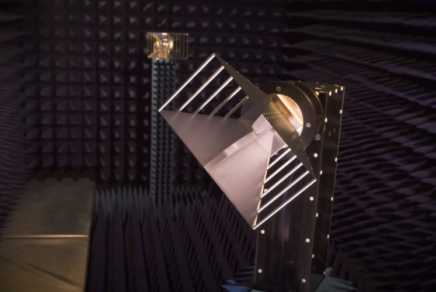
Videos
Discover... the ISAE-SUPAERO radio anechoic chamberISAE-SUPAERO – as a centre for training through research, research training and innovation – has a wide range of research equipment used within its six research departments. Today, we present the radio anechoic chamber! Drones and nanosatellites have many applications in the media, industry, agriculture and telecommunications sectors. These two types of platforms share the common constraint of having to carry complex systems in a small space. One of the key elements of on-board communication systems is the antenna, which must also be compact and lightweight. ISAE-SUPAERO, in collaboration with ENAC and ANYWAVES, is currently developing dielectric antennas made by 3D printing ceramics that meet the demanding criteria for integration on drones and nanosatellites. Thanks to the anechoic chamber available at ISAE-SUPAERO, researchers involved in the development of these original antennas can accurately characterise their radiation properties and thus validate the new technological solutions proposed.
DCAS
DEOS
News
RAMSES: ISAE-SUPAERO at the heart of a historic planetary defense missionLe sismomètre SIA développé par l'ISAE-SUPAERO est une première mondiale pour explorer l'astéroïde Apophis
DEOS
Research
Space
Videos
SUPERCAM Educational Kits / Martian Exploration: Students at the controls of the kitsFollow ISAE-SUPAERO students as they create educational kits, a digital educational tool designed to raise awareness of space exploration that can be used in classrooms from Year 7 to Year 13.
Diversity program
Equal opportunities
Space
Events
The "Assises du NewSpace" returns on July 7 & 8, 2026!Event
Space
News
3 questions to... Ervan Kassarian, S-Cube member from 2015 to 2017Meet Ervan Kassarian, member of S-Cube - SUPAERO Space Section - ISAE-SUPAERO's experimental rocket club, from 2015 to 2017.
Space
Student club
Student life
News
An exceptional scholarship for an innovative projectNaomi Murdoch, a researcher in physics and planetology at ISAE-SUPAERO, has just been awarded the prestigious Consolidator Grant from the European Research Council (ERC) for her planetary body study project called GRAVITE. This ambitious scientific project aims to design a variable gravity machine that will enable the simulation and study of extraterrestrial soils.
DEOS
Scholarship
Space
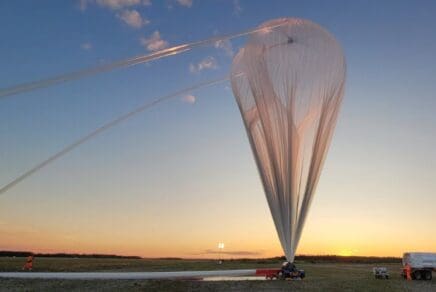
News
Unlocking the secrets of earthquakes with stratospheric balloonsA team of DEOS researchers has achieved a significant milestone in the use of infrasound data captured by stratospheric balloons to understand seismic signals. This breakthrough, published in Earth Planets Space*, opens up new perspectives for the study of earthquakes, both on Earth and on other planets.
DEOS
Researcher
Science
Videos
Visiting professors at ISAE-SUPAERO: DAN SCHEERESISAE-SUPAERO est un établissement d'enseignement supérieur axé sur la recherche et l'innovation, qui s'engage à concilier excellence scientifique, visibilité académique et proximité avec les objectifs industriels. Ses activités de recherche ont contribué à faire de l'école un leader international non seulement en termes de programme d'ingénierie aérospatiale, mais aussi de programmes de troisième cycle, notamment ses masters (MSc) et ses programmes de doctorat en sciences de l'ingénierie. C'est pourquoi de nombreux acteurs internationaux clés de la recherche rendent visite à leurs homologues de l'ISAE-SUPAERO. Nous avons rencontré Dan Sheeres, professeur émérite de l'université du Colorado et titulaire de la chaire A. Richard Seebass au département des sciences de l'ingénierie aérospatiale Ann et H.J. Smead de l'université du Colorado à Boulder. Les recherches de Dan Scheeres couvrent des sujets allant de l'astrodynamique et de la navigation spatiale à la science planétaire et à la mécanique céleste, et il a publié de nombreux articles dans ces domaines. L'astéroïde 8887 a été baptisé « Scheeres » en reconnaissance de ses contributions à la compréhension scientifique de l'environnement dynamique des astéroïdes. Pendant son séjour à l'ISAE-SUPAERO, le professeur Scheeres et l'équipe des systèmes spatiaux pour les applications planétaires ont collaboré à l'analyse des données DART et au développement de concepts visant à étudier la structure interne des astéroïdes lors de futures missions spatiales. De plus, Dan Scheeres et l'ISAE-SUPAERO ont publié conjointement plusieurs articles dans « Nature » sur les astéroïdes et la mission DART.
DEOS
Researcher
Space
Videos
The Dart mission has hit its target: explanations from Dr Naomi Murdoch, planetary scientist at ISAE-SUPAEROResearchers from ISAE-SUPAERO are participating in this first planetary defence mission. Dr. Naomi Murdoch, a researcher at ISAE-SUPAERO and scientific member of the #DART and #HERA missions, comments on the objectives of DART and those of the European HERA mission, which will arrive in the area in 2026 to characterise the crater left by DART and study the internal structure of the asteroid #Dimorphos!
DEOS
Researcher
Space
Pages
Space Systems for Planetology and Applications (SSPA) Scientific GroupThe “Space Systems for Planetology and Applications” (SSPA) scientific group focuses on one main area of research: The development of missions and associated technologies for geophysical exploration of the solar system.
DEOS
Doctoral student
PhD
Pages
Navigation, Radar, and Remote Sensing (NAVIR² eS) Scientific GroupThe “Navigation, Radar and Remonte Sensing” (NAVIR² eS) scientific group is interested in the theoretical study of information sources and hybridization approaches for autonomous vehicle navigation applications.
DEOS
Doctoral student
PhD
Events
Interdisciplinary Congress on Extreme Worlds - CIMEDo you work in or on extreme environments? Come and take part in the first edition of the Interdisciplinary Congress on Extreme Worlds (CIME)!
Congress
Research
Science
News
Meteorite impact reveals new insights into MarsIn September 2021, NASA's InSight mission recorded a meteorite impact. Analysis of the data by scientists has revolutionised our understanding of the internal structure of Mars and its evolution. Its mantle is not homogeneous, as previously assumed, but composed of a layer of molten silicates overlying the core. Press release from the IPGP - Institut de Physique du Globe de Paris: ‘The InSight mission reveals a molten layer at the base of the Martian mantle’.
DEOS
Space
Pages
Learning, Decision, Optimisation (ADO) Scientific GroupDISC
Doctoral student
PhD
News
Researchers from ISAE-SUPAERO contributed to the success of the first images from ESA's Sentinel 2c observation satellite.The Sentinel 2c Earth observation satellite, launched on 5 September as part of ESA's Copernicus mission, has delivered its first images. This success is partly due to the image sensor research team (CIMI) at ISAE-SUPAERO, which designed and oversaw the manufacture of the visible image sensors.
DEOS
Space
News
ISAE-SUPAERO back on mission with HeraThe Hera mission, an international planetary defence mission, is on its way to study the asteroid Dimorphos, which will be struck by DART in 2022. ISAE-SUPAERO is actively collaborating in this international planetary defence programme through the research work of Naomi Murdoch and the SSPA team.
DEOS
Space
News
ISAE-SUPAERO and Spaceflight Institute join forces to train tomorrow's manned flight expertsOn July 29, 2025, ISAE-SUPAERO and the Spaceflight Institute signed a partnership agreement for the joint creation of a “Certificate of Advanced Studies in Human Spaceflight”. This new semester-long program aims to train a new generation of space professionals, combining academic excellence with operational expertise.
Certificates of advanced studies
Education
Space
News
ISAE-SUPAERO Researchers Receive IEEE NSREC 2025 Outstanding Paper Award for Advance in Space Imaging Sensor PhysicsResearchers from ISAE-SUPAERO and their partners have received the Outstanding Conference Paper Award at the IEEE (Institute of Electrical and Electronics Engineers) Nuclear and Space Radiation Effects Conference 2025 (NSREC) in Nashville, Tenessee, the most important international conference dedicated to radiation effects in electronic systems for space and nuclear applications.
DEOS
Prize
Research
Videos
Sophie Adenot: from ISAE-SUPAERO to spaceMeet Sophie Adenot, astronaut at the European Space Agency (ESA) and ISAE-SUPAERO alumna, who answers three questions! 🚀
Alumni
Diversity program
Space
News
Les Assises du New Space: update of the “Ambition NewSpace 2027” reportIn 2022, the Assises du NewSpace collective - a group of players representing the French space industry - published the report “Ambition NewSpace 2027”. Today, the collective is launching another major national consultation to update this report and shape the future of French space!
Conference
Round table
Space
Videos
Arnaud Prost, ESA reserve astronaut and ISAE-SUPAERO alumnus: “I was incredibly lucky to be here”Fighter pilot and reserve astronaut with the European Space Agency (ESA), Arnaud Prost returned to his former school on Thursday March 28 to meet 200 secondary school students as part of the ISAE SUPAERO OSE program. It was an opportunity for him to recall the “great memories” of his student experience at ISAE-SUPAERO, his long-standing commitment to the student social outreach program and the “Aquanauts” scheme he set up with OSE l'ISAE-SUPAERO. And in passing, he offers a few words of advice to young people who might dream of following in his footsteps: “Don't let yourself be convinced that one of these paths isn't for you!” A 2017 graduate of ISAE-SUPAERO, Arnaud Prost is among those selected for the ESA Astronaut Class of 2022, alongside Sophie Adenot and Anthea Comellini, both also alumni of the school. They join other illustrious ESA astronauts who have already studied at the school: Thomas Pesquet, Luca Parmitano and Samantha Cristoforetti. Since 1970, ISAE-SUPAERO has contributed to the progress of the space age through its training, research and innovation activities. As the only organization in France to offer degree courses (engineering, master's, specialized master's, doctorate) covering all 22 space-related themes identified by CNES, the Institute offers a royal road to space careers. For Arnaud Prost's full profile: https://www.esa.int/Science_Exploration/Human_and_Robotic_Exploration/Astronauts/A
Alumni
Diversity program
Space
Pages
Applied Mathematics (MA) Scientific GroupThe “Applied Mathematics” (MA) scientific group covers a wide range of topics: Stochastic processes (especially Markov processes), numerical optimization (especially multidisciplinary optimization) and parallel computing, stabilization, control and numerical solution of partial differential equations, and financial engineering.
DISC
Doctoral student
PhD
Pages
Our Semester & Short ProgrammesDiscover ISAE-SUPAERO's academic excellence through our semester and short programmes, open to international students.
Aeronautics
Aerospace
Aerospace summer program
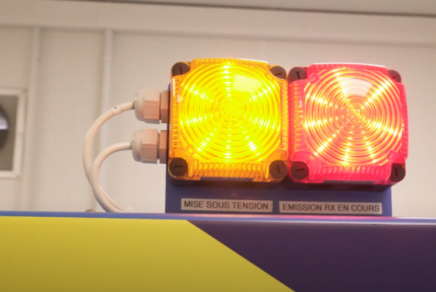
Videos
Discover... the ISAE-SUPAERO irradiatorISAE-SUPAERO – as a centre for training through research, research training and innovation – has a wide range of research equipment used within its six research departments. Today, we present the irradiator! As part of its research activities, ISAE-SUPAERO develops electronic components and systems for scientific and space applications. Space is a very aggressive environment, particularly because high-energy particles emitted by the sun or trapped in radiation belts threaten the health of astronauts, the properties of materials and the proper functioning of electronic chips. In order to reproduce the effects of this ionising radiation on electronic technologies in the laboratory, ISAE-SUPAERO has acquired an X-ray irradiation chamber with an energy of up to 320 keV. This video shows a typical use of this equipment: an electronic component to be tested is placed in the irradiation chamber, the X-ray tube is switched on, and the effects on the component's operation (in this case, an image sensor) are observed and measured in real time.
DEOS
News
ISAE-SUPAERO acquires an innovative new additive manufacturing equipmentISAE-SUPAERO and the Institut Clément Ader (ICA) have just acquired a new Wire Arc Additive Manufacturing (WAAM) machine. This cutting-edge equipment opens up new prospects for research, teaching and innovation in the aeronautical field.
Aeronautics
News
Research
Pages
Advanced Space Concepts Laboratory - Airbus DS & ArianeGroupCreated in 2017 and renewed until 2027, this sponsorship partnership brings together Airbus Defense & Space and Ariane Group.
Aerospace
Chair
Company
Events
"Les Entretiens de Toulouse - Training through debate”: April 9 & 10, 2025 on the ISAE-SUPAERO campus"Les Entretiens de Toulouse" has become a must-attend event for the aerospace industry. A forum for the exchange and transmission of skills, this training through debate provides an opening onto subjects with high industrial stakes. The 2025 edition of the Entretiens de Toulouse will take place on April 9 & 10, 2025, in person, at ISAE-SUPAERO!
Aeronautics
Artificial intelligence
Defence
Events
Les Assises du New Space 2025: discussions and debates on NewSpace!The 2025 edition of the Assises du New Space will be held this year on July 8-9, 2025 at the Centre des congrès de la Villette - Cité des sciences et de l'industrie in Paris. Aimed at all players in the French space ecosystem, this event is a unique opportunity to exchange ideas and debate around NewSpace, and to discover the latest technological innovations and project financing opportunities. Registration is now open!
Conference
Event
Round table
News
CASTOR Chair: ISAE-SUPAERO and Liebherr-Aerospace Toulouse celebrate 1 year of partnershipAeronautics
Chair
Partnership
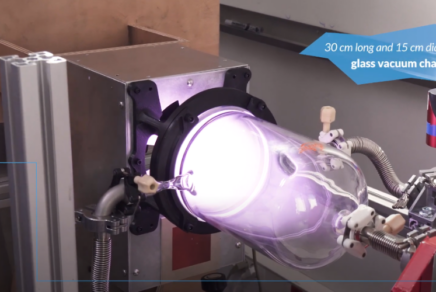
Videos
Discover... the ISAE-SUPAERO plasma benchISAE-SUPAERO – as a centre for training through research, research training and innovation – has a wide range of research equipment used within its six research departments. Today, we present white plasma! With the emergence of #NewSpace, more and more CubeSats are being launched. On these small platforms (CubeSats consist of one or more standard 10 cm cubes), several subsystems must coexist. While electric propulsion solutions save space and weight on board, their electromagnetic compatibility with on-board communication systems is still being questioned today. ISAE-SUPAERO, in collaboration with CNES and LAPLACE, is currently developing simulation tools and characterisation methods to provide engineers with tools for designing CubeSats and effective testing methods to address this issue. This experimental bench developed at ISAE-SUPAERO allows the characterisation of a plasma discharge representative of an electric thruster, as well as the measurement of its interactions with microwave signals generated by nearby communication antennas. Finally, the experimental data obtained will be used to calibrate the numerical analysis tools currently being developed by our teams.
DEOS
News
Call for Nominations for the 2027 Lopez-Loreta AwardISAE-SUPAERO is pleased to announce the call for nominations for the 2027 Lopez-Loreta Prize, a €1 million* award for excellence designed to support innovative, high-impact projects led by our graduates in the fields of academic research or entrepreneurship.
Entrepreneurship
Prize
Research
Videos
Start-up insights: interview with Ugo Bonnet from the Space Flight InstituteIn recent years, ISAE-SUPAERO has developed a range of services and comprehensive support for its project leaders (students, doctoral students, teacher-researchers, and alumni), earning it the title of incubator. It is in line with this support philosophy that the Institute currently hosts numerous startups that were created within its walls. Today we welcome Ugo Bonnet, CEO of the Space Flight Institute, a company that offers innovative training (in partnership with ISAE-SUPAERO) to future professionals in human spaceflight, whether on Earth or in orbit. Ugo Bonnet discusses the creation of the organization, its major successes, and its plans for the future.
Alumni
Space
Startup
News
Mission Insight: the contribution of researchers from ISAE-SUPAEROThe InSight lander deployed by NASA recorded two earthquakes that occurred on Mars in 2021, providing scientists with exceptional data, the first direct observations ever made of a planet's core.
DEOS
Space
News
Focus on... quantum physics at ISAE-SUPAERO: a student journeyISAE-SUPAERO has been integrating quantum physics into its training and research activities uninterruptedly since 1980, and for the past two decades has been offering courses linked to the second quantum revolution.
DEOS
Doctoral student
Ingénieur généraliste (MSc)
Pages
Semester Research ProjectsTake your studies to the next level by participating in a semester-long research project at ISAE-SUPAERO: immerse yourself in cutting-edge laboratories alongside international experts and contribute to advances in aeronautics and space technology.
Aeronautics
Aerospace
Aerospace summer program
News
ISAE-SUPAERO hosts the first in-person Inter-Agency GNC V&V WorkshopOn July 9–10, 2025, ISAE-SUPAERO had the honor of hosting the very first in-person edition of the Inter-Agency GNC V&V Workshop, bringing together more than 150 participants from academia, industry, and major international space agencies.
Event
Research
Workshop
Testimonials
Testimony of Giuseppe Cataldo, alumnus of the 2010 Engineer ISAE-SUPAERO programmeAlumni
Space
Testimonial
Events
2026 edition of "Les Entretiens de Toulouse"Aeronautics
Aerospace
Event
Videos
Sylvestre Maurice, astrophysicist and ISAE-SUPAERO alumnusAwarded a prize by the Académie des Sciences in 2020, Sylvestre Maurice #astrophysicist at the Institut de Recherche en Astrophysique et Planétologie (IRAP) in Toulouse witnessed the landing of the #Perseverance rover on Mars on February 18, 2021. A historic moment for this enthusiast, who is also the scientific manager of the onboard SuperCam instrument. A 1990 graduate of ISAE-SUPAERO, Sylvestre Maurice tells us about his career.
Alumni
Researcher
Space
Pages
Institute for Sustainable AviationCreated in 2021 on the initiative of internationally renowned academic institutions with longstanding academic expertise in aeronautics and air transport, the ISA is an institute dedicated to the challenges of aviation's transition to sustainability.
Aeronautics
Aviation
Decarbonization
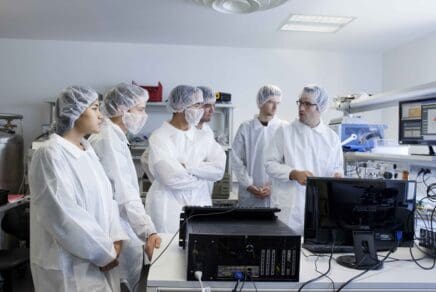
Pages
ResearchAt ISAE-SUPAERO, we conduct cutting-edge research in the service of innovation, technological sovereignty and the ecological transition of the aerospace sector, thereby affirming our role as a leading player in the scientific and industrial community.
DAEP
DCAS
DEOS
News
The Jupiter system: a unique laboratory for a major scientific breakthroughNicolas André, teacher-researcher at ISAE-SUPAERO, co-authors a major discovery in Nature Communications.
DEOS
Exploration
Space
News
ISAE-SUPAERO is co-hosting the 16th EASN International Conference in ToulouseISAE-SUPAERO is pleased to host the 16th edition of the international conference organized by EASN in Toulouse from October 27 to 30, 2026, dedicated to the theme: “Innovation in Aeronautics and Space for Sustainability Today and Tomorrow.”
Aeronautics
Aerospace
Innovation
News
Alexandre Bouraoui Takes Gold at the 2025 International Astronautical CongressFinal-year engineering apprentice, specializing in Industrialisation and Methods for Aeronautics and Space, Alexandre Bouraoui was recently honored at the 76th International Astronautical Congress (IAC 2025) in Sydney, where he won the prestigious Hermann Oberth Gold Medal in the Graduate category. We spoke with him about his award and his studies at ISAE-SUPAERO.
Congress
DEOS
Event
News
« Académie Spatiale de Défense »: A Day of Strategic Reflection on the Future of SpaceOn May 19, 2026, ISAE-SUPAERO and its partners at the Defense Space Academy hosted and organized a day of discussions focused on France’s National Space Strategy. Bringing together government decision-makers, industry representatives, researchers, and military officials, this event provided an opportunity to pool expertise and foster collective reflection on the major challenges of sovereignty, training, and strategic autonomy in the space sector.
Defence
Event
Space
Pages
Design and Analysis of Critical Systems (CASC) Scientific GroupThe “Design and Analysis of Critical Systems” (CASC) scientific group focuses on methods, processes and tools to support System Engineering and Systems Engineering.
DISC
Doctoral student
PhD
News
Meeting with Stéphanie Lizy-Destrez, elected member of the Air and Space AcademyAt ISAE-SUPAERO, Stéphanie Lizy-Destrez heads SaCLaB, a research laboratory focusing on future space systems. A professor of space systems engineering, she has just been elected to the French Air and Space Academy.
Award
Space
Teacher researcher
News
ISAE-SUPAERO contributes to the Artemis IV mission with the SPSS seismology instrumentNASA selects the JPL/CNES instrument suite for the Artemis IV mission, paving the way for unprecedented exploration of the Moon’s internal structure at the South Pole.
DEOS
Exploration
Space
News
ICCAS 2026: Artificial Intelligence for Operational Decision-MakingThe fourth edition of ICCAS (International Conference on Cognitive Aircraft Systems) was held on June 11–12, organized in partnership with the ISAE-SUPAERO Foundation and Dassault Aviation, as part of the Chair in Design and Architecture of Cognitive Aircraft Systems (CASAC).
Aeronautics
Aviation
Conference
News
Valentin LELOUP, quantum and optical telecommunications systems engineer: the quantum and space tandemValentin Leloup, R&D engineer at Thales, combines two fields of expertise: quantum physics and space. He holds an engineering degree from ISAE-SUPAERO 2022 and a Master 2 in fundamental physics and applications.
Alumni
News
Research
News
Sophie Adenot Returns to EarthSophie Adenot, an ESA astronaut and ISAE-SUPAERO engineering graduate, is back on Earth after spending nearly 8 months on the ISS for her Epsilon mission.
Alumni
Event
Space
News
3 questions to... Loïc Jecker, S-Cube member from 2011 to 2013Meet Loïc Jecker, member of S-Cube - SUPAERO Space Section - ISAE-SUPAERO's experimental rocket club, from 2011 to 2013.
Space
Student club
Student life
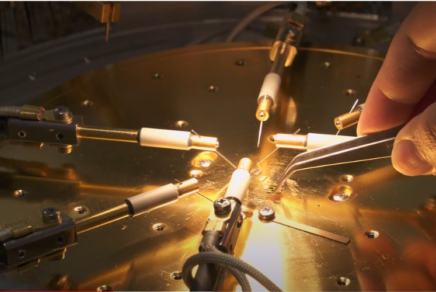
Videos
Discover... ISAE-SUPAERO's cryogenic equipment for electrical testingISAE-SUPAERO - as a center for training through research, research training and innovation - has a wide range of research equipment used by its 6 research departments. Today, we present our cryogenic equipment for electrical testing! ISAE-SUPAERO's image sensor research group (CIMI) studies sensors in the visible wavelength range, but also sensors in different spectral ranges such as infrared. Detection of these longer wavelengths requires materials other than silicon for detection, combined with a silicon readout circuit for information processing, all operating at cryogenic temperature. In this context, ISAE-SUPAERO has developed electrical and electro-optical characterization benches for low-temperature microelectronic circuits, in order to extract and model their behavior and performance. These characterization benches can address both very simple circuits, such as transistors, and complex components (complete sensors) with up to 120 inputs/outputs.
DEOS
Pages
Job offersAeronautics
Aerospace
AI
Pages
French Space Defence AcademyIn order to drive and implement the ambitions set out in the Space Defence Strategy, the creation of a space defence expertise sector offering attractive programmes is a major challenge. In this regard, the French Space Defence Academy (ASD) offers programmes available within the Armed Forces Ministry and leverages synergies between them to provide a personalised approach to space programmes.
Defence
Education
Partner
Videos
ISAE-SUPAERO and Airbus Defence and Space organize an international training course on space systemsTwenty engineers from the Peruvian space agency CONIDA (Comisión Nacional de Investigación y Desarrollo Aeroespacial) attended a training course in Toulouse designed jointly by ISAE-SUPAERO and Airbus Defence and Space! The aim? To develop their skills in space systems and space missions. The entire program was placed under the academic responsibility of AnnaFederica Urbano, a lecturer and researcher in space systems and launchers at ISAE-SUPAERO. The engineers took part in a preliminary satellite design project. At the end of the five-week course, they all obtained the Certificate of Advanced Studies awarded by ISAE-SUPAERO. For ISAE-SUPAERO and Airbus Defence and Space, this experience opens up prospects for future collaborations in training courses of this type for international customers and industrial and institutional partners. For more information: https://www.isae-supaero.fr/fr/actualites/airbus-defence-and-space-et-l-isae-supaero-forment-des-membres-de-l-agence/
Programme
Space
News
Space Explorers: In a Desert, Six Students Simulate Life on MarsLast spring, for four weeks, six students and one alumnus from ISAE-SUPAERO lived completely self-sufficiently at the Mars Desert Research Station (MDRS). This base, located in the Utah Desert in the United States, is specifically designed to simulate living conditions on Mars.
Space
Student club
Pages
Support for the Development of the ISAE Group - GIFASGIFAS (Groupement des Industries Françaises Aéronautiques et Spatiales - French Aerospace Industries Group) supports the development of high-level academic and professional education in aerospace systems at the 6 Grandes Écoles that make up the ISAE Group (ISAE-ENSMA, ISAE-SUPMECA, ESTACA, Ecole de l'Air et de l'Espace, ENAC, ISAE-SUPAERO).
Aeronautics
Aerospace
Chair
News
The COMETES project - Skills and Careers in Space - is launching its website, a platform dedicated to skills and careers in the space sector.The space sector is undergoing profound change driven by New Space, accelerating technological innovation, and environmental challenges. These transformations are leading to rapid changes in the careers and skills required within the industry. In this context, COMETES is launching a platform dedicated to space-related skills, careers, and training.
Education
Space
News
Ariane 6: at ISAE-SUPAERO, researchers are already working on the futureThe European Ariane 6 launcher incorporates major technological innovations such as the Vinci engine, capable of reigniting in space. At ISAE-SUPAERO, researchers are tackling the challenges posed by the rocket engines of tomorrow.
Space
News
Landing on Mars: a unique experience for seven studentsSeven ISAE-SUPAERO students have been selected to join the Mars Desert Research Station (MDRS) in the United States. This replica of a Martian base will host the crew for four weeks, during which they will live in conditions similar to those found on Mars. The objective is to conduct experiments in situ in collaboration with research partners.
Space
Student club
Student life
Pages
Aerospace Summer ProgrammeEnjoy a unique experience at the heart of aeronautics and space technology with intensive courses, exclusive industrial visits, and an international immersion in Paris, Poitiers and Toulouse.
Aeronautics
Aerospace
Aerospace summer program
News
CIME 2025: Where Science Meets Adventure to Push the Limits of ExplorationAt ISAE-SUPAERO, the 2025 Interdisciplinary Congress on Extreme Worlds (CIME) gathers researchers and adventurers determined to push human limits in the planet’s most extreme environments.
Exploration
Innovation
Space
Testimonials
Testimony from Stéphanie Lizy-Destrez, elected member of the Air and Space AcademyDCAS
Space
Teacher researcher
Videos
ISAE-SUPAERO and Indian Institute of Space Science & Technology work on student space exploration projectsISAE-SUPAERO received a visit from Professor Shine S R of the Indian Institute of Space Science and Technology (IIST) on December 7 and 8. ISAE-SUPAERO signed a co #cooperation agreement with the Indian Institute of Space Science and Technology in 2020 and this visit was a perfect opportunity to discuss the deepening of #training and #research collaborations between our two institutions. ISAE-SUPAERO and IIST have already been cooperating for 4 years within the framework of Franco-Indian collaborative academic projects, involving students from ISAE-SUPAERO and IIST on subjects related to space exploration missions and with the participation of experts from CNES, IRAP and the Indian space agency (ISRO)!
Space
Videos
Elena Lopez Contreras, a doctoral student in neuroergonomics at ISAE-SUPAERO, has won the Amelia Earhart AwardPrize
Research
Thesis
Videos
Sylvestre Maurice presents the SUPERCAM / Martian Exploration educational kitThe ‘SUPERCAM - Martian Exploration’ educational kit project was initiated by five partners: ISAE-SUPAERO, the Toulouse Academy, CNRS, CNES and Cité de l'espace. Under the guidance and supervision of astrophysicist Sylvestre Maurice, first-year students at ISAE-SUPAERO developed this educational tool to raise awareness of space exploration in classrooms, from sixth form to final year. This kit is available to middle and high school teachers and can be adapted to offer educational lessons related to this theme.
Diversity program
Equal opportunities
Researcher
Pages
Spring Semester in Aeronautical EngineeringImmerse yourself in the world of aerospace in Toulouse, the European aerospace capital, with a semester taught in English combining excellent courses, cultural immersion, and proximity to major industrial players.
Aeronautics
Aerospace
Aerospace summer program
Pages
Photonics Antenna Microwave PlasmaA (PAMPA) Scientific GroupThe “Photonics Antenna Microwave PlasmaA” (PAMPA) scientific group is interested in electromagnetism in the fields of microwaves and photonics, as well as wave-plasma interactions.
DEOS
Doctoral student
PhD
Pages
Lasbordes Air Operations Center (COAL)The Department of Design and Operation of Aeronautical and Space Vehicles (DCAS) is part of the Lasbordes Air Operations Center (COAL), located on an airfield a few kilometers from the ISAE-SUPAERO campus. As part of its aeronautical training and research activities, COAL operates a fleet of 8 light aircraft.
DCAS
Doctoral student
PhD
Videos
A surprise from elsewhere... from the ISS...?Hello earth? Thomas Pesquet speaking! Thomas Pesquet, French astronaut and famous ISAE-SUPAERO alumnus (class of 2001), is currently in the ISS as part of his new Alpha mission. He sent our students a personalized message from the European laboratory Columbus...
Alumni
Diversity program
Space
News
MMX, Idefix® and cameras to understand Mars' moonStudying the formation and origin of Mars' moons and bringing back samples: this is the extraordinary, ambitious international mission led by JAXA, in which ISAE-SUPAERO is participating alongside CNES.
DEOS
Researcher
Space
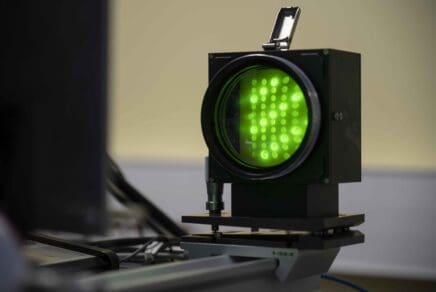
Pages
Electronics, Optronics, and Signal Processing Department (DEOS)At ISAE SUPAERO, the Department of Electronics, Optronics and Signal Processing (DEOS) studies, designs and produces scientific instruments for aeronautics, space and defense applications, with a strong focus on advanced systems and planetary exploration missions.
DEOS
Testimonials
Testimony from Alexandre Bouraoui, engineering student by apprenticeship and IAC 2025 Award WinnerFinal-year engineering apprentice, specializing in Industrialisation and Methods for Aeronautics and Space, Alexandre Bouraoui was recently honored at the 76th International Astronautical Congress (IAC 2025) in Sydney, where he won the prestigious Hermann Oberth Gold Medal in the Graduate category. We spoke with him about his award and his studies at ISAE-SUPAERO.
Aeronautics
Aerospace
Congress
Videos
FRENCH SUPERCAM INSTRUMENT RECORDING THE SOUND OF INGENUITY'S 4th FLIGHTLocated 80 meters from the rover at the moment of take-off, the small helicopter rose to 5 meters above the ground before covering a distance of 133 meters before returning to land where it had taken off from. SuperCam's scientific microphone, developed by ISAE-SUPAERO, recorded the sound emitted by the rotation of the Martian drone's blades during its flight. This sound has a characteristic frequency of 84 Hz, equivalent to the low “E” of a piano or the bass voice of a human being. “This is a big surprise for the whole scientific team,” says Naomi Murdoch, a researcher at ISAE-SUPAERO who is studying the data from the microphone. "Tests carried out in a Martian atmosphere simulator to design this instrument, and our theories of sound propagation, indicated that the microphone would have great difficulty picking up the sounds of the helicopter. Indeed, Mars' thin atmosphere strongly attenuates sound transmission. We needed a bit of luck to record the helicopter from such a distance. We're very pleased to have succeeded in obtaining this recording, which is proving to be a goldmine for our understanding of the Martian atmosphere". Developed jointly by ISAE-SUPAERO and a consortium of CNRS laboratories and its partners, coordinated by CNES, SuperCam's microphone is derived from a consumer model adapted to withstand the Martian environment. It pursues 3 substantial scientific and technical objectives of the Mars 2020 mission: Study the sound associated with laser impacts on Martian rocks, to gain a better understanding of their mechanical properties. Improving our understanding of atmospheric phenomena (wind turbulence, dust eddies, wind interactions with the rover, and now with the helicopter). Understanding the sound signature of the rover's various movements (robotic arm and mast operations, driving on normal or uneven ground, pump monitoring, etc.). The microphone was first switched on a few hours after Perseverance landed. It recorded the first Martian sounds generated by turbulence in the atmosphere. It is used daily in conjunction with laser rock ablation for chemical analysis of Mars. ABOUT THE MARS 2020 MISSION: NASA is relying on Caltech's Jet Propulsion Laboratory for the development of the Mars 2020 mission. SuperCam was developed jointly by LANL (Los Alamos National Laboratory, USA) and a consortium of laboratories attached to the CNRS, French universities and research establishments. Several Spanish universities, led by the University of Valladolid, are also contributing to the instrument. CNES is responsible to NASA for the French contribution to SuperCam. The instrument is operated alternately from LANL and the French Operations Center for Science and Exploration (FOCSE) at CNES in Toulouse.
DEOS
Researcher
Space
News
The 2025 Edmond Brun Prize from the French Academy of Sciences awarded to Annafederica Urbano, professor at ISAE-SUPAEROOn October 28, 2025, the Academy of Sciences awarded the Edmond Brun Prize to Annafederica Urbano, professor of space launch vehicles at ISAE-SUPAERO. This biennial physics award recognizes her entire body of work in the field of space propulsion.
DCAS
News
Prize
Videos
Training courses: space studiesFind out more about our courses and #information in the field of space! The space dimension is strongly developed within our various training courses, whether in specific streams or dedicated programs. French and international students alike are showing a keen interest in our educational programs in Earth observation and the sciences of the Universe, as well as in the design and operation of space systems. Space research and industry employ many ISAE-SUPAERO engineers. Explore the world of space!
Programme
Space
Videos
Orbit Your Thesis: ISAE-SUPAERO in zero gravity with the AIM experimentArtery In Microgravity (#AIM), the first student scientific experiment designed and developed in collaboration since 2018 by ISAE-SUPAERO and Polytechnique Turin, was launched on 23 November 2022 by Space X's Dragon cargo ship to the International Space Station (ISS)! Selected by the ESA as part of its ‘Orbit your thesis’ programme, AIM aims to study the behaviour of the heart and its arteries in space, in order to determine whether people with heart problems will one day be able to stay there.
Prize
Space
Pages
Innovating in a World of Transition - SafranThe challenges facing the aerospace industry (energy transition, New Space, digitalization) are driving a growing need for professionals with the ability to innovate. Against this backdrop, Safran and ISAE-SUPAERO are creating the Innovating in a World in Transition Chair.
Aeronautics
Aerospace
Chair
Testimonials
Testimonial from Sylvain ASSOGBA, an AM IEM student participating in the “Startech Summer School – Space Entrepreneurship: from Business Ideas to Start-Ups” in RomeEducation
International
Space
Pages
Prior Experience AccreditationThe validation of prior experience is an individual right enshrined in the French Labor Code and Education Code. It enables candidates to obtain all - or part - of a professional certification (Diploma, Professional Title, Certificate of Professional Qualification), based on their professional, salaried or non-salaried and/or voluntary experience. This scheme can be used if the candidate is seeking personal recognition, or more generally to support a professional project that he or she wishes to put into practice.
Advanced Master
Aeronautics
Aerospace
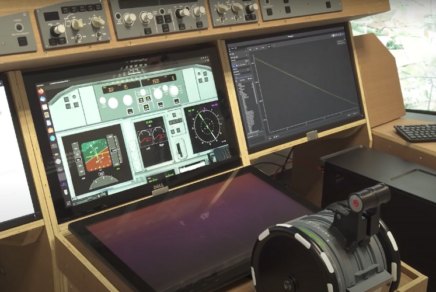
Videos
Discover... ISAE-SUPAERO's mobile ground robotsISAE-SUPAERO - as a center for training through research, research training and innovation - has a wide range of research equipment used in its 6 research departments. Today, we'd like to introduce you to mobile ground robots! Whether robots, airplanes, cars or even telephones, all these technologies are equipped with perception systems. Depending on the application, these sources of information make it possible to perceive the environment in which a system is evolving, and also to measure its own characteristics, such as speed or acceleration. This multitude of data must then be used, cross-referenced and interpreted within the navigation system to obtain the vehicle's position, but also, in the case of mapping applications, that of surrounding objects. Within the DEOS NAVIRRES team, researchers are interested in navigation systems and their application in complex environments where sensor information may be degraded, erroneous or unavailable. Mobile acquisition platforms are being developed. These are equipped with cameras, lidars, GNSS (Global Navigation Satellite System) receivers, radars and inertial units, with the aim of obtaining the most efficient navigation system for the application in question. One of the team's research themes is the analysis of the degradation of sensor information, enabling the development of new robust and adaptive algorithms to compensate for environmental constraints. The aim is to make navigation systems more accurate and safer, for critical applications requiring strong reliability constraints, such as autonomous cars or exploration robotics.
DEOS
Testimonials
Testimony of Juan-Carlos DOLADO-PEREZ, alumni of the 2008 Master's degree in Aerospace EngineeringAlumni
Space
Testimonial
News
Space: Thomas Pesquet and Arnaud Prost will embark on two unprecedented space missions in 2027France is stepping up its space ambitions. At the Choose France summit, the President of the Republic announced that French astronauts Thomas Pesquet and Arnaud Prost will take part in two commercial space missions in 2027, as part of an agreement between France and the American company Vast.
Alumni
Exploration
Space
Videos
3 questions to Marie Delaroche, 3ᵉ year student and MDRS 293 crew commanderSince February 18, seven ISAE-SUPAERO engineering students have been living a simulated Martian life and carrying out experiments in collaboration with CNES and several research laboratories at The Mars Society's Mars Desert Research Station (MDRS) in UTAH (USA)! For the second time, the mission is led by a woman: Marie Delaroche, a passionate #spaceexplorer, who was already part of crew 275 departing in 2023. We asked her 3 questions to find out more about the challenges of this mission and her feelings as #flightcommander! Alongside her, three young women and three young men in their 2ᵉ year of #engineering studies have taken on the roles of astronomer, scientist, botanist, journalist, health worker and onboard engineer. They are all members of the Mars Club ISAE-SUPAERO, a student association for the popularization of science focused on the Red Planet and the missions dedicated to its exploration and study. They are currently experimenting with AI4U, the artificial intelligence that assists astronauts in their daily tasks (environmental measurements, voice recognition, emergency exercises). They are also conducting a science popularization experiment in collaboration with secondary school pupils. Inspired by the film The Martian, in which an astronaut grows potatoes on the Red Planet, the aim of this experiment is to compare plant growth in Martian soil with growth in terrestrial soil! To follow their adventure, click here: https://mars.bde-supaero.fr/
Space
Student club
Student life
News
Mars mission simulation: a scientific experiment, a human adventureLike nine other ISAE-SUPAERO crews before them, seven students took part in a simulation of life on Mars in the Utah desert in the United States this winter.
Space
Student club
Events
French-Korean workshop: “Cryogenic hydrogen for aviation”.Event
Research
Science
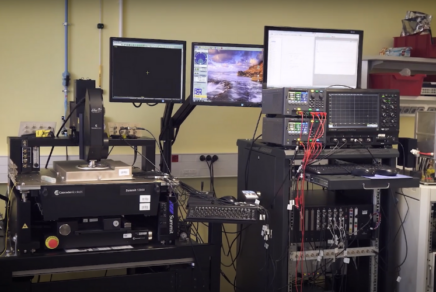
Videos
Discover... CMOS image sensors at ISAE-SUPAEROISAE-SUPAERO - as a center for training through research, research training and innovation - has a wide range of research equipment used in its 6 research departments. Today, we present CMOS image sensors! CMOS image sensors are playing an increasingly important role in our everyday lives. For several years now, our team at ISAE-SUPAERO has been developing CMOS image sensors with a number of players in the field, and innovating by proposing new architectures and conditions of use requiring studies of both elementary components and more complex structures. Measurements are carried out on transistors and diodes with the help of an under-tip tester and a parametric analyzer enabling very low current measurements (10 aA). Similarly, simple structures containing innovative pixels can be operated with the tester using spike cards coupled to a word generator specially designed for image sensors. All these studies not only contribute to our understanding of the physics of photodetection, but also provide models for our simulators. They are also used to monitor manufacturing processes during the various production phases.
DEOS
News
Training new skills for the future of space: COMETES is launched!Company
Job
Space
Events
16th EASN International ConferenceAeronautics
Aerospace
Event
Events
AASTRA Certificate: Introductory Webinar on July 9 from 6:00 p.m. to 7:00 p.m.Aeronautics
Aerospace
Air transport
Videos
The sound of a Martian dust devil captured by the SuperCam microphone on PerseveranceThis video and audio show the results obtained by NASA's Perseverance Mars rover and its SuperCam microphone when recording the sounds of a Martian dust devil passing overhead on 27 September 2021, the 215th Martian day or sol of the mission. The dust devil was 25 metres wide and at least 118 metres high, moving at a speed of approximately 19 km/h. This is the first time such a recording has been made, as capturing a dust devil requires a bit of luck. Indeed, it flew over the rover at a time when all of Perseverance's sensors measuring wind, pressure, temperature and dust, plus the NavigationXXX (Navcam) camera, were running. This allowed scientists to combine sounds, images and atmospheric data. The unique combination of this data, along with atmospheric modelling, enabled researchers to estimate the dimensions of the dust devil. Scientists cannot accurately predict when these vortices will occur. Rovers such as Perseverance and Curiosity monitor them regularly. When scientists notice that they are more frequent at a certain time of day or approaching from a certain direction, they focus their monitoring to try to capture a dust devil with all the sensors at their disposal. > To better understand the video, it shows three rows of images: - the row
DEOS
Researcher
Space
Pages
Our Specialised Studies CertificatesOur specialised studies certificates are designed for professionals. They enable you to develop skills and expertise in the fields of digital, aeronautics, space, project management, systems engineering, and artificial intelligence.
Advanced Master
Aeronautics
Aerospace
Pages
Communication and Information Theory (ComiT) Scientific GroupThe “Communication and Information Theory” (ComiT) scientific group is involved in the disciplines of digital communications, radar, and channel access techniques. Its fields of application include space systems, civil and military aviation, terrestrial cellular networks and the Internet of Things (IoT).
DEOS
Doctoral program
Doctoral student
News
BROMO: the joint venture project involving major European space industry players presented to ISAE-SUPAERO studentsIn December 2025, ISAE-SUPAERO welcomed major players in the European space industry (Airbus, Thales and Leonardo) for an exceptional conference on the BROMO project.
Conference
Space
News
An ISAE-SUPAERO PhD student has been awarded the ONERA 2026 PhD Student PrizeLucie Schwoebel, a third-year doctoral student at ISAE-SUPAERO working on a thesis co-funded by ONERA, has been awarded the 2026 Doctoral Student Prize in the field of Fluid Mechanics and Energy. This award recognizes the excellence of her research on the acoustics of sound-absorbing materials used in aeronautics.
PhD
Prize
Research
Pages
Theory, Modelling, and Systems Engineering (ThéMIS) Scientific GroupThe “Theory, Modeling and Systems Engineering” (ThéMIS) scientific group is dedicated to the study and development of advanced methods for the design, modeling and validation of complex systems.
DISC
Doctoral student
PhD
News
Airbus Defence and Space and ISAE-SUPAERO train members of the Peruvian space agencyTwenty engineers from the Peruvian space agency attended a training course in Toulouse, jointly designed by ISAE-SUPAERO and Airbus Defence and Space, to develop their skills in the field of space systems and space missions.
DCAS
Short internship
Space
News
Apply today for a program at ISAE-SUPAERO or ENAC - École Nationale de l'Aviation Civile!The TSAAE application platform is now open: discover our world-renowned programs and apply online for the 2026 academic year before November 28 at midnight (French time)!
Advanced Master
Aeronautics
Aerospace

World Alumni Days 2026: Testimonial from Steven Bouchired, a 1995 graduate of the general engineering program

Related Content
Videos
Meeting with Christophe Henno (S 1991) Director of Programs for Airbus AtlanticMeeting with Christophe Henno (S 1991) Director of Programs for Airbus Atlantic
Career
Company
Partner
Pages
Testimonials« Ingénieur ISAE-SUPAERO » by apprenticeship
Advanced Master
Alumni
Testimonials
Testimony of Juan-Carlos DOLADO-PEREZ, alumni of the 2008 Master's degree in Aerospace EngineeringAlumni
Space
Testimonial

Testimonials
Testimonial of Elisa Baumgarten, Advanced Master® AES student (class of 2025)Advanced Master
Testimonial
Videos
Start-up insights: interview with Ugo Bonnet from the Space Flight InstituteIn recent years, ISAE-SUPAERO has developed a range of services and comprehensive support for its project leaders (students, doctoral students, teacher-researchers, and alumni), earning it the title of incubator. It is in line with this support philosophy that the Institute currently hosts numerous startups that were created within its walls. Today we welcome Ugo Bonnet, CEO of the Space Flight Institute, a company that offers innovative training (in partnership with ISAE-SUPAERO) to future professionals in human spaceflight, whether on Earth or in orbit. Ugo Bonnet discusses the creation of the organization, its major successes, and its plans for the future.
Alumni
Space
Startup
Videos
Testimonials from Alex Dejoie and Sofia Cardola, engineering and master in aerospace engineering studentsISAE-SUPAERO recently welcomed some 40 companies from a wide range of industrial and service sectors to its campus. These companies, represented by alumni and HR managers, were able to share internship and job opportunities with over 500 students in attendance. The event also provided an opportunity for privileged exchanges between students and professionals on current and future challenges and projects. These close encounters were particularly enriching, providing young talent with sound advice and a mutual understanding of needs and expectations! The Enterprise Village is a fantastic opportunity to forge links and develop your professional network, while at the same time widening the field of possibilities. Through this initiative, ISAE-SUPAERO, at the heart of our students' training, has reaffirmed its central role in guiding them towards the professional world. Read the testimonials of Alex Dejoie, a student engineer specializing in astrophysics and space, and Sofia Cardola, a student in the Master in Aerospace Engineering program.
Career
Company
Testimonial
Videos
A surprise from elsewhere... from the ISS...?Hello earth? Thomas Pesquet speaking! Thomas Pesquet, French astronaut and famous ISAE-SUPAERO alumnus (class of 2001), is currently in the ISS as part of his new Alpha mission. He sent our students a personalized message from the European laboratory Columbus...
Alumni
Diversity program
Space
Testimonials
Testimonial from Harshavardhan Narakatla, student (class of 2025) of the AMS E&M Advanced Master®Aerospace
Alumni
Testimonial
Testimonials
"World Alumni Day": 3 questions to Muhamad Abdul Aziz, alumni of the class of 2024 of the Master in Aerospace Engineering, specialising in Aerospace Systems and ControlsAerospace
Alumni
Videos
Arnaud Prost, ESA reserve astronaut and ISAE-SUPAERO alumnus: “I was incredibly lucky to be here”Fighter pilot and reserve astronaut with the European Space Agency (ESA), Arnaud Prost returned to his former school on Thursday March 28 to meet 200 secondary school students as part of the ISAE SUPAERO OSE program. It was an opportunity for him to recall the “great memories” of his student experience at ISAE-SUPAERO, his long-standing commitment to the student social outreach program and the “Aquanauts” scheme he set up with OSE l'ISAE-SUPAERO. And in passing, he offers a few words of advice to young people who might dream of following in his footsteps: “Don't let yourself be convinced that one of these paths isn't for you!” A 2017 graduate of ISAE-SUPAERO, Arnaud Prost is among those selected for the ESA Astronaut Class of 2022, alongside Sophie Adenot and Anthea Comellini, both also alumni of the school. They join other illustrious ESA astronauts who have already studied at the school: Thomas Pesquet, Luca Parmitano and Samantha Cristoforetti. Since 1970, ISAE-SUPAERO has contributed to the progress of the space age through its training, research and innovation activities. As the only organization in France to offer degree courses (engineering, master's, specialized master's, doctorate) covering all 22 space-related themes identified by CNES, the Institute offers a royal road to space careers. For Arnaud Prost's full profile: https://www.esa.int/Science_Exploration/Human_and_Robotic_Exploration/Astronauts/A
Alumni
Diversity program
Space
Testimonials
Testimonial from Maëlle Joseph, student (class of 2025) of the Advanced Master® IEMAerospace
Alumni
Testimonial
Videos
Testimony of Eric Vicente, Director of Human Resources at Sabina TechnicsEric Vicente tells us about Sabena Technics, a company specializing in aircraft maintenance, repair and overhaul (MRO), which was present at the Village Entreprises to meet students from ISAE-SUPAERO, experts in aeronautics and trained in innovation in this field! Their aim is to offer them professional opportunities and internships. These meetings also enable them to strengthen their presence among future engineers, and to propose future partnerships for the Institute's research and development (R&D) projects.
Career
Company
Partner
Testimonials
Testimony of Giuseppe Cataldo, alumnus of the 2010 Engineer ISAE-SUPAERO programmeAlumni
Space
Testimonial
News
France Alumni Day: 3 questions for Gabrielle Decroix, ISAE-SUPAERO 2022 alumna of the Advanced Master® in Systems EngineeringMeet Gabrielle Decroix, 2022 alumna, now a Model-Based Systems Engineering consultant at Capgemini.
Alumni
Testimonial
News
The Origins of SUPAERO: Two Previously Unpublished Archives Offer a Deep Dive into the School’s HistoryNous mettons aujourd'hui à la disposition de toute notre communauté deux documents sur Marc Pélegrin d'une valeur historique rare.
Alumni
Institute
News
Meeting with Edoardo Mariani Placidi, student of the HADA Advanced Master's programmeA motorsport lover, Edoardo Mariani Placidi started his career in the automotive industry in R&D, V&V, quality, manufacturing, and metallurgy.
Testimonial
News
Luca Parmitano, Artemis III astronaut: an ISAE-SUPAERO graduate at the heart of the next step in the return to the MoonOn June 9, 2026, NASA announced the crew for Artemis III, a key mission in the U.S. lunar program scheduled for 2027.
Advanced Master
Alumni
Space

Testimonials
“It’s an experience that I know will enrich my academic path”Aerospace summer program
Testimonial

Testimonials
Testimony from Fabien Delcan, 'Ingénieur généraliste' StudentApplication
Eligibles
Ingénieur généraliste (MSc)

Testimonials
Testimony from Jeanne Jault, 'Ingénieur généraliste' StudentApplication
Eligibles
Ingénieur généraliste (MSc)

Testimonials
“I learned a lot of high-level aerospace engineering concepts and techniques.“Aerospace summer program
Testimonial
Pages
ISAE SUPAERO ENSICA Alumni AssociationISAE SUPAERO ENSICA Alumni is much more than a network of graduates: it's a close-knit, committed and proactive community, driven by a spirit of mutual aid and sharing at the service of society.
Aerospace
Alumni
Association
Testimonials
Testimony of Ernest Chi Tse, alumni class of 2018 of the Advanced Master® ASAAAdvanced Master
Alumni
Testimonial
News
Our alumni have their say: Meeting with Nathanaël Lecompte (S2021)Nathanaël is a recent graduate of ISAE-SUPAERO with a degree in engineering. Of all the opportunities available to him, he chose to pursue a career in renewable energy. He explains his motivations and his career path!
Sustainability
Testimonial
Testimonials
"World Alumni Day": Three questions for Aude Vignelles, 1991 graduate of ENSICA's Aeronautical Engineering programmeAeronautics
Alumni
Testimonial
Testimonials
Testimony from Stéphanie Lizy-Destrez, elected member of the Air and Space AcademyDCAS
Space
Teacher researcher
Videos
Testimony of Florian Bonte, S2010 ISAE-SUPAERO alumni: creating opportunities through networkingCreating opportunities through networking: a testimonial from Florian Bonte, S2010 ISAE-SUPAERO alumnus! He tells us about our partnership, and the importance of networking and passing on information, as an alumnus of the school, and Sales Manager at Groupe SII, one of the school's partner companies. Our partner companies recently took part in the Village Entreprises, an event held on the ISAE-SUPAERO campus. This not-to-be-missed annual event enables our students to meet, exchange ideas and make contacts with our partner companies! Thanks to the many training options offered by the Institute, and the diversity of their first professional experiences and nationalities, the professional profiles of our students are perfectly adapted to the needs of companies. For our students, it's a unique opportunity to exchange ideas with professionals to identify internship and job opportunities, to refine their project, or to find ideas to bring their projects to fruition.
Alumni
Career
Company

Testimonials
Testimony from Jorys Collard Casanova, TAS AERO FTE Advanced Master® Class of 2025Advanced Master
Testimonial
Testimonials
'World Alumni Day': 3 questions for Shriya Kaur Chawla, Master of Aerospace Engineering Class of 2024Alumni
Master in Aerospace Engineering
Testimonial
Testimonials
World Alumni Day: 3 Questions for Sebastien Eskenazi, ENSICA Engineering Double Degree / Mechanical Engineering Master’s Degree Class of 2009Alumni
Testimonial
News
France Alumni Day: 3 questions for Rosa Angélica CARDENAS SIERRA, ISAE-SUPAERO 2018 alumna of the Master in Aerospace Engineering programmeMeet Rosa Angélica Cardenas Sierra, a 20218 alumna who now works as R&T MFT Leader at Airbus Operations SAS.
Alumni
Master in Aerospace Engineering
Portrait
Testimonials
World Alumni Day: 3 Questions for Giuseppe Cataldo, ISAE-SUPAERO Ingénieur Programme Class of 2010Alumni
Testimonial
News
Space: Thomas Pesquet and Arnaud Prost will embark on two unprecedented space missions in 2027France is stepping up its space ambitions. At the Choose France summit, the President of the Republic announced that French astronauts Thomas Pesquet and Arnaud Prost will take part in two commercial space missions in 2027, as part of an agreement between France and the American company Vast.
Alumni
Exploration
Space
News
ISAE-SUPAERO, ENAC, and Airbus Launch an Advanced Master programme for Ethiopian AirlinesISAE-SUPAERO, ENAC, and Airbus are partnering with Ethiopian Airlines to launch an Advanced Master programme in Aviation Management for 30 executives from the airline. This one-year program, offered in Addis Ababa, aims to support the development of skills and leadership in the African aviation sector.
Advanced Master
Aeronautics
Company
Testimonials
Testimony from Mathis Putegnat, student (class of 2025) of the APM Advanced Master's programmeAerospace
Alumni
Testimonial
News
World Engineer Day 2020: a young alumni puts his engineering skills to work for the climateOn the occasion of ‘World Engineer Day 2020,’ which focuses on the theme of sustainable development, we present the profile of Maxime Efoui Hess.
Alumni
Portrait
Presentation
Testimonials
Testimony from Matthieu Guilhem, 'Ingénieur généraliste' StudentApplication
Eligibles
Ingénieur généraliste (MSc)
Videos
Sylvestre Maurice, astrophysicist and ISAE-SUPAERO alumnusAwarded a prize by the Académie des Sciences in 2020, Sylvestre Maurice #astrophysicist at the Institut de Recherche en Astrophysique et Planétologie (IRAP) in Toulouse witnessed the landing of the #Perseverance rover on Mars on February 18, 2021. A historic moment for this enthusiast, who is also the scientific manager of the onboard SuperCam instrument. A 1990 graduate of ISAE-SUPAERO, Sylvestre Maurice tells us about his career.
Alumni
Researcher
Space
Testimonials
Testimony from Nathanaël Lecompte, 2021 alumni of the ISAE-SUPAERO engineering programmeAlumni
Sustainability
Testimonial
Videos
3 questions to Marie Delaroche, 3ᵉ year student and MDRS 293 crew commanderSince February 18, seven ISAE-SUPAERO engineering students have been living a simulated Martian life and carrying out experiments in collaboration with CNES and several research laboratories at The Mars Society's Mars Desert Research Station (MDRS) in UTAH (USA)! For the second time, the mission is led by a woman: Marie Delaroche, a passionate #spaceexplorer, who was already part of crew 275 departing in 2023. We asked her 3 questions to find out more about the challenges of this mission and her feelings as #flightcommander! Alongside her, three young women and three young men in their 2ᵉ year of #engineering studies have taken on the roles of astronomer, scientist, botanist, journalist, health worker and onboard engineer. They are all members of the Mars Club ISAE-SUPAERO, a student association for the popularization of science focused on the Red Planet and the missions dedicated to its exploration and study. They are currently experimenting with AI4U, the artificial intelligence that assists astronauts in their daily tasks (environmental measurements, voice recognition, emergency exercises). They are also conducting a science popularization experiment in collaboration with secondary school pupils. Inspired by the film The Martian, in which an astronaut grows potatoes on the Red Planet, the aim of this experiment is to compare plant growth in Martian soil with growth in terrestrial soil! To follow their adventure, click here: https://mars.bde-supaero.fr/
Space
Student club
Student life
Testimonials
Joint testimony from Samuel Falcou, general engineering student at ISAE-SUPAERO, and Tristan Ducéré, high school student at Toulouse-LautrecMeet Samuel Falcou, a 20-year-old engineering student in his second year (class of 2024) of the ISAE-SUPAERO general engineering programme, and Tristan Ducéré, a 17-year-old high school student in his final year at Toulouse-Lautrec High School.
Diversity program
Equal opportunities
Testimonial
Testimonials
World Alumni Day: 3 questions for Florian DELPECH, Engineering Cycle – Data and Decision Sciences Track Class of 2022Aerospace
Alumni
Videos
Testimony of Joseph Risson, ingénieur 2024 alumni & co-founder of Viraj H2 From student to entrepreneur: that's the path Joseph Risson, a 2024 graduate, has taken at ISAE-SUPAERO!Co-founder of the startup Viraj H2, created during his 3ᵉ year of engineering studies, Joseph Risson wants to contribute his expertise to the decarbonization of air travel by exploring a new hydrogen propulsion architecture! Joseph and his partner, Paul de Goÿs, were awarded the €1 million Lopez-Loreta Foundation prize in 2023 to continue their research into this innovative propulsion method, and now benefit from the support and expertise of InnovSpace, the school's official incubator, where the startup is currently housed. Like all our alumni, he plays an essential role in creating lasting links between the institution and its former students. They encourage mutual support and the sharing of professional opportunities, help strengthen the community and support future generations with their experience and resources.
Alumni
Career
Company
News
Sophie Adenot Returns to EarthSophie Adenot, an ESA astronaut and ISAE-SUPAERO engineering graduate, is back on Earth after spending nearly 8 months on the ISS for her Epsilon mission.
Alumni
Event
Space
News
Mattéo Gouzien: itinerary of an award-winning engineer and PhD student committed to decarbonized aviation!Mattéo Gouzien, a graduate of ISAE-SUPAERO and currently a doctoral student at IMS Bordeaux and ONERA, has been passionate about science from an early age. His remarkable academic and personal career has been guided by a relentless desire for knowledge and a quest for meaning. Winner of the SEE's André Blanc-Lapierre national prize and of the PEGASUS 2025 student conference, Mattéo talks about his rich career path: from preparatory school to his thesis on reducing aviation emissions.
Aeronautics
Ingénieur généraliste (MSc)
Portrait
Testimonials
Testimony from Alice Fabre, 2021 graduate of the TAS AERO Advanced MasterAeronautics
Alumni
Decarbonization
Testimonials
Testimonial of Baptiste Sigal, Advanced Master® TAS ASTRO student (class) 2025Advanced Master
Aerospace
Space
Testimonials
Testimony of Matthieu LP, student (class of 2025) of the IEM Advanced Master®Aerospace
Alumni
Testimonial
Testimonials
Testimonial from Sylvain ASSOGBA, an AM IEM student participating in the “Startech Summer School – Space Entrepreneurship: from Business Ideas to Start-Ups” in RomeEducation
International
Space
News
Our alumni have their say: Vinh Ly, co-founder of KyanosAlumni
Career
Startup
News
Valentin LELOUP, quantum and optical telecommunications systems engineer: the quantum and space tandemValentin Leloup, R&D engineer at Thales, combines two fields of expertise: quantum physics and space. He holds an engineering degree from ISAE-SUPAERO 2022 and a Master 2 in fundamental physics and applications.
Alumni
News
Research
Pages
UNIVERSEHUNIVERSEH, the European Space University for Earth and Humanity, is an alliance of European universities created as part of the European Universities initiative launched by the European Commission in 2019.
Education
International
Science

Testimonials
Testimony from Clémentine Lelarge, 'Ingénieur généraliste' StudentEducation
Eligibles
Ingénieur généraliste (MSc)
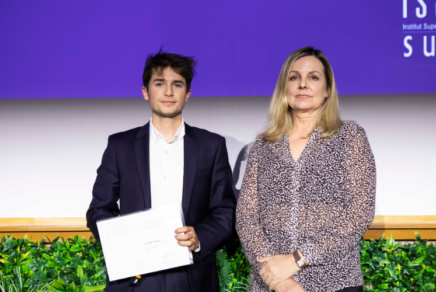
News
Meeting with Joseph Risson, engineering student and winner of a scholarship for his Viraj H2 projectOn Friday, 8 December, the Swiss Jean-Jacques and Felicia Lopez-Loreta Foundation for Academic Excellence awarded a prize to Viraj H2, a project developed at ISAE-SUPAERO. Joseph Risson, a third-year engineering student, is studying a hybridisation between a hydrogen turboprop engine and a fuel cell in order to accelerate the decarbonisation of air transport. The €1 million grant will enable Joseph and his partner Paul de Goÿs to validate the technology behind their innovation.
Entrepreneurship
InnovSpace
Startup
Testimonials
Testimony from Sami Boukezzoula, an 'Ingénieur généraliste' StudentIngénieur généraliste (MSc)
Testimonial
Videos
Sophie Adenot is flying out on February 11th for a eight-month mission with Crew-12 on the ISS!Today, the entire ISAE-SUPAERO community is coming together: students, staff, faculty, and alumni are showing their support for Sophie Adenot, European Space Agency (ESA) astronaut and ISAE-SUPAERO alumna, as she embarks on a eight-month mission to the ISS. Sophie is the second French woman, 30 years after Claudie Haigneré, to fly on a long-duration mission. On the ISS, she will conduct around 200 scientific experiments, including 10 French experiments, covering fields such as medicine and materials physics. Have a good flight, Sophie. We will be following you throughout this amazing journey!
Alumni
Exploration
Space
Videos
Pierre-Eric Pommellet, CEO of Naval Group: European leader in naval defense and partner of ISAE-SUPAERODiscover the interview with Pierre-Eric Pommellet, Chairman and CEO of Naval Group and ISAE-SUPAERO alumnus, who talks about cooperation between schools and companies.
Career
Company
Partner
Videos
Testimony of Pauline Heuze, Recruitment Assistant at Liebherr Aerospace and TransportationLiebherr develops, manufactures and maintains innovative air systems for the aerospace industry. Sustainable aviation has become a major challenge for the aeronautics industry, requiring close collaboration between companies and ISAE-SUPAERO, particularly through its training courses. At the Village Entreprises, ISAE-SUPAERO was able to talk to our students and present various internship programs, collaborative projects and career opportunities. To develop its innovation policy, Liebherr needs young engineers ready to take up the challenges of sustainable aviation, but also skilled in the fields of sustainable technologies, alternative propulsion systems and resource management.
Career
Company
Partner
Testimonials
Testimony from Lisa Wong, 2024 graduate of the TAS ASTRO Advanced Master® programme, SEEDS optionAerospace
Alumni
Testimonial
Testimonials
World Alumni Days 2026: Testimonial from Awadh Kapoor, 2017 graduate of the Master’s in Aerospace Engineering programAlumni
International
Testimonial
Testimonials
Testimony from Rémi Caresche, student (class of 2025) of the TAS ASTRO Advanced Master®Aerospace
Alumni
Testimonial
Testimonials
World Alumni Days 2026: Testimonial from Fabien Dubuc, Vice President of R&D at BioconAlumni
Ingénieur généraliste (MSc)
News
Bertrand Joab-Cornu, co-founder of Wingly: "I already had the idea for a flight-sharing platform at ISAE-SUPAERO."A graduate of the ISAE-SUPAERO engineering programme, Bertrand Joab-Cornu co-founded Wingly a year before graduating in 2015. This start-up, which brings aviation into the collaborative economy, quickly became the European leader in flight sharing.
Aeronautics
Alumni
Diversity program
Videos
Sophie Adenot: from ISAE-SUPAERO to spaceMeet Sophie Adenot, astronaut at the European Space Agency (ESA) and ISAE-SUPAERO alumna, who answers three questions! 🚀
Alumni
Diversity program
Space
Testimonials
Testimony from Valentin Balayn, 2015 graduate of the TAS AERO FTE Advanced Master®Advanced Master
Aeronautics
Alumni
Testimonials
« World alumni Days »: 3 questions to Marie Lambert, alumni 2024 of the Advanced Master APMOn the occasion of World Alumni Day, meet Marie Lambert, alumni 2024 of the Advanced Master APM
Advanced Master
Alumni
Testimonial
Testimonials
Testimony from Lucie Goethals, 'Ingénieur généraliste' StudentIngénieur généraliste (MSc)
Testimonial
Testimonials
"I gained a valuable overview of master's programmes and on how the industry works in France, and I'm leaving with a much greater interest in studying in Europe in the future."Aerospace summer program
Testimonial

Testimonials
Testimony from Yannick Lepage, AMS E&M Advanced Master® Class of 2025Advanced Master
Testimonial
Testimonials
Testimony from Axel Coulon, student (class of 2024) of the TAS ASTRO Advanced Master®Advanced Master
Space
Testimonial
Testimonials
"We designed a satellite and performed heat transfer simulations and calculations on it, which was both challenging and rewarding. “Aerospace summer program
Testimonial
Testimonials
Testimony from Yves Gourinat, elected full member of the Air and Space AcademyDMSM
Structures and materials
Teacher researcher
News
France Alumni Day: 3 questions for Marion Burnichon, ISAE-SUPAERO 2021 alumna of the Master's in Aerospace Engineering programmeMeet Marion Burnichon, 2021 alumna, now a Young Graduate Trainee in Gateway Operations.
Alumni
Master in Aerospace Engineering
Portrait
Testimonials
Testimony of Jonathan Andrieu, student (class of 2025) of the AIBT Advanced Master®Advanced Master
Testimonial