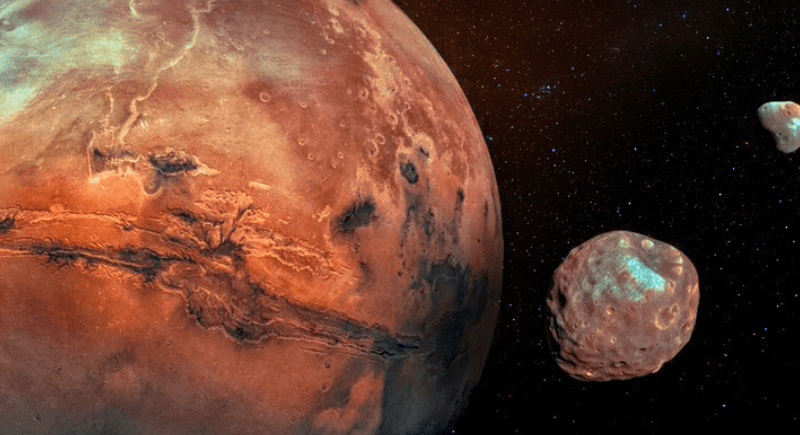
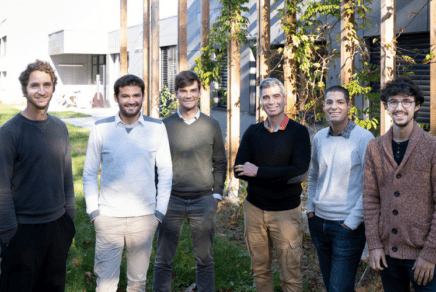
The “Space Systems for Planetology and Applications” (SSPA) scientific group focuses on one main area of research: The development of missions and associated technologies for geophysical exploration of the solar system.
Related Content
Events
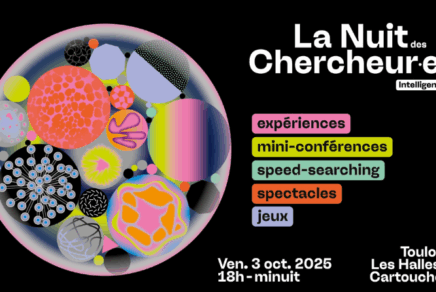
2025 edition of "La nuit des chercheurs"Meet ISAE-SUPAERO researchers at the Nuit des Chercheurs de Toulouse, on October 3 at 6pm at the Halles de la Cartoucherie, on the theme of “Intelligence(s)”!
Aerospace
Researcher
Science
Videos
Visiting professors at ISAE-SUPAERO: DAN SCHEERESISAE-SUPAERO est un établissement d'enseignement supérieur axé sur la recherche et l'innovation, qui s'engage à concilier excellence scientifique, visibilité académique et proximité avec les objectifs industriels. Ses activités de recherche ont contribué à faire de l'école un leader international non seulement en termes de programme d'ingénierie aérospatiale, mais aussi de programmes de troisième cycle, notamment ses masters (MSc) et ses programmes de doctorat en sciences de l'ingénierie. C'est pourquoi de nombreux acteurs internationaux clés de la recherche rendent visite à leurs homologues de l'ISAE-SUPAERO. Nous avons rencontré Dan Sheeres, professeur émérite de l'université du Colorado et titulaire de la chaire A. Richard Seebass au département des sciences de l'ingénierie aérospatiale Ann et H.J. Smead de l'université du Colorado à Boulder. Les recherches de Dan Scheeres couvrent des sujets allant de l'astrodynamique et de la navigation spatiale à la science planétaire et à la mécanique céleste, et il a publié de nombreux articles dans ces domaines. L'astéroïde 8887 a été baptisé « Scheeres » en reconnaissance de ses contributions à la compréhension scientifique de l'environnement dynamique des astéroïdes. Pendant son séjour à l'ISAE-SUPAERO, le professeur Scheeres et l'équipe des systèmes spatiaux pour les applications planétaires ont collaboré à l'analyse des données DART et au développement de concepts visant à étudier la structure interne des astéroïdes lors de futures missions spatiales. De plus, Dan Scheeres et l'ISAE-SUPAERO ont publié conjointement plusieurs articles dans « Nature » sur les astéroïdes et la mission DART.
DEOS
Researcher
Space
News
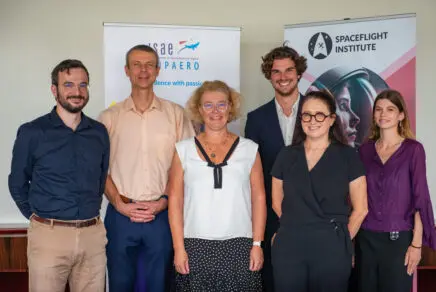
ISAE-SUPAERO and Spaceflight Institute join forces to train tomorrow's manned flight expertsOn July 29, 2025, ISAE-SUPAERO and the Spaceflight Institute signed a partnership agreement for the joint creation of a “Certificate of Advanced Studies in Human Spaceflight”. This new semester-long program aims to train a new generation of space professionals, combining academic excellence with operational expertise.
Certificates of advanced studies
Education
Space
Videos
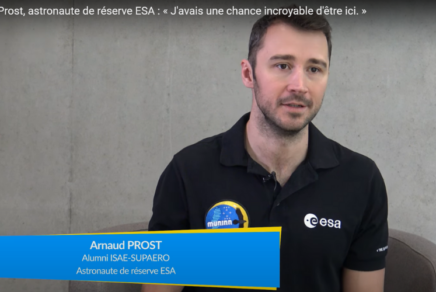
Arnaud Prost, ESA reserve astronaut and ISAE-SUPAERO alumnus: “I was incredibly lucky to be here”Fighter pilot and reserve astronaut with the European Space Agency (ESA), Arnaud Prost returned to his former school on Thursday March 28 to meet 200 secondary school students as part of the ISAE SUPAERO OSE program. It was an opportunity for him to recall the “great memories” of his student experience at ISAE-SUPAERO, his long-standing commitment to the student social outreach program and the “Aquanauts” scheme he set up with OSE l'ISAE-SUPAERO. And in passing, he offers a few words of advice to young people who might dream of following in his footsteps: “Don't let yourself be convinced that one of these paths isn't for you!” A 2017 graduate of ISAE-SUPAERO, Arnaud Prost is among those selected for the ESA Astronaut Class of 2022, alongside Sophie Adenot and Anthea Comellini, both also alumni of the school. They join other illustrious ESA astronauts who have already studied at the school: Thomas Pesquet, Luca Parmitano and Samantha Cristoforetti. Since 1970, ISAE-SUPAERO has contributed to the progress of the space age through its training, research and innovation activities. As the only organization in France to offer degree courses (engineering, master's, specialized master's, doctorate) covering all 22 space-related themes identified by CNES, the Institute offers a royal road to space careers. For Arnaud Prost's full profile: https://www.esa.int/Science_Exploration/Human_and_Robotic_Exploration/Astronauts/A
Alumni
Diversity program
Space
Pages
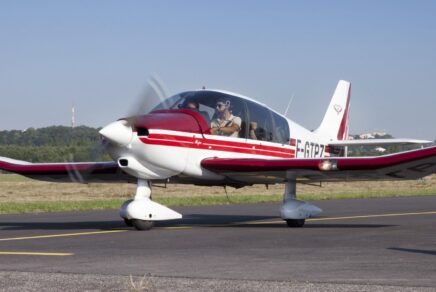
Lasbordes Air Operations Center (COAL)The Department of Design and Operation of Aeronautical and Space Vehicles (DCAS) is part of the Lasbordes Air Operations Center (COAL), located on an airfield a few kilometers from the ISAE-SUPAERO campus. As part of its aeronautical training and research activities, COAL operates a fleet of 8 light aircraft.
DCAS
Doctoral student
PhD
Events
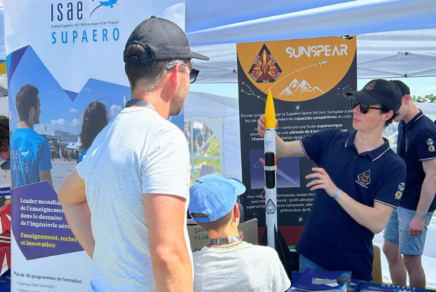
ISAE-SUPAERO will be at the Paris Air Show at Le Bourget from June 16 to 22, 2025ISAE-SUPAERO will be present at the 55ᵉ Salon International de l'Aéronautique et de l'Espace at Le Bourget from June 16 to 22, 2025!
Aeronautics
Aerospace
Event
Pages
Our Short ModulesDerived from the Institute's Advanced Master programmes, our short modules are aimed at professionals wishing to develop specific skills in Aeronautics, Space, Project Management, Systems Engineering, or Digital Systems.
Advanced Master
Aeronautics
Aerospace

Events
The "Assises du NewSpace" returns on July 7 & 8, 2026!Event
Space
News
Congratulations to our eight ISAE-SUPAERO faculty members who are among the top 2% of scientists!Stanford University recently published an updated list of the world's most influential scientists, which includes eight ISAE-Supaero faculty members.
Ranking
Teacher researcher

Videos
The Dart mission has hit its target: explanations from Dr Naomi Murdoch, planetary scientist at ISAE-SUPAEROResearchers from ISAE-SUPAERO are participating in this first planetary defence mission. Dr. Naomi Murdoch, a researcher at ISAE-SUPAERO and scientific member of the #DART and #HERA missions, comments on the objectives of DART and those of the European HERA mission, which will arrive in the area in 2026 to characterise the crater left by DART and study the internal structure of the asteroid #Dimorphos!
DEOS
Researcher
Space
Videos
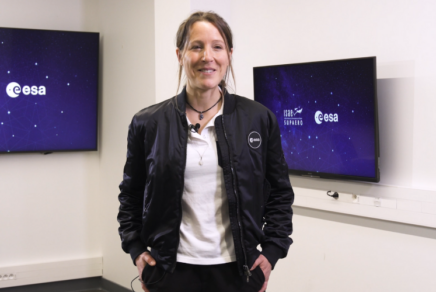
Sophie Adenot: from ISAE-SUPAERO to spaceMeet Sophie Adenot, astronaut at the European Space Agency (ESA) and ISAE-SUPAERO alumna, who answers three questions! 🚀
Alumni
Diversity program
Space

News
Luca Parmitano, Artemis III astronaut: an ISAE-SUPAERO graduate at the heart of the next step in the return to the MoonOn June 9, 2026, NASA announced the crew for Artemis III, a key mission in the U.S. lunar program scheduled for 2027.
Advanced Master
Alumni
Space
News
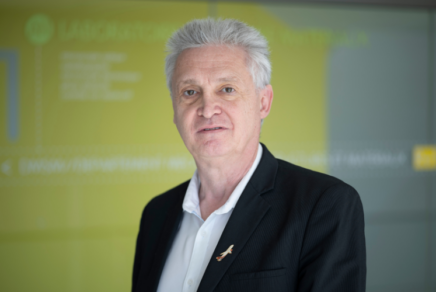
Meeting with Yves Gourinat, elected as a full member of the Air and Space AcademyYves Gourinat is a professor of structural physics in the Structural Mechanics and Materials Department (DMSM) at ISAE-SUPAERO. Already a corresponding member since 2019, he has just been elected a full member of the French Academy of Aeronautics and Space.
Aeronautics
Award
Teacher researcher
Videos
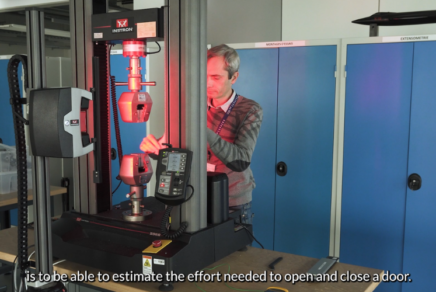
Feedback: a Latecoere engineer in the ISAE-SUPAERO laboratoriesTo strengthen the links between industry and research, more than 10 industrial R&D engineers have been made available to ISAE-SUPAERO as part of the France Relance plan! Cyril Geneste, research engineer at Latecoere, is one of them. Together with Miguel Charlotte, Associate Professor at the Institute, he looks back on this fruitful two-year collaboration. Their work, carried out in the ISAE-SUPAERO laboratories, focused on the behavior of aircraft door seals, which ensure cabin airtightness. Thanks to the Institute's cutting-edge equipment and academic expertise, Cyril Geneste was able in particular to carry out numerical modeling of seals in order to test their behavior. Students in their 3rdᵉ year of engineering studies were also involved in this work.
Aeronautics
Researcher
Events
"Les Entretiens de Toulouse - Training through debate”: April 9 & 10, 2025 on the ISAE-SUPAERO campus"Les Entretiens de Toulouse" has become a must-attend event for the aerospace industry. A forum for the exchange and transmission of skills, this training through debate provides an opening onto subjects with high industrial stakes. The 2025 edition of the Entretiens de Toulouse will take place on April 9 & 10, 2025, in person, at ISAE-SUPAERO!
Aeronautics
Artificial intelligence
Defence
News
Happy New Year, Martians!Today marks the start of Year 39 on Mars: a Martian year lasts 687 Earth days, which is equivalent to nearly two years on our blue planet. Here’s a look back at the projects, missions, and discoveries that bring ISAE-SUPAERO closer to the Red Planet every day.
Research
Space
Pages
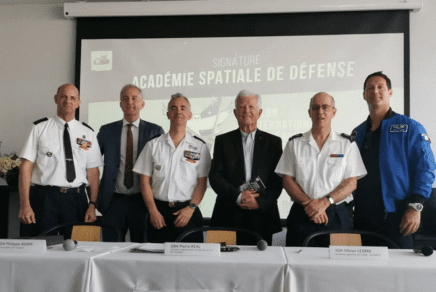
French Space Defence AcademyIn order to drive and implement the ambitions set out in the Space Defence Strategy, the creation of a space defence expertise sector offering attractive programmes is a major challenge. In this regard, the French Space Defence Academy (ASD) offers programmes available within the Armed Forces Ministry and leverages synergies between them to provide a personalised approach to space programmes.
Defence
Education
Partner
News
OPEN SCIENCE ISAE-SUPAERO: ISAE-SUPAERO science in the open air!ISAE-SUPAERO continues to contribute to the open science movement and has created a new open archive platform called OPEN SCIENCE ISAE-SUPAERO. It provides everyone with access to our theses, publications, scientific instruments and technological platforms.
Science
Scientific publication
Thesis
News
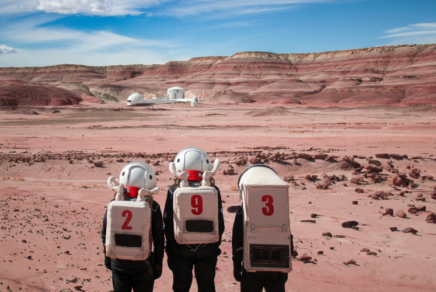
Mars mission simulation: a scientific experiment, a human adventureLike nine other ISAE-SUPAERO crews before them, seven students took part in a simulation of life on Mars in the Utah desert in the United States this winter.
Space
Student club
Videos
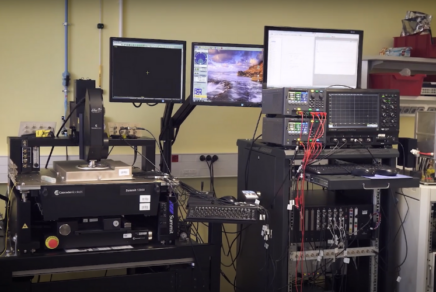
Discover... CMOS image sensors at ISAE-SUPAEROISAE-SUPAERO - as a center for training through research, research training and innovation - has a wide range of research equipment used in its 6 research departments. Today, we present CMOS image sensors! CMOS image sensors are playing an increasingly important role in our everyday lives. For several years now, our team at ISAE-SUPAERO has been developing CMOS image sensors with a number of players in the field, and innovating by proposing new architectures and conditions of use requiring studies of both elementary components and more complex structures. Measurements are carried out on transistors and diodes with the help of an under-tip tester and a parametric analyzer enabling very low current measurements (10 aA). Similarly, simple structures containing innovative pixels can be operated with the tester using spike cards coupled to a word generator specially designed for image sensors. All these studies not only contribute to our understanding of the physics of photodetection, but also provide models for our simulators. They are also used to monitor manufacturing processes during the various production phases.
DEOS
News
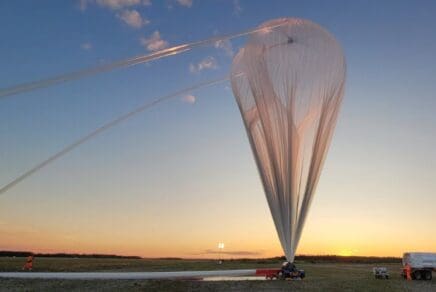
Unlocking the secrets of earthquakes with stratospheric balloonsA team of DEOS researchers has achieved a significant milestone in the use of infrasound data captured by stratospheric balloons to understand seismic signals. This breakthrough, published in Earth Planets Space*, opens up new perspectives for the study of earthquakes, both on Earth and on other planets.
DEOS
Researcher
Science
News
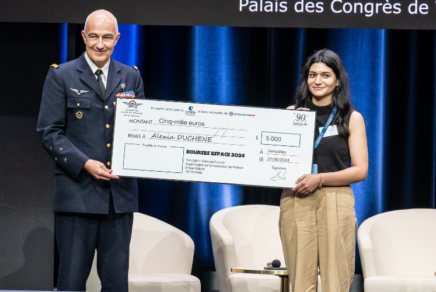
SILOE, an experimental drop tower project selected by ESA and an ESPACE grant for Alexia DuchêneThe SILOE experimental drop tower project aims to study the cohesion of planetary surfaces. This student project is supported by ESA as part of its European ‘Academy Experiments’ program. Alexia Duchêne, SILOE project leader, has been awarded a scholarship of excellence from the Fondation des Ailes de France.
DEOS
Space
News
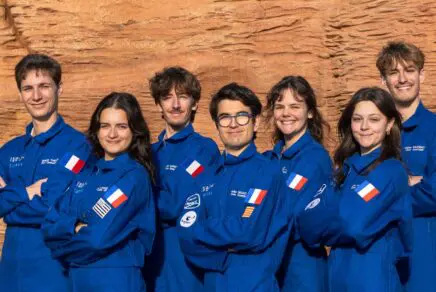
Space Explorers: In a Desert, Six Students Simulate Life on MarsLast spring, for four weeks, six students and one alumnus from ISAE-SUPAERO lived completely self-sufficiently at the Mars Desert Research Station (MDRS). This base, located in the Utah Desert in the United States, is specifically designed to simulate living conditions on Mars.
Space
Student club
Videos
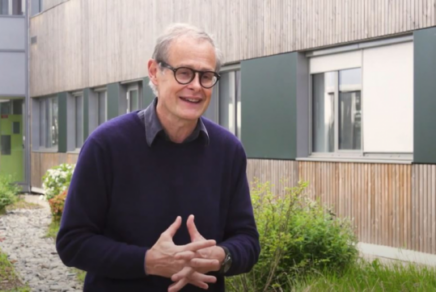
Sylvestre Maurice, astrophysicist and ISAE-SUPAERO alumnusAwarded a prize by the Académie des Sciences in 2020, Sylvestre Maurice #astrophysicist at the Institut de Recherche en Astrophysique et Planétologie (IRAP) in Toulouse witnessed the landing of the #Perseverance rover on Mars on February 18, 2021. A historic moment for this enthusiast, who is also the scientific manager of the onboard SuperCam instrument. A 1990 graduate of ISAE-SUPAERO, Sylvestre Maurice tells us about his career.
Alumni
Researcher
Space
Pages
Support for the Development of the ISAE Group - GIFASGIFAS (Groupement des Industries Françaises Aéronautiques et Spatiales - French Aerospace Industries Group) supports the development of high-level academic and professional education in aerospace systems at the 6 Grandes Écoles that make up the ISAE Group (ISAE-ENSMA, ISAE-SUPMECA, ESTACA, Ecole de l'Air et de l'Espace, ENAC, ISAE-SUPAERO).
Aeronautics
Aerospace
Chair

Videos
3 questions to Marie Delaroche, 3ᵉ year student and MDRS 293 crew commanderSince February 18, seven ISAE-SUPAERO engineering students have been living a simulated Martian life and carrying out experiments in collaboration with CNES and several research laboratories at The Mars Society's Mars Desert Research Station (MDRS) in UTAH (USA)! For the second time, the mission is led by a woman: Marie Delaroche, a passionate #spaceexplorer, who was already part of crew 275 departing in 2023. We asked her 3 questions to find out more about the challenges of this mission and her feelings as #flightcommander! Alongside her, three young women and three young men in their 2ᵉ year of #engineering studies have taken on the roles of astronomer, scientist, botanist, journalist, health worker and onboard engineer. They are all members of the Mars Club ISAE-SUPAERO, a student association for the popularization of science focused on the Red Planet and the missions dedicated to its exploration and study. They are currently experimenting with AI4U, the artificial intelligence that assists astronauts in their daily tasks (environmental measurements, voice recognition, emergency exercises). They are also conducting a science popularization experiment in collaboration with secondary school pupils. Inspired by the film The Martian, in which an astronaut grows potatoes on the Red Planet, the aim of this experiment is to compare plant growth in Martian soil with growth in terrestrial soil! To follow their adventure, click here: https://mars.bde-supaero.fr/
Space
Student club
Student life
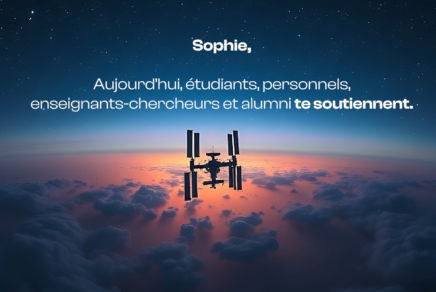
Videos
Sophie Adenot is flying out on February 11th for a eight-month mission with Crew-12 on the ISS!Today, the entire ISAE-SUPAERO community is coming together: students, staff, faculty, and alumni are showing their support for Sophie Adenot, European Space Agency (ESA) astronaut and ISAE-SUPAERO alumna, as she embarks on a eight-month mission to the ISS. Sophie is the second French woman, 30 years after Claudie Haigneré, to fly on a long-duration mission. On the ISS, she will conduct around 200 scientific experiments, including 10 French experiments, covering fields such as medicine and materials physics. Have a good flight, Sophie. We will be following you throughout this amazing journey!
Alumni
Exploration
Space

News
Landing on Mars: a unique experience for seven studentsSeven ISAE-SUPAERO students have been selected to join the Mars Desert Research Station (MDRS) in the United States. This replica of a Martian base will host the crew for four weeks, during which they will live in conditions similar to those found on Mars. The objective is to conduct experiments in situ in collaboration with research partners.
Space
Student club
Student life
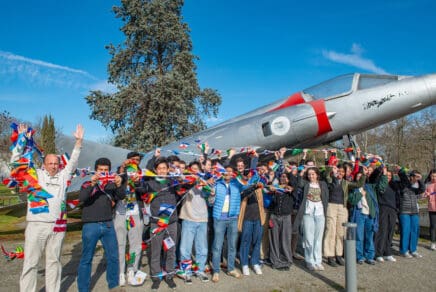
Pages
Semester Research ProjectsTake your studies to the next level by participating in a semester-long research project at ISAE-SUPAERO: immerse yourself in cutting-edge laboratories alongside international experts and contribute to advances in aeronautics and space technology.
Aeronautics
Aerospace
Aerospace summer program
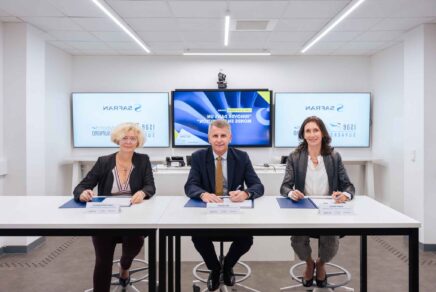
Pages
Innovating in a World of Transition - SafranThe challenges facing the aerospace industry (energy transition, New Space, digitalization) are driving a growing need for professionals with the ability to innovate. Against this backdrop, Safran and ISAE-SUPAERO are creating the Innovating in a World in Transition Chair.
Aeronautics
Aerospace
Chair

News
« Académie Spatiale de Défense »: A Day of Strategic Reflection on the Future of SpaceOn May 19, 2026, ISAE-SUPAERO and its partners at the Defense Space Academy hosted and organized a day of discussions focused on France’s National Space Strategy. Bringing together government decision-makers, industry representatives, researchers, and military officials, this event provided an opportunity to pool expertise and foster collective reflection on the major challenges of sovereignty, training, and strategic autonomy in the space sector.
Defence
Event
Space

News
Capturing the seismic activity of an asteroid: our Apophis rendezvousDEOS
Research
Space

Testimonials
Testimonial of Baptiste Sigal, Advanced Master® TAS ASTRO student (class) 2025Advanced Master
Aerospace
Space

Testimonials
Testimony from Axel Coulon, student (class of 2024) of the TAS ASTRO Advanced Master®Advanced Master
Space
Testimonial
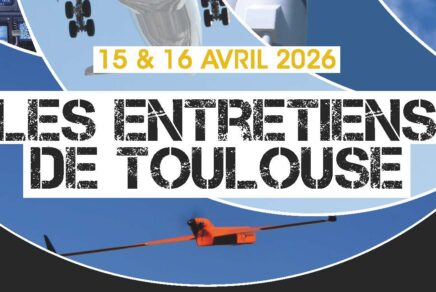
Events
2026 edition of "Les Entretiens de Toulouse"Aeronautics
Aerospace
Event
Pages
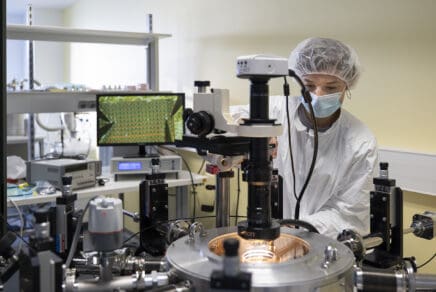
Integrated Image Sensors (CIMI) Scientific GroupThe “Integrated Image Sensors” (CIMI) scientific group, develops and characterizes active-pixel image sensors (CMOS Image Sensors (CIS)) on silicon for visible and infrared radiation.
DEOS
Doctoral student
PhD
Videos
Elena Lopez Contreras, a doctoral student in neuroergonomics at ISAE-SUPAERO, has won the Amelia Earhart AwardPrize
Research
Thesis
News
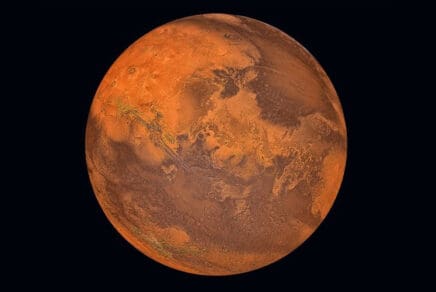
Listening to the Martian past: ISAE-SUPAERO at the heart of the ExoMars missionESA's ExoMars Rosalind Franklin mission to explore Mars will carry a unique instrument for recording sound and atmospheric data from the planet. The Institute has been selected by ESA and CNES for this major scientific collaboration.
DEOS
Researcher
Science
News
3 questions to... Loïc Jecker, S-Cube member from 2011 to 2013Meet Loïc Jecker, member of S-Cube - SUPAERO Space Section - ISAE-SUPAERO's experimental rocket club, from 2011 to 2013.
Space
Student club
Student life
Events
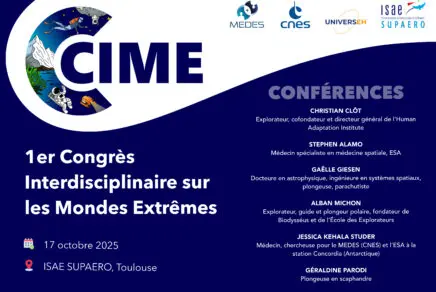
Interdisciplinary Congress on Extreme Worlds - CIMEDo you work in or on extreme environments? Come and take part in the first edition of the Interdisciplinary Congress on Extreme Worlds (CIME)!
Congress
Research
Science

News
The COMETES project - Skills and Careers in Space - is launching its website, a platform dedicated to skills and careers in the space sector.The space sector is undergoing profound change driven by New Space, accelerating technological innovation, and environmental challenges. These transformations are leading to rapid changes in the careers and skills required within the industry. In this context, COMETES is launching a platform dedicated to space-related skills, careers, and training.
Education
Space
Videos
Sylvestre Maurice presents the SUPERCAM / Martian Exploration educational kitThe ‘SUPERCAM - Martian Exploration’ educational kit project was initiated by five partners: ISAE-SUPAERO, the Toulouse Academy, CNRS, CNES and Cité de l'espace. Under the guidance and supervision of astrophysicist Sylvestre Maurice, first-year students at ISAE-SUPAERO developed this educational tool to raise awareness of space exploration in classrooms, from sixth form to final year. This kit is available to middle and high school teachers and can be adapted to offer educational lessons related to this theme.
Diversity program
Equal opportunities
Researcher
Videos
Training courses: space studiesFind out more about our courses and #information in the field of space! The space dimension is strongly developed within our various training courses, whether in specific streams or dedicated programs. French and international students alike are showing a keen interest in our educational programs in Earth observation and the sciences of the Universe, as well as in the design and operation of space systems. Space research and industry employ many ISAE-SUPAERO engineers. Explore the world of space!
Programme
Space
Pages
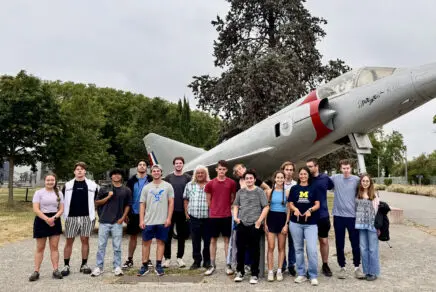
Aerospace Summer ProgrammeEnjoy a unique experience at the heart of aeronautics and space technology with intensive courses, exclusive industrial visits, and an international immersion in Paris, Poitiers and Toulouse.
Aeronautics
Aerospace
Aerospace summer program
News
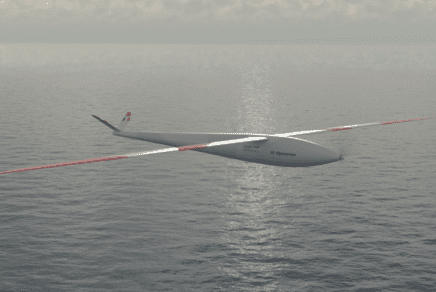
The project for an unmanned, zero-emission aircraft to cross the South AtlanticInnovation
Researcher
Sustainability
Pages
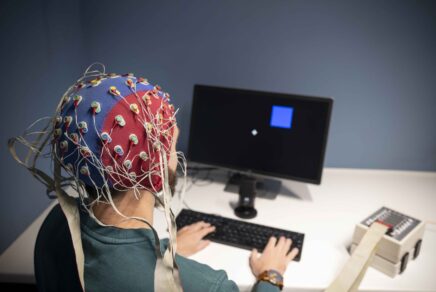
Our doctoral trainingDoctoral program
Doctoral student
PhD
Videos
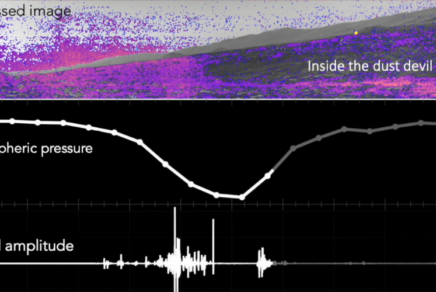
The sound of a Martian dust devil captured by the SuperCam microphone on PerseveranceThis video and audio show the results obtained by NASA's Perseverance Mars rover and its SuperCam microphone when recording the sounds of a Martian dust devil passing overhead on 27 September 2021, the 215th Martian day or sol of the mission. The dust devil was 25 metres wide and at least 118 metres high, moving at a speed of approximately 19 km/h. This is the first time such a recording has been made, as capturing a dust devil requires a bit of luck. Indeed, it flew over the rover at a time when all of Perseverance's sensors measuring wind, pressure, temperature and dust, plus the NavigationXXX (Navcam) camera, were running. This allowed scientists to combine sounds, images and atmospheric data. The unique combination of this data, along with atmospheric modelling, enabled researchers to estimate the dimensions of the dust devil. Scientists cannot accurately predict when these vortices will occur. Rovers such as Perseverance and Curiosity monitor them regularly. When scientists notice that they are more frequent at a certain time of day or approaching from a certain direction, they focus their monitoring to try to capture a dust devil with all the sensors at their disposal. > To better understand the video, it shows three rows of images: - the row
DEOS
Researcher
Space

Pages
Learning, Decision, Optimisation (ADO) Scientific GroupDISC
Doctoral student
PhD

Events
AASTRA Certificate: presentation webinar on March 25 from 6:00 p.m. to 7:00 p.m.Aeronautics
Aerospace
Air transport
Pages
Our EcosystemOur Institute operates at the heart of a leading academic, scientific, and technological ecosystem. Driven by the strength of the ISAE SUPAERO ENSICA Alumni Association network, supported by the ISAE-SUPAERO Foundation, and enriched by EUROSAE's expertise in executive education, our actions are part of a collective dynamic within the University of Toulouse and the ISAE Group. Committed to the major challenges of tomorrow, we are developing major initiatives within the Institute for Sustainable Aviation for sustainable aviation and the Defense Space Academy to meet the strategic challenges of space.
Aerospace
Partner
Partnership

News
An ISAE-SUPAERO PhD student has been awarded the ONERA 2026 PhD Student PrizeLucie Schwoebel, a third-year doctoral student at ISAE-SUPAERO working on a thesis co-funded by ONERA, has been awarded the 2026 Doctoral Student Prize in the field of Fluid Mechanics and Energy. This award recognizes the excellence of her research on the acoustics of sound-absorbing materials used in aeronautics.
PhD
Prize
Research
Testimonials
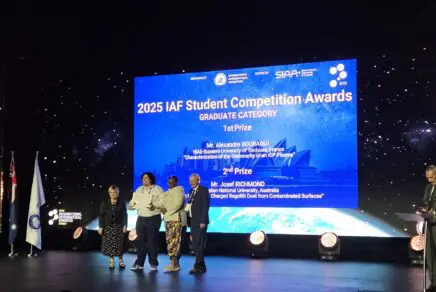
Testimony from Alexandre Bouraoui, engineering student by apprenticeship and IAC 2025 Award WinnerFinal-year engineering apprentice, specializing in Industrialisation and Methods for Aeronautics and Space, Alexandre Bouraoui was recently honored at the 76th International Astronautical Congress (IAC 2025) in Sydney, where he won the prestigious Hermann Oberth Gold Medal in the Graduate category. We spoke with him about his award and his studies at ISAE-SUPAERO.
Aeronautics
Aerospace
Congress
Pages
The “Certificate of Advanced Studies in Human Spaceflight” offered by the Spaceflight Institute in collaboration with ISAE-SUPAEROThe Spaceflight Institute is the first institute dedicated to training in human spaceflight. In partnership with ISAE-SUPAERO, it offers an intensive training program that enables participants to gain a comprehensive understanding of the challenges of human spaceflight and to position themselves within a rapidly expanding ecosystem, marked by future lunar and Martian missions as well as the rapid emergence of commercial space stations and private initiatives in low Earth orbit.
Education
Innovation
Partner

Pages
Theory, Modelling, and Systems Engineering (ThéMIS) Scientific GroupThe “Theory, Modeling and Systems Engineering” (ThéMIS) scientific group is dedicated to the study and development of advanced methods for the design, modeling and validation of complex systems.
DISC
Doctoral student
PhD
Videos
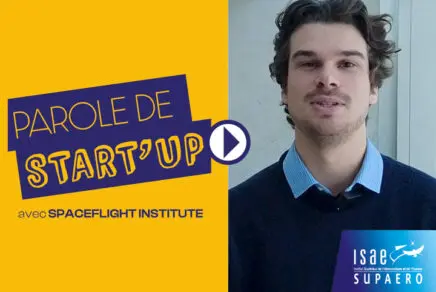
Start-up insights: interview with Ugo Bonnet from the Space Flight InstituteIn recent years, ISAE-SUPAERO has developed a range of services and comprehensive support for its project leaders (students, doctoral students, teacher-researchers, and alumni), earning it the title of incubator. It is in line with this support philosophy that the Institute currently hosts numerous startups that were created within its walls. Today we welcome Ugo Bonnet, CEO of the Space Flight Institute, a company that offers innovative training (in partnership with ISAE-SUPAERO) to future professionals in human spaceflight, whether on Earth or in orbit. Ugo Bonnet discusses the creation of the organization, its major successes, and its plans for the future.
Alumni
Space
Startup
Pages
Mechanics of Structures and Materials Department (DMSM)The Mechanics of Structures and Materials Department is responsible for organizing and supervising all teaching activities in deformable solid mechanics for ISAE-SUPAERO training courses, in synergy with upstream and applied research activities on aeronautical materials and structures. This strong interaction between teaching and research is the foundation of our department's organization.
DMSM
PhD
Researcher
Pages
Our Semester & Short ProgrammesDiscover ISAE-SUPAERO's academic excellence through our semester and short programmes, open to international students.
Aeronautics
Aerospace
Aerospace summer program
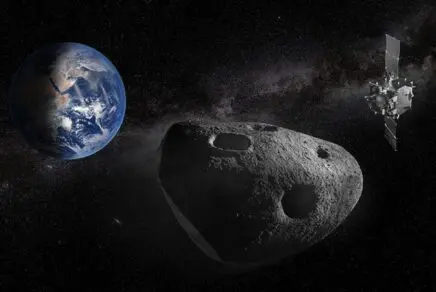
News
RAMSES: ISAE-SUPAERO at the heart of a historic planetary defense missionLe sismomètre SIA développé par l'ISAE-SUPAERO est une première mondiale pour explorer l'astéroïde Apophis
DEOS
Research
Space
Testimonials
Testimony from Yves Gourinat, elected full member of the Air and Space AcademyDMSM
Structures and materials
Teacher researcher

Pages
Languages, Arts, Cultures, and Societies Department (LACS)At the Languages, Arts, Cultures, and Societies Department (LACS), we teach languages, interculturality, geopolitics, general culture, economics, sports, etc. Multidimensional skills that bring out knowledge, interpersonal skills, know-how and the ability to act.
LACS
PhD
Researcher
News
Best Scientific Paper Award from the American Institute of Aeronautics and Astronautics 2024 Multidisciplinary Design OptimizationSix researchers from ISAE-SUPAERO, EPFL and the Hong Kong University of Science and Technology have been awarded the AIAA Best Scientific Paper Award for their paper “DeepGeo: Deep Geometric Mapping for Automated and Effective Parameterization in Aerodynamic Shape Optimization”.
Prize
Researcher
Scientific publication
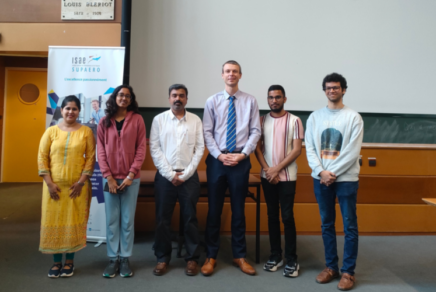
Videos
ISAE-SUPAERO and Indian Institute of Space Science & Technology work on student space exploration projectsISAE-SUPAERO received a visit from Professor Shine S R of the Indian Institute of Space Science and Technology (IIST) on December 7 and 8. ISAE-SUPAERO signed a co #cooperation agreement with the Indian Institute of Space Science and Technology in 2020 and this visit was a perfect opportunity to discuss the deepening of #training and #research collaborations between our two institutions. ISAE-SUPAERO and IIST have already been cooperating for 4 years within the framework of Franco-Indian collaborative academic projects, involving students from ISAE-SUPAERO and IIST on subjects related to space exploration missions and with the participation of experts from CNES, IRAP and the Indian space agency (ISRO)!
Space
Pages
Communication and Information Theory (ComiT) Scientific GroupThe “Communication and Information Theory” (ComiT) scientific group is involved in the disciplines of digital communications, radar, and channel access techniques. Its fields of application include space systems, civil and military aviation, terrestrial cellular networks and the Internet of Things (IoT).
DEOS
Doctoral program
Doctoral student

News
ISAE-SUPAERO announces new partnership with ESA Academy to support future Master in Aerospace Engineering studentsAerospace
Master in Aerospace Engineering
Scholarship
News
ISAE-SUPAERO researchers explore the quantum universeDISC
Researcher
Scientific publication
Videos
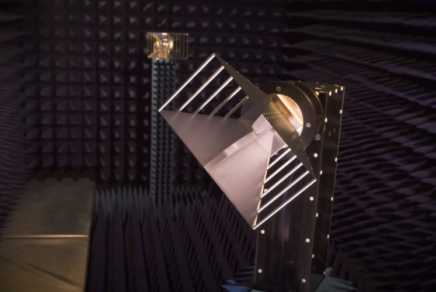
Discover... the ISAE-SUPAERO radio anechoic chamberISAE-SUPAERO – as a centre for training through research, research training and innovation – has a wide range of research equipment used within its six research departments. Today, we present the radio anechoic chamber! Drones and nanosatellites have many applications in the media, industry, agriculture and telecommunications sectors. These two types of platforms share the common constraint of having to carry complex systems in a small space. One of the key elements of on-board communication systems is the antenna, which must also be compact and lightweight. ISAE-SUPAERO, in collaboration with ENAC and ANYWAVES, is currently developing dielectric antennas made by 3D printing ceramics that meet the demanding criteria for integration on drones and nanosatellites. Thanks to the anechoic chamber available at ISAE-SUPAERO, researchers involved in the development of these original antennas can accurately characterise their radiation properties and thus validate the new technological solutions proposed.
DCAS
DEOS

Pages
Connected Systems (SysCo) Scientific GroupThe scientific dynamic of the “Connected Systems” (SysCo) scientific group focuses primarily on network-related issues in aerospace applications, i.e. space communications, embedded networks and certain types of connected systems.
DISC
Doctoral student
PhD
News
DART: ISAE-SUPAERO students publish new scientific findings in Nature CommunicationsNaomi Murdoch, a planetary science researcher at ISAE-SUPAERO, is actively involved in scientific analysis and data interpretation for NASA's DART mission.
DEOS
Space
News
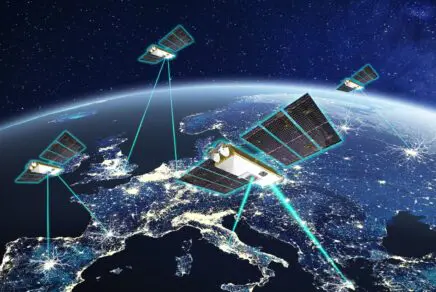
Valentin LELOUP, quantum and optical telecommunications systems engineer: the quantum and space tandemValentin Leloup, R&D engineer at Thales, combines two fields of expertise: quantum physics and space. He holds an engineering degree from ISAE-SUPAERO 2022 and a Master 2 in fundamental physics and applications.
Alumni
News
Research
Videos
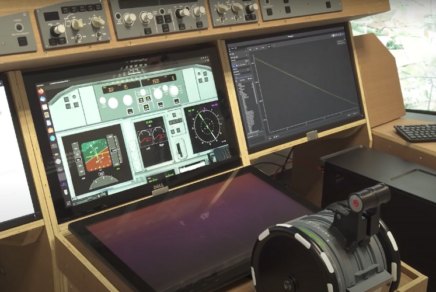
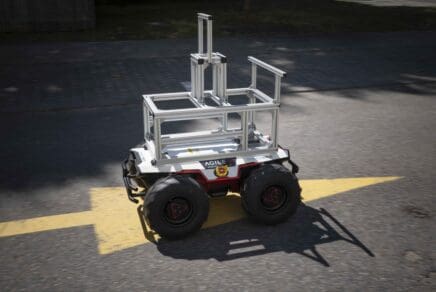
Discover... ISAE-SUPAERO's mobile ground robotsISAE-SUPAERO - as a center for training through research, research training and innovation - has a wide range of research equipment used in its 6 research departments. Today, we'd like to introduce you to mobile ground robots! Whether robots, airplanes, cars or even telephones, all these technologies are equipped with perception systems. Depending on the application, these sources of information make it possible to perceive the environment in which a system is evolving, and also to measure its own characteristics, such as speed or acceleration. This multitude of data must then be used, cross-referenced and interpreted within the navigation system to obtain the vehicle's position, but also, in the case of mapping applications, that of surrounding objects. Within the DEOS NAVIRRES team, researchers are interested in navigation systems and their application in complex environments where sensor information may be degraded, erroneous or unavailable. Mobile acquisition platforms are being developed. These are equipped with cameras, lidars, GNSS (Global Navigation Satellite System) receivers, radars and inertial units, with the aim of obtaining the most efficient navigation system for the application in question. One of the team's research themes is the analysis of the degradation of sensor information, enabling the development of new robust and adaptive algorithms to compensate for environmental constraints. The aim is to make navigation systems more accurate and safer, for critical applications requiring strong reliability constraints, such as autonomous cars or exploration robotics.
DEOS
News
CASTOR Chair: ISAE-SUPAERO and Liebherr-Aerospace Toulouse celebrate 1 year of partnershipAeronautics
Chair
Partnership
News
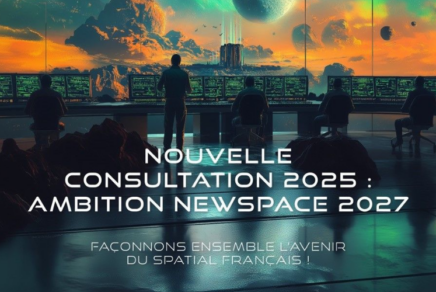
Les Assises du New Space: update of the “Ambition NewSpace 2027” reportIn 2022, the Assises du NewSpace collective - a group of players representing the French space industry - published the report “Ambition NewSpace 2027”. Today, the collective is launching another major national consultation to update this report and shape the future of French space!
Conference
Round table
Space
Videos
Discover the portrait of Anthéa COMELLINI doctoral student at ISAE-SUPAEROAnthéa completed her thesis in the Complex Systems Engineering Department (DISC). Her thesis is entitled “Vision-based autonomous rendezvous with non-cooperative targets”. Anthéa is attached to the AA - Aéronautique Astronautique doctoral school. Her thesis, carried out in collaboration with Thales Alenia Space, is part of the CIFRE* program ISAE-SUPAERO hosts its doctoral students in six teams at ISAE-SUPAERO, ONERA and the Clément Ader Institute, covering a broad spectrum of scientific disciplines related to aeronautics and space: aerodynamics and propulsion, structures and materials, onboard systems, networks and telecommunications, systems control and operation, human factors, electronics, signals. ISAE-SUPAERO offers a rich and diversified doctoral training program, leading to the doctorate, the highest level diploma awarded by the institute, and recognized internationally. *Since 1981, the CIFRE scheme - Conventions Industrielles de Formation par la REcherche (Industrial Conventions for Training through Research) - has enabled companies to benefit from financial assistance to recruit a young doctoral student whose research, supervised by a public research laboratory, will lead to the completion of a thesis in three years. CIFREs are fully funded by the French Ministry of Higher Education and Research, which has entrusted ANRT (Association Nationale de la Recherche et de la Technologie) with their implementation.
PhD
Thesis
Videos
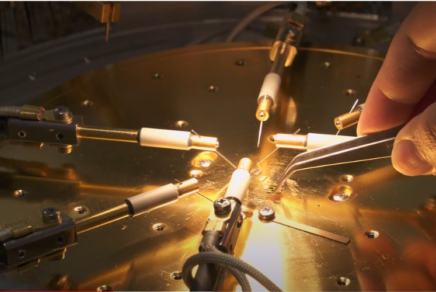
Discover... ISAE-SUPAERO's cryogenic equipment for electrical testingISAE-SUPAERO - as a center for training through research, research training and innovation - has a wide range of research equipment used by its 6 research departments. Today, we present our cryogenic equipment for electrical testing! ISAE-SUPAERO's image sensor research group (CIMI) studies sensors in the visible wavelength range, but also sensors in different spectral ranges such as infrared. Detection of these longer wavelengths requires materials other than silicon for detection, combined with a silicon readout circuit for information processing, all operating at cryogenic temperature. In this context, ISAE-SUPAERO has developed electrical and electro-optical characterization benches for low-temperature microelectronic circuits, in order to extract and model their behavior and performance. These characterization benches can address both very simple circuits, such as transistors, and complex components (complete sensors) with up to 120 inputs/outputs.
DEOS

News
A protocol chosen to secure communications with quantum computersDISC
Researcher
Scientific publication
News
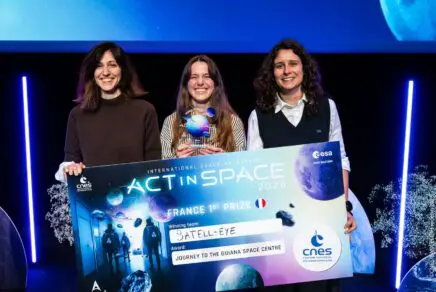
ISAE-SUPAERO and its talented students are once again showcasing Toulouse’s dynamism on the international stageAt ISAE-SUPAERO, talented students continue to distinguish themselves, both in the academic world and in the realm of innovation: a look back at the Amelia Earhart Award won by Elena Lopez-Contreras, a doctoral student at the Neuroergonomics Center, and at the French final of the ActInSpace hackathon, won by her team Solete for their Satell-EYE project.
DCAS
Event
Human factors
Videos
Orbit Your Thesis: ISAE-SUPAERO in zero gravity with the AIM experimentArtery In Microgravity (#AIM), the first student scientific experiment designed and developed in collaboration since 2018 by ISAE-SUPAERO and Polytechnique Turin, was launched on 23 November 2022 by Space X's Dragon cargo ship to the International Space Station (ISS)! Selected by the ESA as part of its ‘Orbit your thesis’ programme, AIM aims to study the behaviour of the heart and its arteries in space, in order to determine whether people with heart problems will one day be able to stay there.
Prize
Space
News
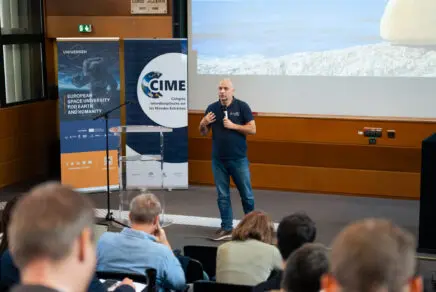
CIME 2025: Where Science Meets Adventure to Push the Limits of ExplorationAt ISAE-SUPAERO, the 2025 Interdisciplinary Congress on Extreme Worlds (CIME) gathers researchers and adventurers determined to push human limits in the planet’s most extreme environments.
Exploration
Innovation
Space
Videos
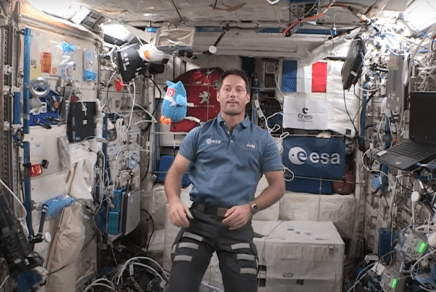
A surprise from elsewhere... from the ISS...?Hello earth? Thomas Pesquet speaking! Thomas Pesquet, French astronaut and famous ISAE-SUPAERO alumnus (class of 2001), is currently in the ISS as part of his new Alpha mission. He sent our students a personalized message from the European laboratory Columbus...
Alumni
Diversity program
Space
News
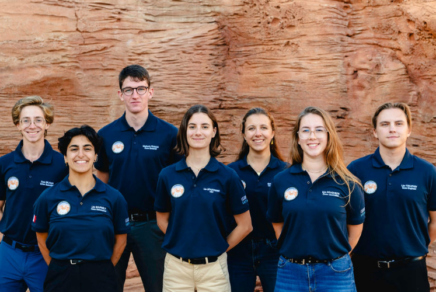
Seven ISAE-SUPAERO students set out to conquer Mars in the Utah desertFor four weeks, seven engineering students will experience a simulation of life on Mars in the Utah desert in the United States. From 18th February to 16th March, they will conduct experiments in collaboration with CNES and several research laboratories at the Mars Desert Research Station (MDRS).
Space
Student club
News
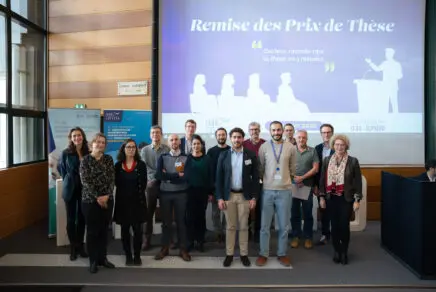
“Doctor, tell me about your thesis in five minutes!” - The ISAE-SUPAERO Foundation Thesis AwardsOn Wednesday, January 7, 2026, the ISAE-SUPAERO Foundation awarded its thesis prizes of the year to five young doctors in recognition of the excellence and impact of their research work.
Doctoral student
ISAE-SUPAERO Foundation
Prize
Videos
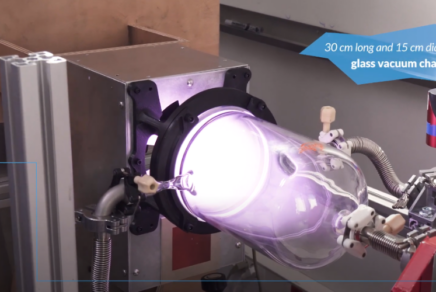
Discover... the ISAE-SUPAERO plasma benchISAE-SUPAERO – as a centre for training through research, research training and innovation – has a wide range of research equipment used within its six research departments. Today, we present white plasma! With the emergence of #NewSpace, more and more CubeSats are being launched. On these small platforms (CubeSats consist of one or more standard 10 cm cubes), several subsystems must coexist. While electric propulsion solutions save space and weight on board, their electromagnetic compatibility with on-board communication systems is still being questioned today. ISAE-SUPAERO, in collaboration with CNES and LAPLACE, is currently developing simulation tools and characterisation methods to provide engineers with tools for designing CubeSats and effective testing methods to address this issue. This experimental bench developed at ISAE-SUPAERO allows the characterisation of a plasma discharge representative of an electric thruster, as well as the measurement of its interactions with microwave signals generated by nearby communication antennas. Finally, the experimental data obtained will be used to calibrate the numerical analysis tools currently being developed by our teams.
DEOS
News
Alexandre Bouraoui Takes Gold at the 2025 International Astronautical CongressFinal-year engineering apprentice, specializing in Industrialisation and Methods for Aeronautics and Space, Alexandre Bouraoui was recently honored at the 76th International Astronautical Congress (IAC 2025) in Sydney, where he won the prestigious Hermann Oberth Gold Medal in the Graduate category. We spoke with him about his award and his studies at ISAE-SUPAERO.
Congress
DEOS
Event
Videos
Discover the portrait of Paolo PANICUCCI doctoral student at ISAE-SUPAEROPaolo has completed his thesis in the Complex Systems Engineering Department (DISC). His thesis is entitled: Navigation based on autonomous vision and shape reconstruction of an unknown asteroid during the approach phase. It is attached to the AA - Aéronautique Astronautique doctoral school. ISAE-SUPAERO hosts its doctoral students in six teams at ISAE-SUPAERO, ONERA and the Clément Ader Institute, covering a broad spectrum of scientific disciplines related to aeronautics and space: aerodynamics and propulsion, structures and materials, embedded systems, networks and telecommunications, systems control and operation, human factors, electronics and signals. ISAE-SUPAERO offers a rich and diversified doctoral training program, leading to the doctorate, the highest level diploma awarded by the institute, and recognized internationally. Link to his thesis: http://www.theses.fr/s253653
PhD
Thesis

News
Space: Thomas Pesquet and Arnaud Prost will embark on two unprecedented space missions in 2027France is stepping up its space ambitions. At the Choose France summit, the President of the Republic announced that French astronauts Thomas Pesquet and Arnaud Prost will take part in two commercial space missions in 2027, as part of an agreement between France and the American company Vast.
Alumni
Exploration
Space
News
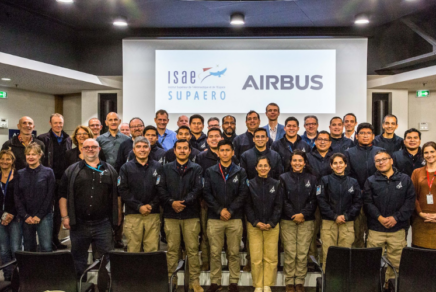
Airbus Defence and Space and ISAE-SUPAERO train members of the Peruvian space agencyTwenty engineers from the Peruvian space agency attended a training course in Toulouse, jointly designed by ISAE-SUPAERO and Airbus Defence and Space, to develop their skills in the field of space systems and space missions.
DCAS
Short internship
Space
Pages
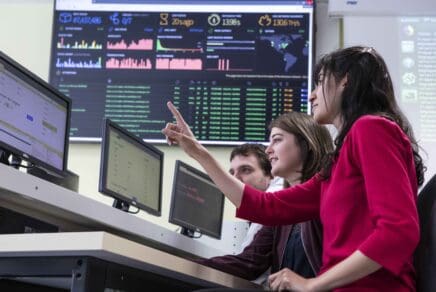
Complex Systems Engineering Department (DISC)Within ISAE-SUPAERO, the Complex Systems Engineering Department (DISC) develops skills in mathematics and computer science for aeronautical and space engineering. In both teaching and research, it focuses on the models, methods, and tools needed to control the behavior and performance of complex systems. This complexity may be induced by the multi-physics or multi-scale nature of the systems studied, their dynamic behavior, or their distributed and communicating structure.
DISC
PhD
Researcher

Pages
Institute for Sustainable AviationCreated in 2021 on the initiative of internationally renowned academic institutions with longstanding academic expertise in aeronautics and air transport, the ISA is an institute dedicated to the challenges of aviation's transition to sustainability.
Aeronautics
Aviation
Decarbonization
Pages
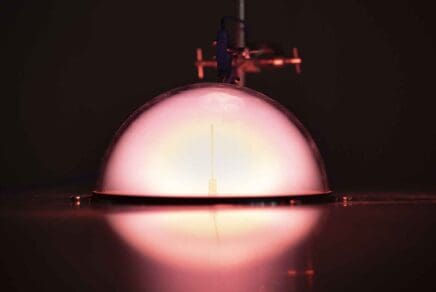
Photonics Antenna Microwave PlasmaA (PAMPA) Scientific GroupThe “Photonics Antenna Microwave PlasmaA” (PAMPA) scientific group is interested in electromagnetism in the fields of microwaves and photonics, as well as wave-plasma interactions.
DEOS
Doctoral student
PhD
News
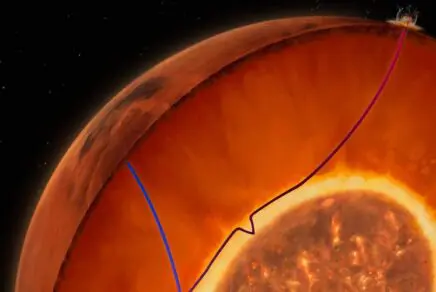
Meteorite impact reveals new insights into MarsIn September 2021, NASA's InSight mission recorded a meteorite impact. Analysis of the data by scientists has revolutionised our understanding of the internal structure of Mars and its evolution. Its mantle is not homogeneous, as previously assumed, but composed of a layer of molten silicates overlying the core. Press release from the IPGP - Institut de Physique du Globe de Paris: ‘The InSight mission reveals a molten layer at the base of the Martian mantle’.
DEOS
Space
News
HACKATHON Data Sciences: AI in action!From February 24 to 26, forty-five students will explore three topical issues involving Artificial Intelligence (AI) during a three-day hackathon. The student teams involved will attempt to meet the challenges posed by three industrial partners on the themes of the environment, industrialization and digitization technology. ISAE-SUPAERO confirms its commitment to training in data science and artificial intelligence through its Decision and Data Sciences (DDS) course.
AI
Artificial intelligence
Hackathon
Events
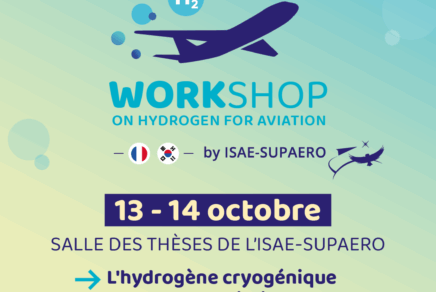
French-Korean workshop: “Cryogenic hydrogen for aviation”.Event
Research
Science
News
ISAE-SUPAERO publishes an aviation and climate reportSustainability
Teacher researcher
News
Campus au féminin: raising girls' awareness of scientific careersCareer
Diversity program
Equal opportunities
News
Focus on... quantum physics in ISAE-SUPAERO training coursesISAE-SUPAERO has been integrating quantum physics into its training and research activities uninterruptedly since 1980, and for the past two decades has been offering courses linked to the second quantum revolution.
DEOS
Ingénieur généraliste (MSc)
Teacher researcher
News
Training new skills for the future of space: COMETES is launched!Company
Job
Space
Videos
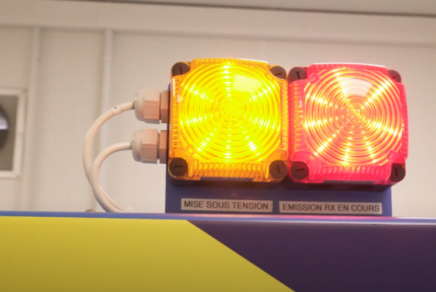
Discover... the ISAE-SUPAERO irradiatorISAE-SUPAERO – as a centre for training through research, research training and innovation – has a wide range of research equipment used within its six research departments. Today, we present the irradiator! As part of its research activities, ISAE-SUPAERO develops electronic components and systems for scientific and space applications. Space is a very aggressive environment, particularly because high-energy particles emitted by the sun or trapped in radiation belts threaten the health of astronauts, the properties of materials and the proper functioning of electronic chips. In order to reproduce the effects of this ionising radiation on electronic technologies in the laboratory, ISAE-SUPAERO has acquired an X-ray irradiation chamber with an energy of up to 320 keV. This video shows a typical use of this equipment: an electronic component to be tested is placed in the irradiation chamber, the X-ray tube is switched on, and the effects on the component's operation (in this case, an image sensor) are observed and measured in real time.
DEOS
News
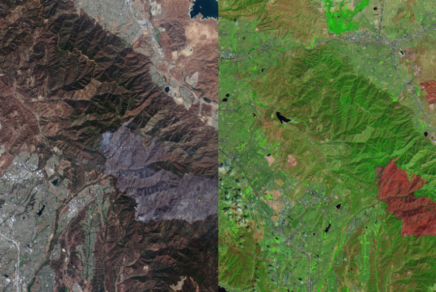
Researchers from ISAE-SUPAERO contributed to the success of the first images from ESA's Sentinel 2c observation satellite.The Sentinel 2c Earth observation satellite, launched on 5 September as part of ESA's Copernicus mission, has delivered its first images. This success is partly due to the image sensor research team (CIMI) at ISAE-SUPAERO, which designed and oversaw the manufacture of the visible image sensors.
DEOS
Space

Pages
DirectoryDirectory
Teacher researcher
Pages
Our Specialised Studies CertificatesOur specialised studies certificates are designed for professionals. They enable you to develop skills and expertise in the fields of digital, aeronautics, space, project management, systems engineering, and artificial intelligence.
Advanced Master
Aeronautics
Aerospace
Testimonials
Testimony from Stéphanie Lizy-Destrez, elected member of the Air and Space AcademyDCAS
Space
Teacher researcher
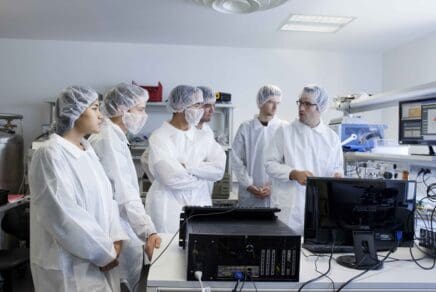
Pages
ResearchAt ISAE-SUPAERO, we conduct cutting-edge research in the service of innovation, technological sovereignty and the ecological transition of the aerospace sector, thereby affirming our role as a leading player in the scientific and industrial community.
DAEP
DCAS
DEOS
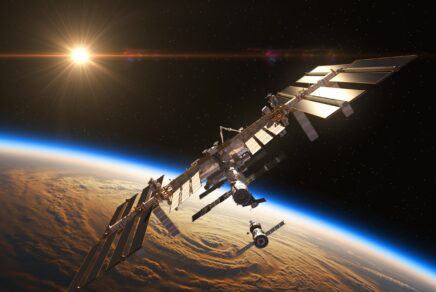
Pages
Advanced Space Concepts Laboratory - Airbus DS & ArianeGroupCreated in 2017 and renewed until 2027, this sponsorship partnership brings together Airbus Defense & Space and Ariane Group.
Aerospace
Chair
Company
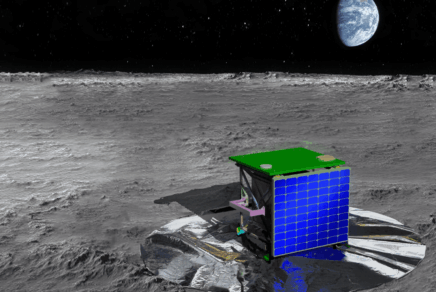
News
ISAE-SUPAERO contributes to the Artemis IV mission with the SPSS seismology instrumentNASA selects the JPL/CNES instrument suite for the Artemis IV mission, paving the way for unprecedented exploration of the Moon’s internal structure at the South Pole.
DEOS
Exploration
Space
News
Mattéo Gouzien: itinerary of an award-winning engineer and PhD student committed to decarbonized aviation!Mattéo Gouzien, a graduate of ISAE-SUPAERO and currently a doctoral student at IMS Bordeaux and ONERA, has been passionate about science from an early age. His remarkable academic and personal career has been guided by a relentless desire for knowledge and a quest for meaning. Winner of the SEE's André Blanc-Lapierre national prize and of the PEGASUS 2025 student conference, Mattéo talks about his rich career path: from preparatory school to his thesis on reducing aviation emissions.
Aeronautics
Ingénieur généraliste (MSc)
Portrait

News
Historical Discovery: Mercury Does Indeed Have Electron Radiation BeltsAn international team of researchers, including a scientist from ISAE-SUPAERO, has just published a study in the journal "Nature Astronomy" revealing the existence of electron radiation belts around Mercury. This discovery, based on an analysis of data from the MESSENGER mission and supported by previously unpublished observations from the BepiColombo mission’s MEA (Mercury Electron Analyzer) instrument, sheds new light on the physics of planetary magnetospheres and raises major challenges for the protection of space missions.
DEOS
Research
Space
News
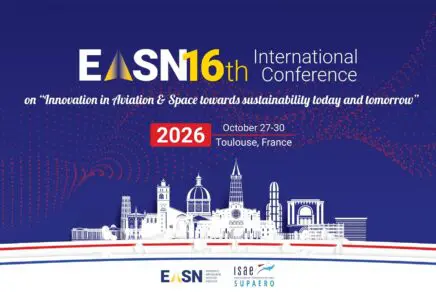
ISAE-SUPAERO is co-hosting the 16th EASN International Conference in ToulouseISAE-SUPAERO is pleased to host the 16th edition of the international conference organized by EASN in Toulouse from October 27 to 30, 2026, dedicated to the theme: “Innovation in Aeronautics and Space for Sustainability Today and Tomorrow.”
Aeronautics
Aerospace
Innovation
Pages
Prior Experience AccreditationThe validation of prior experience is an individual right enshrined in the French Labor Code and Education Code. It enables candidates to obtain all - or part - of a professional certification (Diploma, Professional Title, Certificate of Professional Qualification), based on their professional, salaried or non-salaried and/or voluntary experience. This scheme can be used if the candidate is seeking personal recognition, or more generally to support a professional project that he or she wishes to put into practice.
Advanced Master
Aeronautics
Aerospace
Events
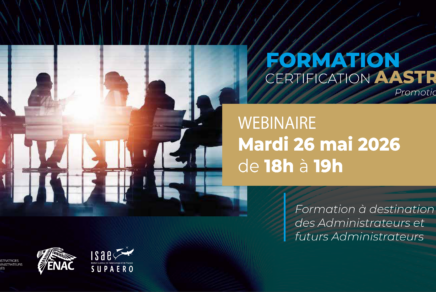
AASTRA Certificate: Introductory Webinar on May 26 from 6:00 p.m. to 7:00 p.m.Aeronautics
Aerospace
Air transport
Pages
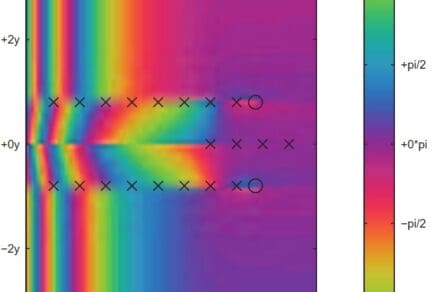
Scientific and research integrityISAE-SUPAERO is one of the signatories of the National Charter of Ethics for Research Professions, adopted in January 2015 by the Conference of University Presidents (CPU) and all national research organizations, and incorporated into the Institute's internal regulations.
DAEP
DCAS
DEOS
Pages
Applied Mathematics (MA) Scientific GroupThe “Applied Mathematics” (MA) scientific group covers a wide range of topics: Stochastic processes (especially Markov processes), numerical optimization (especially multidisciplinary optimization) and parallel computing, stabilization, control and numerical solution of partial differential equations, and financial engineering.
DISC
Doctoral student
PhD
Events
16th EASN International ConferenceAeronautics
Aerospace
Event
News
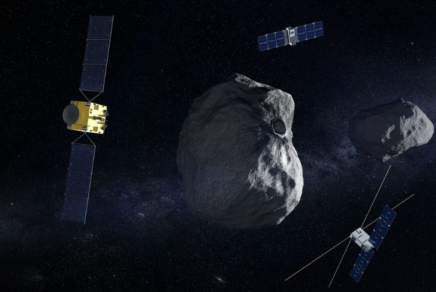
ISAE-SUPAERO back on mission with HeraThe Hera mission, an international planetary defence mission, is on its way to study the asteroid Dimorphos, which will be struck by DART in 2022. ISAE-SUPAERO is actively collaborating in this international planetary defence programme through the research work of Naomi Murdoch and the SSPA team.
DEOS
Space
Pages
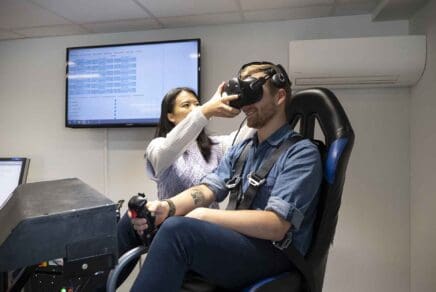
Design and Operation of Aerospace Vehicles Department (DCAS)At ISAE-SUPAERO, the Design and Operation of Aerospace Vehicles Department (DCAS) develops methods, simulation tools and experimental platforms for the design and operation of aerospace vehicles.
DCAS
PhD
Researcher
Testimonials
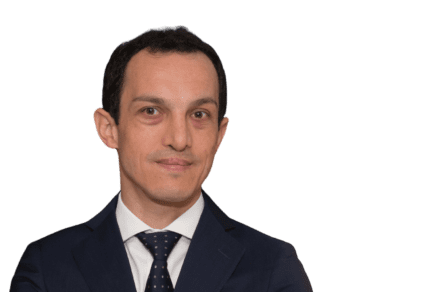
Testimony of Giuseppe Cataldo, alumnus of the 2010 Engineer ISAE-SUPAERO programmeAlumni
Space
Testimonial
News
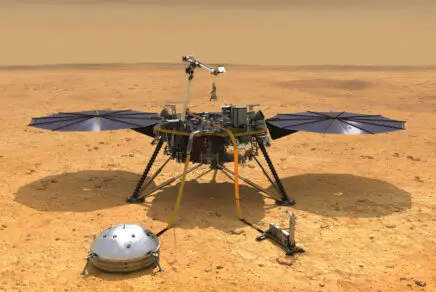
Mission Insight: the contribution of researchers from ISAE-SUPAEROThe InSight lander deployed by NASA recorded two earthquakes that occurred on Mars in 2021, providing scientists with exceptional data, the first direct observations ever made of a planet's core.
DEOS
Space
News
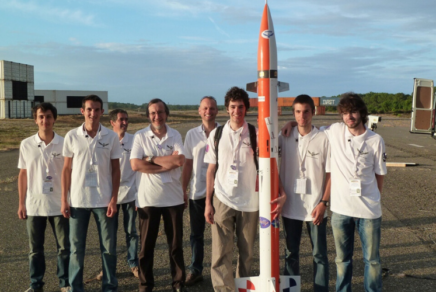
3 questions to... Ervan Kassarian, S-Cube member from 2015 to 2017Meet Ervan Kassarian, member of S-Cube - SUPAERO Space Section - ISAE-SUPAERO's experimental rocket club, from 2015 to 2017.
Space
Student club
Student life
News
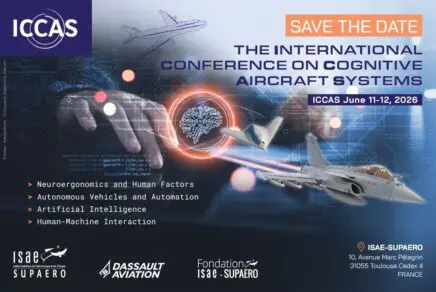
ICCAS 2026, jointly organized by ISAE-SUPAERO, the ISAE-SUPAERO Foundation, and Dassault Aviation, will take place on June 11-12, 2026.Following the success of the 2022 and 2024 editions, we are delighted to announce 𝐈𝐂𝐂𝐀𝐒 𝟐𝟎𝟐𝟔, organized jointly by ISAE-SUPAERO, the ISAE-SUPAERO Foundation, and Dassault Aviation!
Aeronautics
Artificial intelligence
Aviation
News
Meeting with Stéphanie Lizy-Destrez, elected member of the Air and Space AcademyAt ISAE-SUPAERO, Stéphanie Lizy-Destrez heads SaCLaB, a research laboratory focusing on future space systems. A professor of space systems engineering, she has just been elected to the French Air and Space Academy.
Award
Space
Teacher researcher
News
Focus on... quantum physics at ISAE-SUPAERO: a student journeyISAE-SUPAERO has been integrating quantum physics into its training and research activities uninterruptedly since 1980, and for the past two decades has been offering courses linked to the second quantum revolution.
DEOS
Doctoral student
Ingénieur généraliste (MSc)
Pages
Aerodynamics, Energetics, and Propulsion Department (DAEP)At ISAE SUPAERO, the Aerodynamics, Energetics, and Propulsion Department has a staff of 62, 30 research projects including 5 on a European scale, an exceptional fleet of test facilities for teaching and research purposes, and three research groups contributing to a growth strategy focused on 4 themes of current scientific and social-economic challenge, supported by 2 structuring projects: the SAA wind tunnel and the IC3 large-scale simulation code.
DAEP
PhD
Researcher
News
Apply today for a program at ISAE-SUPAERO or ENAC - École Nationale de l'Aviation Civile!The TSAAE application platform is now open: discover our world-renowned programs and apply online for the 2026 academic year before November 28 at midnight (French time)!
Advanced Master
Aeronautics
Aerospace
Pages
Spring Semester in Aeronautical EngineeringImmerse yourself in the world of aerospace in Toulouse, the European aerospace capital, with a semester taught in English combining excellent courses, cultural immersion, and proximity to major industrial players.
Aeronautics
Aerospace
Aerospace summer program
Pages
Electronics, Optronics, and Signal Processing Department (DEOS)At ISAE SUPAERO, the Department of Electronics, Optronics and Signal Processing (DEOS) studies, designs and produces scientific instruments for aeronautics, space and defense applications, with a strong focus on advanced systems and planetary exploration missions.
DEOS

News
Mars hit by meteorites more often than previously thoughtTwo researchers from ISAE-SUPAERO contributed to new discoveries based on data from the seismometer sent to Mars during the InSight mission, one of whose main objectives was to measure seismic activity on the Red Planet.
Space
Videos
ISAE-SUPAERO publishes its Aviation and Climate Reference FrameworkThe ISAE-SUPAERO #Aviation and #Climate reference framework aims to provide #scientific information useful for understanding the challenges facing aviation and the climate. This work has undergone a specific review process involving both ISAE-SUPAERO staff and external researchers from various institutes.
Decarbonization
Researcher
Sustainability
Pages
DMSM at the Clément Ader Institute (ICA)The Clément Ader Institute (UMR CNRS 5312) is the solid mechanics research laboratory for Toulouse and its region, under the aegis of the CNRS. It brings together research teams from four institutions and three ministries: the University of Toulouse III Paul Sabatier (National Education), INSA (National Education), ISAE-SUPAERO (Defense), and the École des Mines d'Albi (Industry). These institutions are located in three cities in Midi-Pyrénées: Toulouse, Albi, and Tarbes.
DMSM
Doctoral student
PhD
News
An exceptional scholarship for an innovative projectNaomi Murdoch, a researcher in physics and planetology at ISAE-SUPAERO, has just been awarded the prestigious Consolidator Grant from the European Research Council (ERC) for her planetary body study project called GRAVITE. This ambitious scientific project aims to design a variable gravity machine that will enable the simulation and study of extraterrestrial soils.
DEOS
Scholarship
Space
Videos
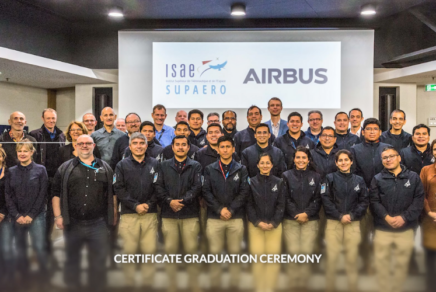
ISAE-SUPAERO and Airbus Defence and Space organize an international training course on space systemsTwenty engineers from the Peruvian space agency CONIDA (Comisión Nacional de Investigación y Desarrollo Aeroespacial) attended a training course in Toulouse designed jointly by ISAE-SUPAERO and Airbus Defence and Space! The aim? To develop their skills in space systems and space missions. The entire program was placed under the academic responsibility of AnnaFederica Urbano, a lecturer and researcher in space systems and launchers at ISAE-SUPAERO. The engineers took part in a preliminary satellite design project. At the end of the five-week course, they all obtained the Certificate of Advanced Studies awarded by ISAE-SUPAERO. For ISAE-SUPAERO and Airbus Defence and Space, this experience opens up prospects for future collaborations in training courses of this type for international customers and industrial and institutional partners. For more information: https://www.isae-supaero.fr/fr/actualites/airbus-defence-and-space-et-l-isae-supaero-forment-des-membres-de-l-agence/
Programme
Space

News
Ariane 6: at ISAE-SUPAERO, researchers are already working on the futureThe European Ariane 6 launcher incorporates major technological innovations such as the Vinci engine, capable of reigniting in space. At ISAE-SUPAERO, researchers are tackling the challenges posed by the rocket engines of tomorrow.
Space
News
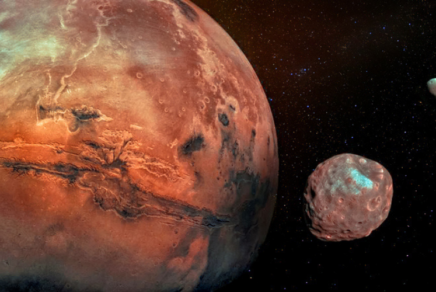
MMX, Idefix® and cameras to understand Mars' moonStudying the formation and origin of Mars' moons and bringing back samples: this is the extraordinary, ambitious international mission led by JAXA, in which ISAE-SUPAERO is participating alongside CNES.
DEOS
Researcher
Space
News
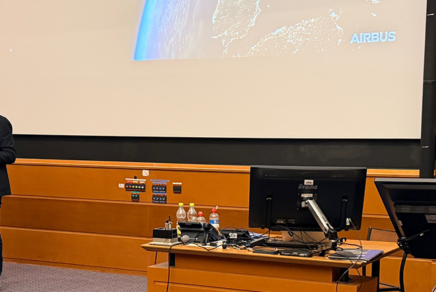
BROMO: the joint venture project involving major European space industry players presented to ISAE-SUPAERO studentsIn December 2025, ISAE-SUPAERO welcomed major players in the European space industry (Airbus, Thales and Leonardo) for an exceptional conference on the BROMO project.
Conference
Space
News
Let's make together a durable commitment to new horizonsAeronautics
Horizons
Sustainability

News
CASTOR Chair: Liebherr-Aerospace Toulouse and ISAE-SUPAERO, a win-win partnershipThe official signing of the industrial chair, called CASTOR, between Liebherr-Aerospace Toulouse and ISAE-SUPAERO took place on Tuesday 9 July at the institute's campus. This research partnership contributes to research into carbon-free aircraft.
Aeronautics
Chair
Company
News
ISAE-SUPAERO will be at the Paris Air Show from June 16 to 22, 2025!Aeronautics
Event
Fair
News
3 questions to... Marie-Bertille Mosnier, S-Cube member from 2018 to 2022Meet Marie-Bertille Mosnier, member of the S-Cube - SUPAERO Space Section - ISAE-SUPAERO's experimental rocket club, from 2018 to 2022.
Space
Student club
Student life

Events
AASTRA Certificate: Introductory Webinar on July 9 from 6:00 p.m. to 7:00 p.m.Aeronautics
Aerospace
Air transport
Videos
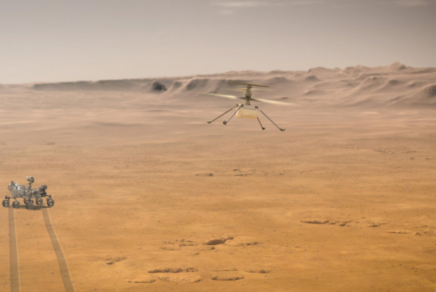
FRENCH SUPERCAM INSTRUMENT RECORDING THE SOUND OF INGENUITY'S 4th FLIGHTLocated 80 meters from the rover at the moment of take-off, the small helicopter rose to 5 meters above the ground before covering a distance of 133 meters before returning to land where it had taken off from. SuperCam's scientific microphone, developed by ISAE-SUPAERO, recorded the sound emitted by the rotation of the Martian drone's blades during its flight. This sound has a characteristic frequency of 84 Hz, equivalent to the low “E” of a piano or the bass voice of a human being. “This is a big surprise for the whole scientific team,” says Naomi Murdoch, a researcher at ISAE-SUPAERO who is studying the data from the microphone. "Tests carried out in a Martian atmosphere simulator to design this instrument, and our theories of sound propagation, indicated that the microphone would have great difficulty picking up the sounds of the helicopter. Indeed, Mars' thin atmosphere strongly attenuates sound transmission. We needed a bit of luck to record the helicopter from such a distance. We're very pleased to have succeeded in obtaining this recording, which is proving to be a goldmine for our understanding of the Martian atmosphere". Developed jointly by ISAE-SUPAERO and a consortium of CNRS laboratories and its partners, coordinated by CNES, SuperCam's microphone is derived from a consumer model adapted to withstand the Martian environment. It pursues 3 substantial scientific and technical objectives of the Mars 2020 mission: Study the sound associated with laser impacts on Martian rocks, to gain a better understanding of their mechanical properties. Improving our understanding of atmospheric phenomena (wind turbulence, dust eddies, wind interactions with the rover, and now with the helicopter). Understanding the sound signature of the rover's various movements (robotic arm and mast operations, driving on normal or uneven ground, pump monitoring, etc.). The microphone was first switched on a few hours after Perseverance landed. It recorded the first Martian sounds generated by turbulence in the atmosphere. It is used daily in conjunction with laser rock ablation for chemical analysis of Mars. ABOUT THE MARS 2020 MISSION: NASA is relying on Caltech's Jet Propulsion Laboratory for the development of the Mars 2020 mission. SuperCam was developed jointly by LANL (Los Alamos National Laboratory, USA) and a consortium of laboratories attached to the CNRS, French universities and research establishments. Several Spanish universities, led by the University of Valladolid, are also contributing to the instrument. CNES is responsible to NASA for the French contribution to SuperCam. The instrument is operated alternately from LANL and the French Operations Center for Science and Exploration (FOCSE) at CNES in Toulouse.
DEOS
Researcher
Space
Videos
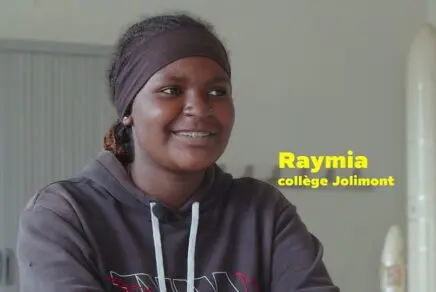
SUPERCAM Educational Kits / Martian Exploration: Students at the controls of the kitsFollow ISAE-SUPAERO students as they create educational kits, a digital educational tool designed to raise awareness of space exploration that can be used in classrooms from Year 7 to Year 13.
Diversity program
Equal opportunities
Space
Pages
Navigation, Radar, and Remote Sensing (NAVIR² eS) Scientific GroupThe “Navigation, Radar and Remonte Sensing” (NAVIR² eS) scientific group is interested in the theoretical study of information sources and hybridization approaches for autonomous vehicle navigation applications.
DEOS
Doctoral student
PhD

Testimonials
Testimonial from Sylvain ASSOGBA, an AM IEM student participating in the “Startech Summer School – Space Entrepreneurship: from Business Ideas to Start-Ups” in RomeEducation
International
Space

News
Hera probe captures exceptional images of Mars and its moon DeimosDEOS
Researcher
Science
Pages
Design and Analysis of Critical Systems (CASC) Scientific GroupThe “Design and Analysis of Critical Systems” (CASC) scientific group focuses on methods, processes and tools to support System Engineering and Systems Engineering.
DISC
Doctoral student
PhD
News
The 2025 Edmond Brun Prize from the French Academy of Sciences awarded to Annafederica Urbano, professor at ISAE-SUPAEROOn October 28, 2025, the Academy of Sciences awarded the Edmond Brun Prize to Annafederica Urbano, professor of space launch vehicles at ISAE-SUPAERO. This biennial physics award recognizes her entire body of work in the field of space propulsion.
DCAS
News
Prize
News
Noémie Martin, E2018 engineer, receives €1 million prize from the Jean-Jacques and Félicia Lopez-Loreta Foundation for her FASTE projectNoémie Martin, an ISAE-SUPAERO (ENSICA) engineer who graduated in 2018, was awarded a prize by the Lopez-Loreta Foundation in November 2024 for her project FASTE: Fabrication Additive des Structures performantes multi maTériaux pour utilisation en Environnement sévère.
Diversity program
Prize
Science

News
“My summer at NASA’s Jet Propulsion Laboratory”: Axel’s account, a student on the TAS Astro Advanced Master’s programmeSince May, Axel Coulon has been interning at NASA's famous JPL in Los Angeles. He is working on detecting helicopter landing sites on Mars. A student in the MS TAS Astro programme, he recounts this incredible space adventure that took him from his native Lorraine to California.
Internship
Programme
Space
News
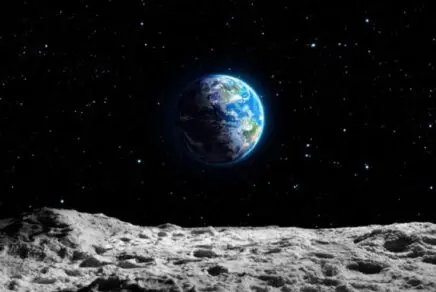
ISAE-SUPAERO's researchers are working on establishing a sustainable human presence on the Moon.While last year marked the 50th anniversary of the Apollo 17 mission, the last manned trip to the Moon, the development of ‘New Space’ has revived the space sector's interest in lunar exploration.
DCAS
Space

Pages
UNIVERSEHUNIVERSEH, the European Space University for Earth and Humanity, is an alliance of European universities created as part of the European Universities initiative launched by the European Commission in 2019.
Education
International
Science
News
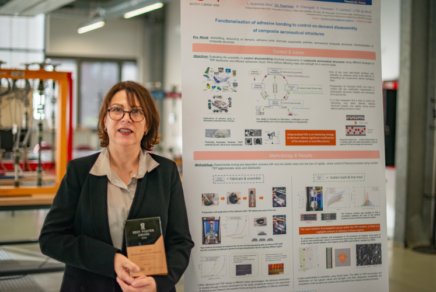
DMSM's SA-I research team wins best poster award at 14th EASN conferenceSeveral DMSM researchers received the best poster award at the 14ᵉ EASN (European Aeronautic Science Network) conference dedicated this year to the theme “Innovation in Aviation & Sace towards sustainability today & tomorrow”!
Conference
Prize
Researcher
News
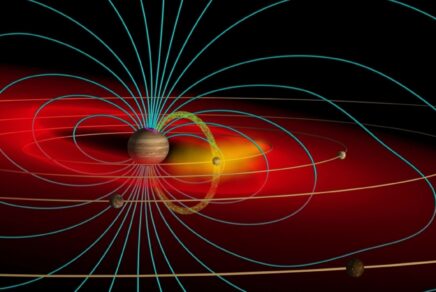
The Jupiter system: a unique laboratory for a major scientific breakthroughNicolas André, teacher-researcher at ISAE-SUPAERO, co-authors a major discovery in Nature Communications.
DEOS
Exploration
Space

News
ISAE-SUPAERO Researchers Receive IEEE NSREC 2025 Outstanding Paper Award for Advance in Space Imaging Sensor PhysicsResearchers from ISAE-SUPAERO and their partners have received the Outstanding Conference Paper Award at the IEEE (Institute of Electrical and Electronics Engineers) Nuclear and Space Radiation Effects Conference 2025 (NSREC) in Nashville, Tenessee, the most important international conference dedicated to radiation effects in electronic systems for space and nuclear applications.
DEOS
Prize
Research

Pages
Job offersAeronautics
Aerospace
AI
Events
Les Assises du New Space 2025: discussions and debates on NewSpace!The 2025 edition of the Assises du New Space will be held this year on July 8-9, 2025 at the Centre des congrès de la Villette - Cité des sciences et de l'industrie in Paris. Aimed at all players in the French space ecosystem, this event is a unique opportunity to exchange ideas and debate around NewSpace, and to discover the latest technological innovations and project financing opportunities. Registration is now open!
Conference
Event
Round table
Videos
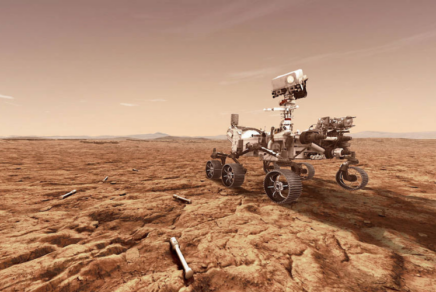
Perseverance collects first Martian sounds: explanation by Dr. Naomi Murdoch & Dr. Alexander StottDr Naomi Murdoch, researcher in space instrumentation and planetary science, and Dr Alexander Stott, post-doctoral fellow, tell us more about the physical characteristics of Mars' atmosphere, in particular the speed of sound and its attenuation. These analyses were published in Nature on April 1, 2022 by an international team led by a teacher-researcher from Toulouse III - Paul Sabatier University, and including scientists from CNRS and ISAE-SUPAERO.
DEOS
Researcher
Space
Testimonials
Testimony of Juan-Carlos DOLADO-PEREZ, alumni of the 2008 Master's degree in Aerospace EngineeringAlumni
Space
Testimonial
Our doctoral training
Related Content
News
A protocol chosen to secure communications with quantum computersDISC
Researcher
Scientific publication
News
Unlocking the secrets of earthquakes with stratospheric balloonsA team of DEOS researchers has achieved a significant milestone in the use of infrasound data captured by stratospheric balloons to understand seismic signals. This breakthrough, published in Earth Planets Space*, opens up new perspectives for the study of earthquakes, both on Earth and on other planets.
DEOS
Researcher
Science
Videos
The sound of a Martian dust devil captured by the SuperCam microphone on PerseveranceThis video and audio show the results obtained by NASA's Perseverance Mars rover and its SuperCam microphone when recording the sounds of a Martian dust devil passing overhead on 27 September 2021, the 215th Martian day or sol of the mission. The dust devil was 25 metres wide and at least 118 metres high, moving at a speed of approximately 19 km/h. This is the first time such a recording has been made, as capturing a dust devil requires a bit of luck. Indeed, it flew over the rover at a time when all of Perseverance's sensors measuring wind, pressure, temperature and dust, plus the NavigationXXX (Navcam) camera, were running. This allowed scientists to combine sounds, images and atmospheric data. The unique combination of this data, along with atmospheric modelling, enabled researchers to estimate the dimensions of the dust devil. Scientists cannot accurately predict when these vortices will occur. Rovers such as Perseverance and Curiosity monitor them regularly. When scientists notice that they are more frequent at a certain time of day or approaching from a certain direction, they focus their monitoring to try to capture a dust devil with all the sensors at their disposal. > To better understand the video, it shows three rows of images: - the row
DEOS
Researcher
Space
Videos
Feedback: a Latecoere engineer in the ISAE-SUPAERO laboratoriesTo strengthen the links between industry and research, more than 10 industrial R&D engineers have been made available to ISAE-SUPAERO as part of the France Relance plan! Cyril Geneste, research engineer at Latecoere, is one of them. Together with Miguel Charlotte, Associate Professor at the Institute, he looks back on this fruitful two-year collaboration. Their work, carried out in the ISAE-SUPAERO laboratories, focused on the behavior of aircraft door seals, which ensure cabin airtightness. Thanks to the Institute's cutting-edge equipment and academic expertise, Cyril Geneste was able in particular to carry out numerical modeling of seals in order to test their behavior. Students in their 3rdᵉ year of engineering studies were also involved in this work.
Aeronautics
Researcher
Videos
Perseverance collects first Martian sounds: explanation by Dr. Naomi Murdoch & Dr. Alexander StottDr Naomi Murdoch, researcher in space instrumentation and planetary science, and Dr Alexander Stott, post-doctoral fellow, tell us more about the physical characteristics of Mars' atmosphere, in particular the speed of sound and its attenuation. These analyses were published in Nature on April 1, 2022 by an international team led by a teacher-researcher from Toulouse III - Paul Sabatier University, and including scientists from CNRS and ISAE-SUPAERO.
DEOS
Researcher
Space
News
ISAE-SUPAERO and its talented students are once again showcasing Toulouse’s dynamism on the international stageAt ISAE-SUPAERO, talented students continue to distinguish themselves, both in the academic world and in the realm of innovation: a look back at the Amelia Earhart Award won by Elena Lopez-Contreras, a doctoral student at the Neuroergonomics Center, and at the French final of the ActInSpace hackathon, won by her team Solete for their Satell-EYE project.
DCAS
Event
Human factors
Pages
Connected Systems (SysCo) Scientific GroupThe scientific dynamic of the “Connected Systems” (SysCo) scientific group focuses primarily on network-related issues in aerospace applications, i.e. space communications, embedded networks and certain types of connected systems.
DISC
Doctoral student
PhD
News
Listening to the Martian past: ISAE-SUPAERO at the heart of the ExoMars missionESA's ExoMars Rosalind Franklin mission to explore Mars will carry a unique instrument for recording sound and atmospheric data from the planet. The Institute has been selected by ESA and CNES for this major scientific collaboration.
DEOS
Researcher
Science
Pages
Applied Mathematics (MA) Scientific GroupThe “Applied Mathematics” (MA) scientific group covers a wide range of topics: Stochastic processes (especially Markov processes), numerical optimization (especially multidisciplinary optimization) and parallel computing, stabilization, control and numerical solution of partial differential equations, and financial engineering.
DISC
Doctoral student
PhD
Pages
Testimonials« Ingénieur ISAE-SUPAERO » by apprenticeship
Advanced Master
Alumni
News
“Doctor, tell me about your thesis in five minutes!” - The ISAE-SUPAERO Foundation Thesis AwardsOn Wednesday, January 7, 2026, the ISAE-SUPAERO Foundation awarded its thesis prizes of the year to five young doctors in recognition of the excellence and impact of their research work.
Doctoral student
ISAE-SUPAERO Foundation
Prize
Pages
Design and Operation of Aerospace Vehicles Department (DCAS)At ISAE-SUPAERO, the Design and Operation of Aerospace Vehicles Department (DCAS) develops methods, simulation tools and experimental platforms for the design and operation of aerospace vehicles.
DCAS
PhD
Researcher
News
The project for an unmanned, zero-emission aircraft to cross the South AtlanticInnovation
Researcher
Sustainability
Videos
FRENCH SUPERCAM INSTRUMENT RECORDING THE SOUND OF INGENUITY'S 4th FLIGHTLocated 80 meters from the rover at the moment of take-off, the small helicopter rose to 5 meters above the ground before covering a distance of 133 meters before returning to land where it had taken off from. SuperCam's scientific microphone, developed by ISAE-SUPAERO, recorded the sound emitted by the rotation of the Martian drone's blades during its flight. This sound has a characteristic frequency of 84 Hz, equivalent to the low “E” of a piano or the bass voice of a human being. “This is a big surprise for the whole scientific team,” says Naomi Murdoch, a researcher at ISAE-SUPAERO who is studying the data from the microphone. "Tests carried out in a Martian atmosphere simulator to design this instrument, and our theories of sound propagation, indicated that the microphone would have great difficulty picking up the sounds of the helicopter. Indeed, Mars' thin atmosphere strongly attenuates sound transmission. We needed a bit of luck to record the helicopter from such a distance. We're very pleased to have succeeded in obtaining this recording, which is proving to be a goldmine for our understanding of the Martian atmosphere". Developed jointly by ISAE-SUPAERO and a consortium of CNRS laboratories and its partners, coordinated by CNES, SuperCam's microphone is derived from a consumer model adapted to withstand the Martian environment. It pursues 3 substantial scientific and technical objectives of the Mars 2020 mission: Study the sound associated with laser impacts on Martian rocks, to gain a better understanding of their mechanical properties. Improving our understanding of atmospheric phenomena (wind turbulence, dust eddies, wind interactions with the rover, and now with the helicopter). Understanding the sound signature of the rover's various movements (robotic arm and mast operations, driving on normal or uneven ground, pump monitoring, etc.). The microphone was first switched on a few hours after Perseverance landed. It recorded the first Martian sounds generated by turbulence in the atmosphere. It is used daily in conjunction with laser rock ablation for chemical analysis of Mars. ABOUT THE MARS 2020 MISSION: NASA is relying on Caltech's Jet Propulsion Laboratory for the development of the Mars 2020 mission. SuperCam was developed jointly by LANL (Los Alamos National Laboratory, USA) and a consortium of laboratories attached to the CNRS, French universities and research establishments. Several Spanish universities, led by the University of Valladolid, are also contributing to the instrument. CNES is responsible to NASA for the French contribution to SuperCam. The instrument is operated alternately from LANL and the French Operations Center for Science and Exploration (FOCSE) at CNES in Toulouse.
DEOS
Researcher
Space
Events
2025 edition of "La nuit des chercheurs"Meet ISAE-SUPAERO researchers at the Nuit des Chercheurs de Toulouse, on October 3 at 6pm at the Halles de la Cartoucherie, on the theme of “Intelligence(s)”!
Aerospace
Researcher
Science
Pages
Languages, Arts, Cultures, and Societies Department (LACS)At the Languages, Arts, Cultures, and Societies Department (LACS), we teach languages, interculturality, geopolitics, general culture, economics, sports, etc. Multidimensional skills that bring out knowledge, interpersonal skills, know-how and the ability to act.
LACS
PhD
Researcher
News
HACKATHON Data Sciences: AI in action!From February 24 to 26, forty-five students will explore three topical issues involving Artificial Intelligence (AI) during a three-day hackathon. The student teams involved will attempt to meet the challenges posed by three industrial partners on the themes of the environment, industrialization and digitization technology. ISAE-SUPAERO confirms its commitment to training in data science and artificial intelligence through its Decision and Data Sciences (DDS) course.
AI
Artificial intelligence
Hackathon
Pages
Photonics Antenna Microwave PlasmaA (PAMPA) Scientific GroupThe “Photonics Antenna Microwave PlasmaA” (PAMPA) scientific group is interested in electromagnetism in the fields of microwaves and photonics, as well as wave-plasma interactions.
DEOS
Doctoral student
PhD
News
Focus on... quantum physics at ISAE-SUPAERO: a student journeyISAE-SUPAERO has been integrating quantum physics into its training and research activities uninterruptedly since 1980, and for the past two decades has been offering courses linked to the second quantum revolution.
DEOS
Doctoral student
Ingénieur généraliste (MSc)
Videos
Discover the portrait of Paolo PANICUCCI doctoral student at ISAE-SUPAEROPaolo has completed his thesis in the Complex Systems Engineering Department (DISC). His thesis is entitled: Navigation based on autonomous vision and shape reconstruction of an unknown asteroid during the approach phase. It is attached to the AA - Aéronautique Astronautique doctoral school. ISAE-SUPAERO hosts its doctoral students in six teams at ISAE-SUPAERO, ONERA and the Clément Ader Institute, covering a broad spectrum of scientific disciplines related to aeronautics and space: aerodynamics and propulsion, structures and materials, embedded systems, networks and telecommunications, systems control and operation, human factors, electronics and signals. ISAE-SUPAERO offers a rich and diversified doctoral training program, leading to the doctorate, the highest level diploma awarded by the institute, and recognized internationally. Link to his thesis: http://www.theses.fr/s253653
PhD
Thesis
Pages
Aerodynamics, Energetics, and Propulsion Department (DAEP)At ISAE SUPAERO, the Aerodynamics, Energetics, and Propulsion Department has a staff of 62, 30 research projects including 5 on a European scale, an exceptional fleet of test facilities for teaching and research purposes, and three research groups contributing to a growth strategy focused on 4 themes of current scientific and social-economic challenge, supported by 2 structuring projects: the SAA wind tunnel and the IC3 large-scale simulation code.
DAEP
PhD
Researcher
Pages
Communication and Information Theory (ComiT) Scientific GroupThe “Communication and Information Theory” (ComiT) scientific group is involved in the disciplines of digital communications, radar, and channel access techniques. Its fields of application include space systems, civil and military aviation, terrestrial cellular networks and the Internet of Things (IoT).
DEOS
Doctoral program
Doctoral student
Pages
Theory, Modelling, and Systems Engineering (ThéMIS) Scientific GroupThe “Theory, Modeling and Systems Engineering” (ThéMIS) scientific group is dedicated to the study and development of advanced methods for the design, modeling and validation of complex systems.
DISC
Doctoral student
PhD
Videos
Sylvestre Maurice, astrophysicist and ISAE-SUPAERO alumnusAwarded a prize by the Académie des Sciences in 2020, Sylvestre Maurice #astrophysicist at the Institut de Recherche en Astrophysique et Planétologie (IRAP) in Toulouse witnessed the landing of the #Perseverance rover on Mars on February 18, 2021. A historic moment for this enthusiast, who is also the scientific manager of the onboard SuperCam instrument. A 1990 graduate of ISAE-SUPAERO, Sylvestre Maurice tells us about his career.
Alumni
Researcher
Space
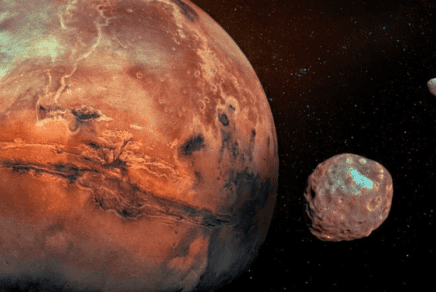
Pages
Space Systems for Planetology and Applications (SSPA) Scientific GroupThe “Space Systems for Planetology and Applications” (SSPA) scientific group focuses on one main area of research: The development of missions and associated technologies for geophysical exploration of the solar system.
DEOS
Doctoral student
PhD
Pages
ResearchAt ISAE-SUPAERO, we conduct cutting-edge research in the service of innovation, technological sovereignty and the ecological transition of the aerospace sector, thereby affirming our role as a leading player in the scientific and industrial community.
DAEP
DCAS
DEOS
Pages
Navigation, Radar, and Remote Sensing (NAVIR² eS) Scientific GroupThe “Navigation, Radar and Remonte Sensing” (NAVIR² eS) scientific group is interested in the theoretical study of information sources and hybridization approaches for autonomous vehicle navigation applications.
DEOS
Doctoral student
PhD
Pages
Lasbordes Air Operations Center (COAL)The Department of Design and Operation of Aeronautical and Space Vehicles (DCAS) is part of the Lasbordes Air Operations Center (COAL), located on an airfield a few kilometers from the ISAE-SUPAERO campus. As part of its aeronautical training and research activities, COAL operates a fleet of 8 light aircraft.
DCAS
Doctoral student
PhD
News
An ISAE-SUPAERO PhD student has been awarded the ONERA 2026 PhD Student PrizeLucie Schwoebel, a third-year doctoral student at ISAE-SUPAERO working on a thesis co-funded by ONERA, has been awarded the 2026 Doctoral Student Prize in the field of Fluid Mechanics and Energy. This award recognizes the excellence of her research on the acoustics of sound-absorbing materials used in aeronautics.
PhD
Prize
Research
Pages
Scientific and research integrityISAE-SUPAERO is one of the signatories of the National Charter of Ethics for Research Professions, adopted in January 2015 by the Conference of University Presidents (CPU) and all national research organizations, and incorporated into the Institute's internal regulations.
DAEP
DCAS
DEOS
Videos
The Dart mission has hit its target: explanations from Dr Naomi Murdoch, planetary scientist at ISAE-SUPAEROResearchers from ISAE-SUPAERO are participating in this first planetary defence mission. Dr. Naomi Murdoch, a researcher at ISAE-SUPAERO and scientific member of the #DART and #HERA missions, comments on the objectives of DART and those of the European HERA mission, which will arrive in the area in 2026 to characterise the crater left by DART and study the internal structure of the asteroid #Dimorphos!
DEOS
Researcher
Space
Pages
Learning, Decision, Optimisation (ADO) Scientific GroupDISC
Doctoral student
PhD
News
MMX, Idefix® and cameras to understand Mars' moonStudying the formation and origin of Mars' moons and bringing back samples: this is the extraordinary, ambitious international mission led by JAXA, in which ISAE-SUPAERO is participating alongside CNES.
DEOS
Researcher
Space
Pages
Integrated Image Sensors (CIMI) Scientific GroupThe “Integrated Image Sensors” (CIMI) scientific group, develops and characterizes active-pixel image sensors (CMOS Image Sensors (CIS)) on silicon for visible and infrared radiation.
DEOS
Doctoral student
PhD
Pages
DMSM at the Clément Ader Institute (ICA)The Clément Ader Institute (UMR CNRS 5312) is the solid mechanics research laboratory for Toulouse and its region, under the aegis of the CNRS. It brings together research teams from four institutions and three ministries: the University of Toulouse III Paul Sabatier (National Education), INSA (National Education), ISAE-SUPAERO (Defense), and the École des Mines d'Albi (Industry). These institutions are located in three cities in Midi-Pyrénées: Toulouse, Albi, and Tarbes.
DMSM
Doctoral student
PhD
Pages
Mechanics of Structures and Materials Department (DMSM)The Mechanics of Structures and Materials Department is responsible for organizing and supervising all teaching activities in deformable solid mechanics for ISAE-SUPAERO training courses, in synergy with upstream and applied research activities on aeronautical materials and structures. This strong interaction between teaching and research is the foundation of our department's organization.
DMSM
PhD
Researcher
Videos
Discover the portrait of Anthéa COMELLINI doctoral student at ISAE-SUPAEROAnthéa completed her thesis in the Complex Systems Engineering Department (DISC). Her thesis is entitled “Vision-based autonomous rendezvous with non-cooperative targets”. Anthéa is attached to the AA - Aéronautique Astronautique doctoral school. Her thesis, carried out in collaboration with Thales Alenia Space, is part of the CIFRE* program ISAE-SUPAERO hosts its doctoral students in six teams at ISAE-SUPAERO, ONERA and the Clément Ader Institute, covering a broad spectrum of scientific disciplines related to aeronautics and space: aerodynamics and propulsion, structures and materials, onboard systems, networks and telecommunications, systems control and operation, human factors, electronics, signals. ISAE-SUPAERO offers a rich and diversified doctoral training program, leading to the doctorate, the highest level diploma awarded by the institute, and recognized internationally. *Since 1981, the CIFRE scheme - Conventions Industrielles de Formation par la REcherche (Industrial Conventions for Training through Research) - has enabled companies to benefit from financial assistance to recruit a young doctoral student whose research, supervised by a public research laboratory, will lead to the completion of a thesis in three years. CIFREs are fully funded by the French Ministry of Higher Education and Research, which has entrusted ANRT (Association Nationale de la Recherche et de la Technologie) with their implementation.
PhD
Thesis
Videos
Visiting professors at ISAE-SUPAERO: DAN SCHEERESISAE-SUPAERO est un établissement d'enseignement supérieur axé sur la recherche et l'innovation, qui s'engage à concilier excellence scientifique, visibilité académique et proximité avec les objectifs industriels. Ses activités de recherche ont contribué à faire de l'école un leader international non seulement en termes de programme d'ingénierie aérospatiale, mais aussi de programmes de troisième cycle, notamment ses masters (MSc) et ses programmes de doctorat en sciences de l'ingénierie. C'est pourquoi de nombreux acteurs internationaux clés de la recherche rendent visite à leurs homologues de l'ISAE-SUPAERO. Nous avons rencontré Dan Sheeres, professeur émérite de l'université du Colorado et titulaire de la chaire A. Richard Seebass au département des sciences de l'ingénierie aérospatiale Ann et H.J. Smead de l'université du Colorado à Boulder. Les recherches de Dan Scheeres couvrent des sujets allant de l'astrodynamique et de la navigation spatiale à la science planétaire et à la mécanique céleste, et il a publié de nombreux articles dans ces domaines. L'astéroïde 8887 a été baptisé « Scheeres » en reconnaissance de ses contributions à la compréhension scientifique de l'environnement dynamique des astéroïdes. Pendant son séjour à l'ISAE-SUPAERO, le professeur Scheeres et l'équipe des systèmes spatiaux pour les applications planétaires ont collaboré à l'analyse des données DART et au développement de concepts visant à étudier la structure interne des astéroïdes lors de futures missions spatiales. De plus, Dan Scheeres et l'ISAE-SUPAERO ont publié conjointement plusieurs articles dans « Nature » sur les astéroïdes et la mission DART.
DEOS
Researcher
Space
Pages
Design and Analysis of Critical Systems (CASC) Scientific GroupThe “Design and Analysis of Critical Systems” (CASC) scientific group focuses on methods, processes and tools to support System Engineering and Systems Engineering.
DISC
Doctoral student
PhD
News
Best Scientific Paper Award from the American Institute of Aeronautics and Astronautics 2024 Multidisciplinary Design OptimizationSix researchers from ISAE-SUPAERO, EPFL and the Hong Kong University of Science and Technology have been awarded the AIAA Best Scientific Paper Award for their paper “DeepGeo: Deep Geometric Mapping for Automated and Effective Parameterization in Aerodynamic Shape Optimization”.
Prize
Researcher
Scientific publication
News
DMSM's SA-I research team wins best poster award at 14th EASN conferenceSeveral DMSM researchers received the best poster award at the 14ᵉ EASN (European Aeronautic Science Network) conference dedicated this year to the theme “Innovation in Aviation & Sace towards sustainability today & tomorrow”!
Conference
Prize
Researcher
Videos
ISAE-SUPAERO publishes its Aviation and Climate Reference FrameworkThe ISAE-SUPAERO #Aviation and #Climate reference framework aims to provide #scientific information useful for understanding the challenges facing aviation and the climate. This work has undergone a specific review process involving both ISAE-SUPAERO staff and external researchers from various institutes.
Decarbonization
Researcher
Sustainability
Pages
Complex Systems Engineering Department (DISC)Within ISAE-SUPAERO, the Complex Systems Engineering Department (DISC) develops skills in mathematics and computer science for aeronautical and space engineering. In both teaching and research, it focuses on the models, methods, and tools needed to control the behavior and performance of complex systems. This complexity may be induced by the multi-physics or multi-scale nature of the systems studied, their dynamic behavior, or their distributed and communicating structure.
DISC
PhD
Researcher
Videos
Sylvestre Maurice presents the SUPERCAM / Martian Exploration educational kitThe ‘SUPERCAM - Martian Exploration’ educational kit project was initiated by five partners: ISAE-SUPAERO, the Toulouse Academy, CNRS, CNES and Cité de l'espace. Under the guidance and supervision of astrophysicist Sylvestre Maurice, first-year students at ISAE-SUPAERO developed this educational tool to raise awareness of space exploration in classrooms, from sixth form to final year. This kit is available to middle and high school teachers and can be adapted to offer educational lessons related to this theme.
Diversity program
Equal opportunities
Researcher
News
Hera probe captures exceptional images of Mars and its moon DeimosDEOS
Researcher
Science
Pages
Job offersAeronautics
Aerospace
AI
News
ISAE-SUPAERO researchers explore the quantum universeDISC
Researcher
Scientific publication
Research
At ISAE-SUPAERO, we conduct cutting-edge research in the service of innovation, technological sovereignty and the ecological transition of the aerospace sector, thereby affirming our role as a leading player in the scientific and industrial community.
DEOS
The Electronics, Optronics, and Signal Processing Department (DEOS) develops and produces payloads for tomorrow's advanced aeronautical and space applications. The skills of its teams cover a wide range of technologies, from the design of silicon sensors to interplanetary scientific payloads, and from signal theory studies to advanced communication and navigation systems.
Further Information
DCAS
The Aerospace Vehicle Design and Operation Department (DCAS) develops methods, simulation tools, and experimental platforms for the design and operation of aerospace vehicles.
Further Information
DISC
The Department of Complex Systems Engineering (DISC) develops skills in mathematics and computer science for aeronautical and space engineering. In both teaching and research, it focuses on the models, methods, and tools needed to control the behaviour and performance of complex systems. This complexity may be induced by the multi-physics or multiscale nature of the systems studied, their dynamic behaviour, or their distributed and communicating structure.
Further Information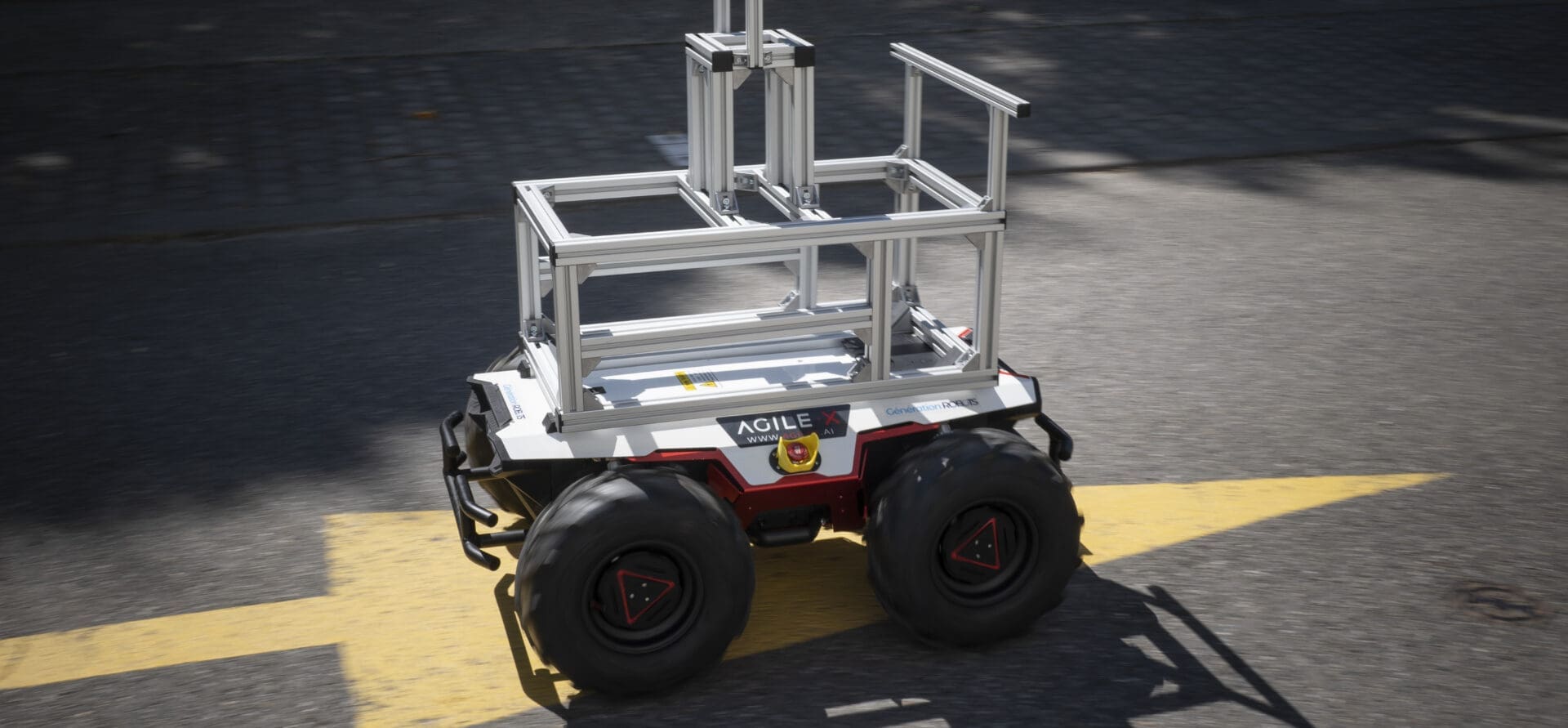
DAEP
The Aerodynamics and Propulsion Department: 62 people, 30 research projects, including 5 on a European scale, an exceptional fleet of test facilities for teaching and research purposes, 3 research groups contributing to a growth strategy focused on 4 themes with topical scientific and social-economic challenges, supported by 2 structuring projects: the SAA wind tunnel and the IC3 large-scale simulation code.
Further Information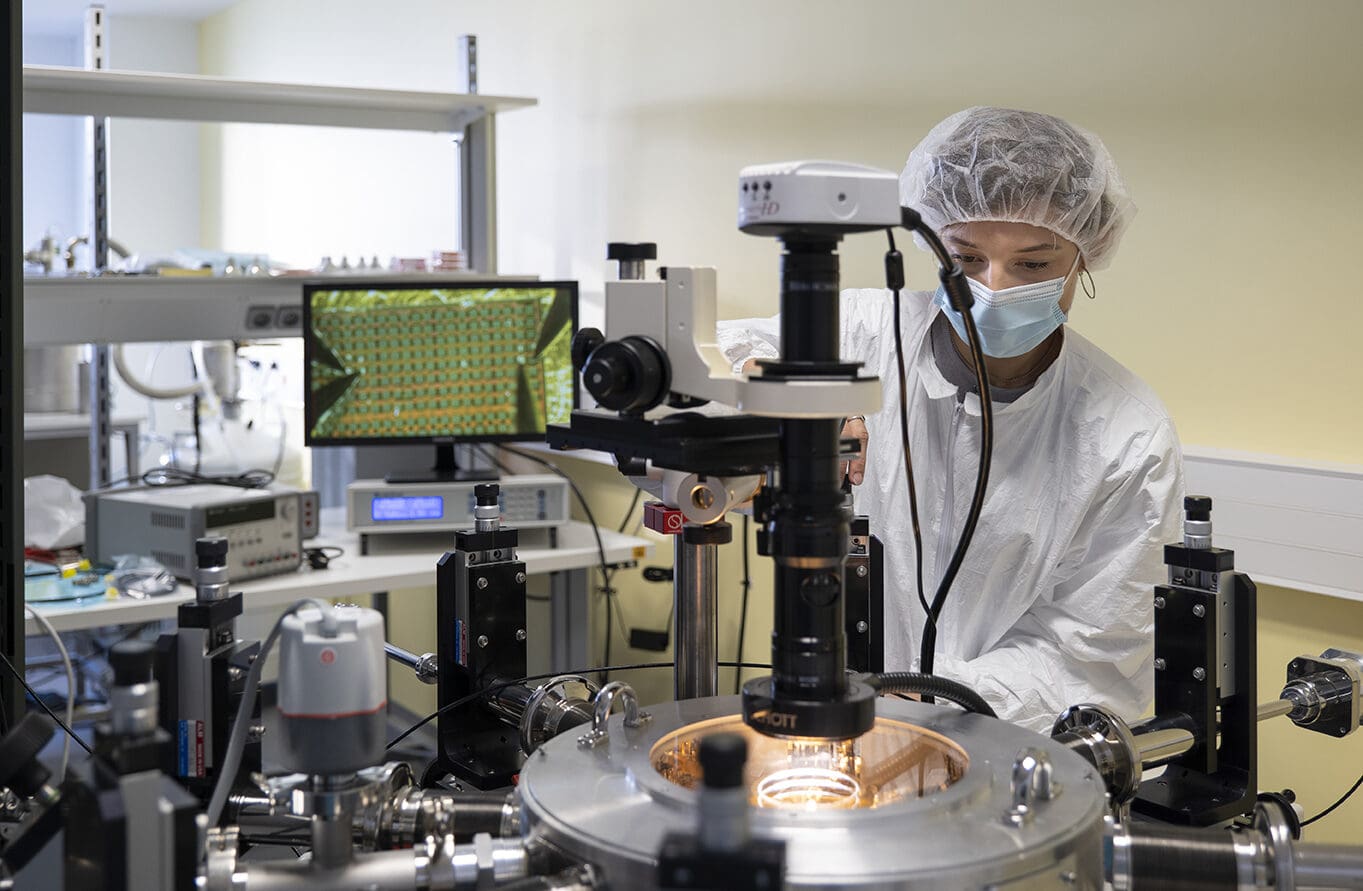
DMSM
The role of the Structures and Materials Mechanics Department is to organise and supervise all teaching activities in the mechanics of deformable solids for ISAE-SUPAERO courses, in synergy with upstream and applied research activities on aeronautical materials and structures. This strong interaction between teaching and research is the basis of our department's organisation.
Further information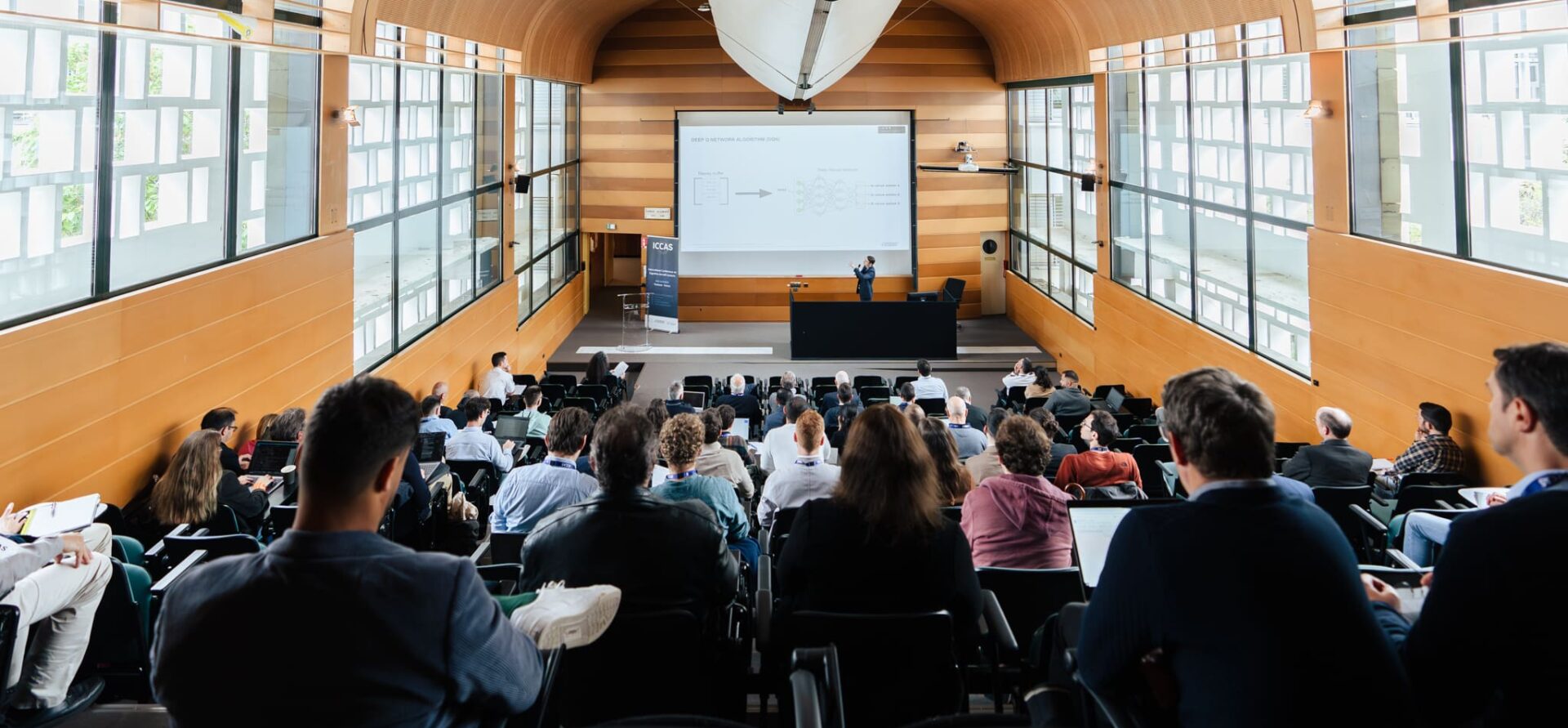
LACS
In the Languages, Arts, Cultures, and Societies Department, we teach languages, interculturality, geopolitics, general culture, economics, sport... Multi-dimensional skills that bring out knowledge, interpersonal skills, know-how and interpersonal skills.
Further InformationResearch at ISAE-SUPAERO
At ISAE SUPAERO, the Department of Electronics, Optronics and Signal Processing (DEOS) studies, designs and produces scientific instruments for aeronautics, space and defense applications, with...
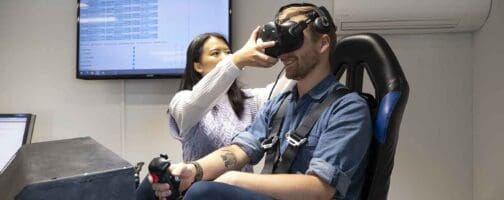
At ISAE-SUPAERO, the Design and Operation of Aerospace Vehicles Department (DCAS) develops methods, simulation tools and experimental platforms for the design and operation of aerospace...
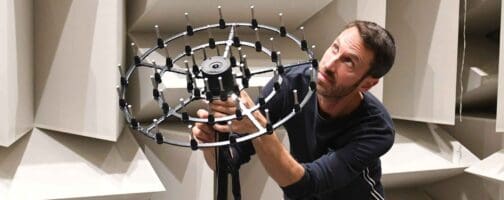
At ISAE SUPAERO, the Aerodynamics, Energetics, and Propulsion Department has a staff of 62, 30 research projects including 5 on a European scale, an exceptional...
The Mechanics of Structures and Materials Department is responsible for organizing and supervising all teaching activities in deformable solid mechanics for ISAE-SUPAERO training courses, in...
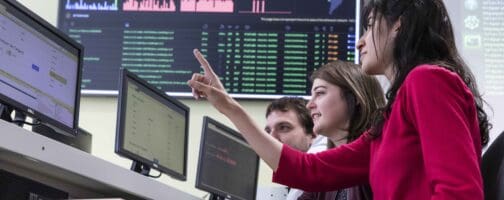
Within ISAE-SUPAERO, the Complex Systems Engineering Department (DISC) develops skills in mathematics and computer science for aeronautical and space engineering. In both teaching and research,...

At the Languages, Arts, Cultures, and Societies Department (LACS), we teach languages, interculturality, geopolitics, general culture, economics, sports, etc. Multidimensional skills that bring out knowledge,...

Created in 2021 on the initiative of internationally renowned academic institutions with longstanding academic expertise in aeronautics and air transport, the ISA is an institute...
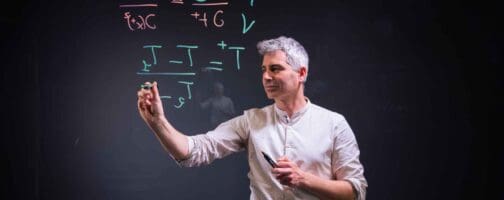
ISAE-SUPAERO is one of the signatories of the National Charter of Ethics for Research Professions, adopted in January 2015 by the Conference of University Presidents...

Related Content
News
ISAE-SUPAERO back on mission with HeraThe Hera mission, an international planetary defence mission, is on its way to study the asteroid Dimorphos, which will be struck by DART in 2022. ISAE-SUPAERO is actively collaborating in this international planetary defence programme through the research work of Naomi Murdoch and the SSPA team.
DEOS
Space
News
Focus on... quantum physics at ISAE-SUPAERO: a student journeyISAE-SUPAERO has been integrating quantum physics into its training and research activities uninterruptedly since 1980, and for the past two decades has been offering courses linked to the second quantum revolution.
DEOS
Doctoral student
Ingénieur généraliste (MSc)
News
Mattéo Gouzien: itinerary of an award-winning engineer and PhD student committed to decarbonized aviation!Mattéo Gouzien, a graduate of ISAE-SUPAERO and currently a doctoral student at IMS Bordeaux and ONERA, has been passionate about science from an early age. His remarkable academic and personal career has been guided by a relentless desire for knowledge and a quest for meaning. Winner of the SEE's André Blanc-Lapierre national prize and of the PEGASUS 2025 student conference, Mattéo talks about his rich career path: from preparatory school to his thesis on reducing aviation emissions.
Aeronautics
Ingénieur généraliste (MSc)
Portrait
News
Unlocking the secrets of earthquakes with stratospheric balloonsA team of DEOS researchers has achieved a significant milestone in the use of infrasound data captured by stratospheric balloons to understand seismic signals. This breakthrough, published in Earth Planets Space*, opens up new perspectives for the study of earthquakes, both on Earth and on other planets.
DEOS
Researcher
Science

Videos
Discover... ISAE-SUPAERO's EMpEROR multidisciplinary testing platformISAE-SUPAERO – as a centre for research-based education, research training and innovation – has a wide range of research equipment used within its six research departments. Today, we present the EMpEROR multidisciplinary testing platform! The EMpEROR platform was born out of the growing awareness of aeroelastic phenomena in modern aeronautics and the synergy between the Aerodynamics, Energy and Propulsion (DAEP) and Structural Mechanics and Materials (DMSM) departments. This platform has been designed and developed to allow for a high degree of metrology modularity, centred around a rotor test bench capable of rotating 1 to 6 blades, up to 1 metre in diameter, from 0 to 3000 rpm in complete safety thanks to a 6-metre-long protective cage. It is equipped with several sensors for performance measurements and a rotary vibrometry system for measuring blade dynamics. The bench allows measurement systems to be embedded in the blades, as well as systems for controlling these unstable phenomena. Since 2020, this platform has also enabled two PhD students and six Master's students to work on aeroelastic phenomena. This platform generates experimental databases used by ISAE-SUPAERO researchers to compare and validate their calculation codes. The equipment will be upgraded in 2024 with the possibility of performing PIV and/or LDV laser measurements, as well as the possibility of manufacturing more complex blades with greater flexibility. Scientific supervisors: Dr. Sebastien Prothin - Sebastien.PROTHIN@isae-supaero.fr Prof. Guilhem Michon - Guilhem.MICHON@isae-supaero.fr
DAEP
Pages
Lasbordes Air Operations Center (COAL)The Department of Design and Operation of Aeronautical and Space Vehicles (DCAS) is part of the Lasbordes Air Operations Center (COAL), located on an airfield a few kilometers from the ISAE-SUPAERO campus. As part of its aeronautical training and research activities, COAL operates a fleet of 8 light aircraft.
DCAS
Doctoral student
PhD
News
DART: ISAE-SUPAERO students publish new scientific findings in Nature CommunicationsNaomi Murdoch, a planetary science researcher at ISAE-SUPAERO, is actively involved in scientific analysis and data interpretation for NASA's DART mission.
DEOS
Space
News
Noémie Martin, E2018 engineer, receives €1 million prize from the Jean-Jacques and Félicia Lopez-Loreta Foundation for her FASTE projectNoémie Martin, an ISAE-SUPAERO (ENSICA) engineer who graduated in 2018, was awarded a prize by the Lopez-Loreta Foundation in November 2024 for her project FASTE: Fabrication Additive des Structures performantes multi maTériaux pour utilisation en Environnement sévère.
Diversity program
Prize
Science
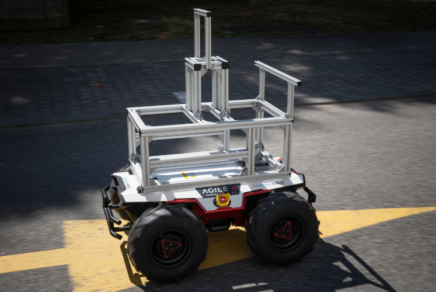
Videos
Discover... the ISAE-SUPAERO "Autonomous Systems" platformISAE-SUPAERO – as a centre for research-based education, research training and innovation – has a wide range of research equipment used within its six research departments. Today, we present the ‘Autonomous Systems’ platform! The ‘Autonomous Systems’ platform brings together the various tools and resources, software and robotics provided by the technical group of the Complex Systems Engineering Department (DISC) to ISAE-SUPAERO's teacher-researchers. This platform consists of a dozen development and control stations and a 10 × 10 × 4 m test area equipped with a motion capture system that allows various mobile land or air robots to be tested. This test area has a modular semi-urban environment that can be modified according to the different projects or tests to be carried out. It is used for the development of demonstrators to showcase the various research projects of ISAE-SUPAERO faculty members and for teaching through practical work carried out initially in simulation and then on real robots.
DISC
Pages
Navigation, Radar, and Remote Sensing (NAVIR² eS) Scientific GroupThe “Navigation, Radar and Remonte Sensing” (NAVIR² eS) scientific group is interested in the theoretical study of information sources and hybridization approaches for autonomous vehicle navigation applications.
DEOS
Doctoral student
PhD
Pages
Our doctoral trainingDoctoral program
Doctoral student
PhD
Pages
Institute for Sustainable AviationCreated in 2021 on the initiative of internationally renowned academic institutions with longstanding academic expertise in aeronautics and air transport, the ISA is an institute dedicated to the challenges of aviation's transition to sustainability.
Aeronautics
Aviation
Decarbonization
Videos
Visiting professors at ISAE-SUPAERO: DAN SCHEERESISAE-SUPAERO est un établissement d'enseignement supérieur axé sur la recherche et l'innovation, qui s'engage à concilier excellence scientifique, visibilité académique et proximité avec les objectifs industriels. Ses activités de recherche ont contribué à faire de l'école un leader international non seulement en termes de programme d'ingénierie aérospatiale, mais aussi de programmes de troisième cycle, notamment ses masters (MSc) et ses programmes de doctorat en sciences de l'ingénierie. C'est pourquoi de nombreux acteurs internationaux clés de la recherche rendent visite à leurs homologues de l'ISAE-SUPAERO. Nous avons rencontré Dan Sheeres, professeur émérite de l'université du Colorado et titulaire de la chaire A. Richard Seebass au département des sciences de l'ingénierie aérospatiale Ann et H.J. Smead de l'université du Colorado à Boulder. Les recherches de Dan Scheeres couvrent des sujets allant de l'astrodynamique et de la navigation spatiale à la science planétaire et à la mécanique céleste, et il a publié de nombreux articles dans ces domaines. L'astéroïde 8887 a été baptisé « Scheeres » en reconnaissance de ses contributions à la compréhension scientifique de l'environnement dynamique des astéroïdes. Pendant son séjour à l'ISAE-SUPAERO, le professeur Scheeres et l'équipe des systèmes spatiaux pour les applications planétaires ont collaboré à l'analyse des données DART et au développement de concepts visant à étudier la structure interne des astéroïdes lors de futures missions spatiales. De plus, Dan Scheeres et l'ISAE-SUPAERO ont publié conjointement plusieurs articles dans « Nature » sur les astéroïdes et la mission DART.
DEOS
Researcher
Space
News
Alexandre Bouraoui Takes Gold at the 2025 International Astronautical CongressFinal-year engineering apprentice, specializing in Industrialisation and Methods for Aeronautics and Space, Alexandre Bouraoui was recently honored at the 76th International Astronautical Congress (IAC 2025) in Sydney, where he won the prestigious Hermann Oberth Gold Medal in the Graduate category. We spoke with him about his award and his studies at ISAE-SUPAERO.
Congress
DEOS
Event
Pages
Integrated Image Sensors (CIMI) Scientific GroupThe “Integrated Image Sensors” (CIMI) scientific group, develops and characterizes active-pixel image sensors (CMOS Image Sensors (CIS)) on silicon for visible and infrared radiation.
DEOS
Doctoral student
PhD
Pages
DMSM at the Clément Ader Institute (ICA)The Clément Ader Institute (UMR CNRS 5312) is the solid mechanics research laboratory for Toulouse and its region, under the aegis of the CNRS. It brings together research teams from four institutions and three ministries: the University of Toulouse III Paul Sabatier (National Education), INSA (National Education), ISAE-SUPAERO (Defense), and the École des Mines d'Albi (Industry). These institutions are located in three cities in Midi-Pyrénées: Toulouse, Albi, and Tarbes.
DMSM
Doctoral student
PhD
News
Capturing the seismic activity of an asteroid: our Apophis rendezvousDEOS
Research
Space
Pages
Communication and Information Theory (ComiT) Scientific GroupThe “Communication and Information Theory” (ComiT) scientific group is involved in the disciplines of digital communications, radar, and channel access techniques. Its fields of application include space systems, civil and military aviation, terrestrial cellular networks and the Internet of Things (IoT).
DEOS
Doctoral program
Doctoral student
Testimonials
Testimony from Stéphanie Lizy-Destrez, elected member of the Air and Space AcademyDCAS
Space
Teacher researcher
Videos
The sound of a Martian dust devil captured by the SuperCam microphone on PerseveranceThis video and audio show the results obtained by NASA's Perseverance Mars rover and its SuperCam microphone when recording the sounds of a Martian dust devil passing overhead on 27 September 2021, the 215th Martian day or sol of the mission. The dust devil was 25 metres wide and at least 118 metres high, moving at a speed of approximately 19 km/h. This is the first time such a recording has been made, as capturing a dust devil requires a bit of luck. Indeed, it flew over the rover at a time when all of Perseverance's sensors measuring wind, pressure, temperature and dust, plus the NavigationXXX (Navcam) camera, were running. This allowed scientists to combine sounds, images and atmospheric data. The unique combination of this data, along with atmospheric modelling, enabled researchers to estimate the dimensions of the dust devil. Scientists cannot accurately predict when these vortices will occur. Rovers such as Perseverance and Curiosity monitor them regularly. When scientists notice that they are more frequent at a certain time of day or approaching from a certain direction, they focus their monitoring to try to capture a dust devil with all the sensors at their disposal. > To better understand the video, it shows three rows of images: - the row
DEOS
Researcher
Space
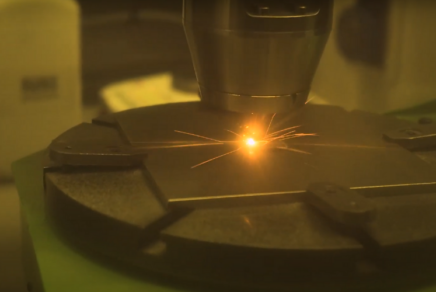
Videos
Discover... the BeAM machine at ISAE-SUPAEROISAE-SUPAERO – as a centre for training through research, research training and innovation – has a wide range of research equipment used within its six research departments. Today, we present the BeAM machine! The additive manufacturing machine, which uses metal powder deposition and laser fusion, enables the Department of Structural Mechanics and Materials (DMSM) to size and qualify parts obtained through these processes. The department is implementing instrumentation to improve part quality and process reliability. This year saw the start of research, supported by the Occitanie region, on process instrumentation and monitoring. Activity will ramp up in 2023 with the start of research on the repair of high value-added aerospace parts and the development of multi-materials.
DMSM
Pages
Photonics Antenna Microwave PlasmaA (PAMPA) Scientific GroupThe “Photonics Antenna Microwave PlasmaA” (PAMPA) scientific group is interested in electromagnetism in the fields of microwaves and photonics, as well as wave-plasma interactions.
DEOS
Doctoral student
PhD
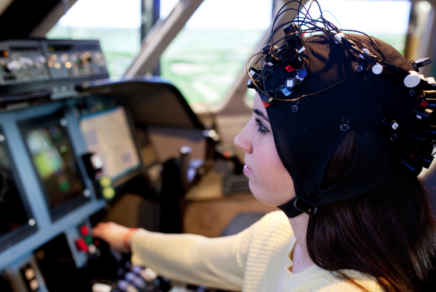
News
The cockpits of the future at the heart of research at ISAE-SUPAEROResearchers at ISAE-SUPAERO have been studying cognitive airborne systems, the virtual assistants that will help pilots in the cockpits of the future, for many years.
Aeronautics
DCAS
News
An ISAE-SUPAERO PhD student has been awarded the ONERA 2026 PhD Student PrizeLucie Schwoebel, a third-year doctoral student at ISAE-SUPAERO working on a thesis co-funded by ONERA, has been awarded the 2026 Doctoral Student Prize in the field of Fluid Mechanics and Energy. This award recognizes the excellence of her research on the acoustics of sound-absorbing materials used in aeronautics.
PhD
Prize
Research
Pages
Our EcosystemOur Institute operates at the heart of a leading academic, scientific, and technological ecosystem. Driven by the strength of the ISAE SUPAERO ENSICA Alumni Association network, supported by the ISAE-SUPAERO Foundation, and enriched by EUROSAE's expertise in executive education, our actions are part of a collective dynamic within the University of Toulouse and the ISAE Group. Committed to the major challenges of tomorrow, we are developing major initiatives within the Institute for Sustainable Aviation for sustainable aviation and the Defense Space Academy to meet the strategic challenges of space.
Aerospace
Partner
Partnership
Pages
Complex Systems Engineering Department (DISC)Within ISAE-SUPAERO, the Complex Systems Engineering Department (DISC) develops skills in mathematics and computer science for aeronautical and space engineering. In both teaching and research, it focuses on the models, methods, and tools needed to control the behavior and performance of complex systems. This complexity may be induced by the multi-physics or multi-scale nature of the systems studied, their dynamic behavior, or their distributed and communicating structure.
DISC
PhD
Researcher
News
Best Scientific Paper Award from the American Institute of Aeronautics and Astronautics 2024 Multidisciplinary Design OptimizationSix researchers from ISAE-SUPAERO, EPFL and the Hong Kong University of Science and Technology have been awarded the AIAA Best Scientific Paper Award for their paper “DeepGeo: Deep Geometric Mapping for Automated and Effective Parameterization in Aerodynamic Shape Optimization”.
Prize
Researcher
Scientific publication
News
ISAE-SUPAERO researchers explore the quantum universeDISC
Researcher
Scientific publication
News
MMX, Idefix® and cameras to understand Mars' moonStudying the formation and origin of Mars' moons and bringing back samples: this is the extraordinary, ambitious international mission led by JAXA, in which ISAE-SUPAERO is participating alongside CNES.
DEOS
Researcher
Space
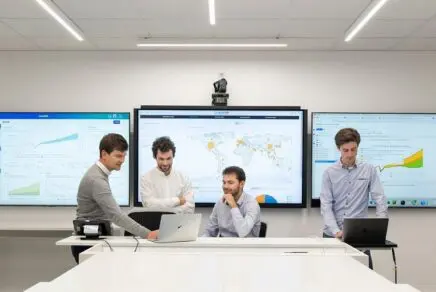
Videos
AeroMAPS: an ISAE-SUPAERO reference tool for exploring the possible futures of aviationThe AeroMAPS tool, developed by two ISAE-SUPAERO researchers, Scott Delbecq and Thomas Planès, can be used to assess the environmental impacts of air transport and the effectiveness or limitations of levers to decarbonize the sector! Initially designed for research and training purposes, the tool is now a multidisciplinary, open-source platform, accessible to experts as well as institutional, industrial and associative decision-makers. Its development has been integrated into the work of the Institute for Sustainable Aviation (ISA), an interdisciplinary research institute headed by Laurent Joly, whose aim is to address the issue of #aviation's ecological transition in all its complexity. By playing on the sector's transition levers, AeroMAPS users can define the scenarios whose impacts they wish to analyze. For example, the introduction of new aircraft types, the use of new fuels or the rate of growth in air traffic. AeroMAPS is the first air transport scenario exploration platform built on an open-source scientific methodology. It was initially designed and developed to enable researchers to explore air transport transition scenarios in detail. It was then rapidly integrated into training programs: first in the ISAE-SUPAERO engineering curriculum, then in continuing education programs. To facilitate use of the tool, a partnership was formed with Sopra Steria. This major tech player built the platform's new web interface to enhance the user experience and make it accessible to decision-makers. Research work recently took on a socio-economic dimension with a PhD prepared by Antoine Salgas, in partnership with TBS Education. Antoine Salgas has also created a traffic and emissions inventory in collaboration with the Dutch Delft University of Technology. These two aspects of his thesis gave rise to an AeroMAPS “satellite” tool, called AeroSCOPE, which enables analyses to be partitioned and regionalized. Today, the comprehensive, multi-disciplinary aspect of AeroMAPS is a decision-making aid for the entire #aeronautics ecosystem. Through its scientific expertise, ISAE-SUPAERO contributes to the debate and to the future of aviation.
DCAS
Decarbonization
Sustainability
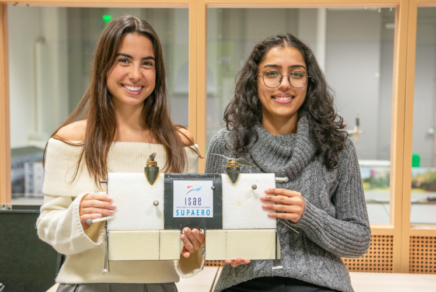
News
Two Master's students will participate in the world's most prestigious robotics conferenceKrishna Murali and Elena Ponce Moreno are second-year students in the Master of Aerospace Engineering programme at ISAE-SUPAERO. They are conducting research on the Mavion, a drone developed at the Institute that takes off vertically and can then fly like an aeroplane.
Conference
DCAS
Master in Aerospace Engineering
News
Meeting with Stéphanie Lizy-Destrez, elected member of the Air and Space AcademyAt ISAE-SUPAERO, Stéphanie Lizy-Destrez heads SaCLaB, a research laboratory focusing on future space systems. A professor of space systems engineering, she has just been elected to the French Air and Space Academy.
Award
Space
Teacher researcher
News
Hera probe captures exceptional images of Mars and its moon DeimosDEOS
Researcher
Science

News
ICCAS 2026: Artificial Intelligence for Operational Decision-MakingThe fourth edition of ICCAS (International Conference on Cognitive Aircraft Systems) was held on June 11–12, organized in partnership with the ISAE-SUPAERO Foundation and Dassault Aviation, as part of the Chair in Design and Architecture of Cognitive Aircraft Systems (CASAC).
Aeronautics
Aviation
Conference
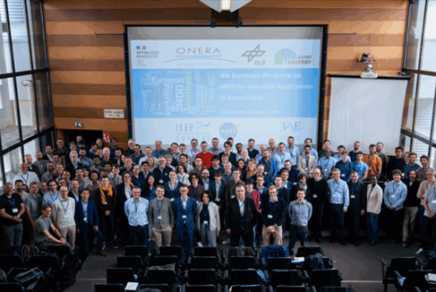
News
From modeling to decarbonation: MDO as a driver of transformation at the 4th European workshopDMSM
Structures and materials
Workshop

News
A team of researchers from the École de l'Air et de l'Espace and ISAE-SUPAERO received the Best Paper Award from the journal "Aviation Psychology and Applied Human Factors"A team of researchers from Ecole de l'air et de l'Espace and ISAE-SUPAERO and their partners have received the Best Paper Award in the Aviation Psychology and Applied Human Factors journal. The official award ceremony will take place during the European Conference on Aviation Psychology (EAAP) in The Hague in September 2026.
Aviation
DCAS
Human factors
Events
French-Korean workshop: “Cryogenic hydrogen for aviation”.Event
Research
Science
Pages
UNIVERSEHUNIVERSEH, the European Space University for Earth and Humanity, is an alliance of European universities created as part of the European Universities initiative launched by the European Commission in 2019.
Education
International
Science
News
ISAE-SUPAERO Researchers Receive IEEE NSREC 2025 Outstanding Paper Award for Advance in Space Imaging Sensor PhysicsResearchers from ISAE-SUPAERO and their partners have received the Outstanding Conference Paper Award at the IEEE (Institute of Electrical and Electronics Engineers) Nuclear and Space Radiation Effects Conference 2025 (NSREC) in Nashville, Tenessee, the most important international conference dedicated to radiation effects in electronic systems for space and nuclear applications.
DEOS
Prize
Research
News
ISAE-SUPAERO and its talented students are once again showcasing Toulouse’s dynamism on the international stageAt ISAE-SUPAERO, talented students continue to distinguish themselves, both in the academic world and in the realm of innovation: a look back at the Amelia Earhart Award won by Elena Lopez-Contreras, a doctoral student at the Neuroergonomics Center, and at the French final of the ActInSpace hackathon, won by her team Solete for their Satell-EYE project.
DCAS
Event
Human factors
Pages
Applied Mathematics (MA) Scientific GroupThe “Applied Mathematics” (MA) scientific group covers a wide range of topics: Stochastic processes (especially Markov processes), numerical optimization (especially multidisciplinary optimization) and parallel computing, stabilization, control and numerical solution of partial differential equations, and financial engineering.
DISC
Doctoral student
PhD
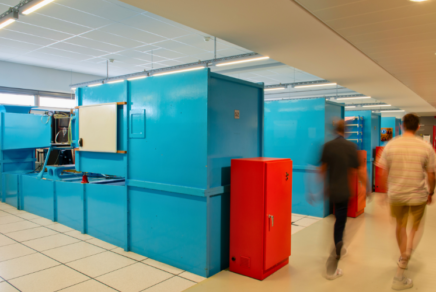
News
Focus on subsonic wind tunnels, aerodynamics in practiceThe subsonic wind tunnels at ISAE-SUPAERO are used to study airflow over objects such as aircraft wing profiles. This equipment, supervised by a technical team, is used by both students and researchers in the Aerodynamics, Energy and Propulsion Department (DAEP).
Aeronautics
DAEP
News
An exceptional scholarship for an innovative projectNaomi Murdoch, a researcher in physics and planetology at ISAE-SUPAERO, has just been awarded the prestigious Consolidator Grant from the European Research Council (ERC) for her planetary body study project called GRAVITE. This ambitious scientific project aims to design a variable gravity machine that will enable the simulation and study of extraterrestrial soils.
DEOS
Scholarship
Space
Videos
FRENCH SUPERCAM INSTRUMENT RECORDING THE SOUND OF INGENUITY'S 4th FLIGHTLocated 80 meters from the rover at the moment of take-off, the small helicopter rose to 5 meters above the ground before covering a distance of 133 meters before returning to land where it had taken off from. SuperCam's scientific microphone, developed by ISAE-SUPAERO, recorded the sound emitted by the rotation of the Martian drone's blades during its flight. This sound has a characteristic frequency of 84 Hz, equivalent to the low “E” of a piano or the bass voice of a human being. “This is a big surprise for the whole scientific team,” says Naomi Murdoch, a researcher at ISAE-SUPAERO who is studying the data from the microphone. "Tests carried out in a Martian atmosphere simulator to design this instrument, and our theories of sound propagation, indicated that the microphone would have great difficulty picking up the sounds of the helicopter. Indeed, Mars' thin atmosphere strongly attenuates sound transmission. We needed a bit of luck to record the helicopter from such a distance. We're very pleased to have succeeded in obtaining this recording, which is proving to be a goldmine for our understanding of the Martian atmosphere". Developed jointly by ISAE-SUPAERO and a consortium of CNRS laboratories and its partners, coordinated by CNES, SuperCam's microphone is derived from a consumer model adapted to withstand the Martian environment. It pursues 3 substantial scientific and technical objectives of the Mars 2020 mission: Study the sound associated with laser impacts on Martian rocks, to gain a better understanding of their mechanical properties. Improving our understanding of atmospheric phenomena (wind turbulence, dust eddies, wind interactions with the rover, and now with the helicopter). Understanding the sound signature of the rover's various movements (robotic arm and mast operations, driving on normal or uneven ground, pump monitoring, etc.). The microphone was first switched on a few hours after Perseverance landed. It recorded the first Martian sounds generated by turbulence in the atmosphere. It is used daily in conjunction with laser rock ablation for chemical analysis of Mars. ABOUT THE MARS 2020 MISSION: NASA is relying on Caltech's Jet Propulsion Laboratory for the development of the Mars 2020 mission. SuperCam was developed jointly by LANL (Los Alamos National Laboratory, USA) and a consortium of laboratories attached to the CNRS, French universities and research establishments. Several Spanish universities, led by the University of Valladolid, are also contributing to the instrument. CNES is responsible to NASA for the French contribution to SuperCam. The instrument is operated alternately from LANL and the French Operations Center for Science and Exploration (FOCSE) at CNES in Toulouse.
DEOS
Researcher
Space
Testimonials
Testimony from Yves Gourinat, elected full member of the Air and Space AcademyDMSM
Structures and materials
Teacher researcher
News
The 2025 Edmond Brun Prize from the French Academy of Sciences awarded to Annafederica Urbano, professor at ISAE-SUPAEROOn October 28, 2025, the Academy of Sciences awarded the Edmond Brun Prize to Annafederica Urbano, professor of space launch vehicles at ISAE-SUPAERO. This biennial physics award recognizes her entire body of work in the field of space propulsion.
DCAS
News
Prize
Videos
Sylvestre Maurice, astrophysicist and ISAE-SUPAERO alumnusAwarded a prize by the Académie des Sciences in 2020, Sylvestre Maurice #astrophysicist at the Institut de Recherche en Astrophysique et Planétologie (IRAP) in Toulouse witnessed the landing of the #Perseverance rover on Mars on February 18, 2021. A historic moment for this enthusiast, who is also the scientific manager of the onboard SuperCam instrument. A 1990 graduate of ISAE-SUPAERO, Sylvestre Maurice tells us about his career.
Alumni
Researcher
Space
Videos
Discover... ISAE-SUPAERO's cryogenic equipment for electrical testingISAE-SUPAERO - as a center for training through research, research training and innovation - has a wide range of research equipment used by its 6 research departments. Today, we present our cryogenic equipment for electrical testing! ISAE-SUPAERO's image sensor research group (CIMI) studies sensors in the visible wavelength range, but also sensors in different spectral ranges such as infrared. Detection of these longer wavelengths requires materials other than silicon for detection, combined with a silicon readout circuit for information processing, all operating at cryogenic temperature. In this context, ISAE-SUPAERO has developed electrical and electro-optical characterization benches for low-temperature microelectronic circuits, in order to extract and model their behavior and performance. These characterization benches can address both very simple circuits, such as transistors, and complex components (complete sensors) with up to 120 inputs/outputs.
DEOS
Pages
Mechanics of Structures and Materials Department (DMSM)The Mechanics of Structures and Materials Department is responsible for organizing and supervising all teaching activities in deformable solid mechanics for ISAE-SUPAERO training courses, in synergy with upstream and applied research activities on aeronautical materials and structures. This strong interaction between teaching and research is the foundation of our department's organization.
DMSM
PhD
Researcher
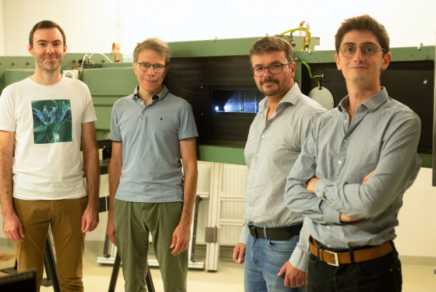
News
Ion propulsion, the genesis of emerging researchNicolas Binder is a professor and head of the Turbomachinery and Propulsion research group at ISAE-SUPAERO. He leads the IPROP project (Ionic Propulsion In Atmosphere) for the Institute, in collaboration with European academic partners.
DAEP
News
Listening to the Martian past: ISAE-SUPAERO at the heart of the ExoMars missionESA's ExoMars Rosalind Franklin mission to explore Mars will carry a unique instrument for recording sound and atmospheric data from the planet. The Institute has been selected by ESA and CNES for this major scientific collaboration.
DEOS
Researcher
Science
News
OPEN SCIENCE ISAE-SUPAERO: ISAE-SUPAERO science in the open air!ISAE-SUPAERO continues to contribute to the open science movement and has created a new open archive platform called OPEN SCIENCE ISAE-SUPAERO. It provides everyone with access to our theses, publications, scientific instruments and technological platforms.
Science
Scientific publication
Thesis
News
DMSM's SA-I research team wins best poster award at 14th EASN conferenceSeveral DMSM researchers received the best poster award at the 14ᵉ EASN (European Aeronautic Science Network) conference dedicated this year to the theme “Innovation in Aviation & Sace towards sustainability today & tomorrow”!
Conference
Prize
Researcher
Videos
Discover the portrait of Paolo PANICUCCI doctoral student at ISAE-SUPAEROPaolo has completed his thesis in the Complex Systems Engineering Department (DISC). His thesis is entitled: Navigation based on autonomous vision and shape reconstruction of an unknown asteroid during the approach phase. It is attached to the AA - Aéronautique Astronautique doctoral school. ISAE-SUPAERO hosts its doctoral students in six teams at ISAE-SUPAERO, ONERA and the Clément Ader Institute, covering a broad spectrum of scientific disciplines related to aeronautics and space: aerodynamics and propulsion, structures and materials, embedded systems, networks and telecommunications, systems control and operation, human factors, electronics and signals. ISAE-SUPAERO offers a rich and diversified doctoral training program, leading to the doctorate, the highest level diploma awarded by the institute, and recognized internationally. Link to his thesis: http://www.theses.fr/s253653
PhD
Thesis
Videos
Sylvestre Maurice presents the SUPERCAM / Martian Exploration educational kitThe ‘SUPERCAM - Martian Exploration’ educational kit project was initiated by five partners: ISAE-SUPAERO, the Toulouse Academy, CNRS, CNES and Cité de l'espace. Under the guidance and supervision of astrophysicist Sylvestre Maurice, first-year students at ISAE-SUPAERO developed this educational tool to raise awareness of space exploration in classrooms, from sixth form to final year. This kit is available to middle and high school teachers and can be adapted to offer educational lessons related to this theme.
Diversity program
Equal opportunities
Researcher
Videos
Discover... the ISAE-SUPAERO plasma benchISAE-SUPAERO – as a centre for training through research, research training and innovation – has a wide range of research equipment used within its six research departments. Today, we present white plasma! With the emergence of #NewSpace, more and more CubeSats are being launched. On these small platforms (CubeSats consist of one or more standard 10 cm cubes), several subsystems must coexist. While electric propulsion solutions save space and weight on board, their electromagnetic compatibility with on-board communication systems is still being questioned today. ISAE-SUPAERO, in collaboration with CNES and LAPLACE, is currently developing simulation tools and characterisation methods to provide engineers with tools for designing CubeSats and effective testing methods to address this issue. This experimental bench developed at ISAE-SUPAERO allows the characterisation of a plasma discharge representative of an electric thruster, as well as the measurement of its interactions with microwave signals generated by nearby communication antennas. Finally, the experimental data obtained will be used to calibrate the numerical analysis tools currently being developed by our teams.
DEOS
News
‘Welcome to France’: ISAE-SUPAERO accredited for the quality of its welcome to international studentsISAE-SUPAERO has once again been awarded the "Bienvenue en France" label with a three-star rating (the highest possible). This label, awarded by Campus France, recognises the quality of the welcome given to international students.
Label
LACS
News
HACKATHON Data Sciences: AI in action!From February 24 to 26, forty-five students will explore three topical issues involving Artificial Intelligence (AI) during a three-day hackathon. The student teams involved will attempt to meet the challenges posed by three industrial partners on the themes of the environment, industrialization and digitization technology. ISAE-SUPAERO confirms its commitment to training in data science and artificial intelligence through its Decision and Data Sciences (DDS) course.
AI
Artificial intelligence
Hackathon
Videos
Perseverance collects first Martian sounds: explanation by Dr. Naomi Murdoch & Dr. Alexander StottDr Naomi Murdoch, researcher in space instrumentation and planetary science, and Dr Alexander Stott, post-doctoral fellow, tell us more about the physical characteristics of Mars' atmosphere, in particular the speed of sound and its attenuation. These analyses were published in Nature on April 1, 2022 by an international team led by a teacher-researcher from Toulouse III - Paul Sabatier University, and including scientists from CNRS and ISAE-SUPAERO.
DEOS
Researcher
Space
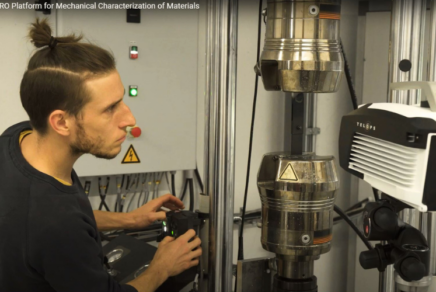
Videos
ISAE-SUPAERO's mechanical materials characterization platformISAE-SUPAERO - as a center for training through research, research training and innovation - has a wide range of research equipment used within its 6 research departments. Today, we present the DMSM's mechanical materials characterization platform! ISAE-SUPAERO's Department of Structural Mechanics and Materials (DMSM) has a number of conventional test facilities on the Institute's campus, enabling it to carry out a wide range of mechanical characterization tests on structural materials, under both quasi-static and fatigue loads. A wide range of instrumentation - video bi-extensometer, stereo image correlation, thermal camera, high-speed camera, etc. - is used to enhance the measurements taken during tests. These test facilities are used as part of ISAE-SUPAERO's various training courses, as well as for the research activities of the Department's teacher-researchers.
DMSM
Pages
Aerodynamics, Energetics, and Propulsion Department (DAEP)At ISAE SUPAERO, the Aerodynamics, Energetics, and Propulsion Department has a staff of 62, 30 research projects including 5 on a European scale, an exceptional fleet of test facilities for teaching and research purposes, and three research groups contributing to a growth strategy focused on 4 themes of current scientific and social-economic challenge, supported by 2 structuring projects: the SAA wind tunnel and the IC3 large-scale simulation code.
DAEP
PhD
Researcher
Videos
Feedback: a Latecoere engineer in the ISAE-SUPAERO laboratoriesTo strengthen the links between industry and research, more than 10 industrial R&D engineers have been made available to ISAE-SUPAERO as part of the France Relance plan! Cyril Geneste, research engineer at Latecoere, is one of them. Together with Miguel Charlotte, Associate Professor at the Institute, he looks back on this fruitful two-year collaboration. Their work, carried out in the ISAE-SUPAERO laboratories, focused on the behavior of aircraft door seals, which ensure cabin airtightness. Thanks to the Institute's cutting-edge equipment and academic expertise, Cyril Geneste was able in particular to carry out numerical modeling of seals in order to test their behavior. Students in their 3rdᵉ year of engineering studies were also involved in this work.
Aeronautics
Researcher
Pages
Design and Analysis of Critical Systems (CASC) Scientific GroupThe “Design and Analysis of Critical Systems” (CASC) scientific group focuses on methods, processes and tools to support System Engineering and Systems Engineering.
DISC
Doctoral student
PhD
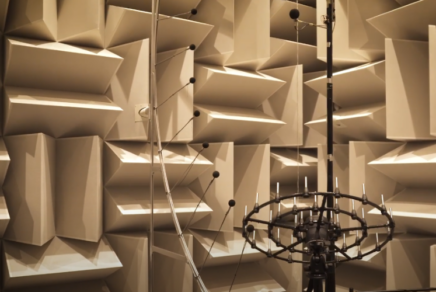
Videos
Discover... the ISAE-SUPAERO acoustic anechoic chamberISAE-SUPAERO – as a centre for training through research, research training and innovation – has a wide range of research equipment used within its six research departments. Today, we present the anechoic chamber! Since 2017, ISAE-SUPAERO's Department of Aerodynamics and Propulsion (DAEP) has had an anechoic chamber, an acoustic testing room whose walls have been treated to study the noise generated by equipment in the absence of acoustic wave reflection. The DAEP uses this testing facility to study aerodynamic noise generated, for example, by drone propellers in order to propose and test noise reduction strategies. The tests carried out in this facility also enable the development of new experimental methodologies and the validation of numerical simulation codes developed by the department.
DAEP
Pages
DirectoryDirectory
Teacher researcher
News
RAMSES: ISAE-SUPAERO at the heart of a historic planetary defense missionLe sismomètre SIA développé par l'ISAE-SUPAERO est une première mondiale pour explorer l'astéroïde Apophis
DEOS
Research
Space
News
ISAE-SUPAERO contributes to the Artemis IV mission with the SPSS seismology instrumentNASA selects the JPL/CNES instrument suite for the Artemis IV mission, paving the way for unprecedented exploration of the Moon’s internal structure at the South Pole.
DEOS
Exploration
Space
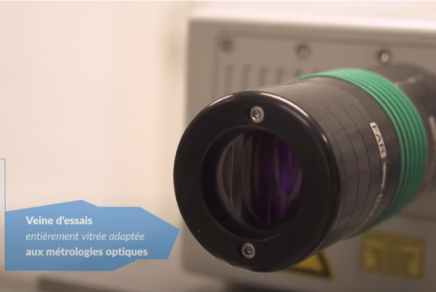
Videos
Discover... the ISAE-SUPAERO visualisation wind tunnelISAE-SUPAERO - as a center for training through #research, research training and innovation - has many research equipments used within its 6 research departments. Today, we present the “S-Visu” #wind #tunnel! The DAEP “S-Visu” wind tunnel is the only open loop wind tunnel in the department. Unlike closed loop wind tunnels recirculating air, air is here drawn from outside, passes through the test section and is evacuated outside thanks to a downstream centrifugal suction compressor. This wind tunnel is thus particularly suitable for flow disturbances studies: the disturbances generated in the test section are evacuated without modifying the conditions entering the wind tunnel.
DAEP
News
“Doctor, tell me about your thesis in five minutes!” - The ISAE-SUPAERO Foundation Thesis AwardsOn Wednesday, January 7, 2026, the ISAE-SUPAERO Foundation awarded its thesis prizes of the year to five young doctors in recognition of the excellence and impact of their research work.
Doctoral student
ISAE-SUPAERO Foundation
Prize
Pages
Learning, Decision, Optimisation (ADO) Scientific GroupDISC
Doctoral student
PhD
Videos
Elena Lopez Contreras, a doctoral student in neuroergonomics at ISAE-SUPAERO, has won the Amelia Earhart AwardPrize
Research
Thesis
Videos
Discover... the ISAE-SUPAERO irradiatorISAE-SUPAERO – as a centre for training through research, research training and innovation – has a wide range of research equipment used within its six research departments. Today, we present the irradiator! As part of its research activities, ISAE-SUPAERO develops electronic components and systems for scientific and space applications. Space is a very aggressive environment, particularly because high-energy particles emitted by the sun or trapped in radiation belts threaten the health of astronauts, the properties of materials and the proper functioning of electronic chips. In order to reproduce the effects of this ionising radiation on electronic technologies in the laboratory, ISAE-SUPAERO has acquired an X-ray irradiation chamber with an energy of up to 320 keV. This video shows a typical use of this equipment: an electronic component to be tested is placed in the irradiation chamber, the X-ray tube is switched on, and the effects on the component's operation (in this case, an image sensor) are observed and measured in real time.
DEOS
Pages
Theory, Modelling, and Systems Engineering (ThéMIS) Scientific GroupThe “Theory, Modeling and Systems Engineering” (ThéMIS) scientific group is dedicated to the study and development of advanced methods for the design, modeling and validation of complex systems.
DISC
Doctoral student
PhD
News
Meteorite impact reveals new insights into MarsIn September 2021, NASA's InSight mission recorded a meteorite impact. Analysis of the data by scientists has revolutionised our understanding of the internal structure of Mars and its evolution. Its mantle is not homogeneous, as previously assumed, but composed of a layer of molten silicates overlying the core. Press release from the IPGP - Institut de Physique du Globe de Paris: ‘The InSight mission reveals a molten layer at the base of the Martian mantle’.
DEOS
Space
News
ICCAS 2026, jointly organized by ISAE-SUPAERO, the ISAE-SUPAERO Foundation, and Dassault Aviation, will take place on June 11-12, 2026.Following the success of the 2022 and 2024 editions, we are delighted to announce 𝐈𝐂𝐂𝐀𝐒 𝟐𝟎𝟐𝟔, organized jointly by ISAE-SUPAERO, the ISAE-SUPAERO Foundation, and Dassault Aviation!
Aeronautics
Artificial intelligence
Aviation
Pages
Job offersAeronautics
Aerospace
AI
News
ISAE-SUPAERO's researchers are working on establishing a sustainable human presence on the Moon.While last year marked the 50th anniversary of the Apollo 17 mission, the last manned trip to the Moon, the development of ‘New Space’ has revived the space sector's interest in lunar exploration.
DCAS
Space
Videos
Discover the portrait of Anthéa COMELLINI doctoral student at ISAE-SUPAEROAnthéa completed her thesis in the Complex Systems Engineering Department (DISC). Her thesis is entitled “Vision-based autonomous rendezvous with non-cooperative targets”. Anthéa is attached to the AA - Aéronautique Astronautique doctoral school. Her thesis, carried out in collaboration with Thales Alenia Space, is part of the CIFRE* program ISAE-SUPAERO hosts its doctoral students in six teams at ISAE-SUPAERO, ONERA and the Clément Ader Institute, covering a broad spectrum of scientific disciplines related to aeronautics and space: aerodynamics and propulsion, structures and materials, onboard systems, networks and telecommunications, systems control and operation, human factors, electronics, signals. ISAE-SUPAERO offers a rich and diversified doctoral training program, leading to the doctorate, the highest level diploma awarded by the institute, and recognized internationally. *Since 1981, the CIFRE scheme - Conventions Industrielles de Formation par la REcherche (Industrial Conventions for Training through Research) - has enabled companies to benefit from financial assistance to recruit a young doctoral student whose research, supervised by a public research laboratory, will lead to the completion of a thesis in three years. CIFREs are fully funded by the French Ministry of Higher Education and Research, which has entrusted ANRT (Association Nationale de la Recherche et de la Technologie) with their implementation.
PhD
Thesis
Videos
Discover... the ISAE-SUPAERO radio anechoic chamberISAE-SUPAERO – as a centre for training through research, research training and innovation – has a wide range of research equipment used within its six research departments. Today, we present the radio anechoic chamber! Drones and nanosatellites have many applications in the media, industry, agriculture and telecommunications sectors. These two types of platforms share the common constraint of having to carry complex systems in a small space. One of the key elements of on-board communication systems is the antenna, which must also be compact and lightweight. ISAE-SUPAERO, in collaboration with ENAC and ANYWAVES, is currently developing dielectric antennas made by 3D printing ceramics that meet the demanding criteria for integration on drones and nanosatellites. Thanks to the anechoic chamber available at ISAE-SUPAERO, researchers involved in the development of these original antennas can accurately characterise their radiation properties and thus validate the new technological solutions proposed.
DCAS
DEOS
Pages
Connected Systems (SysCo) Scientific GroupThe scientific dynamic of the “Connected Systems” (SysCo) scientific group focuses primarily on network-related issues in aerospace applications, i.e. space communications, embedded networks and certain types of connected systems.
DISC
Doctoral student
PhD
News
Airbus Defence and Space and ISAE-SUPAERO train members of the Peruvian space agencyTwenty engineers from the Peruvian space agency attended a training course in Toulouse, jointly designed by ISAE-SUPAERO and Airbus Defence and Space, to develop their skills in the field of space systems and space missions.
DCAS
Short internship
Space
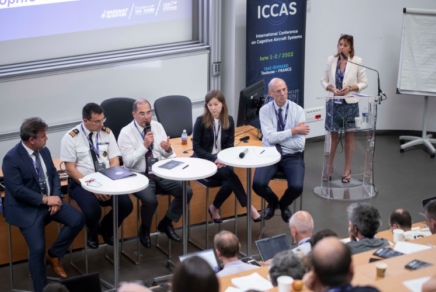
News
ISAE-SUPAERO hosts ICCAS, an international conference on cognitive airborne systems• The ICCAS international conference will be held on 16 and 17 May on the ISAE-SUPAERO campus. • It brings together world-renowned scientists working on cognitive airborne systems, the virtual assistants that will help pilots in the cockpits of the future. • The Institute has been involved in the development of these research topics for many years.
Conference
DCAS
News
Mission Insight: the contribution of researchers from ISAE-SUPAEROThe InSight lander deployed by NASA recorded two earthquakes that occurred on Mars in 2021, providing scientists with exceptional data, the first direct observations ever made of a planet's core.
DEOS
Space
News
SILOE, an experimental drop tower project selected by ESA and an ESPACE grant for Alexia DuchêneThe SILOE experimental drop tower project aims to study the cohesion of planetary surfaces. This student project is supported by ESA as part of its European ‘Academy Experiments’ program. Alexia Duchêne, SILOE project leader, has been awarded a scholarship of excellence from the Fondation des Ailes de France.
DEOS
Space
Pages
Space Systems for Planetology and Applications (SSPA) Scientific GroupThe “Space Systems for Planetology and Applications” (SSPA) scientific group focuses on one main area of research: The development of missions and associated technologies for geophysical exploration of the solar system.
DEOS
Doctoral student
PhD
News
The Jupiter system: a unique laboratory for a major scientific breakthroughNicolas André, teacher-researcher at ISAE-SUPAERO, co-authors a major discovery in Nature Communications.
DEOS
Exploration
Space
Videos
The Dart mission has hit its target: explanations from Dr Naomi Murdoch, planetary scientist at ISAE-SUPAEROResearchers from ISAE-SUPAERO are participating in this first planetary defence mission. Dr. Naomi Murdoch, a researcher at ISAE-SUPAERO and scientific member of the #DART and #HERA missions, comments on the objectives of DART and those of the European HERA mission, which will arrive in the area in 2026 to characterise the crater left by DART and study the internal structure of the asteroid #Dimorphos!
DEOS
Researcher
Space

News
The Age of Pioneers: Reinventing Aviation with HydrogenFor the past ten years at ISAE-SUPAERO, research into hydrogen has established itself as a major focus of innovation in support of the aviation sector’s energy transition. Now, more than ever, the pioneering spirit drives the Institute’s researchers. The Mermoz hydrogen-powered drone project builds on the legendary legacy of the Aéropostale and Jean Mermoz’s 1930 flight across the South Atlantic. Almost a century later, "Défi Mermoz" is in turn taking up a technological challenge, closely aligned with industrial priorities, without waiting until 2050!
Aviation
DAEP
Decarbonization
Videos
Discover... CMOS image sensors at ISAE-SUPAEROISAE-SUPAERO - as a center for training through research, research training and innovation - has a wide range of research equipment used in its 6 research departments. Today, we present CMOS image sensors! CMOS image sensors are playing an increasingly important role in our everyday lives. For several years now, our team at ISAE-SUPAERO has been developing CMOS image sensors with a number of players in the field, and innovating by proposing new architectures and conditions of use requiring studies of both elementary components and more complex structures. Measurements are carried out on transistors and diodes with the help of an under-tip tester and a parametric analyzer enabling very low current measurements (10 aA). Similarly, simple structures containing innovative pixels can be operated with the tester using spike cards coupled to a word generator specially designed for image sensors. All these studies not only contribute to our understanding of the physics of photodetection, but also provide models for our simulators. They are also used to monitor manufacturing processes during the various production phases.
DEOS
Videos
ISAE-SUPAERO publishes its Aviation and Climate Reference FrameworkThe ISAE-SUPAERO #Aviation and #Climate reference framework aims to provide #scientific information useful for understanding the challenges facing aviation and the climate. This work has undergone a specific review process involving both ISAE-SUPAERO staff and external researchers from various institutes.
Decarbonization
Researcher
Sustainability
Testimonials
Testimony from Alexandre Bouraoui, engineering student by apprenticeship and IAC 2025 Award WinnerFinal-year engineering apprentice, specializing in Industrialisation and Methods for Aeronautics and Space, Alexandre Bouraoui was recently honored at the 76th International Astronautical Congress (IAC 2025) in Sydney, where he won the prestigious Hermann Oberth Gold Medal in the Graduate category. We spoke with him about his award and his studies at ISAE-SUPAERO.
Aeronautics
Aerospace
Congress
News
Let's make together a durable commitment to new horizonsAeronautics
Horizons
Sustainability
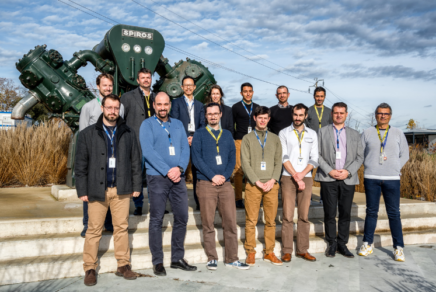
News
Air conditioning systems: ISAE-SUPAERO and Liebherr-Aerospace Toulouse join forcesISAE-SUPAERO and Liebherr-Aerospace Toulouse strengthened their collaboration on January the first through an industrial chair. The objective is to develop and improve methods and tools for the aerodynamic design of turbomachine wheels, contributing to research on carbon-free aircraft.
Chair
DAEP
Partnership
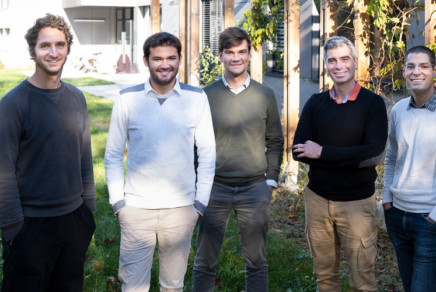
News
Aviation and Climate: an assessment of transition scenarios for sustainable aviation compatible with the Paris AgreementIn 2021, ISAE-SUPAERO researchers Scott Delbecq, Jérôme Fontane, Nicolas Gourdain, Florian Simatos and Thomas Planès published the ‘Aviation and Climate’ report, summarising international scientific publications in order to provide the scientific information needed to understand the challenges of decarbonising air transport.
Aeronautics
DCAS
Decarbonization
News
Historical Discovery: Mercury Does Indeed Have Electron Radiation BeltsAn international team of researchers, including a scientist from ISAE-SUPAERO, has just published a study in the journal "Nature Astronomy" revealing the existence of electron radiation belts around Mercury. This discovery, based on an analysis of data from the MESSENGER mission and supported by previously unpublished observations from the BepiColombo mission’s MEA (Mercury Electron Analyzer) instrument, sheds new light on the physics of planetary magnetospheres and raises major challenges for the protection of space missions.
DEOS
Research
Space
Events
2025 edition of "La nuit des chercheurs"Meet ISAE-SUPAERO researchers at the Nuit des Chercheurs de Toulouse, on October 3 at 6pm at the Halles de la Cartoucherie, on the theme of “Intelligence(s)”!
Aerospace
Researcher
Science
News
ISAE-SUPAERO publishes an aviation and climate reportSustainability
Teacher researcher
Pages
Scientific and research integrityISAE-SUPAERO is one of the signatories of the National Charter of Ethics for Research Professions, adopted in January 2015 by the Conference of University Presidents (CPU) and all national research organizations, and incorporated into the Institute's internal regulations.
DAEP
DCAS
DEOS
Pages
Electronics, Optronics, and Signal Processing Department (DEOS)At ISAE SUPAERO, the Department of Electronics, Optronics and Signal Processing (DEOS) studies, designs and produces scientific instruments for aeronautics, space and defense applications, with a strong focus on advanced systems and planetary exploration missions.
DEOS
Events
Interdisciplinary Congress on Extreme Worlds - CIMEDo you work in or on extreme environments? Come and take part in the first edition of the Interdisciplinary Congress on Extreme Worlds (CIME)!
Congress
Research
Science
News
Focus on... quantum physics in ISAE-SUPAERO training coursesISAE-SUPAERO has been integrating quantum physics into its training and research activities uninterruptedly since 1980, and for the past two decades has been offering courses linked to the second quantum revolution.
DEOS
Ingénieur généraliste (MSc)
Teacher researcher
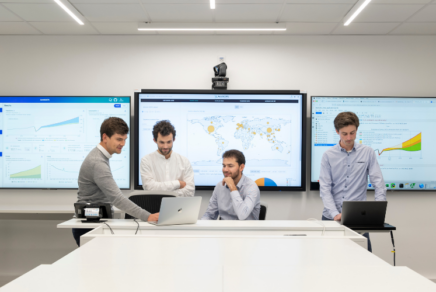
News
AeroMAPS: the go-to tool for exploring the possible futures of aviationThe AeroMAPS tool, developed by researchers at ISAE-SUPAERO, makes it possible to assess the environmental impacts of air transport and the effectiveness or limitations of levers for decarbonising the sector.
Aeronautics
DCAS
Decarbonization
News
A protocol chosen to secure communications with quantum computersDISC
Researcher
Scientific publication
News
Researchers from ISAE-SUPAERO contributed to the success of the first images from ESA's Sentinel 2c observation satellite.The Sentinel 2c Earth observation satellite, launched on 5 September as part of ESA's Copernicus mission, has delivered its first images. This success is partly due to the image sensor research team (CIMI) at ISAE-SUPAERO, which designed and oversaw the manufacture of the visible image sensors.
DEOS
Space
Pages
Testimonials« Ingénieur ISAE-SUPAERO » by apprenticeship
Advanced Master
Alumni
Videos
Discover... ISAE-SUPAERO's mobile ground robotsISAE-SUPAERO - as a center for training through research, research training and innovation - has a wide range of research equipment used in its 6 research departments. Today, we'd like to introduce you to mobile ground robots! Whether robots, airplanes, cars or even telephones, all these technologies are equipped with perception systems. Depending on the application, these sources of information make it possible to perceive the environment in which a system is evolving, and also to measure its own characteristics, such as speed or acceleration. This multitude of data must then be used, cross-referenced and interpreted within the navigation system to obtain the vehicle's position, but also, in the case of mapping applications, that of surrounding objects. Within the DEOS NAVIRRES team, researchers are interested in navigation systems and their application in complex environments where sensor information may be degraded, erroneous or unavailable. Mobile acquisition platforms are being developed. These are equipped with cameras, lidars, GNSS (Global Navigation Satellite System) receivers, radars and inertial units, with the aim of obtaining the most efficient navigation system for the application in question. One of the team's research themes is the analysis of the degradation of sensor information, enabling the development of new robust and adaptive algorithms to compensate for environmental constraints. The aim is to make navigation systems more accurate and safer, for critical applications requiring strong reliability constraints, such as autonomous cars or exploration robotics.
DEOS
Pages
Design and Operation of Aerospace Vehicles Department (DCAS)At ISAE-SUPAERO, the Design and Operation of Aerospace Vehicles Department (DCAS) develops methods, simulation tools and experimental platforms for the design and operation of aerospace vehicles.
DCAS
PhD
Researcher
News
Meeting with Yves Gourinat, elected as a full member of the Air and Space AcademyYves Gourinat is a professor of structural physics in the Structural Mechanics and Materials Department (DMSM) at ISAE-SUPAERO. Already a corresponding member since 2019, he has just been elected a full member of the French Academy of Aeronautics and Space.
Aeronautics
Award
Teacher researcher
Pages
Languages, Arts, Cultures, and Societies Department (LACS)At the Languages, Arts, Cultures, and Societies Department (LACS), we teach languages, interculturality, geopolitics, general culture, economics, sports, etc. Multidimensional skills that bring out knowledge, interpersonal skills, know-how and the ability to act.
LACS
PhD
Researcher

Videos
Trailer FLE 2022 singing conferenceAround 350 international students take French courses organized by the institute. These courses are aimed at students in the “Ingénieur ISAE-SUPAERO” program and in the Master of Science in Aerospace Engineering program. They are also open to doctoral students and interns from the institute's various departments. The aim of these courses is to facilitate students' social, cultural and academic integration.
LACS
Student life
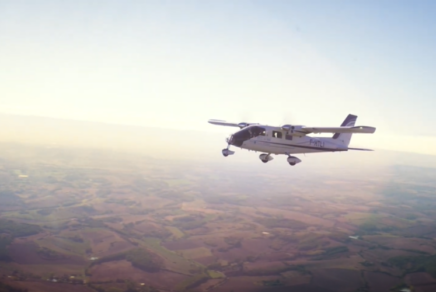
Videos
Discover... ISAE-SUPAERO's P68ISAE-SUPAERO - as a center for training through #research, research training and innovation - has a wealth of research equipment used within its 6 research departments. Today, we present the #P68! Since 2018, ISAE-SUPAERO's flight operations center has been equipped with a twin-engine Vulcanair P68 Observer 2 to teach ISAE-SUPAERO students flight mechanics, flight test techniques and how to carry out research projects. The aircraft is equipped with a telemetry system, enabling flight parameters to be monitored in real time from the campus classrooms. A versatile aircraft with a large payload, it can carry a variety of sensors via a hatch under the fuselage. It also features unique instrumentation for research activities and sensors for pilot monitoring (remote eye trackers, scene cameras, etc.) synchronized with flight parameters. It enables us to estimate pilots' attentional and cognitive states (fatigue, distraction, inattention, engagement, etc.) in real time during flight.
DCAS
News
Campus au féminin: raising girls' awareness of scientific careersCareer
Diversity program
Equal opportunities
News
Congratulations to our eight ISAE-SUPAERO faculty members who are among the top 2% of scientists!Stanford University recently published an updated list of the world's most influential scientists, which includes eight ISAE-Supaero faculty members.
Ranking
Teacher researcher
News
The project for an unmanned, zero-emission aircraft to cross the South AtlanticInnovation
Researcher
Sustainability
Discover the portrait of Paolo PANICUCCI doctoral student at ISAE-SUPAERO
Paolo has completed his thesis in the Complex Systems Engineering Department (DISC). His thesis is entitled: Navigation based on autonomous vision and shape reconstruction of an unknown asteroid during the approach phase. It is attached to the AA - Aéronautique Astronautique doctoral school. ISAE-SUPAERO hosts its doctoral students in six teams at ISAE-SUPAERO, ONERA and the Clément Ader Institute, covering a broad spectrum of scientific disciplines related to aeronautics and space: aerodynamics and propulsion, structures and materials, embedded systems, networks and telecommunications, systems control and operation, human factors, electronics and signals. ISAE-SUPAERO offers a rich and diversified doctoral training program, leading to the doctorate, the highest level diploma awarded by the institute, and recognized internationally. Link to his thesis: http://www.theses.fr/s253653
Related Content
Pages
Communication and Information Theory (ComiT) Scientific GroupThe “Communication and Information Theory” (ComiT) scientific group is involved in the disciplines of digital communications, radar, and channel access techniques. Its fields of application include space systems, civil and military aviation, terrestrial cellular networks and the Internet of Things (IoT).
DEOS
Doctoral program
Doctoral student
Pages
Aerodynamics, Energetics, and Propulsion Department (DAEP)At ISAE SUPAERO, the Aerodynamics, Energetics, and Propulsion Department has a staff of 62, 30 research projects including 5 on a European scale, an exceptional fleet of test facilities for teaching and research purposes, and three research groups contributing to a growth strategy focused on 4 themes of current scientific and social-economic challenge, supported by 2 structuring projects: the SAA wind tunnel and the IC3 large-scale simulation code.
DAEP
PhD
Researcher
Pages
Connected Systems (SysCo) Scientific GroupThe scientific dynamic of the “Connected Systems” (SysCo) scientific group focuses primarily on network-related issues in aerospace applications, i.e. space communications, embedded networks and certain types of connected systems.
DISC
Doctoral student
PhD
Pages
Design and Analysis of Critical Systems (CASC) Scientific GroupThe “Design and Analysis of Critical Systems” (CASC) scientific group focuses on methods, processes and tools to support System Engineering and Systems Engineering.
DISC
Doctoral student
PhD
Pages
Theory, Modelling, and Systems Engineering (ThéMIS) Scientific GroupThe “Theory, Modeling and Systems Engineering” (ThéMIS) scientific group is dedicated to the study and development of advanced methods for the design, modeling and validation of complex systems.
DISC
Doctoral student
PhD
Pages
Space Systems for Planetology and Applications (SSPA) Scientific GroupThe “Space Systems for Planetology and Applications” (SSPA) scientific group focuses on one main area of research: The development of missions and associated technologies for geophysical exploration of the solar system.
DEOS
Doctoral student
PhD
Pages
ResearchAt ISAE-SUPAERO, we conduct cutting-edge research in the service of innovation, technological sovereignty and the ecological transition of the aerospace sector, thereby affirming our role as a leading player in the scientific and industrial community.
DAEP
DCAS
DEOS
News
“Doctor, tell me about your thesis in five minutes!” - The ISAE-SUPAERO Foundation Thesis AwardsOn Wednesday, January 7, 2026, the ISAE-SUPAERO Foundation awarded its thesis prizes of the year to five young doctors in recognition of the excellence and impact of their research work.
Doctoral student
ISAE-SUPAERO Foundation
Prize
Pages
Lasbordes Air Operations Center (COAL)The Department of Design and Operation of Aeronautical and Space Vehicles (DCAS) is part of the Lasbordes Air Operations Center (COAL), located on an airfield a few kilometers from the ISAE-SUPAERO campus. As part of its aeronautical training and research activities, COAL operates a fleet of 8 light aircraft.
DCAS
Doctoral student
PhD
Pages
Photonics Antenna Microwave PlasmaA (PAMPA) Scientific GroupThe “Photonics Antenna Microwave PlasmaA” (PAMPA) scientific group is interested in electromagnetism in the fields of microwaves and photonics, as well as wave-plasma interactions.
DEOS
Doctoral student
PhD
Pages
Our doctoral trainingDoctoral program
Doctoral student
PhD
Pages
Mechanics of Structures and Materials Department (DMSM)The Mechanics of Structures and Materials Department is responsible for organizing and supervising all teaching activities in deformable solid mechanics for ISAE-SUPAERO training courses, in synergy with upstream and applied research activities on aeronautical materials and structures. This strong interaction between teaching and research is the foundation of our department's organization.
DMSM
PhD
Researcher
Pages
Learning, Decision, Optimisation (ADO) Scientific GroupDISC
Doctoral student
PhD
Pages
Complex Systems Engineering Department (DISC)Within ISAE-SUPAERO, the Complex Systems Engineering Department (DISC) develops skills in mathematics and computer science for aeronautical and space engineering. In both teaching and research, it focuses on the models, methods, and tools needed to control the behavior and performance of complex systems. This complexity may be induced by the multi-physics or multi-scale nature of the systems studied, their dynamic behavior, or their distributed and communicating structure.
DISC
PhD
Researcher
Videos
Discover the portrait of Anthéa COMELLINI doctoral student at ISAE-SUPAEROAnthéa completed her thesis in the Complex Systems Engineering Department (DISC). Her thesis is entitled “Vision-based autonomous rendezvous with non-cooperative targets”. Anthéa is attached to the AA - Aéronautique Astronautique doctoral school. Her thesis, carried out in collaboration with Thales Alenia Space, is part of the CIFRE* program ISAE-SUPAERO hosts its doctoral students in six teams at ISAE-SUPAERO, ONERA and the Clément Ader Institute, covering a broad spectrum of scientific disciplines related to aeronautics and space: aerodynamics and propulsion, structures and materials, onboard systems, networks and telecommunications, systems control and operation, human factors, electronics, signals. ISAE-SUPAERO offers a rich and diversified doctoral training program, leading to the doctorate, the highest level diploma awarded by the institute, and recognized internationally. *Since 1981, the CIFRE scheme - Conventions Industrielles de Formation par la REcherche (Industrial Conventions for Training through Research) - has enabled companies to benefit from financial assistance to recruit a young doctoral student whose research, supervised by a public research laboratory, will lead to the completion of a thesis in three years. CIFREs are fully funded by the French Ministry of Higher Education and Research, which has entrusted ANRT (Association Nationale de la Recherche et de la Technologie) with their implementation.
PhD
Thesis
News
ISAE-SUPAERO and its talented students are once again showcasing Toulouse’s dynamism on the international stageAt ISAE-SUPAERO, talented students continue to distinguish themselves, both in the academic world and in the realm of innovation: a look back at the Amelia Earhart Award won by Elena Lopez-Contreras, a doctoral student at the Neuroergonomics Center, and at the French final of the ActInSpace hackathon, won by her team Solete for their Satell-EYE project.
DCAS
Event
Human factors
Pages
Design and Operation of Aerospace Vehicles Department (DCAS)At ISAE-SUPAERO, the Design and Operation of Aerospace Vehicles Department (DCAS) develops methods, simulation tools and experimental platforms for the design and operation of aerospace vehicles.
DCAS
PhD
Researcher
Pages
Job offersAeronautics
Aerospace
AI
Videos
Elena Lopez Contreras, a doctoral student in neuroergonomics at ISAE-SUPAERO, has won the Amelia Earhart AwardPrize
Research
Thesis
Pages
Integrated Image Sensors (CIMI) Scientific GroupThe “Integrated Image Sensors” (CIMI) scientific group, develops and characterizes active-pixel image sensors (CMOS Image Sensors (CIS)) on silicon for visible and infrared radiation.
DEOS
Doctoral student
PhD
Pages
Navigation, Radar, and Remote Sensing (NAVIR² eS) Scientific GroupThe “Navigation, Radar and Remonte Sensing” (NAVIR² eS) scientific group is interested in the theoretical study of information sources and hybridization approaches for autonomous vehicle navigation applications.
DEOS
Doctoral student
PhD
Pages
DMSM at the Clément Ader Institute (ICA)The Clément Ader Institute (UMR CNRS 5312) is the solid mechanics research laboratory for Toulouse and its region, under the aegis of the CNRS. It brings together research teams from four institutions and three ministries: the University of Toulouse III Paul Sabatier (National Education), INSA (National Education), ISAE-SUPAERO (Defense), and the École des Mines d'Albi (Industry). These institutions are located in three cities in Midi-Pyrénées: Toulouse, Albi, and Tarbes.
DMSM
Doctoral student
PhD
News
OPEN SCIENCE ISAE-SUPAERO: ISAE-SUPAERO science in the open air!ISAE-SUPAERO continues to contribute to the open science movement and has created a new open archive platform called OPEN SCIENCE ISAE-SUPAERO. It provides everyone with access to our theses, publications, scientific instruments and technological platforms.
Science
Scientific publication
Thesis
Pages
Applied Mathematics (MA) Scientific GroupThe “Applied Mathematics” (MA) scientific group covers a wide range of topics: Stochastic processes (especially Markov processes), numerical optimization (especially multidisciplinary optimization) and parallel computing, stabilization, control and numerical solution of partial differential equations, and financial engineering.
DISC
Doctoral student
PhD
News
An ISAE-SUPAERO PhD student has been awarded the ONERA 2026 PhD Student PrizeLucie Schwoebel, a third-year doctoral student at ISAE-SUPAERO working on a thesis co-funded by ONERA, has been awarded the 2026 Doctoral Student Prize in the field of Fluid Mechanics and Energy. This award recognizes the excellence of her research on the acoustics of sound-absorbing materials used in aeronautics.
PhD
Prize
Research
Pages
Languages, Arts, Cultures, and Societies Department (LACS)At the Languages, Arts, Cultures, and Societies Department (LACS), we teach languages, interculturality, geopolitics, general culture, economics, sports, etc. Multidimensional skills that bring out knowledge, interpersonal skills, know-how and the ability to act.
LACS
PhD
Researcher
Discover the portrait of Anthéa COMELLINI doctoral student at ISAE-SUPAERO
Related Content
Pages
Applied Mathematics (MA) Scientific GroupThe “Applied Mathematics” (MA) scientific group covers a wide range of topics: Stochastic processes (especially Markov processes), numerical optimization (especially multidisciplinary optimization) and parallel computing, stabilization, control and numerical solution of partial differential equations, and financial engineering.
DISC
Doctoral student
PhD
Pages
Complex Systems Engineering Department (DISC)Within ISAE-SUPAERO, the Complex Systems Engineering Department (DISC) develops skills in mathematics and computer science for aeronautical and space engineering. In both teaching and research, it focuses on the models, methods, and tools needed to control the behavior and performance of complex systems. This complexity may be induced by the multi-physics or multi-scale nature of the systems studied, their dynamic behavior, or their distributed and communicating structure.
DISC
PhD
Researcher
Videos
Elena Lopez Contreras, a doctoral student in neuroergonomics at ISAE-SUPAERO, has won the Amelia Earhart AwardPrize
Research
Thesis
Pages
Languages, Arts, Cultures, and Societies Department (LACS)At the Languages, Arts, Cultures, and Societies Department (LACS), we teach languages, interculturality, geopolitics, general culture, economics, sports, etc. Multidimensional skills that bring out knowledge, interpersonal skills, know-how and the ability to act.
LACS
PhD
Researcher
Pages
Our doctoral trainingDoctoral program
Doctoral student
PhD
Pages
Mechanics of Structures and Materials Department (DMSM)The Mechanics of Structures and Materials Department is responsible for organizing and supervising all teaching activities in deformable solid mechanics for ISAE-SUPAERO training courses, in synergy with upstream and applied research activities on aeronautical materials and structures. This strong interaction between teaching and research is the foundation of our department's organization.
DMSM
PhD
Researcher
Pages
Space Systems for Planetology and Applications (SSPA) Scientific GroupThe “Space Systems for Planetology and Applications” (SSPA) scientific group focuses on one main area of research: The development of missions and associated technologies for geophysical exploration of the solar system.
DEOS
Doctoral student
PhD
Pages
Connected Systems (SysCo) Scientific GroupThe scientific dynamic of the “Connected Systems” (SysCo) scientific group focuses primarily on network-related issues in aerospace applications, i.e. space communications, embedded networks and certain types of connected systems.
DISC
Doctoral student
PhD
News
ISAE-SUPAERO and its talented students are once again showcasing Toulouse’s dynamism on the international stageAt ISAE-SUPAERO, talented students continue to distinguish themselves, both in the academic world and in the realm of innovation: a look back at the Amelia Earhart Award won by Elena Lopez-Contreras, a doctoral student at the Neuroergonomics Center, and at the French final of the ActInSpace hackathon, won by her team Solete for their Satell-EYE project.
DCAS
Event
Human factors
News
OPEN SCIENCE ISAE-SUPAERO: ISAE-SUPAERO science in the open air!ISAE-SUPAERO continues to contribute to the open science movement and has created a new open archive platform called OPEN SCIENCE ISAE-SUPAERO. It provides everyone with access to our theses, publications, scientific instruments and technological platforms.
Science
Scientific publication
Thesis
Pages
Lasbordes Air Operations Center (COAL)The Department of Design and Operation of Aeronautical and Space Vehicles (DCAS) is part of the Lasbordes Air Operations Center (COAL), located on an airfield a few kilometers from the ISAE-SUPAERO campus. As part of its aeronautical training and research activities, COAL operates a fleet of 8 light aircraft.
DCAS
Doctoral student
PhD
Pages
Theory, Modelling, and Systems Engineering (ThéMIS) Scientific GroupThe “Theory, Modeling and Systems Engineering” (ThéMIS) scientific group is dedicated to the study and development of advanced methods for the design, modeling and validation of complex systems.
DISC
Doctoral student
PhD
Pages
DMSM at the Clément Ader Institute (ICA)The Clément Ader Institute (UMR CNRS 5312) is the solid mechanics research laboratory for Toulouse and its region, under the aegis of the CNRS. It brings together research teams from four institutions and three ministries: the University of Toulouse III Paul Sabatier (National Education), INSA (National Education), ISAE-SUPAERO (Defense), and the École des Mines d'Albi (Industry). These institutions are located in three cities in Midi-Pyrénées: Toulouse, Albi, and Tarbes.
DMSM
Doctoral student
PhD
News
An ISAE-SUPAERO PhD student has been awarded the ONERA 2026 PhD Student PrizeLucie Schwoebel, a third-year doctoral student at ISAE-SUPAERO working on a thesis co-funded by ONERA, has been awarded the 2026 Doctoral Student Prize in the field of Fluid Mechanics and Energy. This award recognizes the excellence of her research on the acoustics of sound-absorbing materials used in aeronautics.
PhD
Prize
Research
Pages
Aerodynamics, Energetics, and Propulsion Department (DAEP)At ISAE SUPAERO, the Aerodynamics, Energetics, and Propulsion Department has a staff of 62, 30 research projects including 5 on a European scale, an exceptional fleet of test facilities for teaching and research purposes, and three research groups contributing to a growth strategy focused on 4 themes of current scientific and social-economic challenge, supported by 2 structuring projects: the SAA wind tunnel and the IC3 large-scale simulation code.
DAEP
PhD
Researcher
Pages
Navigation, Radar, and Remote Sensing (NAVIR² eS) Scientific GroupThe “Navigation, Radar and Remonte Sensing” (NAVIR² eS) scientific group is interested in the theoretical study of information sources and hybridization approaches for autonomous vehicle navigation applications.
DEOS
Doctoral student
PhD
Pages
ResearchAt ISAE-SUPAERO, we conduct cutting-edge research in the service of innovation, technological sovereignty and the ecological transition of the aerospace sector, thereby affirming our role as a leading player in the scientific and industrial community.
DAEP
DCAS
DEOS
Pages
Communication and Information Theory (ComiT) Scientific GroupThe “Communication and Information Theory” (ComiT) scientific group is involved in the disciplines of digital communications, radar, and channel access techniques. Its fields of application include space systems, civil and military aviation, terrestrial cellular networks and the Internet of Things (IoT).
DEOS
Doctoral program
Doctoral student
Pages
Learning, Decision, Optimisation (ADO) Scientific GroupDISC
Doctoral student
PhD
Pages
Integrated Image Sensors (CIMI) Scientific GroupThe “Integrated Image Sensors” (CIMI) scientific group, develops and characterizes active-pixel image sensors (CMOS Image Sensors (CIS)) on silicon for visible and infrared radiation.
DEOS
Doctoral student
PhD
Videos
Discover the portrait of Paolo PANICUCCI doctoral student at ISAE-SUPAEROPaolo has completed his thesis in the Complex Systems Engineering Department (DISC). His thesis is entitled: Navigation based on autonomous vision and shape reconstruction of an unknown asteroid during the approach phase. It is attached to the AA - Aéronautique Astronautique doctoral school. ISAE-SUPAERO hosts its doctoral students in six teams at ISAE-SUPAERO, ONERA and the Clément Ader Institute, covering a broad spectrum of scientific disciplines related to aeronautics and space: aerodynamics and propulsion, structures and materials, embedded systems, networks and telecommunications, systems control and operation, human factors, electronics and signals. ISAE-SUPAERO offers a rich and diversified doctoral training program, leading to the doctorate, the highest level diploma awarded by the institute, and recognized internationally. Link to his thesis: http://www.theses.fr/s253653
PhD
Thesis
Pages
Design and Analysis of Critical Systems (CASC) Scientific GroupThe “Design and Analysis of Critical Systems” (CASC) scientific group focuses on methods, processes and tools to support System Engineering and Systems Engineering.
DISC
Doctoral student
PhD
Pages
Photonics Antenna Microwave PlasmaA (PAMPA) Scientific GroupThe “Photonics Antenna Microwave PlasmaA” (PAMPA) scientific group is interested in electromagnetism in the fields of microwaves and photonics, as well as wave-plasma interactions.
DEOS
Doctoral student
PhD
News
“Doctor, tell me about your thesis in five minutes!” - The ISAE-SUPAERO Foundation Thesis AwardsOn Wednesday, January 7, 2026, the ISAE-SUPAERO Foundation awarded its thesis prizes of the year to five young doctors in recognition of the excellence and impact of their research work.
Doctoral student
ISAE-SUPAERO Foundation
Prize
Pages
Design and Operation of Aerospace Vehicles Department (DCAS)At ISAE-SUPAERO, the Design and Operation of Aerospace Vehicles Department (DCAS) develops methods, simulation tools and experimental platforms for the design and operation of aerospace vehicles.
DCAS
PhD
Researcher
Pages
Job offersAeronautics
Aerospace
AI