Internship offer
Full-time
Master's degree
Between 0 and 2 years
Intern
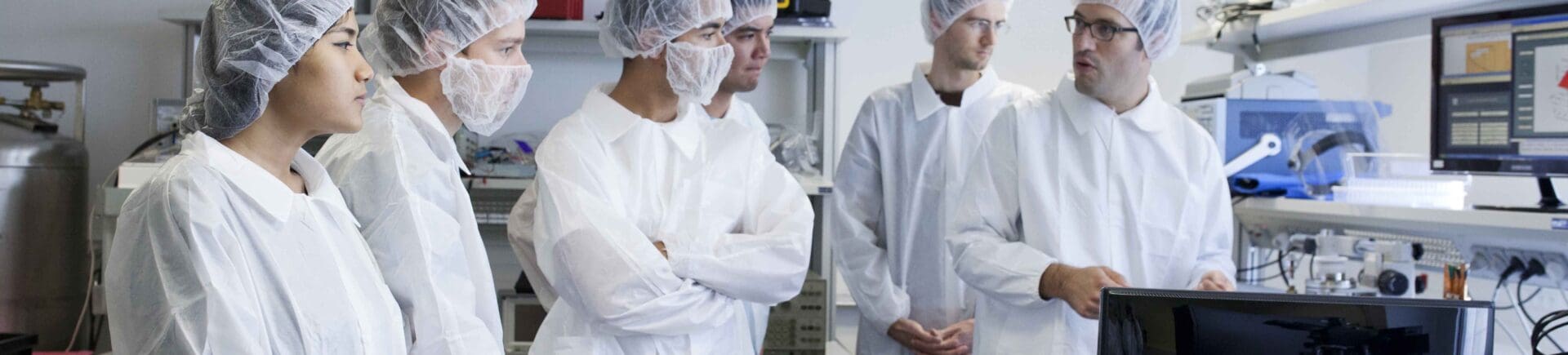
2000 series aluminium alloys are widely used in the aerospace industry because of their very good specific mechanical properties.
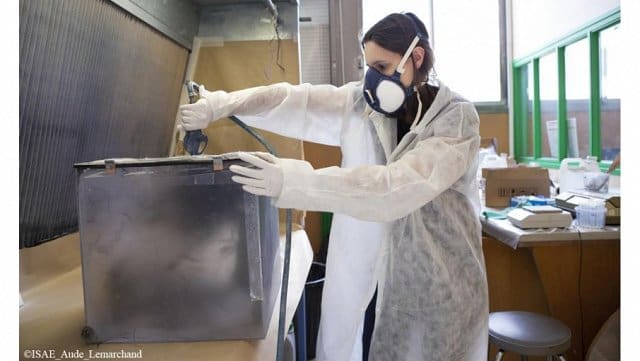
In addition to the mechanical stresses associated with their use, aeronautical structures are also subjected to environments that can alter their integrity. Anodising surface treatments enable a thin protective film to grow, thereby improving the corrosion resistance of these alloys.
However, cracking or crazing can occur as a result of thermal stress, considerably reducing their resistance to corrosion in harsh environments. Understanding these anodic film degradation phenomena and identifying and taking into account the influencing parameters will help to improve the thermal behaviour of anodised components.
From modeling to decarbonation: MDO as a driver of transformation at the 4th European workshop
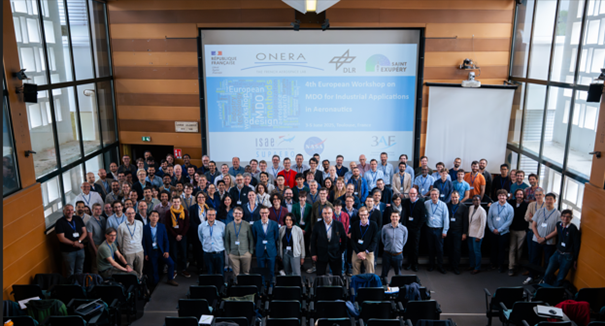
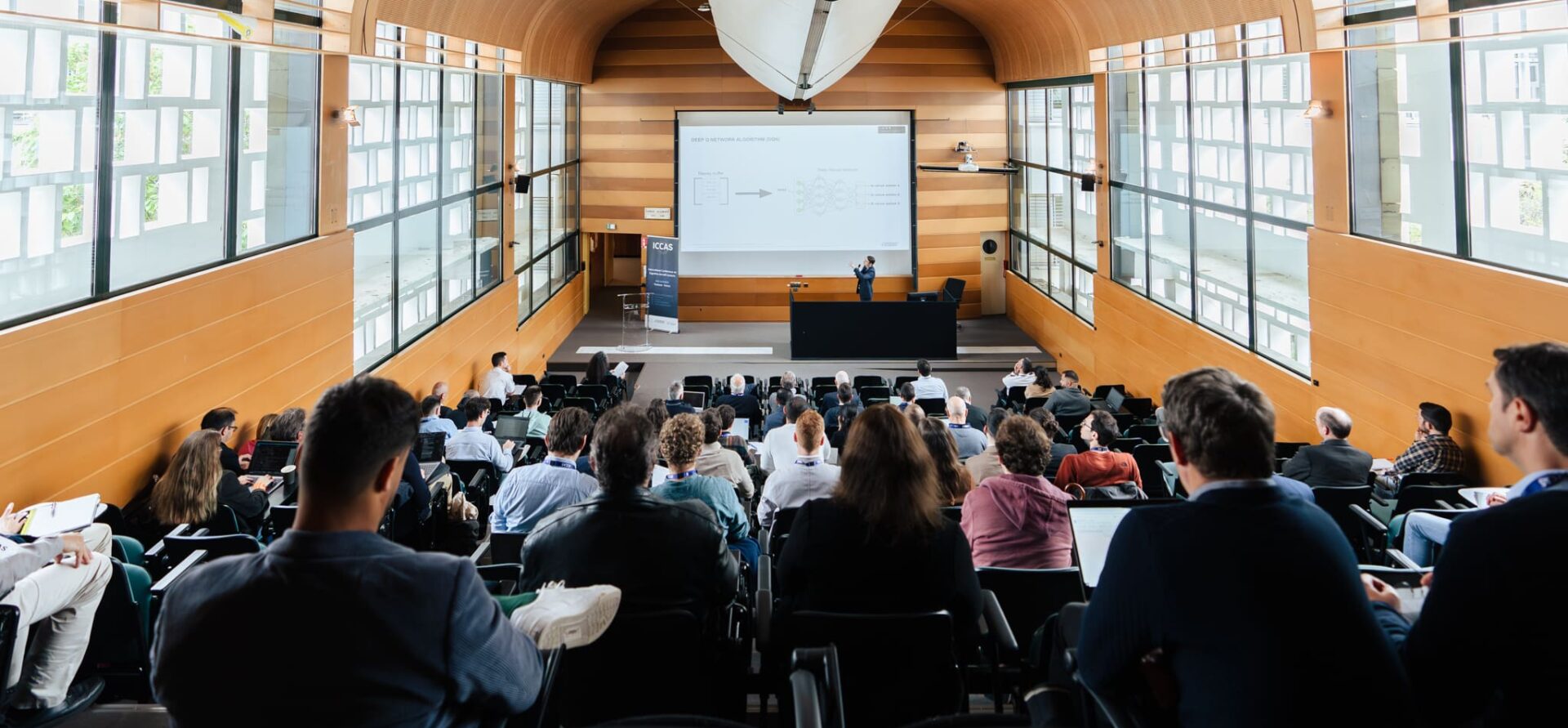
From 3 to 5 June, ISAE-SUPAERO opened its doors to the 4ᵉ European Workshop on MDO for Industrial Applications in Aeronautics. For three days, researchers, engineers and industrialists came together to discuss advances in a field that has become essential to aeronautical design.
An international workshop at the heart of advances in MDO
The event, organised in collaboration with ONERA, DLR, IRT Saint Exupéry and NASA, brought together nearly 150 participants, facilitating a fruitful dialogue between academic research and industrial needs.
The programme was rich and varied, led by Joseph Morlier, Professor of Multidisciplinary Design Optimisation at ISAE-SUPAERO, Nathalie Bartoli, Director of Research at ONERA and Associate Professor at ISAE-SUPAERO, and Christian Gogu, Professor of Structural Optimisation and Reliability at ISAE-SUPAERO.
Among the key topics, multi-fidelity modelling was widely discussed, illustrating how to combine fast models and high-fidelity models to optimise efficiently without sacrificing accuracy. Approaches incorporating artificial intelligence also attracted attention, notably through the use of machine learning techniques to accelerate simulations and guide optimisation processes. And the environmental dimension took centre stage, with presentations dedicated to reducing the carbon footprint of aircraft.
” Whereas a few years ago it was difficult to get industry to move forward, mainly because of disciplinary barriers, MDO is making progress, and the benefits of academic research are now being rapidly integrated, mainly thanks to the availability of open source code (SMT, OpeMDAO, Gemseo, etc.) and multidisciplinary benchmarks (NASA CRM wing, DLR jet engine, etc.) “, emphasised Joseph Morlier, putting the recent evolution of the MDO ecosystem into perspective.
Key events and interdisciplinary collaborations
The keynote address by Benjamin Philips (NASA Langley Research Center) was one of the highlights. Entitled “Transforming MDAO: How We Can Bridge the Gap Between Academic Development and Industry Adoption”, his keynote offered a critical reflection on current MDO tools and practices as part of NASA’s Transformative Tools and Technologies (TTT) project. Benjamin Philips highlighted the persistent tensions between advances in academic methodology and the demands of industrial robustness, while also outlining ways in which the two can be reconciled. His presentation ended with a lively discussion.
Laura Mainini, Professor of Aerospace Computational Design in the Department of Aeronautics at Imperial College London, focused on the benefits of exploiting different levels of fidelity in optimisation processes. She showed how the combined use of fast and high-fidelity models makes it possible to balance accuracy and computational cost, particularly when it comes to integrating environmental considerations right from the design phase. His approach, at the interface between advanced modelling and sustainability, opens up prospects for a more agile MDO adapted to the growing complexity of aerospace systems.
The technical sessions brought together a wide range of participants from ONERA, DLR (the German Aerospace Centre), IRT Saint Exupéry, Dassault Aviation, Airbus, Safran, Imperial College London, Rolls-Royce, the Universities of Sheffield and Southampton, Vicomtech and the University of Cagliari. These contributions addressed concrete issues, such as the coupling between disciplines in hybrid-electric configurations, the management of multi-fidelity models and optimisation geared towards environmental performance.
A collaborative approach to sustainability
The final day was marked by a special session dedicated to the European NEXTAIR project, funded as part of Horizon Europe. This programme aims to develop new methodologies for optimising complex systems in the aeronautical sector, by integrating environmental and sustainability criteria right from the design stage. This session provided an opportunity to present concrete examples of applications and to highlight the results obtained from industrial scenarios.
The workshop also highlighted the excellence of French research in MDO, and in particular the structuring role played by ISAE-SUPAERO, whose work in optimisation for aeronautical design is part of a European and collaborative dynamic.
” We have all demonstrated the importance of interdisciplinary coupling through intense and productive discussions. Taking these couplings into account will help to change attitudes within the aerospace industry: the problem is no longer to optimise aerospace vehicles or their trajectories, but mainly to enable a traveller to get from point A to point B while minimising the impact on the planet”, pointed out Joseph Morlier, “and this trend was demonstrated during the very interesting poster sessions presented by numerous international doctoral students “.
The involvement of the Institute’s young researchers and doctoral students (Shantanu Sapre, Ousmane Sy, Shubham Deshmukh) made a major contribution to the smooth running of the event, both logistically and scientifically. ” This workshop required a great deal of upstream preparation, but thanks to the dedication of all the members of the organising team, we were able to build on the success of previous editions and further increase the number of participants, with this year’s event being by far the largest in terms of numbers, ” commented Christian Gogu.
Finally, as Nathalie Bartoli summed up: ” This event was both technically and humanly rich, marked by the quality of the exchanges, a warm atmosphere, and a great dynamic of collaboration within the European MDO community “.
MDO in the DMSM
The Structures and Materials Mechanics research department (DMSM) focuses its research on damage to composite structures, fatigue of metallic materials and structures, vibration dynamics and numerical methods for mechanics. Within the department, Multidisciplinary Design Optimization (MDO) is a methodological approach that aims to optimize the design of complex systems by simultaneously taking into account several engineering disciplines.
Unlike traditional methods where each discipline is optimised sequentially, MDO integrates the interactions between disciplines from the earliest design phases, enabling globally optimal solutions to be identified.
In aeronautics, MDO integrates several disciplines, such as aerodynamics, structure and propulsion, into its research, enabling the overall optimisation of aircraft by reconciling performance, safety, weight and fuel consumption. Today, this systemic approach is an essential response to the sector's technical and environmental challenges.
Additive manufacturing of functionnally graded materials
Post-doctoral offer
Full-time
3300€ / month
PhD
Post-doctoral research assistant
In the face of accidental events (collision, crash, impact of debris, etc.) or related to the context of the mission (military or terrorist aggression, etc.), the sensitive and functional zones of land, aeronautical and space vehicles, as well as ships and submarines, require protection systems that combine ballistic performance and lightness.
For a long time, the numerical optimisation of such protection systems came up against the problem of their manufacture. This limitation has been partly overcome thanks to the ongoing development of additive manufacturing techniques, which can now be used to produce functional materials with complex architecture. Often evaluated statically or under low-speed impact, there are still gaps in the performance of these materials under high-speed impact.
The aim of this project is to use metal additive manufacturing to develop materials with gradient properties and to assess their performance in ballistic energy absorption applications.
DMSM at the Clément Ader Institute (ICA)
In 2019, 90 researchers and associate researchers are organising and coordinating their activities in four research groups:
- MSC: Composite Materials and Structures
- SUMO: Surface, Machining, Materials, and Tools
- MS2M: Modelling of Mechanical Systems and Microsystems
- MICS: Measurement, Control, and Monitoring
The DMSM is involved in three of these four research groups: MSC, SUMO and MS2M.
Involvement in MSC Group Activities
Four DMSM professors carry out their research activities within the Composite Materials and Structures group of the ICA, mainly in the SIMU area, but also in certain areas of the MAPP area.
Area 1 – Structures, Impact, Modelling, Machining (S.I.M.U.):
- Theme 1: Impact – crash
- Theme 2: Behaviour modelling
- Theme 3: Machining
Area 2 – Materials, Properties, and Processes (M.A.P.P.):
- Theme 1: Process simulation
- Theme 2: Emerging processes
- Theme 3: Tooling
- Theme 4: Innovative materials and methods for the multi-scale study of properties
Certain activities related to composites, but also to the themes of other research groups in the laboratory, are also addressed by the team within the ICA’s transversal UMM and ASM research areas. The team is developing partnerships with academic and industrial players, sometimes around structuring French or European multi-partner projects (ANR, FUI, etc.), or regional projects.
Academic Partners
Involvement in SUMO Group Activities
Three DMSM professors contribute to and co-lead the research activities for the Surface, Machining, Materials, and Tooling group (Groupe SUMO).
Area 1 – Fatigue, Modelling, Damage and Wear (F.A.M.E.U.):
- Theme 1: Analysis of interfacial heat exchanges
- Theme 2: Tribology and hot and cold wear
- Theme 3: Modelling behaviour and service life under thermomechanical loads
Area 2 – Properties of Use and Microstructures of Advanced Materials (P.U.M.A.):
- Theme 1: Mechanisms of plastic deformation and microstructural evolution in relation to macroscopic properties
- Theme 2: Damage and ageing under mechanical, thermal, and environmental stresses
- Area 3 – Machining and Shaping (Usi.M.e.F):
- Theme 1: Improving machining quality
- Theme 2: Optimised tool positioning on left-hand surface, optimised machining strategy
- Theme 3: Digital chain for tool design and serviceability: Virtual Lab®.
Our Resources
- Experimental: Stereo-correlation, microscopy (MO, SEM, EDX), fatigue machines (uniaxial and multiaxial), instrumented nano-indenters, etc,
- Numerical: ABAQUS, LS-DYNA, NASTRAN, Z-set (Zébulon, Zmat).
Our Partners
Involvement in MS2M Group Activities
Ten DMSM professors contribute to and co-lead the research activities of Axis 1 and Axis 2 of the Mechanical Systems and Microsystems Modelling Group (MS2M Group):
Axis 1 – Systems and Microsystems Engineering (I.S.M.):
- Theme ISM1: Optimal multidisciplinary design or design under uncertainty
- Theme ISM2: Microfluidics and mechanical microsystems
- Theme ISM3: Embedded systems, mechanical assemblies and actuators
Area 2 – Integrity of Structures and Systems (ISS):
- Theme ISS1: Vibration dynamics of structures and systems
- Theme ISS2: Structures under severe loads
- Topic ISS3: Numerical developments in structural design
Our Partners
Directory
Discover the profiles of the 130 faculty members at the Institute who are pioneering research in aeronautics and space.
This resource allows you to explore the fields and research projects of our scientists.
Job Offers
Check out the vacancies for scientific staff in the research department
Thesis Offers
Check out the research department's thesis and post-doctorate vacancies
Internship Opportunities
Check out the Research Department's internship opportunities!
Mechanics of Structures and Materials Department (DMSM)
Our Research Department
The synergy between teaching and research within the Department of Structural Mechanics and Materials (DMSM) aims to encourage students and associated researchers to develop the know-how and open-mindedness required for innovation and excellence, through a demanding and creative approach.
It relies on teams of professors, research professors, technical engineers, and laboratory administrative staff who anchor the research in the activities of the Clément Ader Institute, who lead and develop the cross-disciplinary themes of the ISAE-Research host team, and who enable the emergence of new areas of applied research at the cutting edge of technological innovation.
The activities of the Structures and Materials Mechanics Department (DMSM) are supported by strong partnerships.
Various research and R&D projects enable ISAE-SUPAERO students and auditors to learn about methods and a working environment that complement the engineering approach taught in the classroom. The projects range from student research projects to major ANR (Agence Nationale pour la Recherche) or FUI (Fond Unique Ministériel) projects, and cover the development phases from pre-project to the production of demonstrators.
Faculty
Research engineer
Doctoral students
Postdocs
Articles per year

By combining applied research and demanding training, we prepare engineers capable of innovation. Thanks to the many partnerships we are developing, they are exposed to the real challenges of engineering, developing the creativity, rigour, and adaptability essential to their future profession.
Catherine Mabru Department HeadOur Research Activities
Along with the Mechanical Engineering Laboratory of the University of Toulouse III Paul Sabatier and the INSA, and the Centre de Recherche Outillages Matériaux et Procédés of the École des Mines d’Albi, ISAE-SUPAERO’s DMSM is one of the three founding members of the Institut de Génie Mécanique de Toulouse, which has become the Institut Clément Ader, a CNRS Joint Research Unit (UMR CNRS 5312 ICA).
The research carried out at the DMSM aims to develop methods and tools for the design of aerospace structures for use by engineers. In order to respond as effectively as possible to the constantly evolving needs of industry and research, it is structured around three key themes which anchor the research activities within three groups of the Institut Clément Ader (ICA) and enable the emergence of emerging themes open to collaboration and exchanges with outside ISAE-SUPAERO and outside the ICA. These activities also feed into two cross-disciplinary themes within ISAE-SUPAERO:
- Multidisciplinary Optimization (MDO)
- Fluid-Structure Couplings (FSI)
The DMSM’s three research themes form a bridge with the Modelling and Dimensioning teaching blocks in the Common Core and with the courses in the three Structure and Materials pathways in the 3rd year of engineering courses and with Masters courses.
Durability and Damage Tolerance of Composite and Metallic Materials
Research Themes
The aim of this research is to gain a better understanding of damage to composite and metallic materials under impact, crash, and fatigue conditions.
Static and Dynamic Modelling and Qualification of Aerospace Structures
Research Themes
The research is mainly focused on the development of models, methodologies, and strategies for the deterministic or uncertain modelling of structures.
Design & Simulation Driven by Multi-Physics Requirements
Research Themes
This theme focuses on the development of methods, models, and strategies for modelling structures and materials in order to verify performance, qualification, or certification requirements.
Asai Gustavo, Jansari Chintan, Lachaud Frédéric, Masania Kunal, Morlier Joseph, Ecodesign of 3D volumetric fiber-composite structures with topology optimization. 2025,...
A Review on Metallic Drilling Burrs: Geometry, Formation, and Effect on the Mechanical Strength of Metallic AssembliesFrutos Taravillo, Santiago, Paroissien Eric, Landon Yann, Schwartz Sébastien, Fressinet Mathieu, Chirol Clément, A Review on Metallic Drilling Burrs: Geometry,...
Fatigue behavior of additively manufactured 316L stainless steel: Competition between the effects of defects and microstructureRoirand, Hugo, Hor Anis, Malard, Benoit, Saintier Nicolas, Fatigue behavior of additively manufactured 316L stainless steel: Competition between the effects...
Digital Thread-Based Optimisation Framework for Aeronautical Structures: A Vertical Tail Plane Use Casede Longueville Sébastien, Bouvet Christophe, Bénard Emmanuel, Jézégou Joël, Gourinat Yves, Digital Thread-Based Optimisation Framework for Aeronautical Structures: A Vertical...
Aerostructural optimization of high-aspect-ratio wings: navigating complex trade-offs : AeroBest 2025 – III ECCOMAS Thematic Conference on MultidiscipSY, Ousmane, Morlier Joseph, Bénard Emmanuel, Aerostructural optimization of high-aspect-ratio wings: navigating complex trade-offs : AeroBest 2025 – III ECCOMAS...
Our Resources
Our Teams
The DMSM is made up of:
- A scientific team made up of permanent staff (1 researcher and 17 professors, including 11 HDRs) supervising non-permanent staff (doctoral students, post-doctoral students, engineers recruited under fixed-term contracts)
- A Laboratory Technical Group (GTL) comprising 8 engineers, technicians and test and instrumentation staff. This group works both at the DMSM site of the Pôle Mécanique and at the Espace Clément Ader within UMR 5312
- A Mechanical Technology Group (GTM), also made up of 8 engineers, technicians, and design & manufacturing staff, working in the DMSM workshop to serve the technological objectives of all ISAE-SUPAERO departments. Like the GTL, it supports both educational work (student projects) and R&D (design and production of assemblies), while also coordinating forward-looking manufacturing activities
- A departmental management unit comprising the departmental executive assistant and the departmental management assistant
- A methods and digital tools development engineer for mechanics working for the above groups, team and unit
In addition to these 37 permanent staff, there are on average around forty PhD students, post-doctoral fellows, project engineers, around twenty master’s student trainees, and 5 visiting or associate professors (TU Delft, Ecole Polytechnique de Montréal), bringing the DMSM workforce to around 100 people, spread over the ISAE-SUPAERO and Institut Clément Ader sites.
The scientific team carries out teaching and research activities.
The teaching given primarily at ISAE-SUPAERO is described in the DMSM curriculum.
Research activities feed into three scientific themes strongly anchored in three of the four groups of the Institut Clément Ader (UMR CNRS 5312, MSC, MS2M, and SUMO), and two transversal themes in partnership with other departments within ISAE-SUPAERO.
Links with the administrative and technical team are established through teaching and research. Composite manufacturing courses, for example, are offered in the 2nd and 3rd year of engineering cycle studies and as part of PREX (experimental practical work).
These courses are based on dual supervision by the scientific team and technical groups.
They enable future engineers to make the link between scientific teaching and practical reality, and to handle in very concrete terms the structures and materials they are designing.
This duality is also the framework offered to all ISAE-SUPAERO students for academic research, innovation, and creativity projects.
The technical and administrative team is organized around a Laboratory Technical Group (GTL) and a Mechanical Technology Group (GTM), each supervised by a Technical Manager.
The groups are placed under the authority of the Head of Department, at the service of ISAE-SUPAERO and in particular the research activities of the DMSM.
Laboratory Technical Group
This technical group is in charge of and operates the materials and structures testing and analysis platform. It has a range of platforms and resources, including some remarkable experimental facilities.
The equipment is distributed between the ISAE SUPAERO campus and the Toulouse Montaudran site of the Institut Clément Ader (ICA UMR CNRS 5312).
Mechanical Engineering Group
This group is responsible for mechanical and composite engineering and manufacturing.
Its activities meet the technological and experimental needs of ISAE-SUPAERO. This group manages the workshop and places its qualified staff at the service of all ISAE-SUPAERO departments, their activities, and their research projects, in particular for academic or research projects led by the DMSM scientific team.
This team is based on the ISAE-SUPAERO campus.
Our Technical Resources
The DMSM has classic manufacturing, experimentation, and analysis resources which are made available to students and researchers from the Institut Clément Ader (UMR CNRS 5312) and ISAE-SUPAERO.
More specific and remarkable resources have also been developed and studied for research activities.
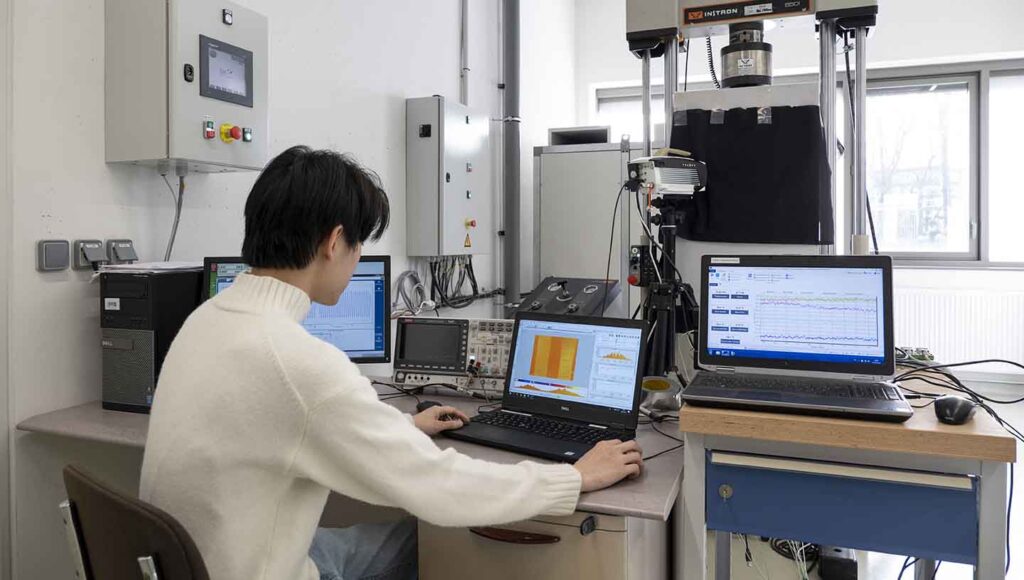
- A mechanical testing platform: 10kN to 100kN static tests, 2.5kN to 250kN fatigue tests, structural tests
- A dynamic testing platform: Vibration tests, Hopkinson bars
- An Analysis and Control platform: Electronic and optical microscopy, ultrasonic NDT, metrology (3D digitisation, surface finish, hardness testers)
- An instrumentation platform: High-speed cameras, image stereo-correlation (optical extensometry), high-speed acquisition, measurement sensors
Specific equipment and fixtures can be developed to equip these resources for specific experiments that are not common.
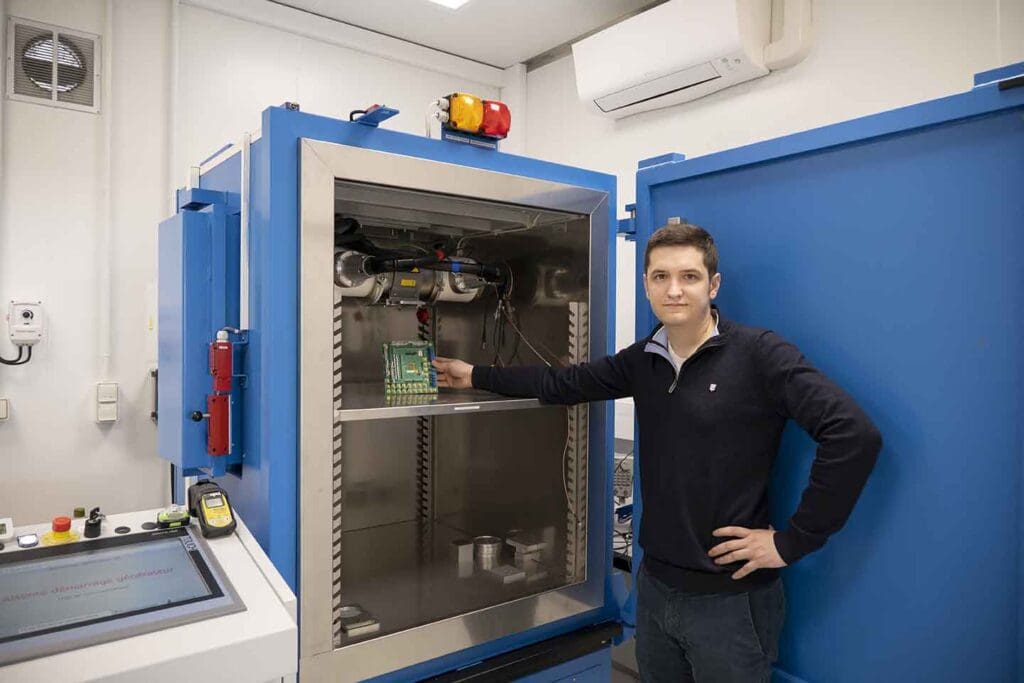
- A 10kN vibrator for vibration testing, equipped with a laser vibrometer with derotator: The vibrator is ideal for vibration and mechanical shock testing using sinusoidal, random or transient excitation. The frequency range extends from 5 Hz to 3000 Hz.
- Gas launchers for rapid impact of balls on materials and structures, 150 m/s, 30 kJ, equipped with high-speed cameras. This equipment can be used to study impact dynamics and assess the penetration or perforation resistance performance of materials and structures.
- Drop towers, including a high tower for instrumented impact on materials and structures, height 6m, 10 m/s, guided carriages from 2kg to 250kg, 14.7 kJ: This equipment is used to carry out low-speed impact or crushing tests on materials or small structures. A guided carriage impacts or carries away a specimen structure at the bottom of the fall trajectory. Several set-ups are available depending on the test problem: Standardized impact, crash, dynamic compression, etc.
- A space vacuum chamber to test the behaviour of space-related materials and components in a thermal vacuum, including in space conditions (secondary vacuum 10-6 mbar and temperature -80°C to +150°C), the behaviour of electronic equipment in operation or materials can be assessed.
- A nanoindenter to characterise the surface layers of materials, 0.1 to 500mN: This is used to determine the mechanical properties (hardness and elastic modulus) of thin films, coatings, and substrates on most materials.
- A laser metal deposition (LMD) machine for metal additive manufacturing.
- A Wire Arc Additive Manufaturing (WAAM) machine.
The DMSM has servers and computing stations running under LINUX and Windows environments, and has access via the Institut Clément Ader (UMR CNRS 5312) to the CALMIP computing centre for massively parallel computing. It also uses the PANDO supercomputer at ISAE-SUPAERO.
The DMSM uses the commercial calculation codes of its research partners and in-house codes for its own scientific evaluation or non-intrusive coupling needs: Abaqus®, Nastran®, Samcef®, Radioss®, LS-Dyna®, Europlexus®, Impetus Afea Solver®.
Our Teaching
The teaching activities of the Structural Mechanics and Materials Department cover the scientific disciplines relating to solid mechanics, including the fundamental subjects of general mechanics and continuous media.
Structures – and in particular thin structures – are the subject of developments in static, dynamic, vibratory, or transient and thermal analysis, leading on the one hand to the certification of aerospace-type structures, and on the other hand to the use and qualification of metallic and composite structural materials within structural elements.
The skills, facilities, and resources of the DMSM are made available for solid mechanics coursest:
- ISAE-SUPAERO generalist engineering courses
- The industrial engineering speciality through apprenticeships
- The Science for the Mechanics of Materials and Structures research course in the Mechanical Engineering Masters at the University of Toulouse
- The Aerospace Structures Major and Aircraft and Helicopter Engineering (AHE) programmes in the Master in Aerospace Engineering (MAE)
- The AES Aeronautical and Space Structures and TAS Aeronautical Engineering Advanced Master® programmes
The DMSM’s lecturers structure and lead teams of part-time lecturers who are involved in teaching and in monitoring the various student projects, giving an introduction to research, experimental work, and facilitating end-of-study projects, often carried out in synergy with the department’s theses.
The DMSM coordinates more than 150 part-time teachers from industry and academic, research, and development institutions.
The DMSM training programme in the engineering curriculum is divided into Scientific Core courses (116 hours) and Elective modules (11 modules, 320 hours) in the 1st and 2nd years, which give engineering students the ability to interact with specialists in the mechanics of materials and structures and to understand complex, cross-disciplinary approaches to design.
- In the first year
Experimental practice is an integral part of the analysis and modelling approach in solid mechanics. In order to initiate students and prepare them for autonomy in experimental practice, but also to make them aware of and autonomous in the analysis of test data and results, enabling them to understand the limits of validity of a modelling approach, Experimental Practice Projects (PrEx) are offered in the first year of the engineering curriculum.
- In the second year
Introductory research projects (PIR) are an opportunity for students to get to grips with research methods and tools. The subjects proposed are directly linked to the department's research activities.
Between the second and third years, the DMSM is responsible for the gap year internships.
- In the third year
The DMSM offers students the opportunity to specialise in three courses in its Structures and Materials programme.
After following the Common Core courses, engineering students can advance their knowledge and skills in the scientific themes covered by the DMSM: Numerical Mechanics, Aeronautical and Space Materials, Aeronautical and Space Structures.
Some modules include the option to follow the Science for the Mechanics of Materials and Structures research path from the Mechanical Engineering Master's degree at the University of Toulouse, gaining research skills useful for a future thesis (in a laboratory, CIFRE, etc).
Officer cadets from the Saudi Arabian Army are welcomed for a two-year certificate at the DMSM. They are prepared during the first year on the three-year engineering curriculum, then enroll in the M2 preparation for the AHE Master's degree.
The DMSM supervises and runs four Master's courses.
Master's education is at the heart of the DMSM's welcome to students not following engineering courses and wishing to pursue careers in the aeronautics and space sector. The Masters course is open to an equivalent number of students, and welcomes non-French and non-French-speaking students from all over the world on a selective basis.
- The Aerospace Structures Major programme in the Aerospace Engineering specialisation (Master's degree in Aerospace Engineering, MAE) at the Toulouse campus is aimed at students with a Bachelor's degree from a foreign university. It offers a two-year course in the mechanics of aerospace materials and structures. The courses are taught in English.
- The Aircraft and Helicopter Engineering programme is also offered as part of the Master's degree in Aerospace Engineering (MAE). This programme is aimed at students with a Bachelor's degree. It aims to bring students up to Master's level (BAC+5) in helicopter design and maintenance engineering. Courses are taught in English.
The DMSM supervises and runs four Master's courses.
Master's education is at the heart of the DMSM's welcome to students not following engineering courses and wishing to pursue careers in the aeronautics and space sector. The Masters course is open to an equivalent number of students, and welcomes non-French and non-French-speaking students from all over the world on a selective basis.
- The Aerospace Structures Major programme in the Aerospace Engineering specialisation (Master's degree in Aerospace Engineering, MAE) at the Toulouse campus is aimed at students with a Bachelor's degree from a foreign university. It offers a two-year course in the mechanics of aerospace materials and structures. The courses are taught in English.
- The Aircraft and Helicopter Engineering programme is also offered as part of the Master's degree in Aerospace Engineering (MAE). This programme is aimed at students with a Bachelor's degree. It aims to bring students up to Master's level (BAC+5) in helicopter design and maintenance engineering. Courses are taught in English.
Directory
Discover the profiles of the 130 faculty members at the Institute who are pioneering research in aeronautics and space.
This resource allows you to explore the fields and research projects of our scientists!
Head of the DAEP Department
Job Offers
Check out the vacancies for scientific staff in the DMSM research department
Thesis Offers
Check out the DMSM research department's thesis and post-doctorate vacancies
Internship Opportunities
Check out the DMSM research department's internship opportunities
Scientific and research integrity
What is scientific integrity?
Scientific integrity refers to the set of rules and values that must govern research activities to ensure that they are honest and rigorous. Mentioned in the Research Code (article L. 211-2 of the Research Code), it “helps to guarantee the impartiality of research and the objectivity of its results”.
Scientific integrity is essential to the smooth running of research communities, and also forms the basis of a relationship of trust between the research community and other parts of society.
Beyond the specificities of each discipline, good practice in research is based on common principles, which are set out in the European Code of Conduct for Research Integrity:
- Reliability in the design, methodology, analysis and use of resources;
- Respect for colleagues, research participants, society, ecosystems, cultural heritage and the environment;
- Honesty in designing, carrying out, evaluating and disseminating research in a transparent, fair, complete and objective manner;
- Responsibility in carrying out research activities, from idea to publication, in their management and organisation, in training, in coaching and mentoring, and in the wider implications of research.
Scientific Integrity Officer at ISAE-SUPAERO
By signing this charter, the Institute undertakes to put in place an institutional policy on scientific integrity and to appoint a “scientific integrity referent”.
As such, Pierre Magnan, Professor Emeritus at the Institute, has been appointed Scientific Integrity Coordinator at ISAE-SUPAERO.
The role of the Scientific Integrity Officer (RIS) is to ensure that the Institute’s researchers comply with the main principles of scientific integrity as defined by OFIS, a department of Hceres, and set out in the European code of conduct and in the “French Charter of Ethics for Research Professions”: To aim for reliable, honest, respectful and responsible research and to combat breaches.
In particular, the referee must:
- To provide information on the implementation of the programme, and on a regular basis, for new arrivals;
- Participate in a training programme for doctoral students in conjunction with the École des Docteurs;
- Ensure that the laboratory notebooks are regularly kept, via the departments;
- Run a web page on the Institute’s website (raising awareness, examples of breaches);
- Participate in the network of scientific integrity officers at the various institutions;
- Keeping an up-to-date list of breaches, with regular reports to the Director General.
Scientific Integrity Coordinator (RIS) at ISAE-SUPAERO
For any request for advice or to report a possible breach of scientific integrity (SI):
Pierre Magnan
What is a breach of scientific integrity?
Any practice that undermines the reliability of results and the proper functioning of research communities is likely to constitute a breach of scientific integrity. A breach may concern all aspects of research activities in all disciplines, whether public or private.
Instruction procedure
Any person acting in good faith who is aware of a possible breach of scientific integrity may send a report to the Scientific Integrity Officer.
Receipt
The allegation of misconduct is sent by email or post, signed and dated. This statement describes the situation and the people involved. The whistleblower’s anonymity is guaranteed by the Scientific Integrity Officer.
Admissibility of the report
During the preliminary investigation phase, the officer in charge verifies that the report is sufficiently detailed to allow action to be taken. If an investigation is launched, he or she quickly informs the persons implicated.
Investigation
In all cases, absolute priority is given to the facts and to the presumption of good faith on the part of the persons concerned. It is understood that, at any stage of the procedure and whenever possible, the Reporting Officer may propose mediation to the persons concerned, in order to resolve the situation through a series of appropriate measures accepted by all parties.
The investigation is carried out in an adversarial manner, with uniform treatment, and if necessary involving independent experts. An inventory of the facts reported, the facts established and the arguments put forward by the various parties leads to the drafting of a report by the Scientific Integrity Officer, which may include recommendations. The report is submitted to the President of the University.
Follow-up
The Director General of ISAE-SUPAERO is responsible for deciding what action to take on the investigation report.
Scientific integrity, research ethics and professional conduct are three essential components of responsible research conduct.
Scientific integrity refers to good practice in the production and dissemination of scientific knowledge. It guarantees the honest and rigorous nature of research activities.
Ethics refer to a set of obligations specific to the practice of a profession. In France, when a researcher is a civil servant, his or her obligations are set out in the General Civil Service Code.
Research ethics concerns, on the one hand, the major issues raised by certain scientific developments and, on the other hand, the more operational issues of compliance of research protocols with the legal rules and ethical recommendations in force.
Ethics refer to a set of obligations specific to the practice of a profession. In France, when a researcher is a civil servant, for example, his or her obligations are set out in the General Civil Service Code.
- The planning and implementation of the research project: Failure to obtain the necessary authorisations (ethical approval, consent of participants); non-compliance with authorised protocols; misuse of research funds.
- Management and practices relating to data of any kind (including bodies of text, archives, images, etc.): Falsification or fabrication; deliberately deficient management or archiving; retention without legal justification, omission or selection without scientific justification; problematic statistical processing; unmentioned embellishment.
- Publication, communication and authoring practices: Plagiarism; improper signature or failure to acknowledge a contribution; self-plagiarism; non-compliance with AI usage requirements; improper or biased citations; lack of impartiality or transparency when speaking publicly.
- Interactions between peers: Biased peer-reviewing, appropriation of research projects or ideas, lack of supervision, undue hindrance of the progress of a peer's work, unfounded accusations of misconduct.
- Failure to declare links or conflicts of interest, or their poor management at all or part of the stages of a research activity (e.g. application for funding, evaluation, expert appraisal and dissemination of results).
- The most serious forms of misconduct - such as fabrication, falsification of data and plagiarism (FFP) - are liable to disciplinary action.
Reference texts on scientific integrity
- ANR Charter of ethics and scientific integrity
- European Code of Conduct for Research Integrity
- Singapore Declaration on Scientific Integrity
- The Corvol report
- French Office of Scientific Integrity
- Report by the CNRS Ethics Committee (COMETS) – “Ethical reflection on plagiarism in scientific research”.
- Guide “Practising research with integrity and responsibility” published by the CNRS
As developments in this area, both nationally and internationally, are fairly frequent, it is advisable to refer to the Ofis website, which is regularly updated.
Research
Our scientific activities cover a broad spectrum of strategic themes, closely linked to the major challenges facing the aerospace sector. Supported by our research departments, our activities combine academic excellence, technological innovation, and responses to industrial and societal challenges. Thanks to our complementary approach and our openness to interdisciplinarity, the Institute is positioned as a major player in French and international research.
Our research policy is resolutely focused on the technological challenges of tomorrow, in response to the emerging needs of the aerospace and high technology industries. This dynamic approach is underpinned by close collaboration with industry, through sponsorship agreements in strategic areas, and the active participation of a large number of professionals in teaching, who pass on the latest innovations and best practices in the sector.
Research at ISAE-SUPAERO
International
ISAE-SUPAERO's research contributes to its position as an international leader for its general engineering curriculum, its post-graduate courses, in particular Master's degree in aerospace engineering (MAE), Advanced Master® and doctorate (PhD) programmes.
Interdiscplinary
We combine an interdisciplinary approach with advanced research into scientific knowledge, models, methodological approaches, and tools for the design of aeronautical, space and embedded systems, from the expression of requirements and specifications through to verification and validation (V&V) or qualification with planned future certification.
Innovative
ISAE-SUPAERO's scientific strategy addresses the societal and industrial challenges of sustainable development and the performance of aerospace systems, including issues of safety, security, resilience, competitiveness, (digital) virtualisation, new technologies, processes, services or innovative concepts.
ISAE-SUPERO's research activity has developed considerably in recent years.
- The Institute's laboratories employ around 400 people.
- The campus is also home to ONERA's Toulouse research centre, which also has 400 employees.
The ISAE-SUPAERO and ONERA laboratories cover a wide range of activities and disciplines related to aeronautics and space - from aerodynamics to neuroergonomics to the development of new technologies in
electronics, signal processing, and structural mechanics. Nearly 300 doctoral students are enrolled at ISAE-SUPAERO.
The ISAE-SUPAERO laboratories are open to all our students. The campus has been designed to combine research and teaching areas, and to ensure that students have easy and permanent access to researchers.
Our campus is also adjacent to that of Paul Sabatier University and major CNRS laboratories such as LAAS and the Midi-Pyrénées Observatory - partners that offer many opportunities for discovery or work placements for our students who are interested in research.
Of the 130 permanent teaching staff at ISAE-SUPAERO, 120 are also researchers.
The general engineering curriculum includes extensive exposure to research. In the second year, our faculty offer students research placements in the school's laboratories or those of our partners in Toulouse.
Some teaching activities, such as Experimental Practice' in the first year or practical work as part of elective or third-year courses, also take place in research laboratories. Our doctoral students are also on hand to give lectures and tutorials.
For students who are interested in doing a thesis, a 'research pathway' has been set up, which allows them to adjust their schooling and spread their third year over two years, so that they can do work placements in several laboratories, particularly abroad, before starting their thesis.
Our engineering students can also take a research-oriented Master's degree during their third year, with courses that allow them to combine a general engineering degree with a Master's degree in fields such as the sciences of the universe or operational research. As a result, around 15% of our students go on to do a PhD, either with us or in other laboratories in France or abroad.
5 Strategic Priorities
ISAE-SUPAERO’s scientific policy for aeronautical and space systems is organised into 5 strategic areas:
- Integrated design for aerospace system performance, operational safety, and the environment
- Models and optimisation for energy efficiency, the environment, and competitiveness
- Earth observation, environmental monitoring, and space exploration
- Resilient telecommunications, networks, and connected cyber-physical systems
- Data analysis, decision sciences, and mastering complexity
6 Research Departments
As part of its missions and under the aegis of its Research Council, ISAE-SUPAERO and its 6 departments, carries out its scientific strategy in two research units (laboratories evaluated by the HCERES):
- ISAE-SUPAERO Research, a multidisciplinary laboratory and the Institute’s own unit
- Institut Clément Ader (ICA) UMR n°5312 of the CNRS, a solid mechanics laboratory in the Midi-Pyrénées region under the supervision of the CNRS, UT3, INSA, MINES-ALBI, and ISAE-SUPAERO
and with the support of 6 doctoral schools in the Toulouse area, in particular the Aeronautics and Astronautics Doctoral School (EDAA), of which ISAE-SUPAERO is the supporting institution.
ISAE-SUPAERO leads scientific, disciplinary, or cross-disciplinary themes, as well as cross-disciplinary research and innovation actions (ATRI), which are extended into national scientific interest groups: the 'Microdrones' and 'Centre Spatial Universitaire Toulousain' GISs.
LACS research is housed in the LISST and LAIRDIL laboratories at UT2 Jean Jaurès, which are evaluated separately.
ISAE-SUPAERO's partnership with ONERA and ENAC is a key element of the higher education and research cluster dedicated to the 'aeronautics and space' sector on the Toulouse Midi-Pyrénées Federal University site.
OPEN SCIENCE: ISAE-SUPAERO'S SCIENCE AVAILABLE TO ALL
Discover OPEN SCIENCE: Our new open archive platform.
Anyone can access our theses, publications, scientific instruments, and technological platforms.
DEOS
The Electronics, Optronics, and Signal Processing Department (DEOS) develops and produces payloads for tomorrow's advanced aeronautical and space applications. The skills of its teams cover a wide range of technologies, from the design of silicon sensors to interplanetary scientific payloads, and from signal theory studies to advanced communication and navigation systems.
Further Information
DCAS
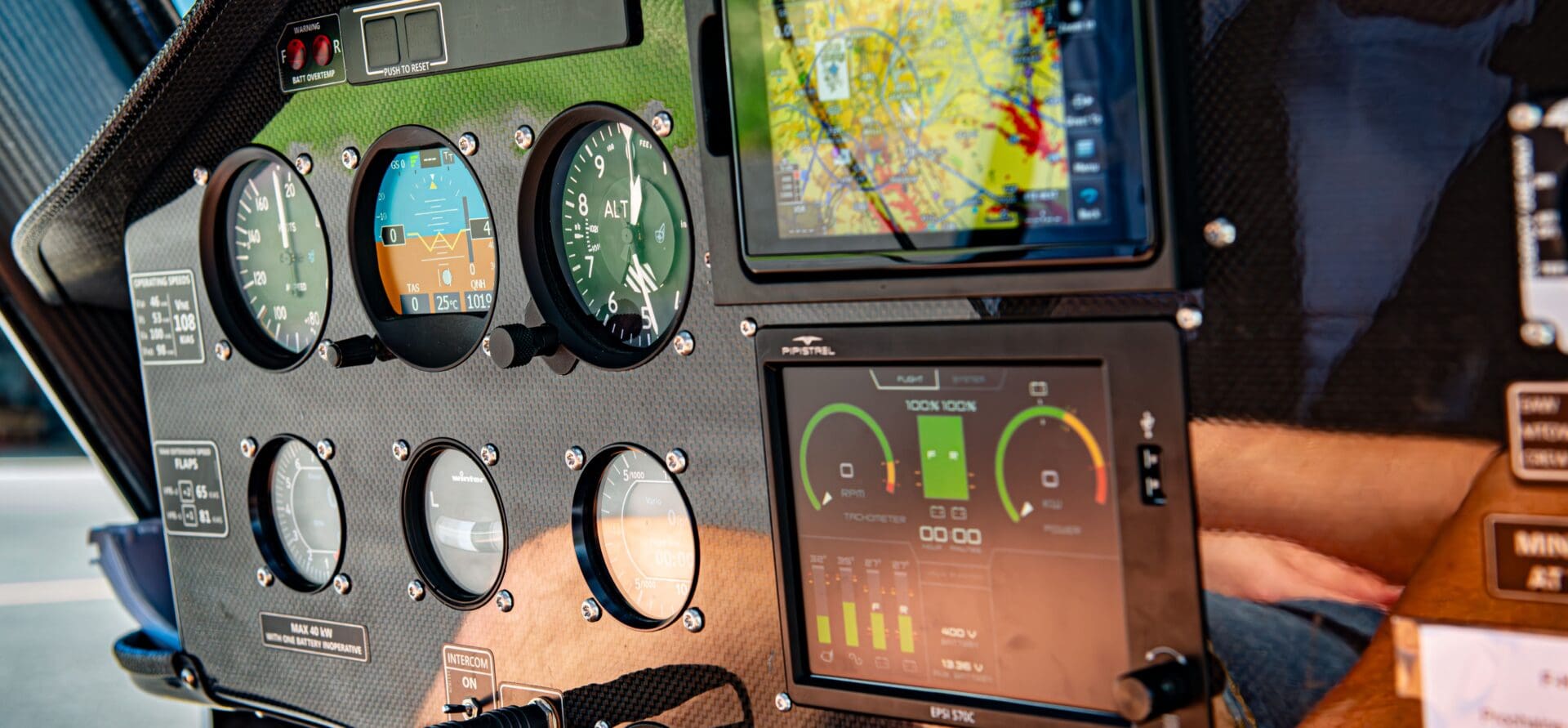
The Aerospace Vehicle Design and Operation Department (DCAS) develops methods, simulation tools, and experimental platforms for the design and operation of aerospace vehicles.
Further Information

DISC
The Department of Complex Systems Engineering (DISC) develops skills in mathematics and computer science for aeronautical and space engineering. In both teaching and research, it focuses on the models, methods, and tools needed to control the behaviour and performance of complex systems. This complexity may be induced by the multi-physics or multiscale nature of the systems studied, their dynamic behaviour, or their distributed and communicating structure.
Further Information
DAEP
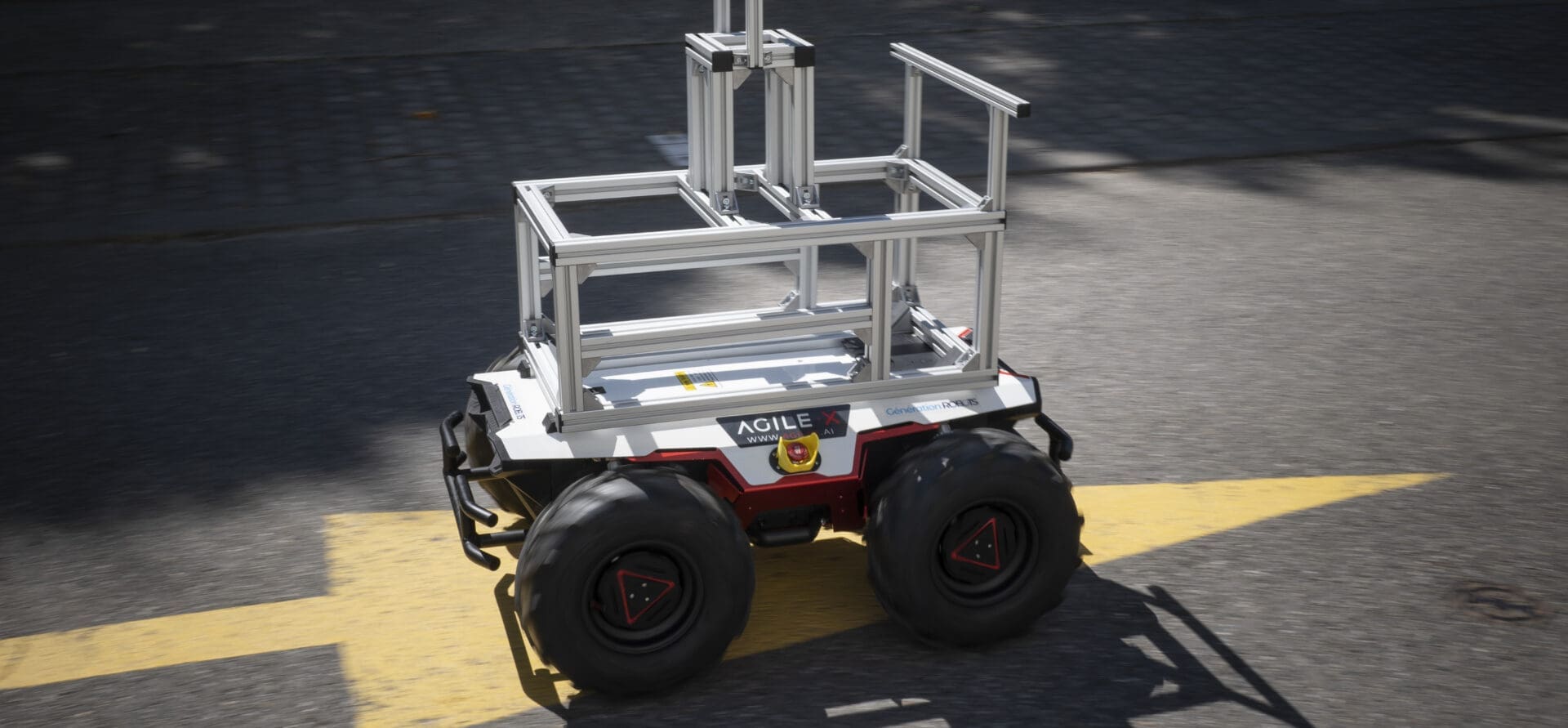
The Aerodynamics and Propulsion Department: 62 people, 30 research projects, including 5 on a European scale, an exceptional fleet of test facilities for teaching and research purposes, 3 research groups contributing to a growth strategy focused on 4 themes with topical scientific and social-economic challenges, supported by 2 structuring projects: the SAA wind tunnel and the IC3 large-scale simulation code.
Further Information
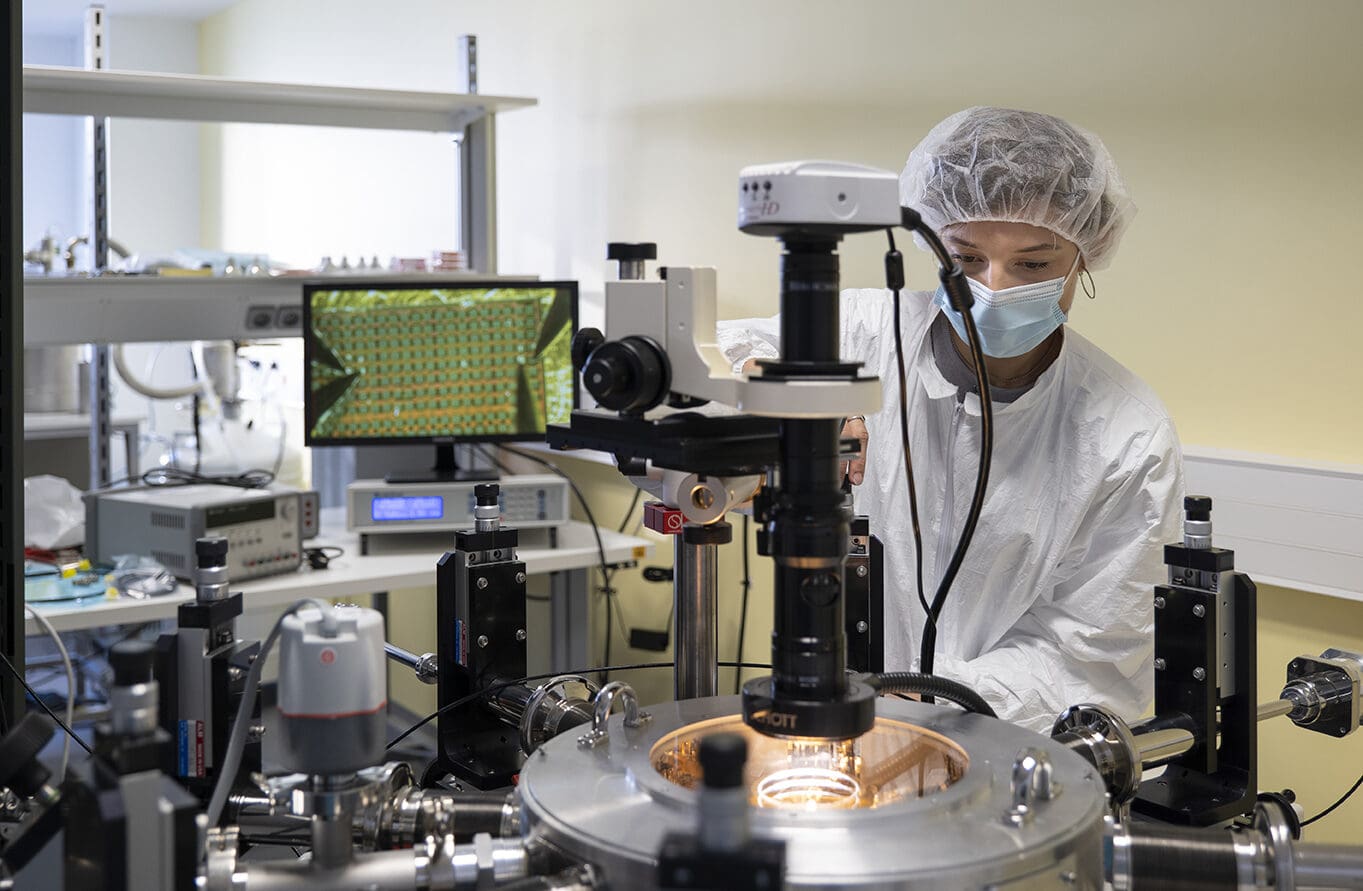
DMSM
The role of the Structures and Materials Mechanics Department is to organise and supervise all teaching activities in the mechanics of deformable solids for ISAE-SUPAERO courses, in synergy with upstream and applied research activities on aeronautical materials and structures. This strong interaction between teaching and research is the basis of our department's organisation.
Further information
LACS
In the Languages, Arts, Cultures, and Societies Department, we teach languages, interculturality, geopolitics, general culture, economics, sport... Multi-dimensional skills that bring out knowledge, interpersonal skills, know-how and interpersonal skills.
Further Information

Testimony from Yves Gourinat, elected full member of the Air and Space Academy
Meeting with Yves Gourinat, elected full member of the Académie de l'Air et de l'Espace
– Yves Gourinat is a professor of structural physics in the Structures and Materials Mechanics Department (DMSM) at ISAE-SUPAERO.
– Already a corresponding member since 2019, he has just been elected a full member of the Académie de l’Air et de l’Espace.
Key dates
1984: Graduates from ENSMA - Engineering degree and DEA, Mechanics & Materials
1985: Graduates from Supaéro - Masters specialising in Aerospace Mechanics and Space, followed by National Service at Supaero
1986: Engineer in industry (Aerospatiale Avions) to do a doctoral thesis (defended in 1989) and take part in the A340 programme (composites)
1993: Associate Professor at Ensica, hired to set up a Space programme
2003: Joins Supaéro as Professor of Structural Mechanics in the Department of Structural Mechanics and Materials (DMSM)
2007: Obtains his HDR (Habilitation to Supervise Research) in Solid Mechanics, Structures, Materials and Surfaces at the University of Poitiers
2011: Qualified as a University Professor by the Conseil National des Universités (French National University Council)
2012: Becomes Director of the Aeronautics-Astronautics Doctoral School (until 2016)
2013: Appointed Deputy Director of the Institut Clément-Ader, Head of the Aeronautical and Space Structures Advanced Master® programme and Head of the Mechanics of Structures and Materials Department at ISAE-SUPAERO (until 2018)
2024: Elected full member of the Académie de l'Air et de l'Espace
Passionate about music from an early age, Yves Gourinat was not predestined for a career in the sciences.
It was at the age of 7 that he discovered his passion for aeronautics: “When I saw the picture of Concorde, I said to myself, that’s what I want to do”. At the time, his love of physics was “completely inseparable from his love of music”, and after completing his studies at the Conservatoire, he continued to pursue both at the same time until he was 19.
“A true enthusiast” is how he defines himself. After hesitating between music and physics, it was physics that finally won out professionally.
This “free electron”, who came from the conservatoire and university, passed the ENSI competitive entrance exam (now the Concours Commun Polytechniques) and entered the ENSMA, from which he graduated in 1984, with a major in Materials.
A career in three vocations
A vocation for teaching
First of all, a vocation for teaching. He owes this in particular to Didier Bellet, professor of mechanics at Supaéro, “an extraordinary personality”, who took him under his wing as an assistant for a year as part of his national service.
It was during this period that his first opportunity arose, the year he turned 25: “He phoned me up one Sunday to say, ‘I’ve got flu, can you do my lecture for me tomorrow?
The first lecture was given and the wheels were set in motion!
“I really enjoy giving lectures because for me it’s theatrical improvisation. I arrive at a lecture without any notes and that’s what fascinates the students! My main accessory is a pair of glasses. Improvisation is very important, it’s the legacy of the Conservatoire and the organ!”
After obtaining his ENSMA engineering diploma and his doctoral thesis at SUPAERO, he joined Airbus in 1990 (formerly Aérospatial Division Avions) and stayed there for 4 years as Composite Structures Engineer on the A340.
A turn in space
In 1994, he flew to Russia for 6 weeks for a SOYOUZ-MIR training course at Star City (a childhood dream).
At the same time, he went back to school and became an associate professor at ENSICA, helping to set up a Space department alongside Pierre Sintes, for whom he was already doing some vacation work: He worked with him for 10 years on launcher dynamics and manned flight safety.
“I wouldn’t be where I am today if he hadn’t hired me. I owe my vocation in space to him.”
At ISAE-SUPAERO, “telling the science story”
It was finally in 2003 that he returned to SUPAERO to replace Serge Larose – with whom he had established an “old tradition” by replacing him in the lecture hall whenever the opportunity arose – as associate professor.
But also to follow the advice of his first mentor, Didier Bellet (“You have to do research”), by becoming Director of Research, after passing his HDR (Habilitation à Diriger des Recherches) in 2007.
“Scientific research is a permanent transgression: You have to go where others don’t go”.
Since 2008, Yves Gourinat has been head of the Advanced Master® in Aeronautical and Space Structures. He is also Associate Professor of Structural Mechanics in the Department of Structural Mechanics and Materials, teaches biophysics at the Université Paul-Sabatier and also lectures at the University of Texas at Arligton.
In 2011, the International Astronautical Federation awarded him the Malina Astronautics Medal, a worldwide medal awarded each year to a single individual, in recognition of scientific and educational commitment to the service of Space.
A vocation for aeronautics
Today, the physicist is fully devoted to his vocation for aeronautics, through his courses and his research into his areas of application: cryogenic tanks, living cells and the thermodynamics of hulls. Teaching, the common thread running through his career, remains at the heart of his commitment, as he is currently supervising four PhD students… bringing to 24 the number of PhD students he has supervised throughout his career!
Recognition for a brilliant career
Invited to all Academy meetings since 2015, Yves Gourinat was elected a corresponding member of the Académie de l’Air et de l’Espace in 2019. He joins various working groups on aircraft certification to provide a link between the Academy and the school’s national and international aerospace activities.
Five years later, this emeritus member, who was already active in several learned societies including 3AF, was appointed titular member, and was happy to take on “more responsibilities and duties to honour the Institute and enhance its prestige”.
He will be officially introduced on 6 December 2024 alongside Stéphanie Lizy-Destrez, recently elected corresponding member, at the Salle des Illustres in Toulouse’s Capitole building!
ISAE-SUPAERO’s mechanical materials characterization platform