I Am:
Make a Donation
Share this page :

Predictive Aircraft Maneuver Dynamics

Reference

N/A

Contract Type

Internship offer

Working Time

Full-time

Degree

Master's degree

Experience

Between 0 and 2 years

Role

Intern

The objective of this internship is  to study state-of-the-art approaches and design a solution to predict an aircraft future possible trajectories. The prediction leverages on the aircraft actual (simulated) flight dynamics and control inputs.

The predictive algorithm generates a stochastic model of the aircraft trajectory, quantifying uncertainty through a time-varying probability distribution.

Rather than providing a single deterministic path, the model estimates a confidence interval for the state variables, where the variance and the degree of uncertainty, increases as a function of the prediction horizon.

Pilot and Aircraft State Estimation for Adaptive Cockpit AI

Reference

N/A

Working Time

Full-time

Degree

PhD

Experience

Between 2 and 5 years

Role

Post-doctoral researcher

Application Deadline

04/01/2027

The post-doctoral research will focus on:

  • Multimodal state estimation combining physiological, behavioural and flight-system data to assess pilot workload, stress, trust, and startle responses in relation to the operational context.
    Postdoctoral Research Position: Pilot and Aircraft State Estimation for Adaptive Cockpit AI
  • Machine learning and data fusion: developing and comparing machine learning approaches, including classical models, recurrent neural networks and hybrid neuro-symbolic methods, to achieve robust, interpretable and safety-aware state estimation.
  • Adaptive AI assistance: evaluating how integrated team-state estimates can inform the level and type of assistance provided by the intelligent cockpit assistant, including cognitive workload mitigation and startle recovery.
  • Experimental validation: assessing model performance and assistance strategies in simulation environments of increasing realism, from synthetic piloting task (MATB) to X-Plane and PEGASE flight simulators, under both nominal and non-nominal flight scenarios. Different levels of assistance will be assessed.

A team of researchers from the École de l’Air et de l’Espace and ISAE-SUPAERO received the Best Paper Award from the journal “Aviation Psychology and Applied Human Factors”

The study highlights the impact of expertise on the visual strategies of military pilots

The study focused on the influence of expertise and visual strategies on piloting accuracy. For this work, 38 pilots with different levels of experience (student pilots, cadets, experts) performed climbing, descending, and turning maneuvers on a Cirrus SR20 flight simulator while being equipped with an eye-tracking device.

The Cirrus SR20 training simulator is used in the training of fighter pilots at Ecole de l’Air. The military pilot wears a head-mounted eye-tracking device.

The maneuvers included performing turns and altitude changes, typical of those carried out during fighter pilot training exercises. The pilots were equipped with an eye-tracking system that makes it possible to precisely determine which area the pilot’s gaze is focused on.


Illustration of the various horizontal and vertical maneuvers performed during the experiment.

The analysis revealed that expertise plays a major role in controlling flight parameters. Compared to novice pilots with limited flight hours, more experienced pilots maintain heading, altitude, speed, and aircraft bank angle more precisely during the different maneuvers studied.

Flight precision during piloting maneuvers: experts exhibited a smaller trajectory deviation than novices and cadets.

Eye-tracking reveals characteristic visual behaviors of expertise

Beyond piloting performance, the researchers highlighted significant differences in visual scanning strategies. Expert pilots devote more attention to certain key instruments, particularly the attitude indicator (“pitch”), which provides essential information about the aircraft’s vertical trajectory. This was especially true when maneuvers required changes in altitude.

Visual fixations across different areas of the cockpit: experts spent more time on the pitch indicator, a crucial parameter for precisely maintaining aircraft attitude.

These results suggest that expertise relies not only on superior technical control, but also on an enhanced ability to quickly select relevant information in a complex environment. Experienced pilots use their gaze more strategically in order to anticipate the adjustments needed to control the aircraft.

Promising perspectives for pilot training

The conclusions of this study confirm the potential of eye-tracking technologies to enhance aviation training methods. By identifying the visual strategies associated with the highest levels of performance, this work could help develop new educational tools capable of supporting student pilots in acquiring expert behaviors.

The research is ongoing, and the scientists are currently working on the integration of eye-tracking systems that can provide real-time feedback on pilots’ visual attention, in order to guide their learning and further improve the safety of flight operations. A “dashboard” is also being developed to provide a highly pedagogical summary of the pilot’s visual performance following a simulator session. This dashboard could be used by instructors at Ecole de l’Air.

Réference:

Vantrepotte, Q., Dubois, E., Camachon, C., Causse, M. (2025). "Effect of pilot expertise on visual scanning and precision of flight maneuvers in military aviation." Aviation Psychology and Applied Human Factors.

This work was supported by the Agence de l'innovation de défense (AID) and is now still undergoing thanks to another AID funding (VISTAS project).

ICCAS 2026: Artificial Intelligence for Operational Decision-Making

An edition that confirms the conference’s international standing

This fourth edition brought together 169 participants representing 23 different nationalities, with a balanced split of 45 per cent from industry and 55 per cent from academia. The programme comprised 28 oral presentations, two keynote speeches by Anne-Marie Brouwer and Wendy Mackay, as well as 30 posters and 10 demonstrations. Three companies (HAT.tec, Tobii and Ephyca) also had stands to showcase their solutions.

Organised around the key themes of embedded artificial intelligence,human-system interaction, neuroergonomics and autonomous systems, the conference offers an integrated perspective combining cutting-edge academic research with concrete operational applications.

A strong focus on practical application

This edition of ICCAS stands out for its resolutely application-oriented focus: the work presented centres on proof-of-concept projects that are very close to deployment, with advanced levels of technological maturity. Researchers validate their methods using realistic scenarios (flight simulators, flight tests, collaborative platforms) before considering their integration into future operational systems.

Another new feature this year was the demonstrations session, where researchers and engineers presented their systems in action. Among the standout demonstrations were human-machine interface concepts for fighter aircraft, an estimation of mental state using cameras, a test bed for collaboration between humans and autonomous systems, modular tools for robotic planning and execution, and a gaze-aware reinforcement learning system for human-AI collaboration.

An exemplary collaboration between industry and academia

ICCAS brings together a unique international community of academic, institutional and industrial researchers focused on the design and architecture of cognitive aerial systems. Alongside Dassault Aviation, major partners such as Thales, Airbus, Cap Gemini, DGA Essais en Vol, TNO and the US Air Force Research Laboratory accounted for 40 per cent of the institutional and industrial stakeholders present, alongside researchers from ISAE-SUPAERO, research laboratories at international universities and grandes écoles.

This dynamic illustrates the model championed by Dassault Aviation and ISAE-SUPAERO within the framework of the CASAC Chair: industry articulates its needs to address operational challenges, academic research proposes innovative methods and tools, and the Chair ensures cross-fertilisation between these two worlds: a collaborative effort underpinned by a shared commitment to accelerating the emergence of smart aviation in the interests of safety.

The main theme of this year’s event: AI for operational decision-making

The 2026 edition placed the issue of autonomy in the service of humanity at the heart of its discussions: how can AI tools help a military pilot or a drone operator to make the right decision at the right time, in a constrained environment, without replacing their judgement? This question, which brings together ethics, systems engineering, cognitive psychology and operational performance, lies at the heart of the challenges facing French and European technological sovereignty in the defence sector.

Among the topics discussed were behavioural and neurophysiological monitoring of operators, eco-friendly and augmented human-machine interfaces, cooperative algorithms with mixed initiative, the certification of embedded AI, and single-pilot or extended-crew operations.

As Caroline Chanel, a professor at ISAE-SUPAERO, points out: “AI is already being used in simulators and will soon be on actual aircraft; today we must ensure that this AI is understandable, reliable, certified and accepted by crews – essential conditions for its operational deployment. ICCAS is precisely the place where this convergence takes place.”

This event is co-organised by ISAE-SUPAERO, Dassault Aviation and the ISAE-SUPAERO Foundation, and is supported by the CASAC Chair, ANITI and AFIA. The 2026 conference was chaired by Caroline Chanel, Frédéric Dehais and Patrick Fabiani, general chairs of ICCAS.

A photo round-up of the conference

Conférence ICCAS 2026

Towards a more operation-centric approach to aircraft design

Contract Type

PhD offer

Working Time

Full-time

Compensation

2153€ net pay before income tax /month

Experience

Between 0 and 2 years

Role

Doctoral student

Application Deadline

30/06/2026
The thesis is proposed in the framework of the EA²GLE Graduate school related to the electrification of Aircraft and Automobiles and is co-funded by the AMI CMA PEGASE and the Occitanie Region.


The research activities aim to develop design methodologies for low-carbon aviation by addressing the challenges of incorporating operational constraints, failure scenarios, and multi-mission requirements into the optimisation process. The developed methodologies will be applied to the design of architectures of more electric aircraft in the category CS23.

The outcomes of the thesis will enable aircraft manufacturers to design safer, more efficient and more environmentally sustainable aircraft, while reducing design risks, development costs, and time to market.

This thesis will be organized based on several well-defined research axes which will structure the project:

  • Axis 1 (Month 1 to 6): this axis will focus on proposing a ConOps for aircraft in the General Aviation segment (which will be the scope of this thesis) and more specifically for larger aircraft specified under CS-23. This will be done thanks to a review of current aircraft in this category, not only including missions but also geographical profiles, and will also include a review of design constraints for propulsive and non-propulsive systems.
  • Axis 2 (Month 7 to16): this axis will aim at improving the models in the FAST-OAD-CS23-HE framework which is developed to assess Hybrid Electric aircraft of category CS23. It will include the proposition of models for the sizing of non-propulsive systems on General Aviation aircraft and their impact on the sizing of propulsive systems (which therefore requires higher fidelity modeling on thermal machines). Additional work on the impacts of usage of thermal machines and batteries on their respective lifespan and performances is also expected.
  • Axis 3 (Month 17 to 24): this axis will focus on the methodological aspect of deploying multi- mission optimization in an OAD framework. In particular, tradeoffs between different objective functions such as costs or environmental impacts will be investigated. The use of a simplified test case is proposed for this axis.
  • Axis 4 (Month 25 to 30): this axis will further develop the work done in the previous months with a specific application to the TBM900 family and will investigate the possibility and viability of electrifying propulsive and non-propulsive functions.
  • Month 31 to 36 will be dedicated to the redaction of the manuscript and preparation of the defense.

This work is expected to lead to the publication of at least 1 scientific article in a top-tier journal and at least two international conferences.

ISAE-SUPAERO and its talented students are once again showcasing Toulouse’s dynamism on the international stage
A prestigious prize

Elena Lopez-Contreras, a doctoral student at ISAE-SUPAERO’s neuroergonomics centre, was honoured by the 𝐩𝐫𝐞𝐬𝐭𝐢𝐠𝐢𝐞𝐮𝐱 𝐩𝐫𝐢𝐱 𝐀𝐦𝐞𝐥𝐢𝐚 𝐄𝐚𝐫𝐡𝐚𝐫𝐭 𝐝𝐞́𝐜𝐞𝐫𝐧𝐞́ 𝐩𝐚𝐫 𝐙𝐨𝐧𝐭𝐚 𝐈𝐧𝐭𝐞𝐫𝐧𝐚𝐭𝐢𝐨𝐧𝐚𝐥, which each year rewards 30 female doctoral candidates in aerospace engineering from around the world.

Elena is conducting her work under the supervision of Vsevolod Peysakhovich, associate professor in human factors and health engineering, Raphaëlle Roy, associate professor in neuroergonomics and human factors at ISAE-SUPAERO, and Laure Boyer, biomedical engineer at MEDES (Institute of Space Medicine and Physiology).

Their research is devoted to human performance in teleoperation in extreme environments, based on experiments conducted both in the laboratory and in real-life conditions (flight in a DR-400, underwater environment). They contribute to a better understanding of human capabilities in demanding operational contexts.

The ActInSpace hackathon

This scientific excellence is also illustrated in collaborative initiatives with high innovation potential!

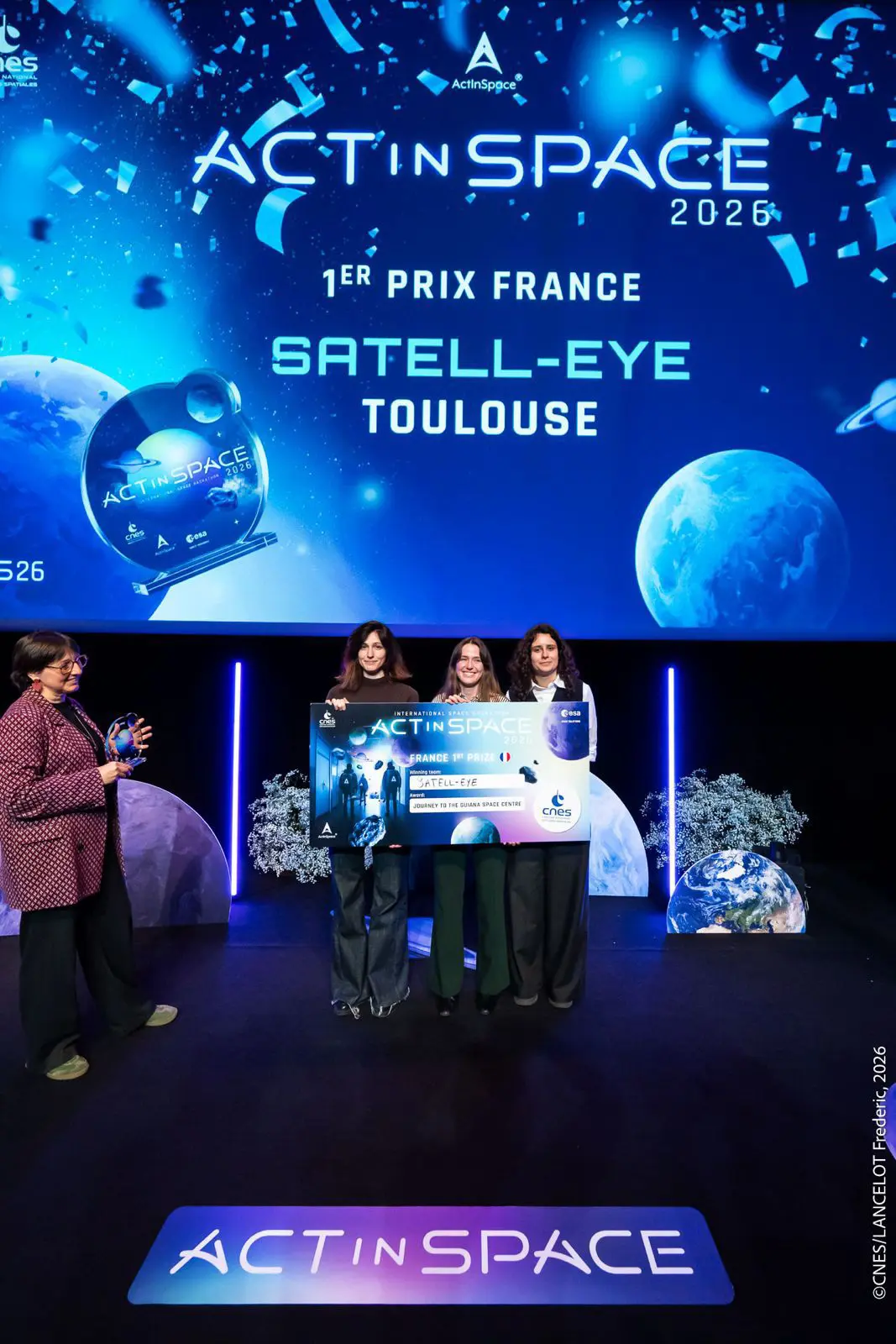
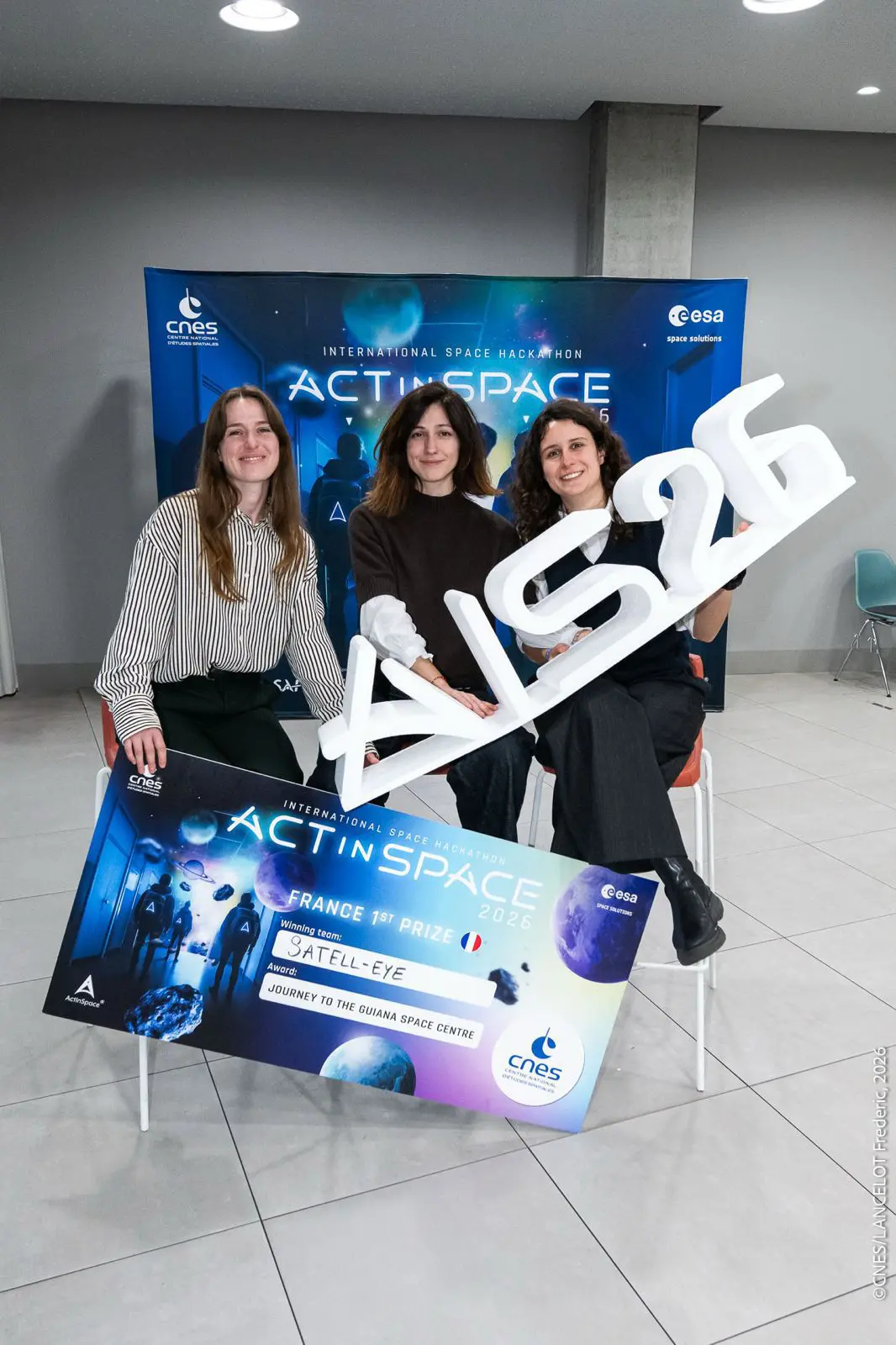
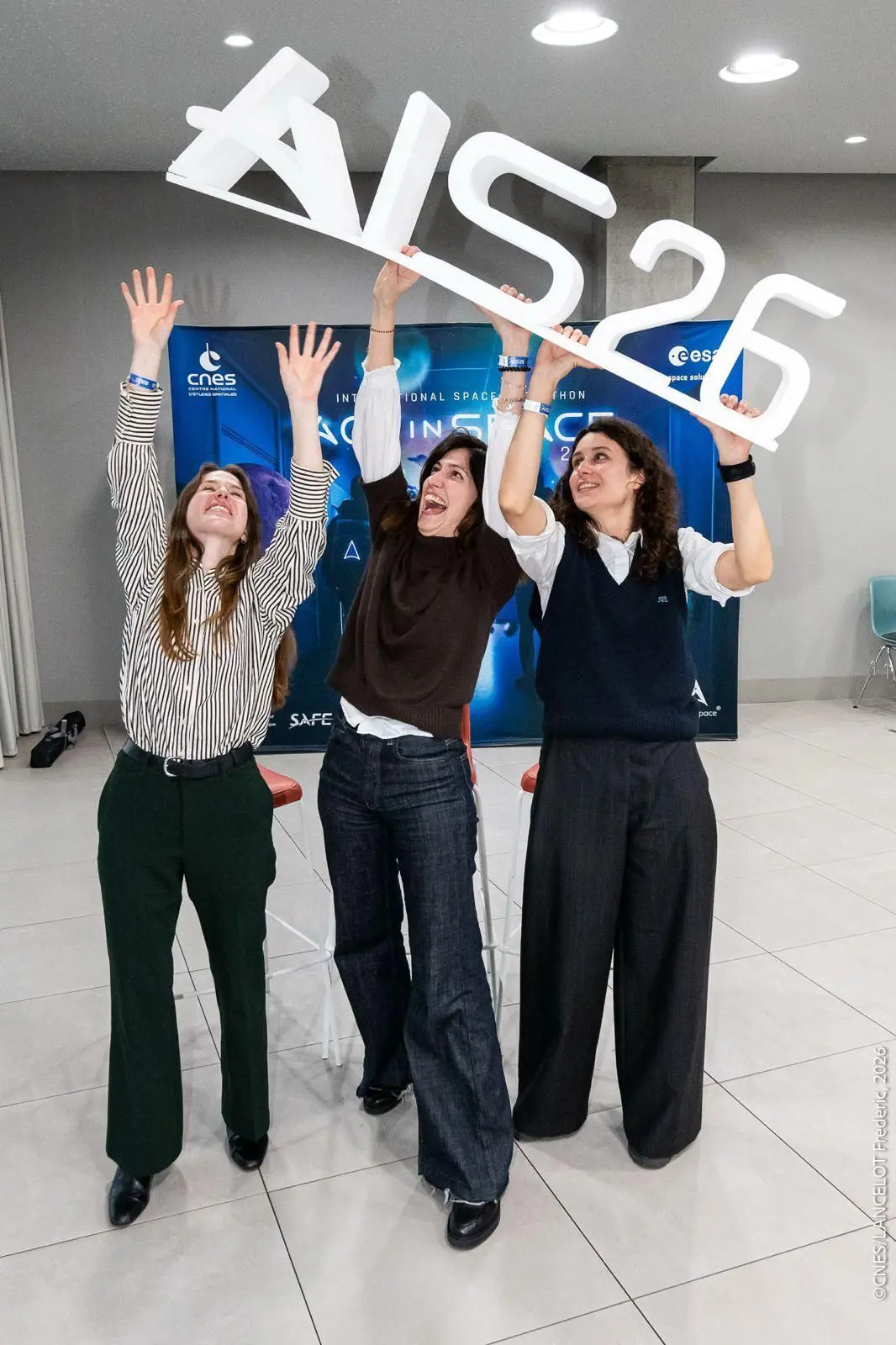
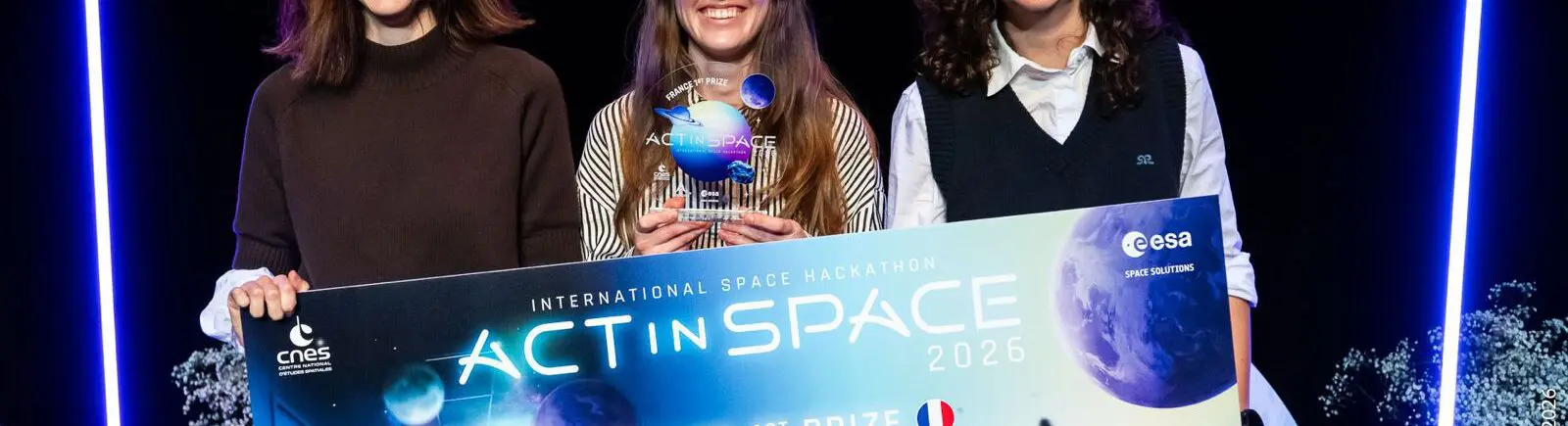
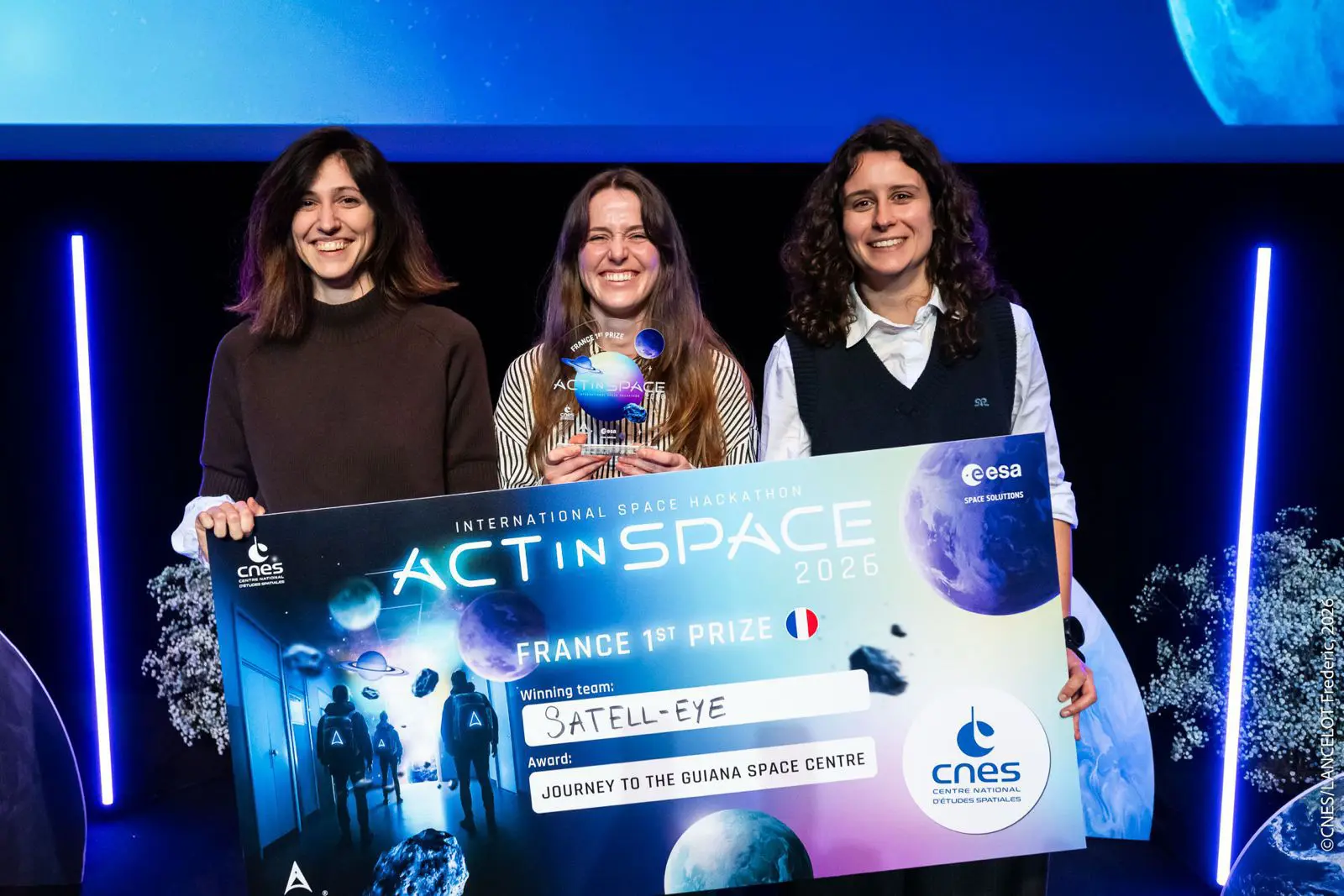
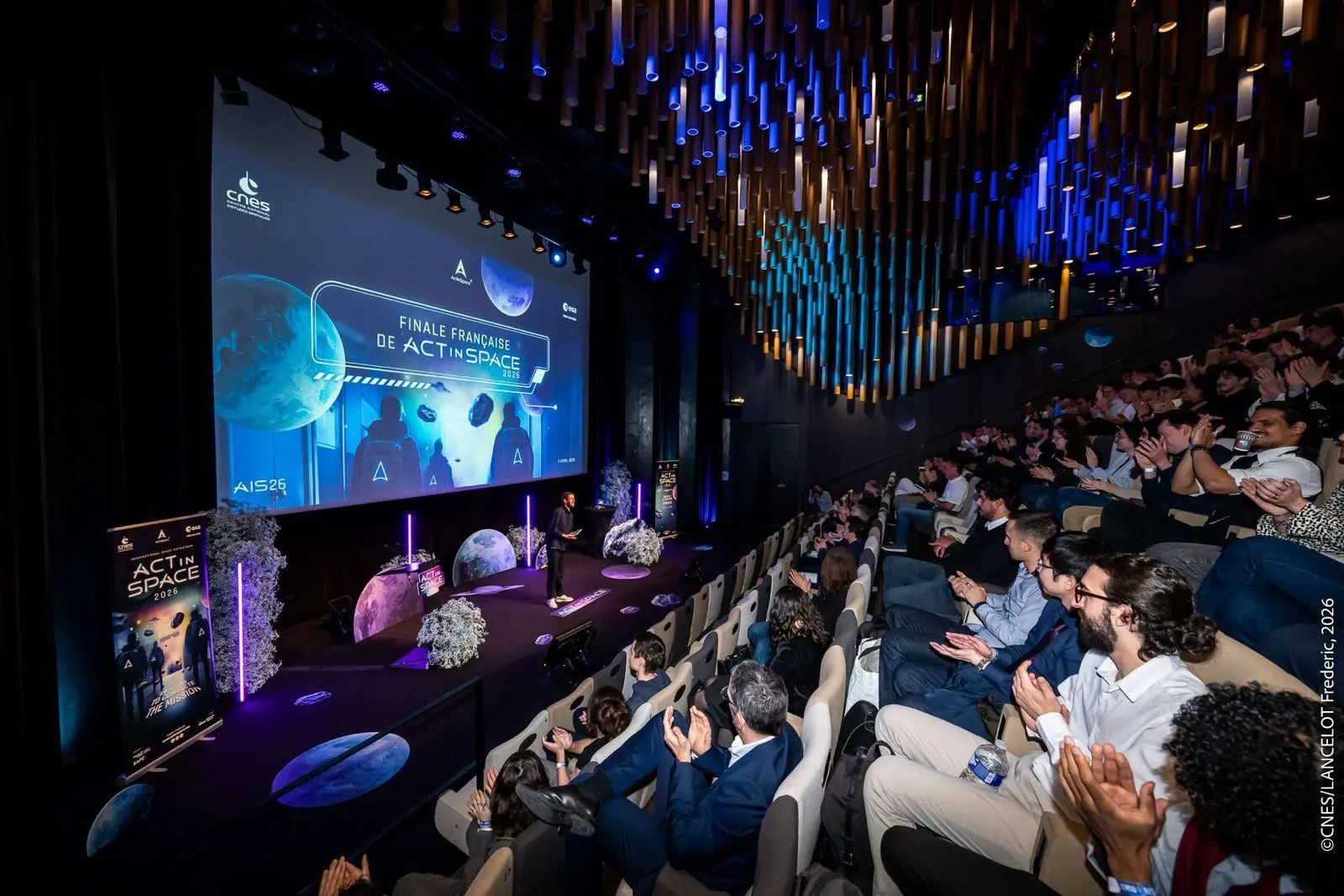
As part of the ActInSpace hackathon organised by TBS Education with the support ofUNIVERSEH, the Toulouse team 𝐒𝐨𝐥𝐞𝐭𝐞, made up of Elena Lopez-Contreras, Leonie Gasteiner (ISAE-SUPAERO student on the Master in Aerospace Engineering), and Veronica Orlandi (PhD student at the University of Toulouse ex UT3) won first place at the national final in Bordeaux with their project 𝐒𝐚𝐭𝐞𝐥𝐥-𝐄𝐘𝐄.

Their solution, based on the use of satellite data and onboard artificial intelligence, makes it possible to detect “ghost ships”, thereby meeting major challenges in terms of maritime safety, the fight against illegal activities and environmental protection.

They then qualified for the international final, where they competed against 23 teams from all over the world, and finished in the international top 5 alongside Senegal, Australia, Ukraine and Uzbekistan).

Although the grand prize went to the Senegalese team, the Toulouse team put in an impressive performance on the international stage.

As national winners, the team took home an exceptional prize: a trip to the Guiana Space Centre to watch a rocket launch!

The event was a resounding success thanks to the support of major industry players such as Capgemini, Airbus, Thales and Aerospace Angels, as well as academic and institutional contributions from TBS Education, the Toulouse School of Management, CNES (Centre national d’études spatiales), the Toulouse COMUE and the Université Toulouse – Jean Jaurès.

After 24 hours of intense reflection, development and presentation, the participants left inspired and motivated, eager to seize the next opportunity to push back the boundaries of space innovation!

Léonie Gasteiner

What started as a simple challenge among friends turned into a real project and an entrepreneurial opportunity. This experience highlights the importance of daring to take the plunge and knowing how to seize opportunities when they arise.

Léonie Gasteiner ISAE-SUPAERO student in Master in Aerospace Engineering

Cavitation in cryogenic fluids in microgravity conditions

Reference

N/A

Contract Type

PhD offer

Working Time

Full-time

Compensation

2100€ / month

Degree

Master's degree

Experience

Between 0 and 2 years

Role

Doctoral student

Application Deadline

01/03/2026
A PhD position is open in the Space Advanced Concepts Laboratory in collaboration with IMFT (institute de mécaniques des fluides des Toulouse)

Supervisors:

  • Annafederica Urbano, professor, ISA-SUPAERO
  • Sébastien Tanguy, professor, Université Paul Sabatier, IMFT

Technological context and scientific questions

During depressurization for propellant preconditioning (and cooling) prior to engine ignition or propellant transfer (in the context of space depots), bubbles can form and grow due to cavitation. This is a problem due to vapour accumulation under microgravity conditions and the impact on wall heat transfer. More generally, cavitation, under conditions where phase change predominates, is important for many applications (including nuclear power plants) and raises many questions that are not understood at the small scale.

This justifies the development of the SCREAMH2 microgravity wall cavitation experiment (currently in phase A/B development under an ESA contract), in which ISAE-SUPAERO is participating as part of the scientific team.

There are several scientific open questions regarding pool cavitation. It is unclear how the contact line phenomena (nano-region, wall roughness, cavity shape…), the level and dynamics of depressurization, and the nature of the fluid (pure or in the presence of non-condensable gas) impact the growth of these bubbles and the associated wall heat flux.

This thesis project aims to answer these questions by developing numerical models capable of accurately simulating pool cavitation, in parallel with the development of the SCREAMH2 experiment. The results will serve, on the one hand, as support for the experiment and, on the other hand, for its extension, particularly to configurations with multiple bubbles and in the presence of non-condensable gases.

Background

The present project is a continuation of the team’s recent work on the development of a solver for the direct numerical simulation of two-phase flows with phase change. The originality of the solver, based on a semi-implicit compressible projection method, lies in its thermodynamic consistency, which allows it to describe liquid, vapor, and saturation conditions at the interface for a generic fluid.

The solver has recently been extended to phase change in the presence of a contact line (solid, vapor, liquid) and validated for the simulation of nucleate boiling and pool cavitation. It has thus enabled parametric studies and model developments for bubble cavitation in microgravity at the wall. The models will be extended and generalized in this project.

This project aims to further develop the numerical solver and to use it to answer the scientific questions raised.

  1. Numerical development of the immersed boundary method [5] to include conjugate heat transfer and contact lines. After validation on basic test cases, configurations with complex geometries will need to be addressed. Initially, the simulation of CH4 pool cavitation used for validation in [4] will be reconsidered with the complex geometry (cylindrical support and cavity for the bubble).
  2. Incondensable gas. The solver will be extended to account for the presence of multi-species vapor and incondensable gases adsorption in the liquid while ensuring thermodynamic consistency at the interface. A surface tension model dependent on local composition will be developed, and the jump conditions will be adapted to take thermo-capillary effects into account. The model will need to be validated for simulation in the presence of Marangoni currents (using existing experimental data).
  3. Pool cavitation in micro-gravity. Several objectives will be pursued. The first will be to support the SCREAM H2 project with detailed numerical simulations. The second will be to extend the study of pool cavitation to many fluids, considering non-condensable gases and various geometric configurations. In particular, the phase change models developed in [4] will be extended and used to simulate multi-bubble configurations, the interaction between bubbles and their impact on wall heat transfer in microgravity.

Impact

While this project focuses on pool cavitation in microgravity, it is important to note that the developments envisaged are also intended to simulate and study other phenomena involving phase change in compressible flows in the presence of contact lines. These include 1) sloshing in tanks and 2) hydrodynamic cavitation with the development of cavitation pockets. It is planned to study such configurations towards the end of the thesis project, depending on how the project progresses.

Work environment

The PhD will be funded by CNES and will be hosted in the Space Advanced Concepts Laboratory at ISAE Supaero in collaboration with IMFT.

ICCAS 2026, jointly organized by ISAE-SUPAERO, the ISAE-SUPAERO Foundation, and Dassault Aviation, will take place on June 11-12, 2026.
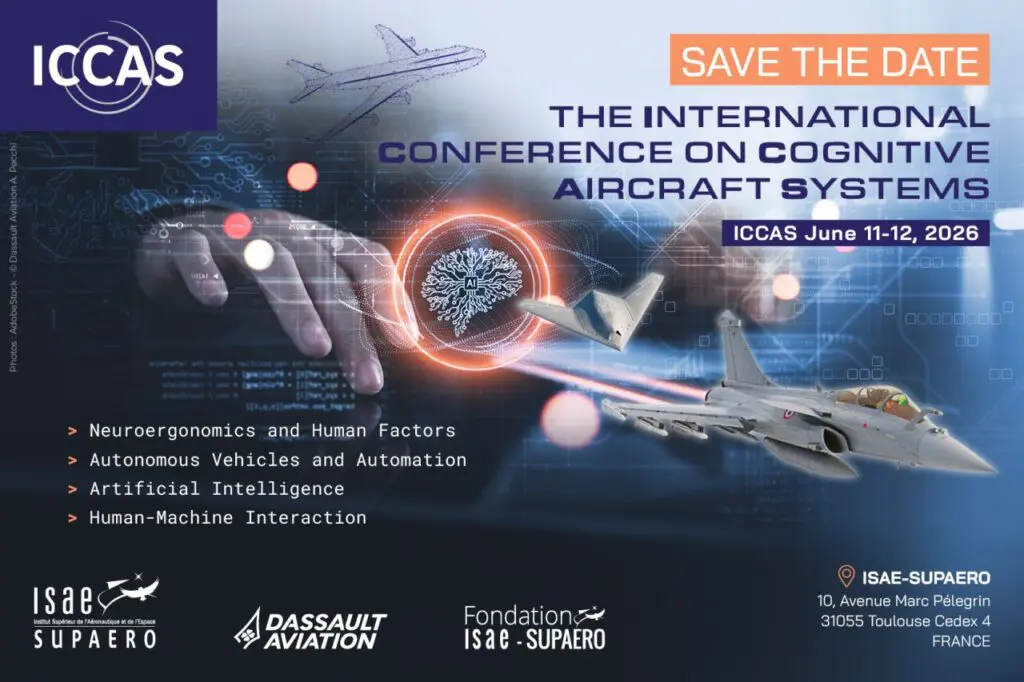
A unique event, ICCAS provides an exceptional framework for sharing knowledge on the design of next-generation civil and military aircraft.

The International Conference on Aeronautical Cognitive Systems (ICCAS), chaired by Caroline Chanel, Dehais Frederic and Patrick Fabiani, is dedicated to scientific discussion and collaboration on future aircraft cognitive systems.


A wide range of theoretical and practical topics related to neuroergonomics and human factors, artificial intelligence, human-computer interaction and autonomous systems engineering will be presented, including:

  • on-line monitoring of operators based on behavioural, physiological and neurological measurements
  • the design of greener man-machine interfaces providing intuitive information on flight or mission status to facilitate the decision-making process,
  • architecture rules guaranteeing a high level of operational safety.

On this occasion, 𝐥𝐞𝐬 𝐜𝐡𝐞𝐫𝐜𝐡𝐞𝐮𝐫𝐬 𝐞𝐭 𝐥𝐞𝐬 𝐩𝐫𝐨𝐟𝐞𝐬𝐬𝐢𝐨𝐧𝐧𝐞𝐥𝐬 𝐝𝐮 𝐬𝐞𝐜𝐭𝐞𝐮𝐫 𝐬𝐨𝐧𝐭 𝐢𝐧𝐯𝐢𝐭𝐞́𝐬 𝐚̀ 𝐬𝐨𝐮𝐦𝐞𝐭𝐭𝐫𝐞 𝐥𝐞𝐮𝐫𝐬 𝐭𝐫𝐚𝐯𝐚𝐮𝐱 𝐩𝐨𝐮𝐫 𝐮𝐧𝐞 𝐩𝐫𝐞́𝐬𝐞𝐧𝐭𝐚𝐭𝐢𝐨𝐧.


Submissions may include extended abstracts (1000 words), or demonstration abstracts (300 words). Accepted contributions will be presented in oral or poster sessions.

Computer Vision and Sequential Decision Making for Plant Cultivation in Bioregenerative Life Support Systems

Reference

N/A

Working Time

Full-time

Degree

Master's degree

Experience

Between 0 and 2 years

Application Deadline

13/03/2026
Bioregenerative life support systems (BLSS) are being considered for future long-duration manned space travel, as supplies from Earth are too expensive, if not impossible. Moreover, environments suitable for agriculture will also be difficult to access on Earth, mainly due to climate change and resource depletion. Both on Earth and in space, it is therefore necessary to find solutions for growing plants, which can benefit from robotics, advanced automation and machine learning, according to the scientific literature.

This internship project in artificial intelligence applied to precision agriculture aims to contribute to the development of methods for maximising long-term production and minimising resource consumption.

It focuses on optimising:

1. the estimation of the state of plants and their environment using machine learning and computer vision algorithms to monitor their growth,

2. sequential decisions using reinforcement learning algorithms to calculate autonomous cultivation strategies that are efficient and economical in the long term.

Direct Numerical Simulation of Hydrogen Bubbles Cavitation (6 months)

Contract Type

Internship offer

Degree

Master's degree

Role

Stagiaire

The objective of the present internship will be to use the DIVA code to carry out a parametric analysis on the influence of the distance between different bubbles over the wall heat transfer.

📌 Requirements: Master 2 student or equivalent interested in pursuing with a PhD thesis. Basics in computational fluid dynamics, thermodynamics, programming.

Secret Link