
Videos
Explore our videos showcasing our education, research, and innovation activities.
Education
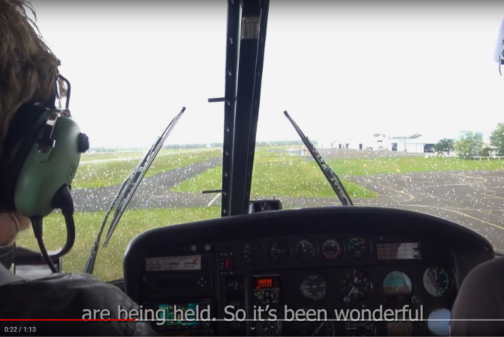
Advanced Master® HADA: EMBARK FOR A COURSE IN THE AIR!ISAE-SUPAERO's Advanced Master® “Helicopter, Aircraft, and Drone Architecture” (HADA), in partnership with Airbus Helicopters, provides high-level technical and engineering skills for careers in the aircraft, drone and helicopter sectors. Right from the start of the program, students board a helicopter for an in-flight course! “In this way, they are immediately involved in the study of the helicopter's various controls and reactions,” explains Jean-Marc Moschetta, head of the program. This experience will serve them well throughout their training: "During theory classes, they'll be able to relate their own experience to an understanding of helicopter flight mechanics. Are you passionate about aeronautics, civil and military aircraft, drones and helicopters? Apply for the next recruitment session on May 13, and develop your career in France or abroad by gaining access to positions in the design, certification and operation of civil and military aircraft, drones and helicopters! For more information on this Specialized Master® and the admission procedure: https://www.isae-supaero.fr/fr/formations/mastere-specialise-r/programmes/mastere-specialise-r-helicopter-aircraft-and-drone-architecture-hada/
Education
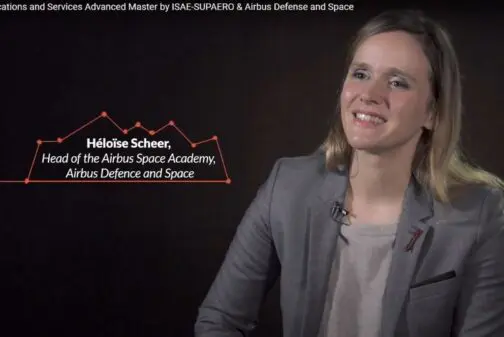
Advanced Master Space Applications and Services from ISAE-SUPAERO & Airbus Defense and SpaceISAE-SUPAERO's Advanced Master® in Space Applications and Services (SPAPS) is designed in collaboration with Airbus Defense and Space. It enables students to acquire the skills needed to master and develop space applications for monitoring the Earth's environment and for telecommunications, both of which play a key role in sustainable development today. Find out more about the skills acquired, the fields of application and the job opportunities offered by this Mastère Spécialisé®, presented by Heloïse Scheer, Head of the Airbus Space Academy at Airbus Defence and Space, and Raphaël Garcia, Program Manager at ISAE-SUPAERO. Next application deadline: April 10, 2024. Contact: info-programmes chez isae-supaero.fr
Education
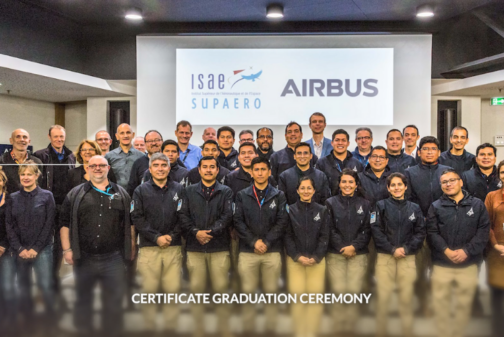
ISAE-SUPAERO and Airbus Defence and Space organize an international training course on space systemsTwenty engineers from the Peruvian space agency CONIDA (Comisión Nacional de Investigación y Desarrollo Aeroespacial) attended a training course in Toulouse designed jointly by ISAE-SUPAERO and Airbus Defence and Space! The aim? To develop their skills in space systems and space missions. The entire program was placed under the academic responsibility of AnnaFederica Urbano, a lecturer and researcher in space systems and launchers at ISAE-SUPAERO. The engineers took part in a preliminary satellite design project. At the end of the five-week course, they all obtained the Certificate of Advanced Studies awarded by ISAE-SUPAERO. For ISAE-SUPAERO and Airbus Defence and Space, this experience opens up prospects for future collaborations in training courses of this type for international customers and industrial and institutional partners. For more information: https://www.isae-supaero.fr/fr/actualites/airbus-defence-and-space-et-l-isae-supaero-forment-des-membres-de-l-agence/
Institute
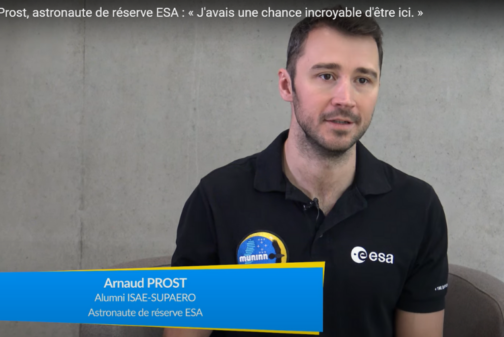
Arnaud Prost, ESA reserve astronaut and ISAE-SUPAERO alumnus: “I was incredibly lucky to be here”Fighter pilot and reserve astronaut with the European Space Agency (ESA), Arnaud Prost returned to his former school on Thursday March 28 to meet 200 secondary school students as part of the ISAE SUPAERO OSE program. It was an opportunity for him to recall the “great memories” of his student experience at ISAE-SUPAERO, his long-standing commitment to the student social outreach program and the “Aquanauts” scheme he set up with OSE l'ISAE-SUPAERO. And in passing, he offers a few words of advice to young people who might dream of following in his footsteps: “Don't let yourself be convinced that one of these paths isn't for you!” A 2017 graduate of ISAE-SUPAERO, Arnaud Prost is among those selected for the ESA Astronaut Class of 2022, alongside Sophie Adenot and Anthea Comellini, both also alumni of the school. They join other illustrious ESA astronauts who have already studied at the school: Thomas Pesquet, Luca Parmitano and Samantha Cristoforetti. Since 1970, ISAE-SUPAERO has contributed to the progress of the space age through its training, research and innovation activities. As the only organization in France to offer degree courses (engineering, master's, specialized master's, doctorate) covering all 22 space-related themes identified by CNES, the Institute offers a royal road to space careers. For Arnaud Prost's full profile: https://www.esa.int/Science_Exploration/Human_and_Robotic_Exploration/Astronauts/A
Research
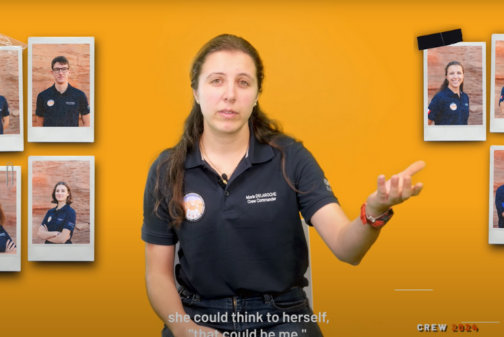
3 questions to Marie Delaroche, 3ᵉ year student and MDRS 293 crew commanderSince February 18, seven ISAE-SUPAERO engineering students have been living a simulated Martian life and carrying out experiments in collaboration with CNES and several research laboratories at The Mars Society's Mars Desert Research Station (MDRS) in UTAH (USA)! For the second time, the mission is led by a woman: Marie Delaroche, a passionate #spaceexplorer, who was already part of crew 275 departing in 2023. We asked her 3 questions to find out more about the challenges of this mission and her feelings as #flightcommander! Alongside her, three young women and three young men in their 2ᵉ year of #engineering studies have taken on the roles of astronomer, scientist, botanist, journalist, health worker and onboard engineer. They are all members of the Mars Club ISAE-SUPAERO, a student association for the popularization of science focused on the Red Planet and the missions dedicated to its exploration and study. They are currently experimenting with AI4U, the artificial intelligence that assists astronauts in their daily tasks (environmental measurements, voice recognition, emergency exercises). They are also conducting a science popularization experiment in collaboration with secondary school pupils. Inspired by the film The Martian, in which an astronaut grows potatoes on the Red Planet, the aim of this experiment is to compare plant growth in Martian soil with growth in terrestrial soil! To follow their adventure, click here: https://mars.bde-supaero.fr/
Education
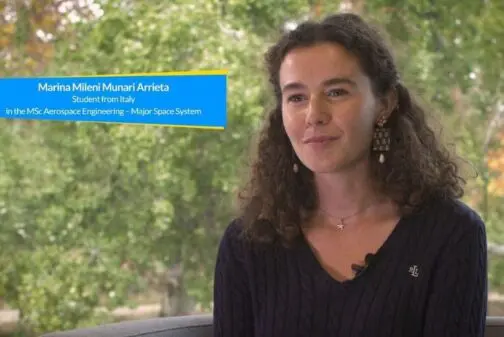
Master’s degree in Aerospace Engineering: meet Marina Mileni Munari Arrieta from ItalyMarina Mileni Munari Arrieta comes from Italy and is studying for the ISAE-SUPAERO Master's degree in Aerospace Engineering, Space Systems major.
Marina Mileni Munari Arrieta - Master's degree in Aerospace Engineering alumni
Education
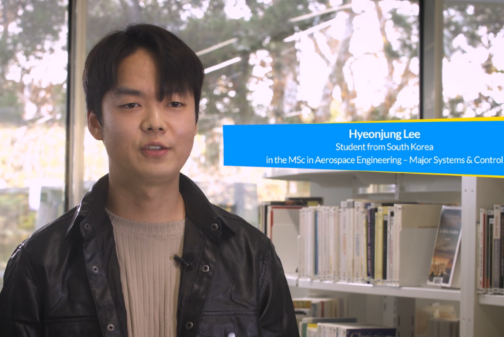
Master’s degree in Aerospace Engineering: meet Hyeonjung Lee from South KoreaHyeonjung Lee comes from South Korea and is studying for the ISAE-SUPAERO Master's degree in Aerospace Engineering, major Systems and Control.
Hyeonjung Lee - Master's degree in Aerospace Engineering alumni
Education
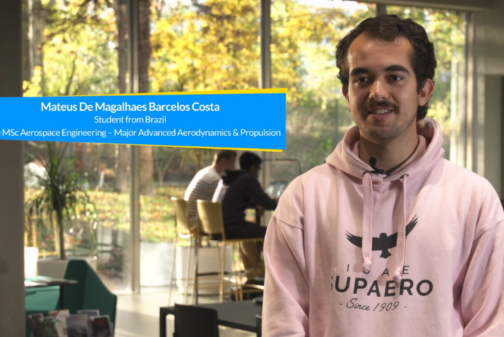
Master’s degree in Aerospace Engineering: meet Mateus de Magalhães Barcelos Costa from BrazilMateus de Magalhães Barcelos Costa comes from Brazil and is studying for the ISAE-SUPAERO Master's degree in Aerospace Engineering, majoring in Advanced Aerodynamics and Propulsion.
Mateus de Magalhães Barcelos Costa - Master's degree in Aerospace Engineering alumni
Institute
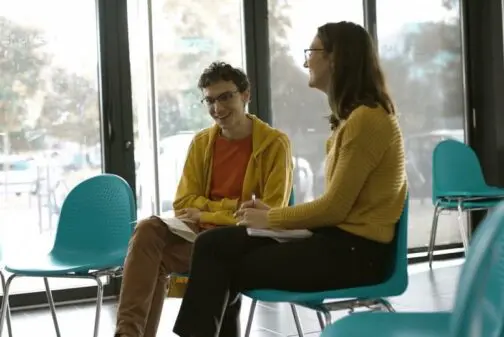
Discover our OSE InGÉ program“OSE Intégrer une Grande École” with the OSE InGÉ program, ISAE-SUPAERO's student social opening program for scientific CPGE students, in partnership with the ISAE-SUPAERO Foundation, ENAC - Ecole Nationale de l'Aviation Civile and the ENAC Foundation. The OSE InGÉ program provides personalized support for young girls and scholarship-holders throughout their preparatory classes for the Grandes Ecoles (CPGE), helping them to build their future plans and develop their ambitions. The stakes are threefold: the democratization of education linked to profound rather than structural transformations, the strengthening of #social openness in the grandes écoles and the engineering field, and the creation of an innovative scheme on the scale of an Occitanie region. Begun in 2022, the program was brought to life thanks to the collaboration of the teaching teams at three Toulouse high schools: Lycée Bellevue, Lycée Déodat de Séverac and Lycée Pierre de Fermat, the mobilization of ISAE-SUPAERO alumni and the support of our partners: the Conseil Régional de La Région Occitanie / Pyrénées-Méditerranée, Airbus, Elior Group and CREPS de Toulouse. It consists of : - customized mentoring: personalized, one-to-one support from a mentor who is an alumnus of the school, depending on availability and needs. An ISAE-SUPAERO alumnus provides support right up to the competitive entrance exams, offering his or her experience, support and listening skills to help answer questions and reinforce choices; - immersion courses to discover the campus of a Grande École, talk to former CPGE students and professionals with inspiring backgrounds, meet your mentor, consolidate your knowledge and learn how to better manage your CPGE years; - one-off events at partner high schools: an #orientation evening, testimonials from professionals, conferences, dinner/debates, training for #CPGE teachers on how to support vulnerable students. To find out more about this program: https://swll.to/TRgwaI
Education
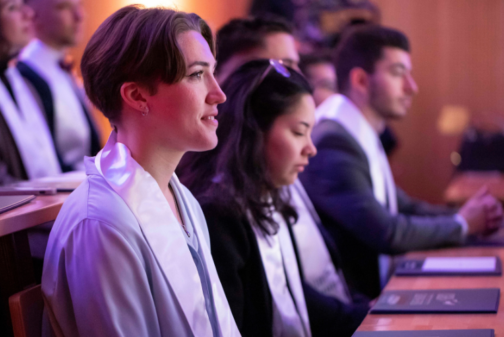
Graduation ceremony for the 2023 Industrial Engineering by apprenticeship programCongratulations to our ISAE-SUPAERO graduates from the 2023 Industrial Engineering by apprenticeship program! We're proud of you and your achievements and commitments throughout your studies. We wish you a successful start to your professional lives!
Education
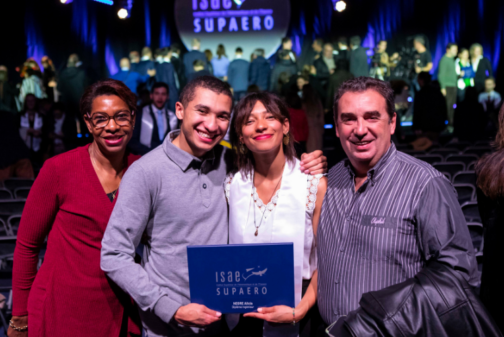
ISAE-SUPAERO Engineering Graduation Class of 2023Congratulations to our ISAE-SUPAERO Engineering Graduates Class of 2023! We're proud of you and your achievements and commitments throughout your studies. We wish you a successful start to your professional lives!
Education
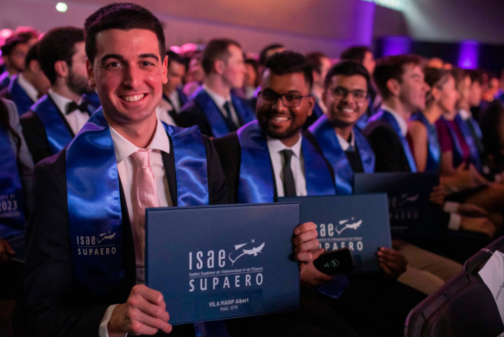
ISAE-SUPAERO Master’s graduation ceremony, class of 2023Congratulations to our ISAE-SUPAERO graduates from the Master in Aerospace Engineering and Advanced Master® classes of 2023! We are proud of you, your achievements and your commitment throughout your studies. We wish you a successful start to your professional lives!

