I Am:
Make a Donation
Share this page :

Cavitation in cryogenic fluids in microgravity conditions

Reference

N/A

Contract Type

PhD offer

Working Time

Full-time

Compensation

2100€ / month

Degree

Master's degree

Experience

Between 0 and 2 years

Role

Doctoral student

Application Deadline

01/03/2026

A PhD position is open in the Space Advanced Concepts Laboratory in collaboration with IMFT (institute de mécaniques des fluides des Toulouse)

Supervisors:

  • Annafederica Urbano, professor, ISA-SUPAERO
  • Sébastien Tanguy, professor, Université Paul Sabatier, IMFT

Technological context and scientific questions

During depressurization for propellant preconditioning (and cooling) prior to engine ignition or propellant transfer (in the context of space depots), bubbles can form and grow due to cavitation. This is a problem due to vapour accumulation under microgravity conditions and the impact on wall heat transfer. More generally, cavitation, under conditions where phase change predominates, is important for many applications (including nuclear power plants) and raises many questions that are not understood at the small scale.

This justifies the development of the SCREAMH2 microgravity wall cavitation experiment (currently in phase A/B development under an ESA contract), in which ISAE-SUPAERO is participating as part of the scientific team.

There are several scientific open questions regarding pool cavitation. It is unclear how the contact line phenomena (nano-region, wall roughness, cavity shape…), the level and dynamics of depressurization, and the nature of the fluid (pure or in the presence of non-condensable gas) impact the growth of these bubbles and the associated wall heat flux.

This thesis project aims to answer these questions by developing numerical models capable of accurately simulating pool cavitation, in parallel with the development of the SCREAMH2 experiment. The results will serve, on the one hand, as support for the experiment and, on the other hand, for its extension, particularly to configurations with multiple bubbles and in the presence of non-condensable gases.

Background

The present project is a continuation of the team’s recent work on the development of a solver for the direct numerical simulation of two-phase flows with phase change. The originality of the solver, based on a semi-implicit compressible projection method, lies in its thermodynamic consistency, which allows it to describe liquid, vapor, and saturation conditions at the interface for a generic fluid.

The solver has recently been extended to phase change in the presence of a contact line (solid, vapor, liquid) and validated for the simulation of nucleate boiling and pool cavitation. It has thus enabled parametric studies and model developments for bubble cavitation in microgravity at the wall. The models will be extended and generalized in this project.

This project aims to further develop the numerical solver and to use it to answer the scientific questions raised.

  1. Numerical development of the immersed boundary method [5] to include conjugate heat transfer and contact lines. After validation on basic test cases, configurations with complex geometries will need to be addressed. Initially, the simulation of CH4 pool cavitation used for validation in [4] will be reconsidered with the complex geometry (cylindrical support and cavity for the bubble).
  2. Incondensable gas. The solver will be extended to account for the presence of multi-species vapor and incondensable gases adsorption in the liquid while ensuring thermodynamic consistency at the interface. A surface tension model dependent on local composition will be developed, and the jump conditions will be adapted to take thermo-capillary effects into account. The model will need to be validated for simulation in the presence of Marangoni currents (using existing experimental data).
  3. Pool cavitation in micro-gravity. Several objectives will be pursued. The first will be to support the SCREAM H2 project with detailed numerical simulations. The second will be to extend the study of pool cavitation to many fluids, considering non-condensable gases and various geometric configurations. In particular, the phase change models developed in [4] will be extended and used to simulate multi-bubble configurations, the interaction between bubbles and their impact on wall heat transfer in microgravity.

Impact

While this project focuses on pool cavitation in microgravity, it is important to note that the developments envisaged are also intended to simulate and study other phenomena involving phase change in compressible flows in the presence of contact lines. These include 1) sloshing in tanks and 2) hydrodynamic cavitation with the development of cavitation pockets. It is planned to study such configurations towards the end of the thesis project, depending on how the project progresses.

Work environment

The PhD will be funded by CNES and will be hosted in the Space Advanced Concepts Laboratory at ISAE Supaero in collaboration with IMFT.

Master’s and Advanced Master’s Degree Graduation Ceremony 2025

ISAE-SUPAERO 2025 Graduation Ceremony – Engineering Class
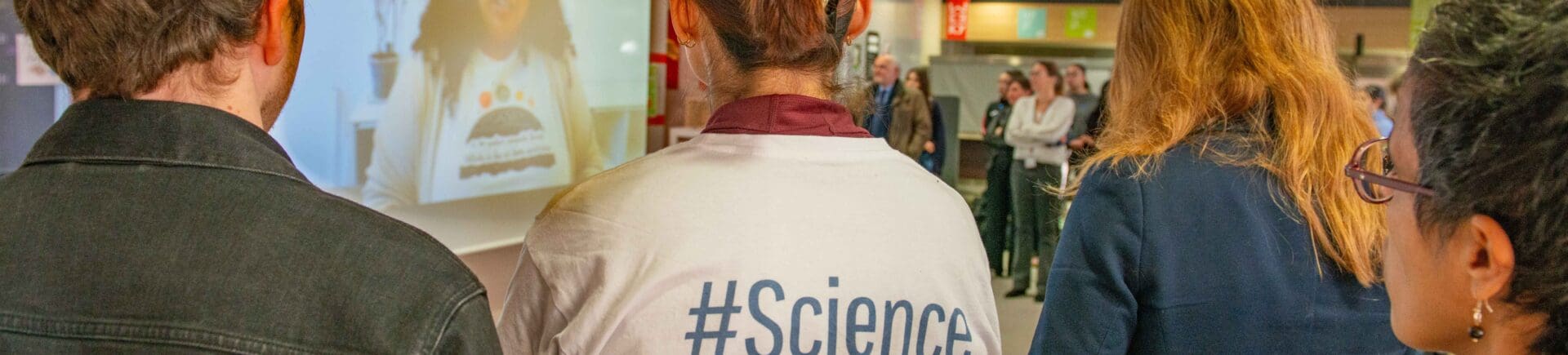
Women’s Campus Day 2026 “Inspiring younger generations and young girls”: astronaut Sophie Adenot’s commitment continues

Sophie Adenot, the patron of ISAE-SUPAERO’s OSE social outreach programme, is deeply committed to inspiring young people’s desires, inspiring their vocations and sparking their imagination. For several years now, she has been lending her support to initiatives in their favour.

On 15 January 2026, with one month to go before she takes off for the International Space Station, Sophie Adenot was not present, but she remained an emblematic and inspiring figure in the programme.

This year’s event, which brought together 120 young women from 17 schools in the Toulouse region, has a special dimension, however, as it celebrates the 10th anniversary of the “Campus au féminin” days.

Deconstructing gender stereotypes, talking to women scientists to make an impact

Julie B from the Femmes et Sciences association opened the workshop on stereotypes with great energy. To capture their attention, she used the easy-to-think-of stereotypes that lull young girls into complacency: ” You’re expected to be schoolgirls, diligent, neat, with long hair… and boys are expected to be rich, strong…” …. The threat is to behave as the stereotype portrays! ” she tells them persuasively.

To prove her point, the presenter proposes a quiz on women who are invisible, followed by a game involving associating a profession with photos of men and women. ” Mountaineer, aeroplane pilot, teacher, company director, engineer – which do you associate them with, a man or a woman? ” asks Julie. She then goes on to decipher the advertising posters, which provoke reactions from the schoolgirls. ” The image of women is devalued on a daily basis and it’s ingrained in people’s brains ” comments Aurore, while for Fatima “ All this has an impact on my vision of what can be imposed on us, and it develops my critical thinking “.

The girls then move on to the “women’s pathways” workshops, where they meet female professionals – chemical engineers, aeronautical engineers, researchers and coaches – to talk about their educational and career paths. ” I’ve tried things out, made mistakes and adjustments, and there are always solutions,” says Johanna, who works at Airbus. Florianne, who works at Alten, said with conviction: “ Pressure, uncertainty and the fear of failing are all allowed, but they shouldn’t stop us from moving forward!

The girls present would like to be doctors, engineers, radio operators, company directors, lawyers, etc. The professionals conclude: ” Believe in your dreams and in what you want to do!

  • 24% of working engineers in France are women

Source: Observatoire des Femmes Ingénieures, 2026

  • In 2025-2026, women will account for 25% of students in scientific CPGEs

The government's objective is to achieve 30% female enrolment in scientific CPGEs by 2030, with a minimum threshold of 20% by the start of the 2026 academic year.

Source: Ministry of Education, "Girls and Maths" Plan, 2025

  • At the time of the ESA astronaut selection (2022), 39% of the candidates selected on the basis of their applications were women.

Of the 17 new astronauts selected, 8 are women (47%)

Of the astronauts who have already flown, 10-15% are women.

Source: ESA, Cité de l'Espace, 2023-2026

  • 22% female students at ISAE-SUPAERO (all courses combined)

They support Campus au féminin

  • Partner schools of the cordée de la réussite: UPSSITECH and ENM
  • Associations: ISAELLES and Femmes et Sciences
  • Institutions: Rectorats of the Occitanie Academic Region, Prefect of Haute Garonne DREETS, DRDFE, Ministry of the Armed Forces, Occitanie Region

Also: GIFAS, AIRBUS, THALES, Fondation Dassault Systèmes, Fondation ISAE- SUPAERO, ELIOR GROUP.

The Toulouse School of Aviation and Aerospace Engineering (TSAAE) launches its official social media accounts
Created in 2025 by ISAE-SUPAERO and ENAC – Ecole Nationale de l’Aviation Civile, TSAAE brings together two leading aviation and aerospace engineering schools around a world-class, internationally-recognised training offering that is in line with industry needs.

👉 2 schools, 21 programmes, 1 single application procedure:
a structured offering to prepare future experts in aeronautics and aerospace engineering, both civil and military.

RAMSES: ISAE-SUPAERO at the heart of a historic planetary defense mission
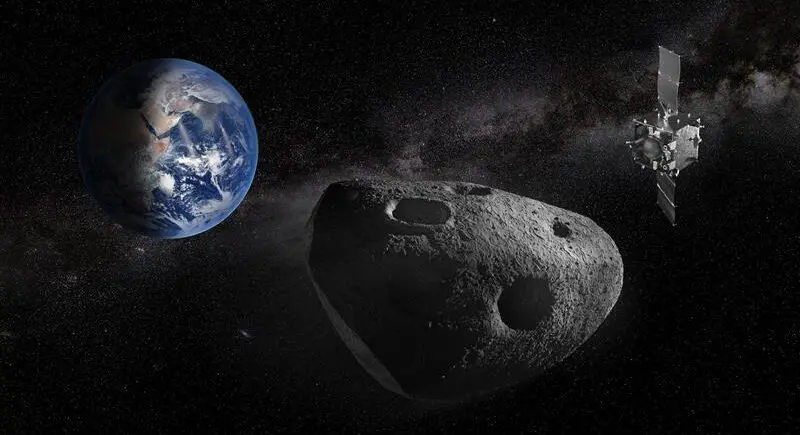
Apophis 2029: an exceptional encounter with science

ISAE-SUPAERO is taking another major step forward in space exploration with its participation in the European Space Agency’s (ESA)RAMSES mission (Rapid Apophis Mission for SpacE Safety). At the heart of this Planetary Defence mission is the SIA (Seismic Instrument for Asteroids) seismometer, developed by the SSPA team in the DEOS department with the support of CNES and in collaboration with the Institut de Physique du Globe de Paris, which will achieve a world first by recording the seismic activity of a near-Earth asteroid.

On Friday 13 April 2029, the asteroid (99942) Apophis will pass just 31,600 km from Earth – less than a tenth of the distance between the Earth and the Moon. This exceptional close passage, visible to the naked eye from Europe, is not dangerous for our planet, but represents a unique scientific opportunity to understand the behaviour and properties of near-Earth asteroids.

Approved by the ESA Ministerial Council on 27 November 2025, the RAMSES mission will be launched in spring 2028 and will reach Apophis in February 2029, two months before its historic flyby of our planet.

SIA: the seismometer developed at ISAE-SUPAERO

A technological and scientific feat

The SIA seismometer is the culmination of several years of research and development by the SSPA (Space Systems for Planetology and Applications)team in the DEOS department at ISAE-SUPAERO. This instrument will be deployed on the surface of Apophis by one of the two CubeSats on the RAMSES mission, marking the first time a seismometer has been deployed on a small celestial body.

“This mission will represent a major advance in our understanding of asteroids,” explains Naomi Murdoch, Research Director at ISAE-SUPAERO and Scientific Manager of the SIA seismometer. “Since the beginning of planetary exploration, seismometers have been key instruments for probing the interior of planetary bodies. They have already been deployed on the surface of the Moon, Mars and Venus, but never before on an asteroid!”

An exceptional mobilisation of the SSPA team

“A large part of the SSPA team at ISAE-SUPAERO is involved in the RAMSES mission and in the development of this revolutionary instrument,” explains Alexandre Cadu, Researcher at ISAE-SUPAERO and Systems Engineer at the SIA. The team’s contributions cover all technical and scientific aspects:

  • Instrumental development: mechanical and electronic design of the seismometer, performance and space qualification tests under extreme conditions, integration with the CubeSat.
  • Scientific preparation: simulation of the effects of tidal forces on the Apophis asteroid, study of the propagation of seismic waves in asteroids, characterisation of mechanical properties.
  • Operations and analysis: operations planning, in-flight instrument acceptance, data analysis, geophysical interpretation of recordings.

Internationally recognised French expertise

ISAE-SUPAERO is part of a tradition of French excellence in the internal sounding of asteroids, as well as in planetary seismology with the InSightmission . The RAMSES mission’s low-frequency radar, developed at the Grenoble Institute of Planetology and Astrophysics (IPAG/UGA) and already used on the Hera mission, will complement the observations of the SIA seismometer to provide a complete picture of Apophis’ internal structure.

Major scientific objectives

The RAMSES mission aims to characterise Apophis precisely before, during and after its passage close to the Earth. The observations will enable us to measure :

  • the mass, density and porosity of the asteroid,
  • its internal cohesion and geological structure,
  • modifications induced by tidal forces: rotational variations, surface movements, internal rearrangements,
  • the seismic properties that reveal its composition and history.

“The SIA seismometer will enable us to probe the interior of Apophis and observe how its internal structure reacts to the Earth’s tidal forces,” explains Raphael Garcia, Professor at ISAE-SUPAERO and SIA Project Leader. “These data will feed directly into Planetary Defence strategies by allowing us to better predict the response of asteroids to external forces, whether natural or applied by a deflection device.

The RAMSES mission will be completed in August 2029, after six months of intensive observations. The data collected by the SIA seismometer and the other scientific instruments will be the subject of in-depth analyses for several years, enriching our knowledge of asteroids and strengthening our ability to protect our planet.

A constellation of missions around Apophis

RAMSES will not be alone in observing Apophis in 2029. The Japanese DESTINY+ mission, launched with RAMSES, will carry out a preliminary flyby of the asteroid, while the American OSIRIS-APEX mission will begin an extended visit after the close passage. “OSIRIS-APEX is planning a thruster-surface interaction experiment on the Apophis asteroid,” explains Cecily Sunday, researcher and member of the RAMSES science team. “Within the SSPA team, we are developing numerical simulations to study the surface movements generated during this experiment, as well as during the landing of the RAMSES CubeSat”.

ISAE-SUPAERO, a major player in space exploration

ISAE-SUPAERO’s participation in the RAMSES mission confirms its position as a recognised player in space exploration. The SSPA team in the DEOS department has already contributed to several major planetary missions.

Mars: from InSight to Perseverance

On the Red Planet, the SSPA team took part in NASA’s InSight mission with the SEIS seismometer, which revolutionised our understanding of the internal structure of Mars. The team also contributed to the Mars 2020 Perseverance mission with the SuperCamMars microphone , making it possible to record the sounds of Mars for the first time and to analyse the properties of its atmosphere. This research has been published in leading international scientific journals, including Nature and Science.

Moon: the return of seismology with Artemis IV

The SSPA team was recently selected by NASA to take part in the Artemis IV mission, scheduled for 2028. They are contributing to the development of the SPSS (South Pole Seismic Station) instrument, the most sensitive seismological station ever designed to study the Moon’s internal structure at the South Pole.

Current and future missions: expertise and ambition

Beyond Mars and the Moon, the DEOS department is participating in the Japanese JAXA MMX (Martian Moons eXploration) mission, which will visit the Martian moons Phobos and Deimos and deploy the Franco-German IDEFIX rover on Phobos. The SSPA team is also contributing to the JUICE (Jovian system), BepiColombo (Mercury) and ExoMars missions with PACIS, an instrument that will study the atmosphere of Mars during the probe’s entry and landing.

“This diversified expertise in space instrumentation, combined with an in-depth understanding of planetary geophysics, positions ISAE-SUPAERO as a recognised player in the exploration of the solar system,” comments David Mimoun, Professor at ISAE-SUPAERO and SSPA team leader.

The RAMSES mission thus represents a new stage in this scientific adventure, paving the way for future discoveries about the small bodies of the solar system.

ICCAS 2026, jointly organized by ISAE-SUPAERO, the ISAE-SUPAERO Foundation, and Dassault Aviation, will take place on June 11-12, 2026.
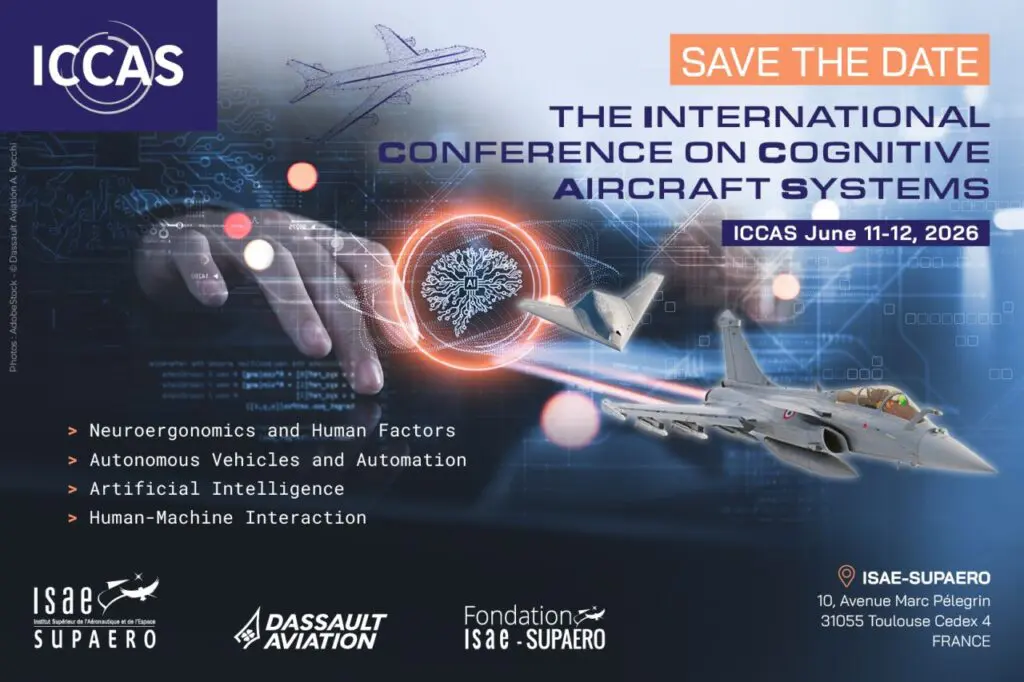
A unique event, ICCAS provides an exceptional framework for sharing knowledge on the design of next-generation civil and military aircraft.

The International Conference on Aeronautical Cognitive Systems (ICCAS), chaired by Caroline Chanel, Dehais Frederic and Patrick Fabiani, is dedicated to scientific discussion and collaboration on future aircraft cognitive systems.


A wide range of theoretical and practical topics related to neuroergonomics and human factors, artificial intelligence, human-computer interaction and autonomous systems engineering will be presented, including:

  • on-line monitoring of operators based on behavioural, physiological and neurological measurements
  • the design of greener man-machine interfaces providing intuitive information on flight or mission status to facilitate the decision-making process,
  • architecture rules guaranteeing a high level of operational safety.

On this occasion, 𝐥𝐞𝐬 𝐜𝐡𝐞𝐫𝐜𝐡𝐞𝐮𝐫𝐬 𝐞𝐭 𝐥𝐞𝐬 𝐩𝐫𝐨𝐟𝐞𝐬𝐬𝐢𝐨𝐧𝐧𝐞𝐥𝐬 𝐝𝐮 𝐬𝐞𝐜𝐭𝐞𝐮𝐫 𝐬𝐨𝐧𝐭 𝐢𝐧𝐯𝐢𝐭𝐞́𝐬 𝐚̀ 𝐬𝐨𝐮𝐦𝐞𝐭𝐭𝐫𝐞 𝐥𝐞𝐮𝐫𝐬 𝐭𝐫𝐚𝐯𝐚𝐮𝐱 𝐩𝐨𝐮𝐫 𝐮𝐧𝐞 𝐩𝐫𝐞́𝐬𝐞𝐧𝐭𝐚𝐭𝐢𝐨𝐧.


Submissions may include extended abstracts (1000 words), or demonstration abstracts (300 words). Accepted contributions will be presented in oral or poster sessions.

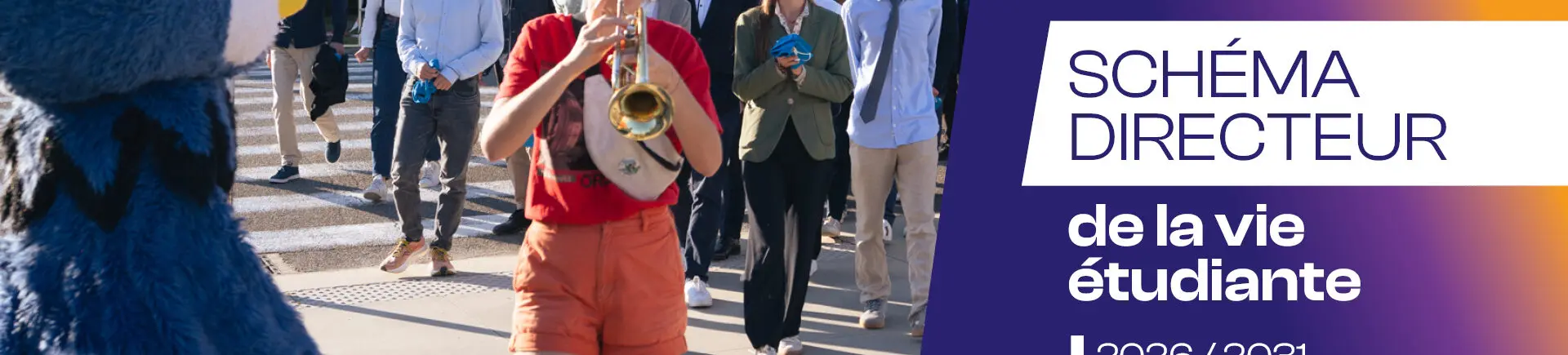
ISAE-SUPAERO launches its Student Life Master Plan for 2026–2031
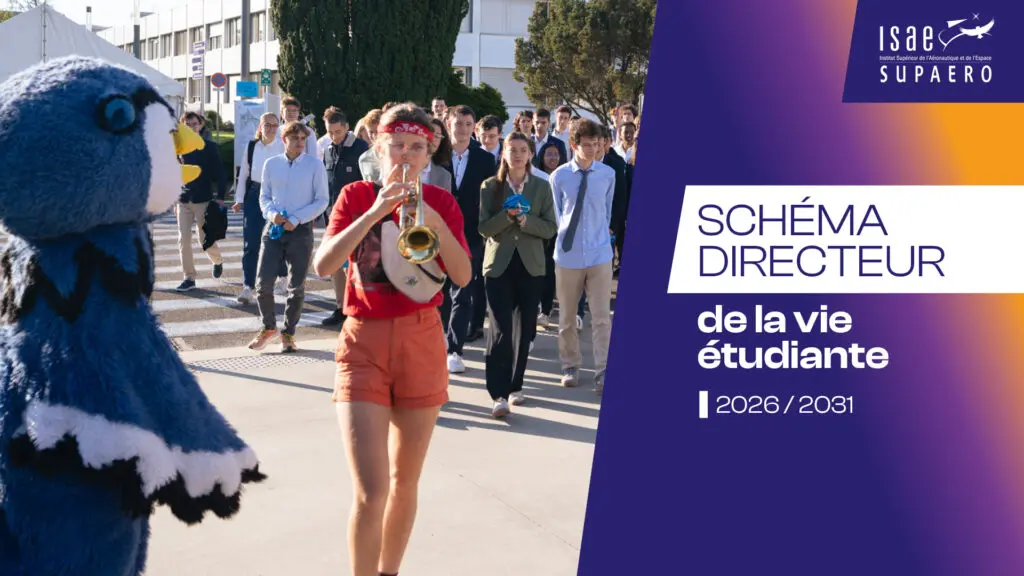
Four main themes

The result of a wide-ranging participatory process involving students, staff and partners, the SDVE is based on four main themes:

  • Living on a pleasant and inclusive campus
  • Enjoying student life in complete safety
  • Getting involved in school life by being supported and valued
  • Interacting with the ecosystem to better invest in the future

This plan marks a turning point in the way the Institut thinks about campus life, student life and community life: from now on, these dimensions will be built together, coordinated and aligned around common objectives. It strengthens existing initiatives, encourages synergies and guides new innovative projects to enhance attractiveness and well-being.

Supported by the General Management and the Deputy Management in charge of student life, the SDVE will form a long-term part of the next Objectives and Performance Contract (2027-2031). Based on an analysis of students’ experiences, studies carried out (including Happy@School) and signals from the ecosystem, it is intended to evolve regularly in order to remain as close as possible to expectations.

A strong commitment to social and environmental responsibility

This master plan is part of ISAE-SUPAERO’s commitment to society and the environment. It is a response to the various CSR initiatives undertaken in areas such as training, research, innovation and campus life.

In addition, the Institute applies a zero-tolerance policy to acts of harassment, discrimination and sexual and gender-based violence, with numerous initiatives to prevent and deal with such acts.

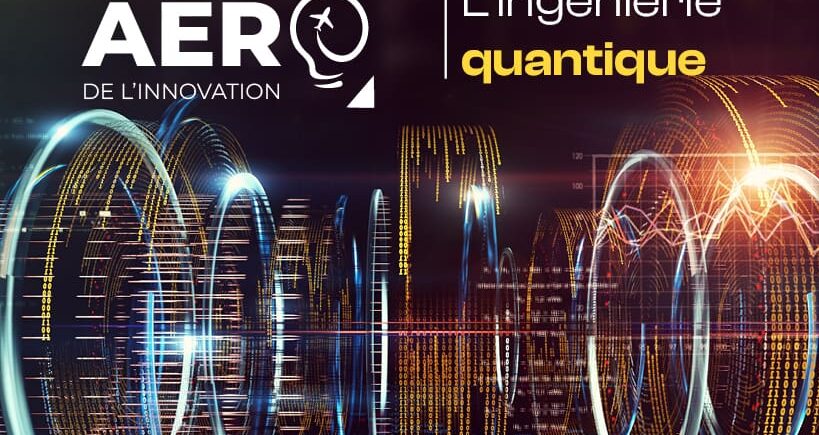
ISAE-SUPAERO and ENAC invite you to the “Rendez-vous Aéro de l’Innovation” on Thursday, February 5, 2026!
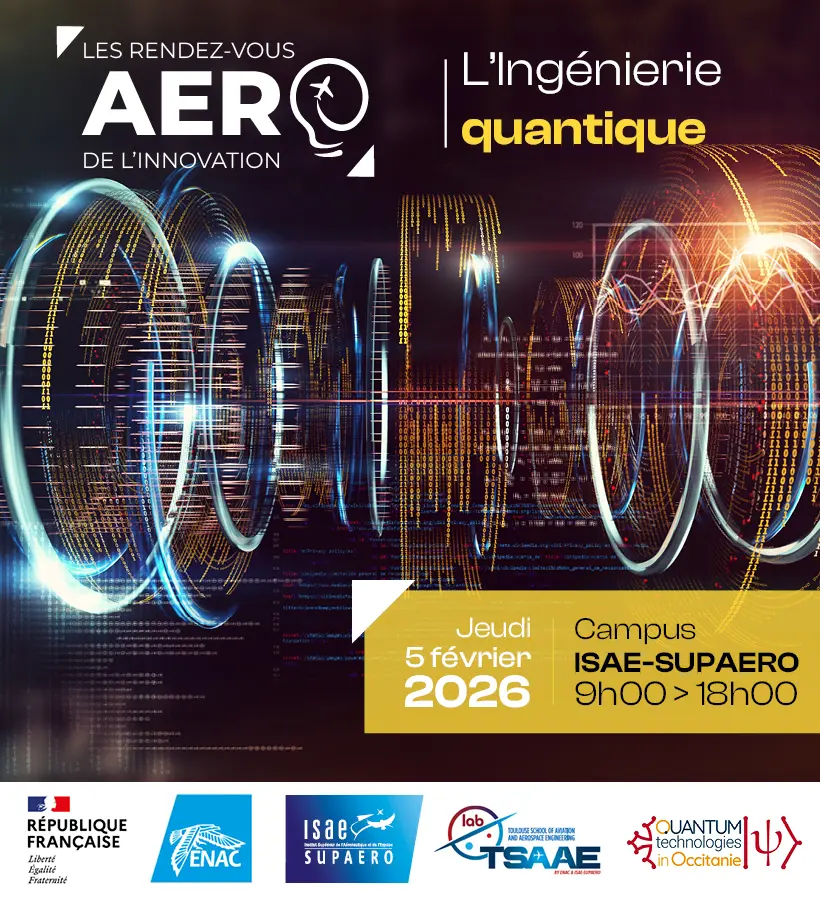
A day dedicated to quantum engineering

ISAE-SUPAERO and ENAC are pleased to invite you to the next edition of the “Innovation Aero Rendezvous”, which will take place on Thursday 5 February 2026 on the ISAE-SUPAERO campus, from 9am to 6pm.

This year’s event will be dedicated to quantum engineering. Our society is now in the2nd quantum revolution. Quantum engineering concerns everyone in society, from laboratories to major industrial companies and the general public. Quantum technology and its applications are rapidly emerging as one of the most revolutionary scientific advances of the 21st century.

The Innovation Aero Rendezvous will look at quantum engineering from a number of angles: institutional and societal issues, quantum – from fundamental research to application, quantum – from start-up to industrialisation, and finally the outlook: what kind of training courses for quantum engineers?

Programme

  • 8.30am: Welcome
  • 9.00am: Opening of the Innovation Aero Rendezvous, with Marie-Hélène BAROUX, Director General of ISAE-SUPAERO and Olivier Chansou, Director General of ENAC.
  • 9.15am – 11.00am: Institutional and Societal Issues

Individual pitches, followed by a round table discussion

  • 11.00am – 11.15am: Break and poster session
  • 11.15am – 1.00pm: Quantum technology from fundamental research to application

Individual pitches

  • 1.00 pm – 2.15 pm: Break
  • 2.15pm – 4.15pm: Quantum from start-up to industrialisation

Individual pitches

  • 4.15pm – 4.30pm: Break + Poster session
  • 16.30 – 17.30: Prospects: what training for quantum engineers?

Round table discussion

  • 5.30pm: End of the day

TSAAE LAB Research Department with Xavier Carbonneau and Géraldine Casaux

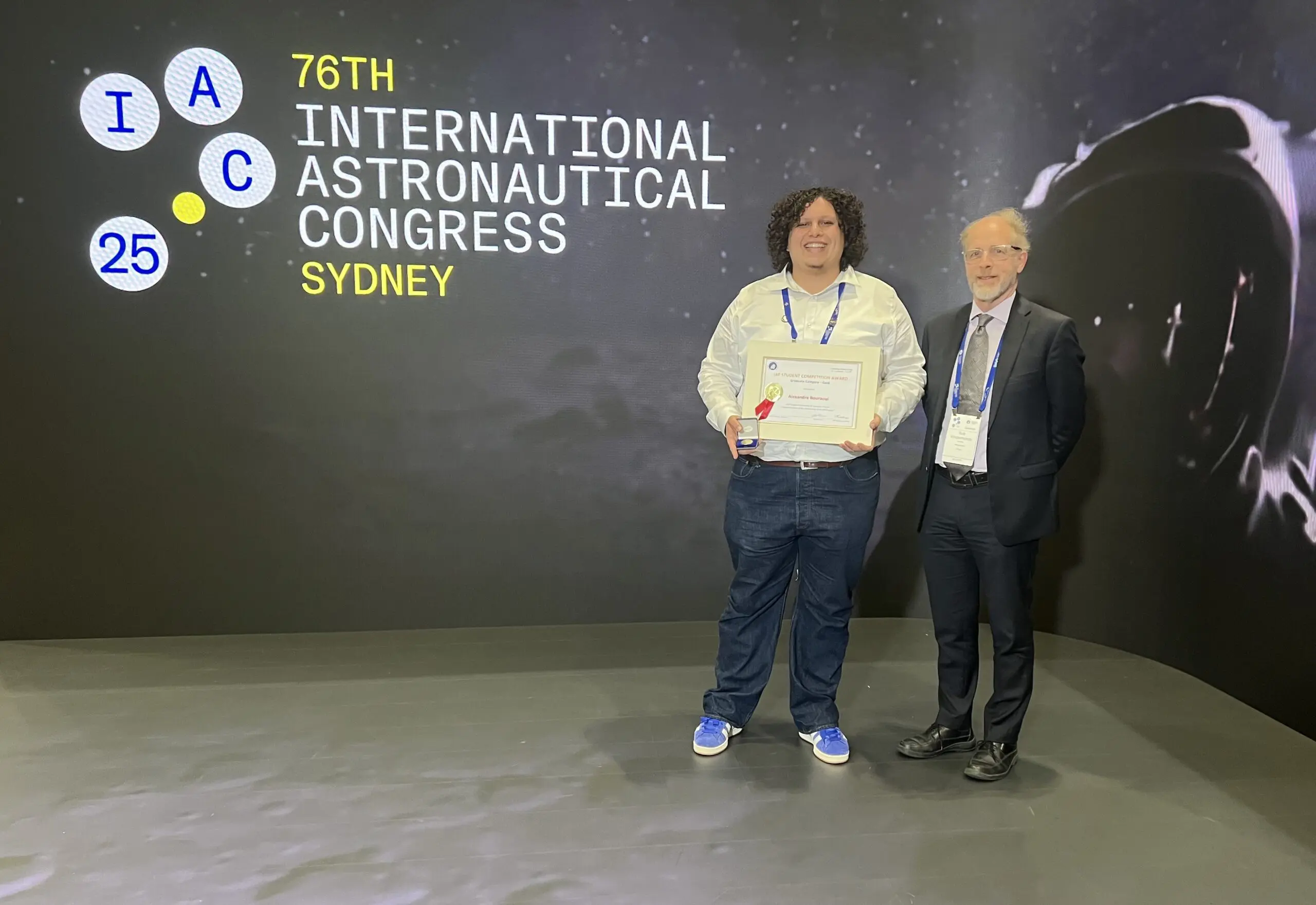
Testimony from Alexandre Bouraoui, engineering student by apprenticeship and IAC 2025 Award Winner
Can you present yourself and speak about your acadmic path? 

I was born in France and grown in Tunisia.

Before joining ISAE-SUPAERO, I graduated from a BUT in Physical Measurements (Mesures Physiques) at the University of Toulouse.

I am currently a final-year student of the “Diplôme d’ingénieur” by Apprenticeship (‘Industrialisation and Methods for Aeronautics and Space’) at ISAE-SUPAERO. I am also doing an apprenticeship at Thales Alenia Space as a payload architect apprentice for communication satellites, where I develop simulation and analysis tools for other architects.

You were awarded the Hermann Oberth Gold Medal at IAC 2025 in Sydney. Why did you receive this prize?

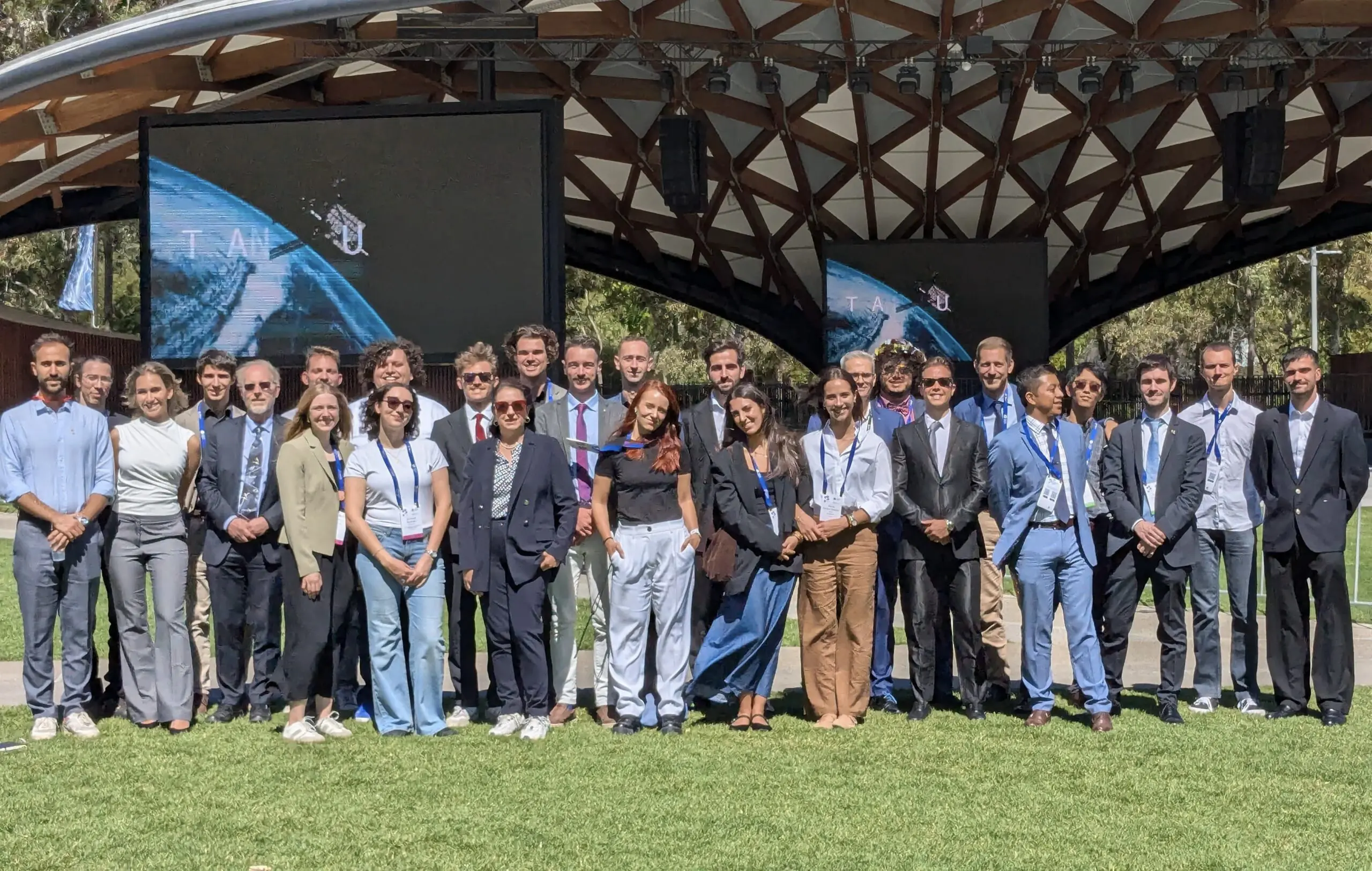
I received this award after being selected by the Aeronautics and Astronautics Association of France (3AF) to represent France in the student competition at the 76th International Astronautical Congress (IAC 2025) in Sydney.

There, I presented a paper entitled “Characterization of the Stationarity of an ICP Plasma”. This work focuses on studying plasma stability and was carried out within the PAMPA team of the Electronics, Optronics, and Signal Department (DEOS) at ISAE-SUPAERO, under the supervision of Romain Pascaud and Valentin Mazières. The project began during my second year as part of an introductory research module: I had personally contacted Dr. Pascaud to work on this topic, driven by my strong interest in plasma physics and electric propulsion—two of my passions.

I had the tremendous honor of winning the Hermann Oberth Gold Medal for the best student paper in the main category (“Graduate”) during the closing ceremony, in front of more than a thousand people.

The IAC was an exceptional opportunity for networking, learning about the space sector, and experiencing such a magnificent environment as Sydney.

Can you tell us about your current studies at ISAE-SUPAERO? Why did you choose this programme?

I chose the “Diplôme d’ingénieur” by Apprenticeship (‘Industrialisation and Methods for Aeronautics and Space’) programme because it provides a better understanding of the professional world through hands-on experience.

I particularly appreciate the alternating schedule (two months at school, two months in the company), which I find very suitable: it allows us to fully focus either on the academic side or on our professional assignments. Moreover, this format has helped ease the financial burden on my parents. They supported me a lot during my undergraduate studies, but it would have been difficult for them to continue assisting me throughout the additional three years of the engineering programme.

What are your career plans after graduation?

After graduation, I plan to focus on research in satellite electric propulsion, either as an engineer or by starting a PhD, as this is what I am most passionate about. However, I am not closing the door to aerospace engineering in all its aspects, a field I greatly enjoy through my current experience at Thales Alenia Space.

Secret Link