
N/A
PhD offer
Full-time
2600€ / year
Master's degree
Between 0 and 2 years
Doctoral student
31/07/2026
The theme of the interoperability of model-based design and analysis approaches is one of our strong areas of research. This thesis is a continuation of the work carried out as part of the CONCORDE collaborative project between ONERA, ISAE and ENAC. The expected results should enable us to consolidate our advances in the field of synergy between models, and open up new collaborations using the planned laboratory platform.
laboratory platform.
A protocol chosen to secure communications with quantum computers
HQC: French technology at the heart of post-quantum cybersecurity
In 2016, the National Institute of Standards and Technology (NIST) in the United States launched a major international appeal to design the cryptographic systems of the future, capable of withstanding the power of quantum computers. These machines of the future could render obsolete the current protections for our communications, whether on the Internet, military networks or even satellites.
Among the solutions proposed, a 100% French protocol stood out: HQC (Hamming Quasi-Cyclic). Designed to withstand attacks from quantum computers, HQC enables two parties to share a secret – even if their exchange is being spied on – and then use it to encrypt their communications.
This ambitious project is being led by a consortium headed by Philippe Gaborit from the University of Limoges, joined by researchers from ISAE-SUPAERO and ENAC. Together, they have contributed to the development, optimisation and validation of this “post-quantum” cryptography solution.
International recognition
NIST recently announced the selection of HQC for future standardisation. This is a major achievement for this protocol, which is set to become a pillar of global cybersecurity for decades to come, particularly in sensitive sectors such as telecommunications.
Toulouse expertise on the front line
The success of HQC is based on the key contributions of several researchers from Toulouse:
- Carlos Aguilar, a professor in the DISC department at ISAE-SUPAERO from 2018 to 2022, is one of the founding members of the project. He was involved in the initial design of the algorithm and was one of the project’s main supporters throughout the standardisation phase.
- Jérôme Lacan, also a professor at ISAE-SUPAERO, worked on the error coding and decoding mechanism, an essential component of the system.
- Arnaud Dion, a teacher-researcher at ISAE-SUPAERO, produced a hardware implementation of the protocol on an integrated circuit, demonstrating its performance against other competing solutions.
We implemented the entire encryption/decryption algorithm directly in an integrated circuit. The aim was twofold: to prove that this algorithm could be embedded in a chip dedicated to cybersecurity, and to demonstrate its concrete performance. This meant completely rewriting the code to make it compatible with a hardware architecture, while ensuring that this implementation could be easily reproduced by an industrial company.
An international team coordinated by Limoges
Coordinator : Philippe Gaborit, University of Limoges
HQC project partners (4ᵉ round):
Carlos Aguilar Melchor (SandBox)
Nicolas Aragon (University of Limoges - Xlim Institute)
Slim Bettaieb, Loïc Bidoux (Technology Innovation Institute, UAE)
Olivier Blazy (École Polytechnique - CNRS/LIX)
Jurjen Bos (Worldline, NL)
Jean-Christophe Deneuville (ENAC, University of Toulouse)
Arnaud Dion, Jérôme Lacan (ISAE-SUPAERO, University of Toulouse)
Edoardo Persichetti (Florida Atlantic University, US)
Jean-Marc Robert, Pascal Véron (University of Toulon - Mathematics Institute)
Gilles Zémor (University of Bordeaux - Bordeaux Mathematics Institute)

Theory, Modelling, and Systems Engineering (ThéMIS) Scientific Group

Our Research Areas
Our mission is to respond to the challenges posed by the design of increasingly integrated, autonomous, and mission-critical systems, by combining theoretical research, modelling methodology, and the implementation of engineering processes.
ThéMIS aims to develop robust and innovative solutions based on an interdisciplinary approach combining modelling, optimisation, and validation. We work with academic and industrial partners to meet the needs of critical sectors and innovate the technologies of tomorrow.
The ThéMIS research group carries out research in the following areas:
Theory
- Preliminary design of complex systems and exploration of the design space
- Architecture and trade-off analysis
- Semantics of models and formal verification and validation (V&V) methods
- System resilience (e.g. identification of obsolescence risks)
- Technology forecasting and roadmapping
Modelling
- Model-based systems engineering (MBSE)
- Links with functional safety analysis (MBSA) and multidisciplinary optimisation (MDAO)
- Model transformation and integration of validation and verification tools
Engineering Process
- Integration of MBSE, product lifecycle management (PLM) and lifecycle analysis (LCA) methodologies
The research carried out by the ThéMIS research group has applications in the following areas:
- Space (ground segment, vehicles, satellites)
- Autonomous vehicles (drones, robots, intelligent cars)
- Complex socio-technical systems (infrastructure management, human-machine interaction)
- Critical embedded systems and cyber-physical systems (safety, reliability and performance in constrained environments)
- Jonathan : Security evaluation of large distributed and reconfigurable systems
- Charles MATHOU: Global methodological framework for safety analysis of UAV systems
- Abdoulaye SARR: Multidisciplinary analysis and optimisation of a hydrogen-powered aircraft
- Charlotte STROBBE: Design of user-centred systems combining MBSE and HSI
- Augustin GALLOIS: Eco-design of a Lunar Habitat
- Ariane BEAUDOIN-BUSSIÈRES : Forecasting for dual technological innovation in strategic ecosystems
- Haochen GAO: Participatory design tools and systemic methods for multimodal air-rail systems
- Valentin MORDEL: Fault tolerance and reliable reconfiguration in an automotive HPC/ZCU architecture
- Maisa CIETTO: Identification and modelling of inefficiencies in the air transportation system
- Sophie LEMOUSSU : A model-based approach for innovative SMEs in the aeronautics industry
- Sébastien SCHWARTZ : Coupling deterministic and non-deterministic simulation for predictive maintenance
- Juan José MONTERO JIMENEZ: Knowledge reuse to improve system architecture for predictive maintenance
- Eric-Guillaume VIDOT: Towards the certification of avionics systems based on machine learning: using mathematical proofs to guarantee reliability
- Anass AKRIM : Prediction of remaining lifetimes of aeronautical components using deep learning approaches
- Ombeline AIELLO: Early validation of system designs using a joint engineering approach based on models and optimisation
- Sophia SALAS CORDERO: Early phases of complex system design: obsolescence considerations from an MBSE perspective
- Eric RAZAFIMAHAZO: A systems engineering approach to the design of multi-use systems on mission inside buildings
- Morgan GAUTHIER: Architectural optimisation of automotive applications on MpSoC components
- Laetitia BORNES: Interactive systems engineering between design science and design as science
Faculty members
Theses in progress
Theses defended
Our Classes
The members of the ThéMIS group are involved in ISAE-SUPAERO’s educational programmes: the general engineering programme, industrial engineering speciality programme by apprenticeship, Master’s degree in Aerospace Engineering (MAE) and various Advanced Master® (AM) programmes.
The group manages the MAE Systems Engineering major (around 30 students/promotion) and the Systems Engineering AM (around 10 students/promotion).
Members of the group are involved in other activities, in particular directing the Systems Doctoral School at the University of Toulouse.
Our Projects
New design, analysis, and qualification methods to ensure drone certification.
Formal verification methods for space systems. Development of the model-checker integrated into ESA's TASTE development platform (https://taste.tools), in collaboration with UGA/Verimag, GMV, and ESA/ESTEC.
Integrated Air Transport System chair with Thalès Group: this sponsorship, research, and teaching chair draws on ISAE-SUPAERO's expertise in optimising the flight operations and systems approach, and on the Thalès Group's expertise in flight avionics, connectivity, and air traffic control.
Our Permanent Members
Head of Themis Group
Thémis Group | Members 2025
Our Partners
Industry Partners
Academic Partners
Directory
Discover the profiles of the 130 faculty members at the Institute who are pioneering research in aeronautics and space.
This resource allows you to explore the fields and research projects of our scientists.
Job Offers
Check out the vacancies for scientific staff in the research department
Thesis Offers
Check out the research department's thesis and post-doctorate vacancies
Internship Opportunities
Check out the Research Department's internship opportunities!
Learning, Decision, Optimisation (ADO) Scientific Group

Our Research Areas
Our work focuses on decision support systems, from the collection of data to its interpretation, in order to make the best decision.
Our common scientific question is: ‘What are the models and algorithms that lead to a learning or decision-making process?’
To answer this question, the ADO group draws on and contributes to the techniques of artificial intelligence (reinforcement learning, evolutionary algorithms, constraint programming) and industrial engineering (operations research, knowledge management, systems engineering).
The applications of the research carried out within the ADO research group are in the following fields:
- Aeronautics and Space: Earth Observation and Autonomous Vehicles
- Production systems: System configuration and workshop programming
- Industry X.0: Preventive maintenance
Doctoral and post-doctoral students
Researchers
Research areas
Teaching modules
Our Classes
Our research group is heavily involved in ISAE-SUPAERO‘s top-quality educational programmes, both in the engineering cycle curriculum and in the Masters programmes. We are fully committed to teaching, offering courses that combine theory and application, to ensure that students receive an education based on the latest scientific and technological advances.
We encourage and promote participation in research projects to enable our students to develop the practical and methodological skills that are essential in the field of decision support systems.
We are involved in the following modules:
- Third-year Decision Sciences course
- Data and Decision Sciences pathway
- Industrial Engineering pathway
- F-SD320 Supply Chain
- F-SD321 Production
- F-SD322 Modelling and Simulation
- F-SD323 Quality and IS
- F-SD311 Machine Learning
- F-SD312 Big Data
- F-SD313 Digital Eco. Digital
- F-SD314 Case Studies
- F-SD319 Seminars
Our Partners
Head of ADO Group
Directory
Discover the profiles of the 130 faculty members at the Institute who are pioneering research in aeronautics and space.
This resource allows you to explore the fields and research projects of our scientists.
Job Offers
Check out the vacancies for scientific staff in the research department
Thesis Offers
Check out the research department's thesis and post-doctorate vacancies
Internship Opportunities
Check out the Research Department's internship opportunities!
Applied Mathematics (MA) Scientific Group
Our Research Areas
One of the main fields of study, which brings together almost all these themes, is the theoretical and numerical study of problems related to fluid-structure interactions.
These research activities are carried out in collaboration with the major players in Toulouse: The Toulouse Mathematics Institute (Paul Sabatier University-INSA), ONERA and the Clément Ader Institute (ICA), as well as with other national and international partners.
The Applied Mathematics (MA) research group comprises seven faculty members and one research engineer.
Contributions are mainly made to the following research themes:
*The division presented below is not strict: Interactions exist.
In this research area, we are interested in various aspects of the control and stabilisation or stability of solutions to partial differential equations. To be more precise:
- Control of partial differential equations
- Fluid-Structure Interaction
- Hamiltonian systems with interaction ports (pHS)
The idea behind interaction port Hamiltonian systems is to describe the dynamics of a system using the physical energy of the system (called the Hamiltonian).
In particular, this makes it possible to deal with non-linearities (non-quadratic Hamiltonian) in general. Analysis of the associated Cauchy problem is still an active research topic in the case of infinite-dimensional systems (typically non-linear partial differential equations).
Interaction ports classically consist of co-located control and observation (among other things), enabling different pHs to be coupled. The resulting system is still a pH. There are algebraic structures subordinate to pHs: Dirac structures.
Numerical simulation of pHs calls for special numerical methods to preserve the Hamiltonian (or, more precisely, the existence of a Dirac structure associated with the discretized system).
It should also be noted that closed-loop stabilisation is easily obtained in pHs, and that they also allow, at least in finite dimension, constraints to be taken into account in the form of algebraic equations coupled to the dynamical system.
- Fractional and Diffusive Differential Systems (SDF)
- Well-Posed Linear Systems (WPLS)
This area of research focuses on numerical optimisation and multidisciplinary optimisation in the context of pre-project design. To be more precise:
- Development and analysis of optimization algorithms (deterministic and stochastic)
- Solving large linear systems and preconditioning
- Uncertainty propagation (UQ)
- Sensitivity analysis
- Substitution models
- High-Performance Computing (HPC)
This area of research focuses on the application of probability and statistics to practical problems encountered by industry. To be more precise:
- Performance analysis of communication networks
- Sensitivity analysis
- Random trees
Our Partners
Head of MA Group
Directory
Discover the profiles of the 130 faculty members at the Institute who are pioneering research in aeronautics and space.
This resource allows you to explore the fields and research projects of our scientists.
Job Offers
Check out the vacancies for scientific staff in the research department
Thesis Offers
Check out the research department's thesis and post-doctorate vacancies
Internship Opportunities
Check out the Research Department's internship opportunities!
Design and Analysis of Critical Systems (CASC) Scientific Group
Our Research Areas
The Critical Systems Analysis and Design (CASC) group focuses on methods and tools to support systems engineering, with the following objectives:
- To extend the state of the art in terms of software dependability, from the design of the initial model to the hardware target, as well as in the definition and use of support tools for formal simulation/verification.
- To contribute to the definition and formal modelling of new system architectures, and to the integration of new software functionalities such as those arising from AI.
The CASC group covers several facets of software-intensive system engineering: design, verification, and validation of critical systems, deployment on hardware targets, and, finally, distributed and real-time simulation.
Our contributions are applied to aeronautics and space, but also more broadly to embedded and cyber-physical systems. These contributions are presented through publications on OpenScience and software, some of which can be freely distributed.
The CASC group is organised around two research themes:
The Formal Methods and Dedicated Languages theme is concerned with the formal semantics of programming languages as well as programs and their specifications, applied particularly to languages adapted to the design of critical embedded systems.
The use of formal methods (programme proofs, SAT/SMT methods, correction by construction, etc.) for the rigorous design of avionics functions can be applied to the various stages in the design and implementation of a product: architecture consistency verification, proof of correct operation of model transformation/code generation tools, and proof of correctness of the application code to be embedded.
The study of dedicated languages (synchronous reactive, probabilistic, etc.) and their semantic aspects will ensure that programmes can be embedded for the implementation of avionics functions, for example, taking into account the strong requirements and constraints of the field, both in terms of computing resources and the implementation of advanced AI-based functions (neural networks or learning by Bayesian inference).
The Architecture and Simulation of Cyber-Physical Systems theme focuses on the V&V stages of critical systems, particularly in conjunction with the PRISE platform.
- New avionics architectures: taking into account new processor and network paradigms and their safe integration into an avionics platform (SMARTIES project)
- Embeddability of applications on hybrid architectures (CPU, GPU and FPGA), in particular neural networks and their complex decision tasks
- Systems simulation based on state-of-the-art tools
- Real-time distributed simulation, through the implementation of the HLA standard by the CERTI middleware developed in partnership with ONERA. CERTI implements versions 1.3 and 1516 of the HLA simulation standard.
- Interoperability and coupling of simulation models for cyber-physical systems, with the Ptolemy-HLA tool. This distributed co-simulation environment couples two open-source tools, Ptolemy II and CERTI/HLA. It takes advantage of Ptolemy's calculation models and the HLA standard for interoperability and deterministic distribution of simulations.
Our Team
Permanent Team Members
- Jannette Cardoso (HdR)
- Jean-Baptiste Chaudron
- Arnaud Dion
- Fabrice Frances
- Christophe Garion
- Christine Tasson (HdR)
- Xavier Thirioux (HdR)
7 PhD Students
Head of CASC Group
Directory
Discover the profiles of the 130 faculty members at the Institute who are pioneering research in aeronautics and space.
This resource allows you to explore the fields and research projects of our scientists.
Job Offers
Check out the vacancies for scientific staff in the research department
Thesis Offers
Check out the research department's thesis and post-doctorate vacancies
Internship Opportunities
Check out the Research Department's internship opportunities!
Connected Systems (SysCo) Scientific Group
Our Research Themes
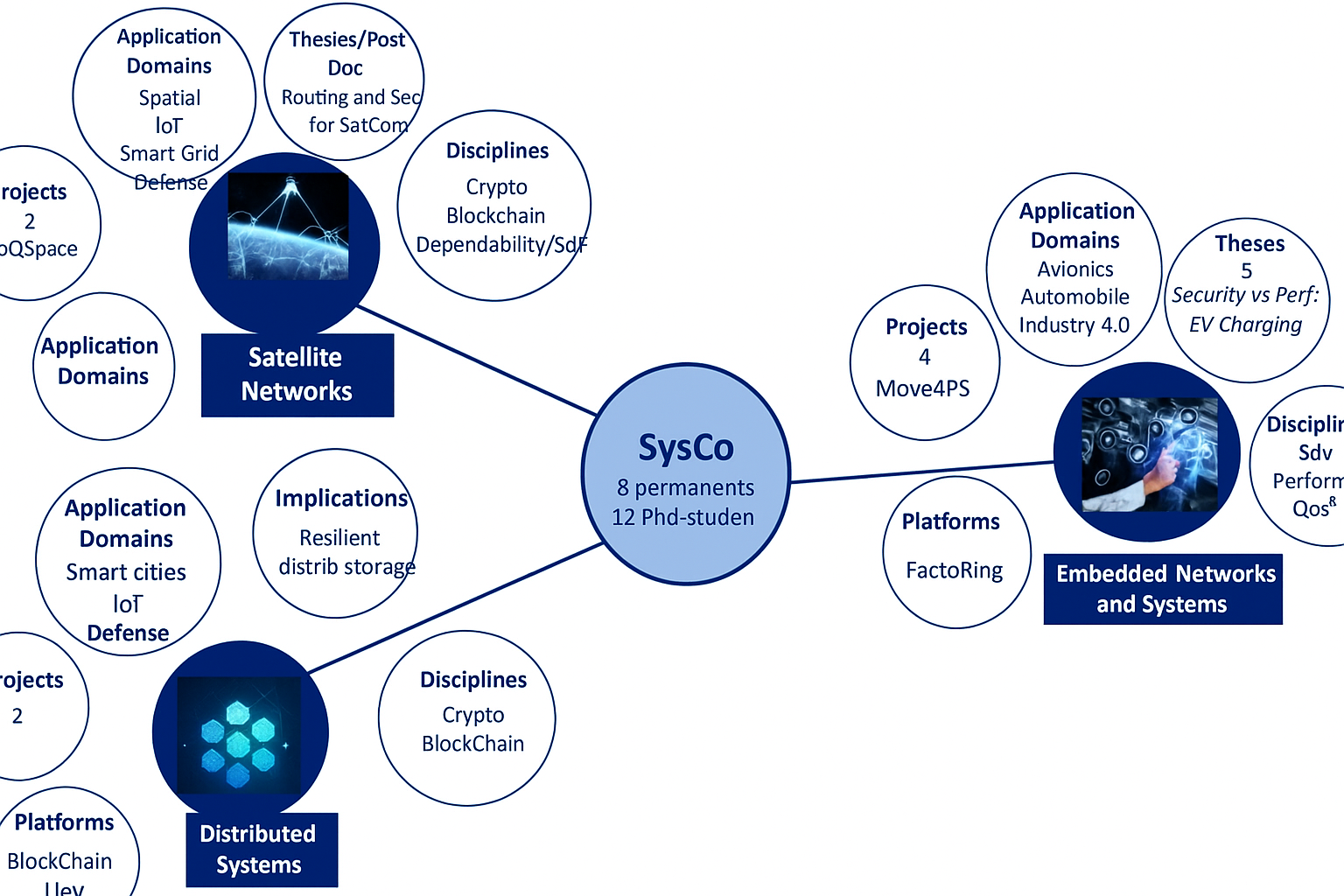
To meet the Institute’s teaching needs, the SYSCO research team’s skills cover all the fields of application of networks and connected systems in the various aerospace contexts.
The global vision developed by the team has made it possible to identify three major research themes on which research efforts have been focused for several years:
- Satellite networks: Secure and deterministic data transmission
- Embedded systems and networks: Design and performance analysis of embedded systems and networks subject to deterministic and security constraints
- Distributed systems: Reliable and secure large-scale distributed storage
Each teacher-researcher contributes to at least two of the team’s three research themes, which makes it possible to generate multiple collaborations and cross-disciplinary contributions in addition to results focused on one area.
In addition, several collaborations with members of the department’s other research groups and other departments (notably DEOS) are also prolific.
This research work has been put to good use in a number of ways over the last 5 years:
- Supervision of more than twenty doctoral and post-doctoral students
- Publication of around a hundred scientific papers and international patents
- Setting up three research platforms: Ireal/Satenet for satellite networks, Blockchain 4 UAV for distributed systems, and Factoring for embedded networks
- Participation in more than a dozen research projects with industrial and academic partners, including regional projects, ANR projects, industrial projects (TAS, Thales Avionics, AIRBUS), CNES R&T, and projects with the Institut de Recherche et de Technologie (IRT) Antoine de Saint-Exupéry.
Our Scientific Challenges
The main scientific issues that we are considering in order to advance the state of the art in our work in each of these research areas are:
For Satellite Networks
- Large-scale multi-orbit dynamic system and its heterogeneity with terrestrial networks
- Improving the security of communication protocols using post-quantum cryptography
- Definition and integration of secure routing with deterministic QoS guarantees (throughput, delay)
For Embedded Networks and Systems
- Heterogeneous hardware architectures and a variety of access control mechanisms
- Joint SW and HW approach for deterministic execution on multicore/manycore
- Definition and analysis of scheduling strategies for embedded applications
- Definition and analysis of security mechanisms adapted to real-time networks
- Methods for evaluating the security/performance trade-off
In Distributed Systems
- Ensuring scalability, data integrity, and mitigation of cyber-security risks
- Implementation of cybersecurity mechanisms and post-quantum cryptography
- Definition of 'zero knowledge' mechanisms for blockchains and peer-to-peer networks
- Integration of erasure codes to ensure the reliability and integrity of distributed storage
Team Members
Ahlem MIFDAOUI (Team Leader)
- Real-time and satellite networks
- Routing, QoS
- Cryptography and Cybersecurity
- Blockchains
- Cryptography and reliability
- Distributed Systems/Blockchains
- Cryptography and Cybersecurity, Blockchains
- Satellite networks, Routing, QoS
*Head of DISC
- Real-time Networks and Systems
- Dependability, OS
- Distributed Systems/Blockchains
- Dependability
Head of SysCo Group
Our Partners
Academic Partners
At the National Level
At the International Level
State and Industrial Partners
Directory
Discover the profiles of the 130 faculty members at the Institute who are pioneering research in aeronautics and space.
This resource allows you to explore the fields and research projects of our scientists.
Job Offers
Check out the vacancies for scientific staff in the research department
Thesis Offers
Check out the research department's thesis and post-doctorate vacancies
Internship Opportunities
Check out the Research Department's internship opportunities!
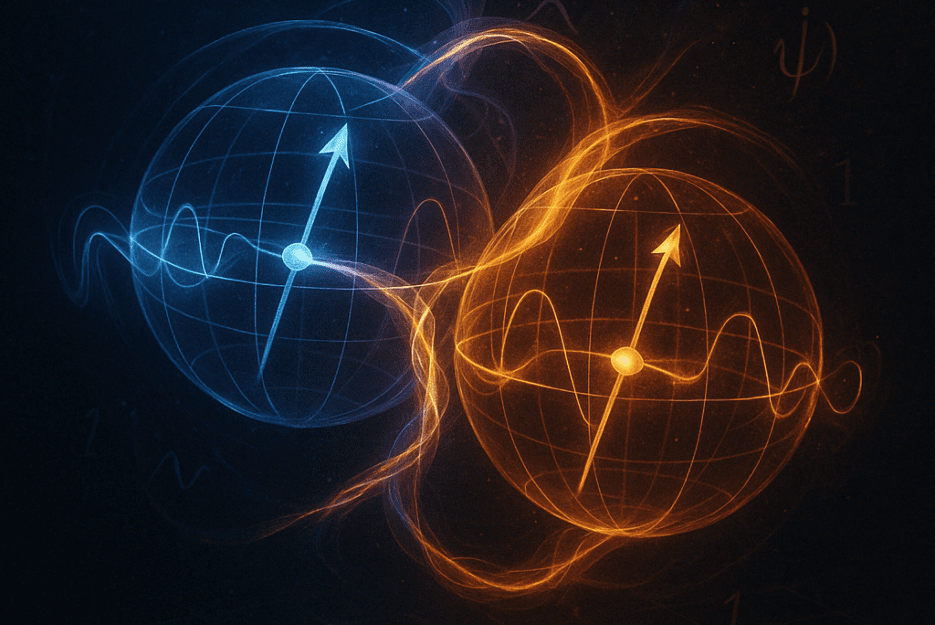
ISAE-SUPAERO researchers explore the quantum universe
At the crossroads of disciplines, quantum shapes the future
Quantum computing: first steps, communications security in focus
” Quantum computing is based on completely different foundations to classical computing and represents a revolution that could change the world,” comments Arnaud Dion, a teacher and researcher in embedded systems.
Quantum computing will, for example, enable the optimisation of processes such as the programmed maintenance of aircraft for companies with very large fleets, and increased reliability beyond weather forecasts, particularly for agriculture, transport and energy production. In the field of health, these developments will accelerate our understanding of diseases and improve the precision of treatments, as well as simulating increasingly complex molecules.
The second quantum revolution will rapidly revolutionise computer security as we know it today. Researchers from ISAE-SUPAERO’s Complex Systems Engineering Department have been involved for nearly 10 years in a cryptography research programme initiated by the US National Institute of Standards and Technology (NIST – USA). Launched in 2016, this campaign to standardise new algorithms has included projects submitted by ISAE-SUPAERO and its partners.
Hamming Quasi-Cyclic (HQC), a protocol developed by researchers at ISAE-SUPAERO, ENAC, the University of Limoges and other universities, has just been selected to meet the future threats posed by quantum computers. This technology will ensure the security of digital exchanges in the fields of telecommunications and sensitive networks. This choice marks a decisive turning point in the history of cryptography and places HQC at the heart of global cybersecurity.
” When quantum computers are operational in 10 to 15 years’ time, they will unlock codes in a matter of hours. If we don’t take an interest in post-quantum cryptography now, IT infrastructures could collapse overnight,” says Arnaud Dion.
The Institute is also developing a quantum computing research activity to explore space and aeronautical applications such as image analysis and orbital probe trajectography, which could be envisaged in the future.
Quantum communications networks and signal processing: research on the move
At the heart of the Electronics, Optronics and Signal Processing (DEOS) department, researchers have been working for several years on quantum telecommunications and laser links in free space. Their interest focuses on ground satellite communications, the effects of which are being modelled and quantum entanglement links are being tested.
“From an experimental point of view, we have our own satellite laser link / infra-red bench on the ground satellite links. The experiment using entangled photons, which is currently used for teaching practical work in quantum physics based on the work of Alain Aspect (winner of the 2022 Nobel Prize), will in the future be used to develop our research “, explains Angélique Rissons, professor and head of the DEOS department.
Meryem Benammar, a researcher specialising in information theory, is working on physical layer security techniques. She is particularly interested in the generation of secure keys to connect users, while ensuring their resistance to attacks and interception by spy networks.
We are developing algorithms for extracting secure communication keys that are useful in quantum key distribution (QKD) schemes,” she explains.
These codes are based on quantum sources of randomness such as entangled photons or photon polarisation, and are by construction robust to quantum computers, unlike mathematically generated keys. The practical applications of satellite-transmitted QKD schemes are large-scale, as they offer the opportunity to distribute quantum sources over long distances via optical communication links. In fact, Europe is leading major projects to develop its own quantum key distribution networks.
In terms of training, ISAE-SUPAERO, in partnership with ENSEEIHT, ENAC and INSA Toulouse, is offering 3rd year engineering students the ‘Advanced Communication Systems’ Master’s degree, one of the few courses to address the security of the physical layer for research purposes.
From basic research to collaborative projects: the next stage
At ISAE-SUPAERO, the expertise and disciplinary advances in the field of quantum physics are now making it possible to build bridges between the various specialists.
In the future, all these skills will be put to good use on cross-disciplinary subjects through applied theses in conjunction with industrial partners.
Fundamental research, which increasingly combines the sciences of telecommunications, signal processing and quantum computing, is evolving towards engineering.
ISAE-SUPAERO will have its place at the heart of these technologies!
Complex Systems Engineering Department (DISC)
Our Research Department
The Complex Systems Engineering Department (DISC) at ISAE-SUPAERO conducts cutting-edge research and develops models, methods, and tools to control the behaviour and performance of complex systems.
Structured into five complementary scientific groups and a transverse technical group , it covers a broad spectrum of skills.
Scientific groups
Professors and faculty
Department assistants
Engineers and technicians
Doctoral and post-doctoral students
Our aim is twofold: To pioneer research into mathematical and numerical aspects of aeronautics and space, and to support our students in these areas as part of their education and future goals.
Jérôme Lacan Department HeadResearch Activities at DISC
With 43 permanent staff and 45 PhDs, the DISC is structured into five scientific groups covering the department’s scientific fields. These groups are responsible for their own or cross-disciplinary research themes that contribute to ISAE-SUPAERO’s strategic priorities. A technical group supports each scientific group.
- The Applied Mathematics group (MA), specialising in stochastic processes (in particular Markov processes), numerical optimisation (multidisciplinary, non-linear programming) and parallel computing, stabilisation, control and numerical resolution of partial differential equations, and finally financial engineering
- The Connected Systems group (SysCo), which specialises in network issues related to aeronautics and space, i.e. space communications, on-board networks, and delay-tolerant networks
- The Critical Systems Analysis and Design group (CASC), which specialises in methods, processes, and tools for the specification, design and development of software-critical systems
- The Learning, Decision and Optimisation (ADO) group, which specialises in decision-making for autonomous systems (planning, learning, supervision) and industrial applications (design, development, operations, etc.)
- The Theory, Modeling, and Systems Engineering (ThéMIS) group, specialising in the study and development of advanced methods for the design, modelling, and validation of complex systems
and eight scientific themes:
- Fluid-structure interactions
- Multidisciplinary optimisation
- Aerospace communication networks
- Connected systems
- Systems engineering: processes and models
- Simulation of cyber-physical systems
- Industrial engineering
- Decision, optimisation, and learning
SysCo Scientific Group
Research Themes
Modelling, performance analysis, and optimisation of real-time systems and networks (embedded, satellite, 5G)
Reliability of transportation protocols
Distributed storage
Cybersecurity / cryptography
CASC Scientific Group
Research Themes
Formal methods
Dedicated programming languages
Simulation of cyber-physical systems
Hardware architecture design
MA Scientific Group
Research Themes
Partial differential equations: Numerical methods, fractional derivatives and/or diffusive models, Hamiltonian systems with interaction ports
Optimisation and uncertainties: Multidisciplinary optimisation, non-convex, stochastic, optimal control, inverse problems
Applied probability and statistics: High-dimensional statistics, statistical learning, parametric estimation, extreme values
ADO Scientific Group
Research Themes
Learning: Reinforcement learning, vision and image analysis, generative AI, LLMs
Decision making: Activity planning models, sequential decision making
Optimisation: Evolutionary algorithms, combinatorial optimisation
ThéMIS Scientific Group
Research Themes
Preliminary design of complex systems and exploration of the design space
Architecture and trade-off analysis
Semantics of models and formal verification and validation (V&V) methods
System resilience (e.g. identification of obsolescence risks)
Technology forecasting and strategic planning (roadmapping)
DISC Technical Group
Activities
- Support for teaching activities: Design and production of experimental materials, supervision of design offices and student projects
- Support for research activities: Concorde, Cohoma, Imuda, Mermoz, SolarBoost, Inemar, Carla, Scrimp, Halion, Factoring, GAS
- Areas of work: Embedded systems engineering, software development, AI, HPC, modelling, simulation, automation, and electronics
- Management of experimental platforms: Autonomous systems, nanosatellite bench, HPC, photovoltaic bench, etc.
Gateau Thibault, Salas Cordero Sophia Karolina, Vingerhoeds Rob A., Hierarchical Planning Applied to the Preliminary Design of CubeSats: Nanospace Study....
Navigating the LEO Network: A Routing Optimisation Approach : 2025 International Symposium on Networks, Computers and Communications (ISNCC)De Guibert Alice, Syed Mohammad Imran, Hotescu Oana, Lacan Jérôme, Navigating the LEO Network: A Routing Optimisation Approach : 2025...
A Methodological Framework for Certification by New Aircraft Integrators : Aircraft Manufacturing, Safety and ControlLemoussu Sophie, Vingerhoeds Rob A., Langen Pieter van, Brazier Frances, Chaudemar Jean-Charles, A Methodological Framework for Certification by New Aircraft...
Optimal Control of 1D Semilinear Heat Equations with Moment-SOS RelaxationsLebarbé, Charlie, Flayac, Emilien, Fournié Michel, Henrion, Didier, Korda, Milan, Optimal Control of 1D Semilinear Heat Equations with Moment-SOS Relaxations....
A Cost-efficient Credit-Based Shaper Deployment Framework for Time-Sensitive Networks : 2025 28th International Symposium on Real-Time Distributed ComTorres-Borda, Santiago, Mifdaoui Ahlem, A Cost-efficient Credit-Based Shaper Deployment Framework for Time-Sensitive Networks : 2025 28th International Symposium on Real-Time...
Our Lessons
The DISC is heavily involved in ISAE-SUPAERO courses:
- In the ISAE-SUPAERO engineering cycle courses: the DISC runs the common core courses in mathematics, computer science, and engineering and business (systems engineering and project management). In the final year of this course, DISC’s professors contribute to the Complex Systems and Simulation and Autonomous Systems fields, as well as to the Decision Sciences, IT Telecoms Networks, and Signals and Systems streams.
- In the Master of Aerospace Engineering: DISC is responsible for the Aerospace Systems and Systems engineering programmes.
- The department also runs the Embedded systems, Systems Engineering, Aerospace Project Management and IEM Advanced Master® programmes.
- DISC is also involved in the University of Toulouse’s Mathematics and Applications master’s programme, for the Operational Research and Research and Innovation tracks, as well as the Networks and Telecommunications Master’s programme.
- Finally, the DISC organises an INCOSE systems engineering certification preparation programme for engineering and Master’s students. It represents ISAE-SUPAERO on the INCOSE Academic Council.
The department welcomes a large number of trainees and projects from various academic courses as part of its research or engineering activities, enabling them to put their work into practice in its facilities.
Our Research Facilities
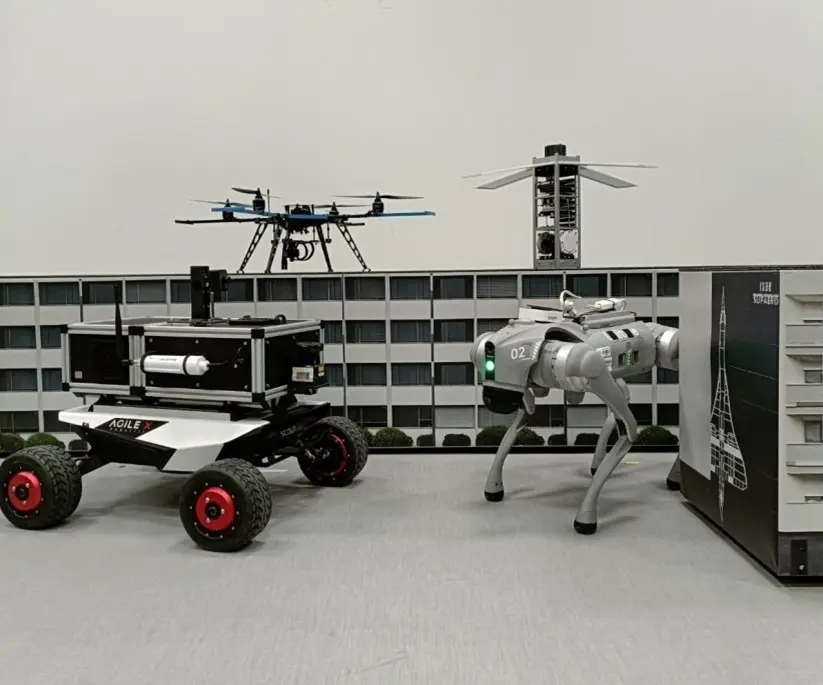
Autonomous Systems Platform
The autonomous systems platform enables robots and drones to evolve in a secure, instrumented area (10m x 10m x 4m). The test zone is equipped with a motion capture system and audiovisual resources.
This platform is a development area suited to ISAE-SUPAERO’s research and teaching activities, activities relating to the development of autonomous mini-UAVs (airborne and ground-based), cooperation between heterogeneous UAVs, and the study of UAV-robot/human operator interaction.
Network / Blockchain Platform
DISC has a room containing 35 PCs dedicated to research, teaching, and communication activities related to different types of communication networks.
This platform is used to carry out performance tests on specific applications: real-time multimedia transmissions over noisy links, peer-to-peer networks, distributed storage systems, and blockchains.
On this last theme, a system for deploying the Ethereum blockchain is used to carry out performance tests.
PRISE Platform
The PRISE platform (Platform for Research in Embedded Systems Engineering) aims to define and implement a platform for research, study, design, hybrid simulation, and validation of critical embedded systems.
The scientific objectives of the PRISE platform concern the performance and functional validation of critical embedded systems, particularly for the aerospace industry. The platform enables the execution and simulation of the entire avionics chain of an aircraft, drone, or satellite.
HYCUBE Nanosatellite Development Platform
This modular flatsat platform, inspired by the EYESAT project, aims to provide tools for the development of CubeSat nanosatellites in support of ISAE-SUPAERO’s teaching and research activities.
It is made up of three development building blocks that meet the key requirements of any space mission: the ground segment, the onboard system (the space segment), and the simulation of the space environment.
Directory
Discover the profiles of the 130 faculty members at the Institute who are pioneering research in aeronautics and space.
This resource allows you to explore the fields and research projects of our scientists!
Head of DISC
Job Offers
Consult the job offers for scientific staff in the DISC research department
Thesis Offers
Check out the DISC research department's thesis and post-doctorate vacancies
Internship Opportunities
Check out the internships available in the DISC research department
Scientific and research integrity
What is scientific integrity?
Scientific integrity refers to the set of rules and values that must govern research activities to ensure that they are honest and rigorous. Mentioned in the Research Code (article L. 211-2 of the Research Code), it “helps to guarantee the impartiality of research and the objectivity of its results”.
Scientific integrity is essential to the smooth running of research communities, and also forms the basis of a relationship of trust between the research community and other parts of society.
Beyond the specificities of each discipline, good practice in research is based on common principles, which are set out in the European Code of Conduct for Research Integrity:
- Reliability in the design, methodology, analysis and use of resources;
- Respect for colleagues, research participants, society, ecosystems, cultural heritage and the environment;
- Honesty in designing, carrying out, evaluating and disseminating research in a transparent, fair, complete and objective manner;
- Responsibility in carrying out research activities, from idea to publication, in their management and organisation, in training, in coaching and mentoring, and in the wider implications of research.
Scientific Integrity Officer at ISAE-SUPAERO
By signing this charter, the Institute undertakes to put in place an institutional policy on scientific integrity and to appoint a “scientific integrity referent”.
As such, Pierre Magnan, Professor Emeritus at the Institute, has been appointed Scientific Integrity Coordinator at ISAE-SUPAERO.
The role of the Scientific Integrity Officer (RIS) is to ensure that the Institute’s researchers comply with the main principles of scientific integrity as defined by OFIS, a department of Hceres, and set out in the European code of conduct and in the “French Charter of Ethics for Research Professions”: To aim for reliable, honest, respectful and responsible research and to combat breaches.
In particular, the referee must:
- To provide information on the implementation of the programme, and on a regular basis, for new arrivals;
- Participate in a training programme for doctoral students in conjunction with the École des Docteurs;
- Ensure that the laboratory notebooks are regularly kept, via the departments;
- Run a web page on the Institute’s website (raising awareness, examples of breaches);
- Participate in the network of scientific integrity officers at the various institutions;
- Keeping an up-to-date list of breaches, with regular reports to the Director General.
Scientific Integrity Coordinator (RIS) at ISAE-SUPAERO
For any request for advice or to report a possible breach of scientific integrity (SI):
Pierre Magnan
What is a breach of scientific integrity?
Any practice that undermines the reliability of results and the proper functioning of research communities is likely to constitute a breach of scientific integrity. A breach may concern all aspects of research activities in all disciplines, whether public or private.
Instruction procedure
Any person acting in good faith who is aware of a possible breach of scientific integrity may send a report to the Scientific Integrity Officer.
Receipt
The allegation of misconduct is sent by email or post, signed and dated. This statement describes the situation and the people involved. The whistleblower’s anonymity is guaranteed by the Scientific Integrity Officer.
Admissibility of the report
During the preliminary investigation phase, the officer in charge verifies that the report is sufficiently detailed to allow action to be taken. If an investigation is launched, he or she quickly informs the persons implicated.
Investigation
In all cases, absolute priority is given to the facts and to the presumption of good faith on the part of the persons concerned. It is understood that, at any stage of the procedure and whenever possible, the Reporting Officer may propose mediation to the persons concerned, in order to resolve the situation through a series of appropriate measures accepted by all parties.
The investigation is carried out in an adversarial manner, with uniform treatment, and if necessary involving independent experts. An inventory of the facts reported, the facts established and the arguments put forward by the various parties leads to the drafting of a report by the Scientific Integrity Officer, which may include recommendations. The report is submitted to the President of the University.
Follow-up
The Director General of ISAE-SUPAERO is responsible for deciding what action to take on the investigation report.
Scientific integrity, research ethics and professional conduct are three essential components of responsible research conduct.
Scientific integrity refers to good practice in the production and dissemination of scientific knowledge. It guarantees the honest and rigorous nature of research activities.
Ethics refer to a set of obligations specific to the practice of a profession. In France, when a researcher is a civil servant, his or her obligations are set out in the General Civil Service Code.
Research ethics concerns, on the one hand, the major issues raised by certain scientific developments and, on the other hand, the more operational issues of compliance of research protocols with the legal rules and ethical recommendations in force.
Ethics refer to a set of obligations specific to the practice of a profession. In France, when a researcher is a civil servant, for example, his or her obligations are set out in the General Civil Service Code.
- The planning and implementation of the research project: Failure to obtain the necessary authorisations (ethical approval, consent of participants); non-compliance with authorised protocols; misuse of research funds.
- Management and practices relating to data of any kind (including bodies of text, archives, images, etc.): Falsification or fabrication; deliberately deficient management or archiving; retention without legal justification, omission or selection without scientific justification; problematic statistical processing; unmentioned embellishment.
- Publication, communication and authoring practices: Plagiarism; improper signature or failure to acknowledge a contribution; self-plagiarism; non-compliance with AI usage requirements; improper or biased citations; lack of impartiality or transparency when speaking publicly.
- Interactions between peers: Biased peer-reviewing, appropriation of research projects or ideas, lack of supervision, undue hindrance of the progress of a peer's work, unfounded accusations of misconduct.
- Failure to declare links or conflicts of interest, or their poor management at all or part of the stages of a research activity (e.g. application for funding, evaluation, expert appraisal and dissemination of results).
- The most serious forms of misconduct - such as fabrication, falsification of data and plagiarism (FFP) - are liable to disciplinary action.
Reference texts on scientific integrity
- ANR Charter of ethics and scientific integrity
- European Code of Conduct for Research Integrity
- Singapore Declaration on Scientific Integrity
- The Corvol report
- French Office of Scientific Integrity
- Report by the CNRS Ethics Committee (COMETS) – “Ethical reflection on plagiarism in scientific research”.
- Guide “Practising research with integrity and responsibility” published by the CNRS
As developments in this area, both nationally and internationally, are fairly frequent, it is advisable to refer to the Ofis website, which is regularly updated.